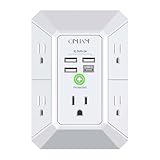
I remember my first trip to Paris. Packed my hairdryer, my straightener, my phone charger – the works. Plugged everything in, and… nothing. Just a sad little spark and the smell of ozone. Turns out, my American outlets weren’t just uncommon in Europe; they were downright incompatible. It was a brutal lesson that thinking American plugs work everywhere is a rookie mistake that costs time and money.
So, are American outlets common in Europe? The short, sharp answer is no, they are not. This isn’t a minor inconvenience; it’s a fundamental difference in electrical systems that trips up more travelers than you’d think.
Let’s cut through the confusion about adapters, voltage, and what you actually need to keep your devices juiced up across the pond.
Why Your American Plugs Won’t Just ‘work’ Over There
The most obvious reason American outlets aren’t common in Europe is that the entire electrical infrastructure is different. We’re talking about a completely different plug and socket design, and often, different voltage and frequency too. It’s not just a cosmetic change; it’s built into the very fabric of how electricity is delivered and used. Imagine trying to shove a square peg into a round hole – that’s basically what plugging an American device into a European socket would be like. They just don’t physically fit.
The plug types you’ll encounter most frequently in mainland Europe are Type C (Europlug) and Type F (Schuko). Type C is the simple two-round-pin plug you see on many small electronic devices. Type F, the Schuko, is a bit larger, also with two round pins, but it has two grounding clips on the sides that fit into corresponding slots on the socket. The UK and Ireland use Type G plugs, which are famously three rectangular pins in a triangular pattern.
So, if you’re heading to Spain, France, Germany, or Italy, you’re looking at Type C or F. Go to the UK or Ireland, and it’s Type G. This variety within Europe itself is another layer of complexity most Americans don’t realize until they’re staring at a wall socket that looks nothing like home.
This physical difference is the first hurdle. But it’s not just about the shape.
The standard voltage in North America is 120V, while in most of Europe it’s 230V. This higher voltage can fry electronics not designed to handle it. Think of it like trying to run a small engine designed for a trickle of fuel on a firehose blast – it’s going to explode.
Many modern chargers for phones, laptops, and other sensitive electronics are dual-voltage (often labeled ‘100-240V’), meaning they can automatically adjust to the local voltage. This is a lifesaver.
However, older or simpler appliances, like some hair dryers or curling irons, might be single-voltage and require a bulky, expensive voltage converter if you want to use them safely abroad. Trying to use a 120V appliance on a 230V supply without a converter is a surefire way to destroy it, and potentially cause a fire hazard.
The frequency is also different: 60 Hz in North America versus 50 Hz in Europe. While this usually doesn’t cause outright failure for most electronics, it can affect the performance of certain devices, like electric motors. Clocks might run slightly faster or slower, and some appliances might not operate as efficiently. It’s a subtle but persistent difference that adds to the general feeling that you’re in a different electrical world. (See Also: Are American Outlets Ac Or Dc )
The Great Adapter Debate: What You Actually Need
When I first started traveling, I bought this massive, all-in-one adapter that promised the moon. It had a dozen different prongs that swiveled and slid out, looking like some sort of sci-fi gadget. It was heavy, bulky, and honestly, a bit intimidating. The problem? It was overkill, and some of the plug mechanisms felt flimsy. I’d rather have a few specific, reliable adapters than one behemoth that I’m afraid will break mid-plug.
The core of the issue is that you’re not changing the voltage with most adapters; you’re just changing the plug shape. This is where so many people get tripped up. They buy a cheap adapter, plug in their American hairdryer, and wonder why it gets super hot, smells weird, and then dies. That’s the voltage difference at play, not the adapter’s fault. You need a voltage converter for appliances that aren’t dual-voltage. Converters are usually heavier and more expensive than simple adapters, and they step down the voltage from 230V to 120V.
The good news is that most modern personal electronics – smartphones, tablets, laptops, cameras, and their chargers – are dual-voltage. Just check the label on your charger. If it says ‘INPUT: 100-240V’, you’re golden. You’ll just need a simple plug adapter to make the physical connection. For these devices, I tend to buy individual adapters for each region I’m visiting, or a small, lightweight universal adapter that covers the main European types (Type C, F, and G). This is far more practical than lugging around a converter for every single USB-powered gadget.
For those few appliances that aren’t dual-voltage (like older curling irons or travel hair dryers), you have a few choices. You can buy a voltage converter. These can be pricey and heavy, so they’re usually only worth it if you’re staying for an extended period or if the appliance is absolutely indispensable. Alternatively, and often the smartest move, is to buy a dual-voltage version of the appliance specifically designed for travel. Many hair dryer brands offer compact, dual-voltage models that fold up nicely and handle European power. I made the switch to a travel-specific dual-voltage hair dryer after I practically melted my favorite one on a trip to Rome, and it was the best $40 I ever spent.
Here’s a quick breakdown of what I carry:
| Device Type | What You Need | My Verdict |
|---|---|---|
| Smartphone/Tablet/Laptop Charger | Plug Adapter (Type C/F for mainland Europe, Type G for UK/Ireland) | Key. Check your charger’s label for 100-240V input. Lightweight adapters are cheap and effective. |
| Camera Battery Charger | Plug Adapter (Same as above) | Key. Most are dual-voltage. |
| Hair Dryer/Curling Iron (older, single-voltage) | Voltage Converter or Dual-Voltage Travel Appliance | Use a dual-voltage travel appliance. Converters are bulky and expensive. If it’s not dual-voltage, don’t risk it. |
| Electric Toothbrush Charger | Plug Adapter (Often Type C) | Usually needed. Most are dual-voltage. |
The key takeaway is to check your devices. Don’t just assume. A quick glance at the label can save you a lot of heartache and money. If it says ‘100-240V ~ 50/60Hz’, you only need an adapter. If it only says ‘120V’, you need a converter or a different appliance.
Common Mistakes and How to Avoid Them
I’ve made them all, so you don’t have to. The biggest mistake, hands down, is thinking that all adapters are created equal or that an adapter magically makes your American appliances compatible with European voltage. I once saw a guy trying to plug a classic, old-school American toaster into a European socket with just a cheap prong adapter. The sparks that flew were impressive, but the toaster was toast (pun intended). He ended up buying a new one locally, which was way more hassle than preparing properly.
Another common pitfall is relying on hotel power strips. Some higher-end hotels might have universal outlets, but it’s rare. Most will have standard European sockets. You can’t count on them to magically accept your American plugs. And even if they do have some sort of adapter built-in, it’s usually for a very limited range of plug types, and they certainly won’t handle voltage conversion. Always have your own reliable adapter. Don’t get caught without power because you assumed the hotel had you covered.
People also underestimate the sheer variety of plugs within Europe. While Type C and F are dominant on the continent, the UK, Ireland, Cyprus, and Malta all use the Type G plug. Trying to use a Type C adapter in London is just as useless as trying to plug your American device directly in. It’s important to know where you’re going and to pack the correct adapter for that region. Some ‘universal’ adapters are better than others, but I still prefer to have specific ones for reliability. Having a Type G adapter for my UK trip was a must.
Finally, there’s the temptation to buy cheap, unbranded adapters from dodgy street vendors or online marketplaces. These are often poorly made, can be a fire hazard, and might not even fit the sockets properly. Stick to reputable brands and retailers for your travel adapters and converters. It’s a small investment for peace of mind and to protect your valuable electronics. I paid about $8 for a solid, reputable Type C adapter that’s lasted me years, compared to a $2 flimsy one that felt like it was going to fall apart the first time I used it. That $6 difference was worth the gamble. (See Also: Are All Power Outlets Ac )
Here’s a quick checklist to avoid these blunders:
- Check Voltage: Every single appliance you plan to bring that isn’t USB-powered needs a voltage check. If it doesn’t say ‘100-240V’, assume it’s 120V only.
- Adapter vs. Converter: Understand the difference. Adapters change the plug shape. Converters change the voltage. You’ll only need a converter for non-dual-voltage appliances.
- Know Your Plugs: Research the specific plug types for your destination countries. Don’t assume all of Europe is the same.
- Invest in Quality: Buy adapters and converters from reputable brands. Avoid the cheapest options.
- Pack Smart: Bring only what you absolutely need. Most modern travelers can get by with just a few plug adapters for their USB-powered devices.
Avoiding these common mistakes will make your trip infinitely smoother and prevent any electronic meltdowns.
Real-World Use: My Setup for a Month in Italy and Germany
Last year, I spent a solid month hopping between cities in Italy and Germany. My goal was to pack light but be fully prepared. I’m a heavy phone user, a laptop user for work, and I like to charge my camera batteries. I also have an electric toothbrush that I absolutely refuse to travel without.
My setup was deliberately simple, focusing on dual-voltage devices and the right adapters. For my phone and laptop, I used their standard chargers, which are both rated for 100-240V. I bought a simple, sturdy Type C adapter for Italy and a Type F adapter for Germany. They’re small, lightweight, and cost less than $10 each. I kept one plugged into my travel power strip (which itself is designed for European voltage) and swapped it out when I moved countries. This way, I always had a place to charge my essentials.
My camera battery charger is also dual-voltage. So, again, just a plug adapter was needed. For my electric toothbrush, the charger was also dual-voltage, so it just needed the appropriate adapter for whichever country I was in. I never had to worry about voltage converters. This is the beauty of modern electronics; they’re designed for global use.
The only thing I considered bringing a converter for was an old-school hair dryer I used to have. It was powerful but strictly 120V. I decided against it. Instead, I bought a compact, dual-voltage travel hair dryer from a brand like Conair or Remington. It cost about $30, folds up small, and does a perfectly adequate job. The peace of mind knowing I wouldn’t fry it or start a fire was worth every penny. Hotel hair dryers are often weak or non-existent, so having my own reliable one was a win.
I also learned to be mindful of power strips. Many European hotels have limited outlets. I carry a small, travel-specific power strip with multiple USB ports and a single standard European outlet. This allows me to charge my phone, camera, and toothbrush simultaneously using just one wall socket. It’s an absolute lifesaver when you’re in a small hotel room with only two outlets.
My whole setup for electronics for that month fit into a small pouch: two plug adapters, one travel power strip, and my dual-voltage hair dryer. No bulky converters, no burned-out devices. It was stress-free and cost me less than $60 for the gear. The key is to prioritize dual-voltage devices and then get the correct physical adapters for your specific destinations. This approach is far more efficient and cost-effective than trying to force American appliances into a foreign system.
Are American Outlets Common in Europe? The Verdict and Practical Tips
Let’s get this straight: American outlets are about as common in Europe as a blizzard in July. You will not find them. Relying on finding an American-style outlet is a recipe for disappointment and possibly damaged electronics. The electrical systems are fundamentally different, not just in plug design but often in voltage and frequency too. This isn’t a minor variation; it’s a significant incompatibility that requires preparation.
My personal experience, and that of countless travelers I’ve spoken with, confirms this. I’ve seen people scrambling in hotel lobbies, trying to find an adapter at the last minute, often settling for overpriced or unreliable options. I’ve also had friends who just plugged things in, only to discover a burnt smell and a dead device later. The common advice is often to just buy an adapter, but the nuance lies in understanding what kind of adapter you need and if you need a converter at all. (See Also: Are Arc Trip Outlets Required In Hillsborough County )
The most practical advice is to assume nothing will work directly. Always check your devices. If it’s a modern gadget with a USB charger or a laptop, the label will almost certainly say ‘INPUT: 100-240V’. This means you only need a plug adapter for the country you’re visiting. For things like hair dryers, straighteners, or other heating appliances that aren’t dual-voltage, your options are: buy a specific travel dual-voltage version, or buy a voltage converter. Honestly, buying a dual-voltage travel appliance is almost always the better, safer, and more cost-effective solution. I’ve spent maybe $300 over the years replacing single-voltage appliances I tried to use abroad with their travel-ready counterparts, and it’s been worth every penny.
A few final tips:
- Don’t Overpack Electronics: Think about what you truly need. Most travelers can get by with just their phone, laptop, and camera.
- Consider Local Purchases: For some items, like a cheap travel hairdryer, it might be easier and cheaper to buy one locally if yours isn’t dual-voltage and you don’t want to invest in a travel version.
- Power Banks are Your Friend: A good portable power bank can keep your phone and other USB devices charged on the go, reducing your reliance on finding wall outlets.
- Label Everything: Clearly label your adapters and converters so you don’t mix them up. A small piece of tape with ‘UK’ or ‘EU’ can save confusion.
Being prepared for the different electrical standards is a small step that makes a huge difference in the enjoyment and ease of your international travel. It’s about understanding the system and bringing the right tools for the job, not just hoping for the best.
People Also Ask (faq)
Will My American Phone Charger Work in Europe?
Yes, almost certainly. Modern smartphone chargers are designed to be dual-voltage, meaning they accept input from 100-240V. You will, however, need a plug adapter to physically fit the European wall socket. Check the label on your charger; it should clearly state ‘INPUT: 100-240V ~ 50/60Hz’.
Do I Need a Voltage Converter for Europe?
You only need a voltage converter if your U.S. appliance is not dual-voltage (i.e., it only states ‘120V’ input). Most modern electronics like phones, laptops, and cameras are dual-voltage, so you’ll only need a plug adapter. For non-dual-voltage items like older hair dryers or curling irons, it’s often better and safer to buy a dual-voltage travel version.
What Type of Plug Adapter Do I Need for Europe?
This depends on your specific destination. For most of mainland Europe (France, Germany, Spain, Italy, etc.), you’ll need a Type C or Type F adapter. For the UK, Ireland, Malta, and Cyprus, you’ll need a Type G adapter. It’s best to research the plug type for the countries you are visiting.
Can I Use My American Hairdryer in Europe?
Only if it is explicitly a dual-voltage travel hairdryer (labeled ‘100-240V’). If it’s a standard American hairdryer rated only for 120V, plugging it into a 230V European outlet without a voltage converter will likely destroy it and could be a fire hazard. It is strongly recommended to buy a dual-voltage travel hairdryer.
Verdict
So, to put it plainly, are American outlets common in Europe? Absolutely not. You’ll be hard-pressed to find one unless you’re in a very niche tourist-focused establishment that has gone out of its way to install them. It’s far more practical to accept the difference and prepare accordingly.
My biggest takeaway from years of travel is this: don’t be that person scrambling at the airport or blowing out your electronics on day one. A few inexpensive plug adapters and a quick check of your device labels will save you a world of pain. For non-dual-voltage appliances, just buy the travel version – it’s cheaper than a converter and much safer.
The next time you’re packing for a European adventure, remember this. Do your homework on plug types for your specific destinations, check your device voltage ratings, and pack the right adapters. It’s a simple preparation that makes sure you can stay connected and powered up throughout your trip.