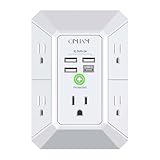
I’ve bought my fair share of cheap travel adapters over the years, and let me tell you, it’s a fool’s errand. One minute you’re happily charging your phone in a Paris café, the next you’re staring at a useless hunk of plastic because the prong bent or, worse, didn’t fit at all. It got me thinking about the basics, the stuff we just assume works. Specifically, are american power outlets different sizes on each prong? It’s a question that seems simple, but the answer has real-world implications for anyone who plugs things in, especially when traveling or buying electronics from abroad. Let’s get this straight from the jump: the prongs on your typical American plug
are
designed with specific dimensions, and yes, they do have differences, particularly between the flat blades and the round ground pin.
The Straight Dope on American Plug and Outlet Anatomy
Alright, let’s get down to brass tacks. When you look at a standard American plug – the kind you see on your toaster, your TV, your laptop charger – you’ll notice two flat, parallel blades and, on many devices, a third, round or U-shaped pin.
This isn’t just for show, and definitely not some arbitrary design choice. The question ‘are american power outlets different sizes on each prong?’ is a yes, and understanding why is pretty straightforward once you break it down. The two flat blades are for your hot and neutral wires.
The neutral blade is wider than the hot blade. This is a safety feature called polarization. Most devices have a polarized plug, meaning one blade is wider than the other.
This makes sure that the plug can only be inserted into the outlet in one orientation, which helps to make sure that the ‘hot’ wire is always connected to the corresponding ‘hot’ slot in the outlet, and the ‘neutral’ wire to the ‘neutral’ slot. This reduces the risk of electric shock.
The round or U-shaped pin is the ground. It’s usually longer than the flat blades and is there for an extra layer of safety. If a fault occurs within an appliance, causing a live wire to touch the metal casing, the ground wire provides a safe path for that electricity to flow to the ground, rather than through you if you happen to touch the appliance. So, to be super clear: the neutral blade is wider than the hot blade, and the ground pin is a completely different shape and size altogether. This isn’t a ‘maybe it’s different’ situation; it’s a ‘this is how it’s designed for safety’ situation.
I remember once, trying to plug in a cheap European fan I’d bought on a whim into an American outlet using a generic adapter. It felt… loose. Like it could wiggle out any second. I chalked it up to a dodgy adapter, but later realized the prongs on the fan itself were likely just slightly off spec, and the adapter wasn’t solid enough to compensate.
It’s a small thing, but when electricity is involved, those small things matter. The standard for these dimensions comes from the National Electrical Manufacturers Association (NEMA), and they’ve laid it all out in their NEMA WD-1 and NEMA WD-6 standards. These standards dictate the exact size, shape, and spacing of prongs and slots to make sure compatibility and, most importantly, safety across the board.
Why the Different Sizes? Safety First.
The differing widths of the neutral and hot blades are a direct result of the need for polarization. This makes sure that appliances are connected correctly to the power supply. Think about it: if both flat blades were the same size, you could plug in a device the wrong way around. This could potentially lead to dangerous situations where the casing of an appliance becomes live. The ground pin, being a separate safety feature, has its own distinct shape and size to make sure it connects to the ground terminal in the outlet. It’s a physical safeguard against electrical shock in fault conditions.
The Nitty-Gritty: American Plug and Outlet Dimensions
Let’s get specific. For those who love the details, the standard American Type B plug (the one with the ground pin) has specific dimensions defined by NEMA. The two flat blades, the hot and neutral, are both typically 0.625 inches (15.88 mm) long. However, the width is where they differ. (See Also: Are American Outlets Ac Or Dc )
The neutral blade is wider, measuring 0.312 inches (7.94 mm), while the hot blade is narrower, at 0.250 inches (6.35 mm). This width difference is the key to polarization.
The ground pin is also distinct. It’s a round pin, about 0.187 inches (4.75 mm) in diameter, and it’s typically longer than the flat blades.
This extra length means it makes contact with the ground terminal in the outlet before the hot and neutral blades, and it breaks contact after them when you unplug. This is another important safety feature, making sure the appliance is grounded during the entire plugging and unplugging process.
When you’re looking at outlets, the slots are designed to match these prongs precisely. The neutral slot is wider to accept the wider neutral blade, and the hot slot is narrower for the narrower hot blade. The ground hole is round. If you try to force a plug into the wrong slot, you’ll immediately feel resistance, and you absolutely should not force it.
This is the system working as intended. I once had a visitor from overseas try to plug their appliance in, and they were struggling. I watched them, and they were trying to jam the wider neutral prong into the narrower hot slot.
I had to stop them before they damaged anything, explaining the difference. It’s easy to overlook, but it’s a fundamental aspect of electrical safety in North America.
The consistency of these dimensions is what allows millions of devices to plug into millions of outlets without issue, year after year.
It’s important to note that while these are the standards for North America (US, Canada, Mexico), other countries use different plug and outlet types altogether. This is why travel adapters are so common and why buying electronics manufactured for different regions can be a headache if you don’t get the right adapter or converter. The prongs are indeed different sizes and shapes on each prong for a reason, and it all boils down to safety and proper function.
Common Mistakes and Why They Matter
The biggest mistake people make is assuming all plugs and outlets are universal. This is, frankly, a dangerous assumption. I’ve seen people try to shave down the prongs on a plug to make it fit, or worse, try to force a non-polarized plug into a polarized outlet. I’ve even heard of people trying to bypass the ground pin entirely by bending it off or using a two-prong adapter and only plugging in two prongs. Big mistake. These prongs are different sizes on each prong for a reason, and ignoring those reasons can lead to appliance damage, fires, or serious electrical shock.
One time, a buddy of mine bought a used power tool from a guy online. It looked great, solid metal casing, felt heavy-duty.
When it arrived, the plug looked a bit odd. It had two flat blades, but they were the same size. He didn’t think much of it, figuring he’d just get a simple adapter. He plugged it in, and the tool worked… for about five minutes. (See Also: Are All Power Outlets Ac )
Then, the casing started getting warm, and there was a faint smell of burning plastic. Turns out, the tool was designed for a non-polarized outlet, and plugging it into a polarized American outlet incorrectly made it draw power in a way it wasn’t designed for. He got lucky; it didn’t catch fire. He ended up having to buy a new tool that was properly rated for US outlets.
That incident hammered home for me how important plug compatibility is. It’s not just about fitting; it’s about drawing power correctly and safely.
Another common pitfall is confusing adapters and converters. An adapter simply changes the physical shape of the plug to fit the outlet; it doesn’t change the voltage. A converter, on the other hand, does change the voltage. Trying to plug a 120V appliance into a 240V outlet (or vice versa) using only an adapter is a recipe for disaster. You’ll either fry the appliance or it won’t work at all. The prongs themselves are only one piece of the puzzle when it comes to international electrical compatibility.
The Risk of ‘universal’ Adapters
Many “universal” travel adapters are notorious for being flimsy or not fitting perfectly. While they might have multiple prongs that fold out, the fit into the actual wall outlet can be loose. This can lead to intermittent power, overheating of the adapter, and in worst-case scenarios, a fire hazard. They often don’t account for the precise NEMA standards for prong dimensions and can be a source of frustration and danger. I’ve tossed more than a few of these in the trash after they failed me on trips. Better to invest in a quality adapter specific to the region you’re visiting.
When Prongs Don’t Match: Practical Solutions
So, what do you do when you encounter this situation? If you’re bringing electronics from outside North America into the US, Canada, or Mexico, you’ll likely need an adapter. You’ll want to check if your device is dual-voltage. Most modern electronics like phone chargers and laptop power bricks are, meaning they can handle both 120V and 240V. These usually have a label that says something like ‘Input: 100-240V’. For these, you just need a physical adapter to fit the US outlet. If your device is not dual-voltage, meaning it’s designed for 240V (common in Europe, for example) and you plug it into a 120V US outlet, it simply won’t work. You’ll need a voltage converter in addition to an adapter.
Conversely, if you’re taking US appliances abroad, you’ll need to check the voltage of the country you’re visiting. If it’s 240V, and your appliance is 120V, you’ll need a voltage converter. You’ll also need an adapter to match the foreign outlet type. This is where things get complicated, as there are many different plug types around the world.
I learned this the hard way on my first trip to Japan. I had this amazing high-end hair dryer that I loved.
It was designed for 120V. Japan uses 100V, which is close enough that it might work, but I was still worried about damaging it. I bought a cheap converter, plugged it in, and my hair dryer sounded like a dying walrus. It barely blew hot air.
I ended up buying a local hair dryer there, which was half the power and twice the bulk. Later, I realized I should have gotten a more solid converter or just accepted that some appliances are better left at home. It’s always a good idea to check the voltage and plug type of your destination country well in advance of your trip.
| Scenario | Device Voltage | Destination Voltage | What You Need | Verdict |
|---|---|---|---|---|
| US Appliance Abroad | 120V | 240V | Voltage Converter + Outlet Adapter | Key for function and safety. Don’t skip the converter! |
| US Appliance Abroad | 120V | 100-127V (e.g., Japan, some parts of Asia) | Outlet Adapter (sometimes converter needed if voltage is significantly different) | Often just an adapter is fine, but check device specs. |
| Foreign Appliance in US | 240V | 120V | Outlet Adapter (if device is dual-voltage, otherwise converter is complex) | Dual-voltage is key. Otherwise, you’re in tricky territory. |
| Foreign Appliance in US | 100-240V (Dual-Voltage) | 120V | Outlet Adapter | Easiest scenario. Just needs the right plug shape. |
The ‘why Aren’t They Standard?’ Question
It’s a fair question: if different prong sizes are for safety, why aren’t all countries using the same standard? The simple answer is history and regional development. Electrical standards evolved independently in different parts of the world as electricity became more widespread. Countries developed their own infrastructure, and the plug and socket designs that were practical and safe at the time became entrenched. Changing these standards globally would be an enormous undertaking, requiring a coordinated effort among nearly every country on Earth, plus massive manufacturing changes, and would be incredibly costly.
Think about it from a manufacturing perspective. Companies make billions of devices and outlets to specific regional standards. To switch to a single global standard would mean retooling entire factories, designing new products, and retraining technicians. (See Also: Are Arc Trip Outlets Required In Hillsborough County )
It’s just not practical. While some regions have adopted similar plug types (like Type C, E, and F in Europe), there isn’t one single global standard. The International Electrotechnical Commission (IEC) has a whole system for classifying plugs and sockets (Types A through O), but it’s more of a catalog than a mandate for universal adoption. So, we’re largely stuck with the hodgepodge we have.
This is why when you see questions like ‘are american power outlets different sizes on each prong,’ the answer is deeply tied to the historical and practical realities of electrical infrastructure in North America.
The good news is that for most common electronics (phones, laptops), dual-voltage capability is now the norm. This makes travel much easier, as you primarily only need physical adapters. However, for higher-power items like hair dryers, curling irons, or blenders, you need to be much more mindful of voltage differences and the need for a proper converter. It’s always better to be safe than sorry. I once met a backpacker who, in a desperate attempt to charge his phone, used a foreign adapter that he thought worked but was actually putting out the wrong voltage. His phone’s battery swelled up like a balloon. A stark reminder that electrical compatibility is not a suggestion; it’s a requirement.
People Also Ask: Understanding Plug Variations
Are Us and European Plugs the Same Size?
No, US and European plugs are not the same size or shape. US plugs (Type A and B) have flat prongs, with the Type B also having a round ground pin. European plugs commonly use Type C (Europlug, two round pins) and Type F (Schuko, two round pins with earth clips). The dimensions and configuration are entirely different, meaning you’ll need an adapter to use US devices in Europe or vice versa.
Are All American Outlets the Same?
Standard residential outlets in North America (US, Canada, Mexico) are designed to accept NEMA Type A and Type B plugs. This means the slots are generally the same for two-prong (Type A) and three-prong (Type B) plugs. However, there can be variations in specific industrial or commercial settings, and older buildings might have outlets that don’t quite meet modern standards for tightness or grounding. For everyday purposes, they are largely standardized for these plug types.
Do All American Plugs Have 3 Prongs?
No, not all American plugs have three prongs. Many simpler appliances, like basic lamps or low-power electronics, use a two-prong plug (Type A), which has two flat blades (hot and neutral). The three-prong plug (Type B) includes an additional round or U-shaped ground pin for added safety, and is typically found on appliances with metal casings or higher power requirements.
What Is the Difference Between a Plug Adapter and a Voltage Converter?
A plug adapter simply changes the physical shape of the plug to fit into a foreign outlet; it does not alter the electrical voltage. A voltage converter, on the other hand, changes the electrical voltage from one level to another (e.g., from 240V to 120V). For international travel, you often need both: an adapter to fit the socket, and a converter if your device is not dual-voltage and the destination’s voltage differs significantly from your device’s rating.
Final Verdict
So, to circle back to the original question: are american power outlets different sizes on each prong? Yes, absolutely. The neutral blade is wider than the hot blade, and the ground pin is a distinct shape and size. This isn’t a quirk; it’s intentional design for safety and proper function. Forgetting this can lead to inconvenience, damaged electronics, or even dangerous shocks. When in doubt, always check your device’s voltage rating and get the appropriate adapter or converter for your destination.
It’s easy to take for granted the simple act of plugging something in, but the engineering behind it is there for a reason. Don’t cut corners on electrical safety, whether you’re at home or abroad. A few dollars spent on the right adapter can save you a lot of headaches, and potentially a lot of danger.
Next time you’re buying an electronic device or planning a trip, take a moment to understand the plugs and voltage. It’s a small effort that pays off big time.