I remember the first time I tried to plug in a fancy European gadget after moving here. Nothing. Zilch. Nada. I stared at the plug, then at the wall socket, convinced I’d broken something expensive. It turns out the question ‘are american outlets ac or dc’ isn’t just academic; it’s the difference between your electronics working and them fizzling out like a damp firework. We’ve all been there, staring blankly at a foreign plug or a power adapter, wondering what fresh hell this is.
For most of us, the electrical grid powering our homes is a big, mysterious black box. We flip a switch, and the lights come on. But understanding the basics, especially the type of current flowing through those familiar outlets, can save you headaches and money. Let’s cut through the confusion.
Why Your Home Isn’t a Battery: Ac vs. Dc Explained
So, what’s the deal with the electricity zipping through your walls? Are American outlets AC or DC? The short, blunt answer is: AC. Alternating Current. This is the standard for household electricity in the US, and frankly, most of the world. DC, or Direct Current, is what you find in batteries. Think of your phone charger brick – that little box converts the AC from your outlet into DC for your phone. It’s a fundamental difference, and understanding it is key to not frying your gadgets.
Why AC? Back in the day, when electricity was first being rolled out, there was a bit of a war between Thomas Edison (big fan of DC) and Nikola Tesla (the champion of AC). Tesla’s AC system won out for a few big reasons. For starters, AC can be easily stepped up or down in voltage using transformers. This is a massive deal. Power plants can generate electricity at a high voltage and send it over long distances with minimal loss, then step it down to a safer, usable voltage for our homes. Imagine trying to send DC power over hundreds of miles at 120 volts; you’d lose almost all of it. AC is just way more efficient for distribution.
Think of AC like a wave, constantly switching direction. In the US, this wave flips back and forth 60 times every second – that’s 60 Hertz (Hz). DC, on the other hand, is like a steady, unwavering stream flowing in one direction. Batteries provide that steady stream. Your laptop battery, your car battery, your TV remote battery – all DC. When you plug something into the wall, you’re tapping into that oscillating AC power. It’s a complex dance happening in your walls, designed for efficiency and reach.
My first real ‘aha!’ moment with this was when I bought a cheap, direct-from-Asia power adapter for a laptop. It looked like it would fit, but it was designed for a DC output that was way off, and I’d never bothered to check the fine print on the adapter itself. Thankfully, it just wouldn’t power on, but I could have easily bought something that looked right but would have sent the wrong kind of juice. It was a close call, and a stark reminder that even though the plug looks the same, what’s coming out of the wall and what a device needs are two different things.
The Outlet Itself: What You Actually See
Okay, so we know the power coming from the grid is AC. But what about the physical outlets in your home? Are American outlets AC or DC?
This is where the confusion often sets in for people. The outlets themselves are designed to deliver that AC power.
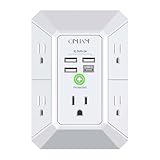
You’ll see two vertical slots and a round or U-shaped hole below them. The two vertical slots are for the ‘hot’ and ‘neutral’ wires, carrying the AC current. The third hole, the ground, is a safety feature, not part of the current-carrying circuit itself under normal operation. It’s there to provide a safe path for electricity if something goes wrong, like a short circuit.
This design is pretty standard across North America, Canada, and parts of Central and South America.
When you plug something in, the prongs connect to these internal contacts, allowing the AC power to flow into your device. The magic (or science, I guess) happens inside the device itself. (See Also: Are American Outlets Ac Or Dc )
Most electronics, especially anything with a digital display, a circuit board, or that needs to be charged, requires DC power. So, that little black box on your laptop charger, your phone charger, or the power supply for your gaming console? That’s called a transformer or a power adapter, and its job is to take the AC from the wall and convert it into the specific DC voltage and current that your device needs.
This is a two-step process: first, the transformer steps the AC voltage down to a lower level, and then a rectifier circuit converts the AC to DC.
It’s a bit like a water system. The AC from the grid is like a river with currents going back and forth. The power adapter is like a pump and a filter system that takes that choppy river water and turns it into a steady, clean stream for your delicate houseplants. Without that adapter, you’d be trying to feed a houseplant river water, which would be a disaster. The outlet is just the tap; the adapter is the treatment plant.
I learned this the hard way when I bought one of those cheap universal travel adapters that promised to work everywhere. I plugged my hairdryer into it in Europe, thinking I was golden. Big mistake. Turns out, the adapter only changed the plug shape, not the voltage or current type.
My hairdryer, designed for US AC power, promptly let out a puff of smoke. It wasn’t just about the plug; it was about the fundamental type of power. This experience hammered home that while the outlet looks familiar, what it delivers is only half the story; the other half is what the device needs and how the adapter bridges that gap. It’s why you see those chunky “wall warts” or power bricks – they’re doing important work.
Common Mistakes and Misconceptions
The biggest misconception is thinking that if a plug fits, it’s compatible. This is just plain wrong and can lead to expensive mistakes.
People often ask, ‘Are American outlets AC or DC?’ and then assume their device will just work. Nope.
It’s like asking if a key fits a lock and assuming the door will open – the key needs to be the right key. A plug might physically go into the socket, but the power it’s delivering is entirely different.
For instance, many European countries use 220-240V AC, whereas the US uses 110-120V AC. Plugging a device designed for 220V into a 110V US outlet might mean it runs weakly or not at all. Plugging a US 110V device into a 220V outlet without a proper voltage converter? Big smoke, sad device.
I’ve seen it happen, and it’s not pretty. (See Also: Are All Power Outlets Ac )
Another common error is confusing the outlet type with the power required by the device. All standard US wall outlets deliver AC power. However, many modern electronics, especially those with internal batteries or sensitive circuitry (smartphones, laptops, tablets, newer TVs), need DC power. So, the outlet is AC, but the device often runs on DC, thanks to the adapter. It’s like asking if a faucet dispenses hot or cold water. The faucet itself just lets water out; it’s the plumbing behind it that determines if it’s hot or cold. The outlet is the faucet; the power supply is the water heater or the cold water pipe.
People also get tripped up by terms like ‘power converter’ versus ‘voltage adapter’. A voltage adapter (or converter) changes the voltage.
A power adapter (or transformer/rectifier) usually does both – it changes the voltage and converts AC to DC. This is why you need to check your device and the adapter carefully. If you travel, you’ll often see two numbers on your device’s power adapter: ‘INPUT: 100-240V ~ 50/60Hz’. That ‘~’ symbol signifies AC, and the range 100-240V tells you it can handle both US and European voltages.
For devices like simple resistive loads (hairdryers, irons, some basic toasters), they might just need a plug adapter if they are dual-voltage, or a voltage converter if they are single-voltage and you’re in a different country. But for anything with a circuit board or battery, you absolutely need the AC to DC conversion.
I once spent about $180 across four different adapters trying to find one that would reliably charge my old camera battery while traveling in Asia. I kept buying ones that looked right, with the right plug pin configuration for the local outlets, but they were either not converting the AC to the specific DC voltage my camera needed, or they were of such shoddy build quality that they just failed after a few uses. It was a frustrating lesson in ‘you get what you pay for’ and the importance of understanding the underlying AC/DC and voltage requirements.
How It Actually Works: Inside Your Power Supply
Let’s peel back the layers on what happens when you plug something in. The US electrical grid generates AC power, typically at a high voltage (like 13,800 volts or more) for transmission. This power travels through transmission lines to substations, where transformers step it down to a lower voltage for distribution to neighborhoods. Finally, at your home, another transformer steps it down again to the standard 120 volts that comes out of your outlets. So, the power delivered to your wall is 120V AC, cycling at 60Hz.
When you plug in a device, the AC current enters its power supply unit. For simple devices like a basic lamp or a toaster, the AC power might be used directly (after voltage stepping down if necessary). However, for most modern electronics, this AC power needs to be converted. The process typically involves a few key components:
- Transformer: This is the first step. It takes the incoming AC voltage (120V) and steps it down to a lower AC voltage, closer to what the device’s internal components need. The size and winding of the transformer coils determine the voltage reduction.
- Rectifier: This is where the AC becomes DC. A rectifier uses diodes (think of them as one-way gates for electricity) to allow current to flow in only one direction. For AC, which flows back and forth, the rectifier basically chops off one half of the wave or inverts it, resulting in a pulsing DC output.
- Filter: The rectified DC is still quite “bumpy” – it pulses rather than being a smooth, steady stream. A filter, usually made of capacitors, smooths out these pulses, creating a much more stable DC voltage.
- Voltage Regulator: Finally, a voltage regulator makes sure the output DC voltage remains constant, regardless of fluctuations in the input AC power or changes in the device’s power draw. This is important for sensitive electronics to prevent damage.
This whole process is why your phone charger has that little brick. It’s not just a simple plug; it’s a miniature power station doing the heavy lifting of AC to DC conversion and voltage regulation. The efficiency and quality of these components vary wildly. Cheaper adapters might have less solid filtering or regulation, leading to a less stable DC output, which can, over time, potentially shorten the lifespan of your device’s battery or internal components. It’s a bit of a black box for most users, but knowing that conversion is happening is half the battle.
| Feature | US Outlet Standard | Verdict |
|---|---|---|
| Current Type | Alternating Current (AC) | Standard for grid distribution. |
| Voltage (Typical) | 120 Volts | Works for most North American devices; higher voltage needed for some international appliances. |
| Frequency | 60 Hertz (Hz) | Standard for North America. Other regions use 50Hz. |
| Plug Configuration | Two parallel flat blades, often with a third round ground pin | Unique to North America; requires adapters for international use. |
| Devices Requiring DC | Requires external AC-to-DC power adapter | Most modern electronics fall into this category. The adapter is key. |
Practical Tips for Everyday Use
When dealing with electronics, especially if you travel or buy items from abroad, always check the power adapter’s specifications. Look for the ‘INPUT’ section.
If it says ‘100-240V ~ 50/60Hz’, you’re golden for most international travel (you’ll only need a plug adapter to fit the socket). If it only lists a single voltage (e.g., ‘INPUT: 120V’), you’ll need a voltage converter for that device in regions with a different standard voltage. For things like hair straighteners or curling irons that get very hot, these are often designed to be dual-voltage but might require a converter if you’re in a country with a significantly higher voltage. (See Also: Are Arc Trip Outlets Required In Hillsborough County )
My sister learned this the hard way when her high-end straightener only worked intermittently in Europe, and she’d forgotten she’d bought a cheap converter that wasn’t powerful enough.
For charging your gadgets (phones, tablets, laptops), most modern chargers are already designed for universal voltage input (100-240V). So, if you’re traveling from the US to Europe, you just need a simple plug adapter to fit the wall socket. The charger itself will handle the voltage difference and convert the AC to DC. This is why those little rectangular USB bricks are so ubiquitous and useful; they’re doing all the complex conversion internally.
When buying electronics in the US, you’re generally safe assuming they’re designed for 120V AC at 60Hz. If you’re buying something from an online marketplace that ships from overseas, be extra vigilant. Always double-check the product description and the included power adapter. Sometimes, sellers will try to pass off single-voltage 110V devices meant for the US market as universal, or they’ll include a cheap adapter that might not last or might not properly convert the power. It’s a gamble I tend to avoid.
If you’re ever unsure, err on the side of caution. It’s better to buy a quality, certified adapter or converter than to risk damaging your expensive electronics. Look for certifications like UL (Underwriters Laboratories) or CE marking on power supplies; these indicate some level of safety and quality testing. I’ve found that investing in a good universal travel adapter or a reputable brand of power brick can save you a lot of grief and money in the long run. It’s not just about plugging it in; it’s about making sure the power flowing is the right kind, at the right level, and at the right time.
What Is the Difference Between Ac and Dc Power?
AC (Alternating Current) is electricity that periodically reverses direction, like a wave. It’s used for household power distribution because it can be efficiently transmitted over long distances and easily changed in voltage. DC (Direct Current) flows in only one direction, like the steady output from a battery. Most electronic devices with batteries or circuit boards run on DC power, requiring an adapter to convert AC from the wall into DC.
Do I Need a Voltage Converter for My Us Electronics in Europe?
It depends on the device. Many modern electronics, like phone and laptop chargers, are dual-voltage (100-240V) and only need a plug adapter to fit the socket. However, older or simpler appliances like hair dryers or irons might be single-voltage (e.g., 120V only) and will require a voltage converter to be used safely in a 220-240V European outlet. Always check the device’s label for voltage requirements.
Can I Plug a European Device Into a Us Outlet?
If the European device is dual-voltage (100-240V), you’ll only need a plug adapter. If the device is designed for 220-240V only, plugging it directly into a 120V US outlet will likely result in it not working or performing very poorly. You would need a step-up voltage converter. It’s less common to need a step-up converter than a step-down one.
Are American Outlets Ac or Dc?
American outlets deliver Alternating Current (AC) power. This AC power is then converted to Direct Current (DC) by the device’s power adapter or power supply for use by most modern electronics. The outlet itself is the source of AC power.
Final Verdict
So, to circle back to the main question: are American outlets AC or DC? They are AC. Always. The outlet is just the gateway to the grid’s alternating current. What your device uses is often a different story, thanks to those key power adapters. Don’t get caught out by thinking a plug fitting means compatibility; it’s just the first step in a much more complex power chain.
Next time you plug something in, whether it’s a charger for your phone or a new gadget from overseas, take a moment to check those labels. Understanding the difference between AC and DC, and the role of voltage conversion, can save you a lot of frustration and protect your gear. It’s a simple concept, but it’s the foundation of keeping your electronics running.
The world of electricity can seem daunting, but a little knowledge goes a long way. Now you know precisely what’s happening when you plug into a US outlet.