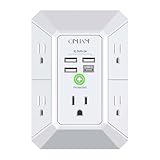
I remember a time, probably late at night, staring at some obscure gadget I’d bought online. It looked cool, promised the moon, and then… nothing. It needed a specific power adapter, and suddenly my brain was fried trying to figure out the difference between AC and DC, and if my wall socket would even play nice. It’s a common enough situation, right? You just want to plug something in, and suddenly you’re wondering: are all power outlets AC?
The short answer, for most of us in our homes and offices, is a resounding yes. But like most things in life, the devil is in the details, and understanding the ‘why’ can save you a lot of headaches – and maybe a fried piece of electronics.
Why Your Home Wires Buzz with Ac
So, let’s get down to brass tacks. When you look at that standard outlet on your wall, the kind you plug your phone charger, your toaster, or that suspiciously cheap eBay find into, you’re looking at an AC (Alternating Current) source. And yes, in most residential and commercial buildings worldwide, virtually all of them are. But what the heck does ‘alternating’ even mean? It’s not as complicated as it sounds, but it’s the fundamental reason why our grids are built this way.
Think of electricity like water flowing through a pipe. With Direct Current (DC), the water flows in one direction, steadily and consistently. Your car battery uses DC. It’s like a one-way street.
Alternating Current, on the other hand, is more like a tide. The water (or the electrical charge) flows one way, then reverses and flows the other way, then reverses again, and so on. This happens incredibly fast – 60 times per second in North America (60 Hertz) and 50 times per second in much of Europe and other parts of the world (50 Hertz). This constant back-and-forth is what makes AC so special for long-distance power transmission.
It’s way easier and more efficient to ‘step up’ the voltage for long hauls using transformers (making it high voltage, low current, which loses less energy) and then ‘step it down’ again for safe use in our homes. Batteries? They’re DC.
Your laptop’s power brick? It takes AC from the wall and converts it to DC for the laptop’s internal components.
See where this is going?
I once bought a fancy desk lamp that came with a brick. It was my first introduction to the AC/DC dance.
I plugged it in, and the lamp flickered like a haunted house. Turns out, the brick was for a different region’s voltage AND it was designed to output DC. My lamp, being a simple incandescent, was expecting AC. A quick look at the label on the brick and the lamp, a frantic call to the manufacturer’s support line (which, by the way, was surprisingly helpful after I finally got through), and I realized I’d bought a product designed for a completely different electrical system.
It was a stupid mistake, but a good lesson. Always check the fine print on power adapters and the labels on your devices. Not all power sources are created equal, and while your wall outlets are almost always AC, what the device needs is a whole other ballgame. This fundamental difference is why you’ll see those chunky ‘wall warts’ or power bricks on so many of your gadgets – they’re doing the heavy lifting of converting that wall AC into usable DC.
The Dc Side of Things: Where Batteries Rule
While your wall outlets are almost universally AC, it’s important to understand that DC (Direct Current) is everywhere else. Think about anything battery-powered: your smartphone, your TV remote, your car, your laptop (once it’s running on battery power). These devices run on DC. The reason is simple: batteries inherently produce DC power. They have a positive and a negative terminal, and the charge flows consistently from one to the other. It’s a stable, unidirectional flow, perfect for delicate electronics that need a consistent power supply without the rapid fluctuations of AC. (See Also: Are American Outlets Ac Or Dc )
This is why you see those power adapters, the little bricks or plugs that come with your electronics. They are transformers and rectifiers. The primary job of a good power adapter is to take the high-voltage AC from your wall outlet and convert it into the lower-voltage DC that your device can actually use.
If it didn’t do this conversion, you’d basically be feeding AC directly into a device designed for DC, and that’s a recipe for instant electronic death. I learned this the hard way with an old portable CD player I tried to power with a universal adapter that was set to the wrong setting. Poof. Smelled like burnt plastic and regret.
The adapter converted the AC to DC, but my mistake was using a DC output that was too high a voltage for the CD player. It was a clear case of ‘DC is great, but you need the right DC.’
Understanding this distinction is key to preventing yourself from frying expensive gadgets. The common advice is to use the original charger, and there’s a good reason for that. Original chargers are designed to provide the specific voltage and current (both AC and DC, depending on the adapter’s output) that the device needs. If you’re tempted to use a generic adapter, always, always, always check the voltage (V) and amperage (A) or wattage (W) ratings. They need to match or be very close to what the device requires. A mismatch here, even with DC, can be just as damaging as plugging something directly into the wrong AC voltage.
| Feature | AC (Alternating Current) | DC (Direct Current) | Verdict |
|---|---|---|---|
| Direction of Flow | Reverses direction periodically | Flows in one direction only | AC is better for transmission, DC is stable for devices. |
| Primary Source in Homes | Wall Outlets | Batteries, Power Adapters (output) | Wall outlets are AC, but most devices need DC after conversion. |
| Transmission Efficiency | High (easily stepped up/down) | Low (high loss over long distances) | AC wins for power grids. |
| Common Uses | Household appliances, lighting, power grid | Electronics, vehicles, batteries | Both are vital, just in different places. |
Beyond the Wall: Why Ac Dominates the Grid
So, if DC is what most of our gadgets actually use, why is our entire power grid built around AC? It all comes down to efficiency, especially over long distances. Imagine trying to send electricity from a massive power plant hundreds of miles away to your house using DC. You’d lose a massive amount of power due to resistance in the wires. It’d be like trying to push water through a very, very long and thin pipe – a lot of the pressure (energy) gets lost along the way.
AC, however, is a hero when it comes to transmission. The magic ingredient is the transformer. With AC, you can easily change the voltage using transformers. To send power across the country, utilities ‘step up’ the voltage from the power plant to incredibly high levels (like hundreds of thousands of volts). High voltage means low current for the same amount of power (Power = Voltage x Current). And lower current means less energy lost to resistance in the transmission lines. This is why those massive pylons you see crisscrossing the countryside are carrying power at such extreme voltages. It’s the most economical way to get electricity where it needs to go.
Then, as the power gets closer to towns and cities, substations use more transformers to ‘step down’ the voltage in stages. It gets lower and lower until it reaches your neighborhood transformer, which steps it down again to the standard 120V or 240V that comes out of your wall outlet. This whole process of stepping up and stepping down voltage is incredibly simple and efficient with AC, thanks to electromagnetic induction.
With DC, changing voltage requires much more complex and less efficient electronic circuits, making it impractical for a large-scale grid. This is the fundamental reason why, when you’re asking if all power outlets are AC, the answer for your wall socket is almost always a definitive yes. It’s the backbone of our modern electrical infrastructure.
The Exceptions and the Niche Cases
Now, before you go around telling everyone that all power outlets are AC, let’s talk about the exceptions, because there are a few, though they’re not what you’ll find in your average living room. The most common place you’ll encounter DC outlets is in specific industrial settings, laboratories, or in very specialized equipment that requires a direct DC supply without the need for an external converter. Think about some scientific instruments or older public transit systems that might have had dedicated DC power lines. These are rare, though. For the vast majority of everyday use, when you see a wall outlet, it’s AC.
Another place where you might see DC power being delivered directly is through USB ports. Yes, your trusty USB port on a power bank, a computer, or a wall adapter is providing DC power. But is it technically a ‘power outlet’ in the same sense as your wall socket? Not really. It’s a standardized interface designed for low-voltage DC power and data transfer. You don’t typically plug a high-power appliance into a USB port (though that’s changing with USB-C PD – Power Delivery). The wall adapter that the USB cable plugs into is still connected to an AC outlet, and it’s doing the AC-to-DC conversion.
I once had a customer who insisted his garage workshop had DC outlets because he was running some old, specific machinery. Turns out, he had a beefy transformer and rectifier setup that he’d installed himself, converting his main AC supply into a dedicated DC circuit for his vintage equipment. It wasn’t a standard outlet you’d find at the hardware store; it was a custom installation. So, while you won’t find DC outlets in your typical home, they do exist in specific, often custom-built, scenarios. It’s a good reminder that while AC is the standard for grid distribution, the electrical world is a bit more nuanced than a simple yes or no. (See Also: Are All Power Outlets Ac )
When Devices Get Confused: Ac vs. Dc Mishaps
This is where things can get hairy, and it’s the reason I always stress checking labels. Devices are designed for either AC or DC power. Trying to feed them the wrong type is a surefire way to break them. For example, most simple electronic devices, like your smartphone or laptop, need DC. They have internal circuitry designed to handle that steady, unidirectional flow. If you were to somehow feed them AC directly (without the proper adapter), you’d likely fry their sensitive components because the alternating nature of AC would be incompatible with their internal workings.
Conversely, some simpler devices, like a basic incandescent light bulb or a heating element in a toaster, are designed to work with AC. They don’t have sensitive electronics.
The AC current flowing through them generates heat. Could you power these with DC? Yes, you absolutely could, as long as the voltage is correct. The filament in a light bulb will glow, and the heating element will get hot, regardless of whether the current is alternating or direct.
The key is matching the voltage. A 120V AC bulb will work fine on a 120V DC source, but it won’t work on a 240V DC source.
The real problem arises when you have devices with complex internal electronics. These are almost universally designed for DC.
Many older or simpler appliances might be more forgiving, but relying on that is a gamble.
My personal favorite disaster story involves a friend who, bless his heart, decided he could power his entire gaming PC directly from a car battery for a “portable setup.” He bypassed the PC’s power supply unit (PSU), which is designed to take AC from the wall and convert it to the various DC voltages the PC components need.
He thought he could just wire the battery directly to the motherboard. Big mistake.
The motherboard, the graphics card, the drives – all expecting stable DC voltages. What he gave them was raw, fluctuating DC from a car battery.
The result? A lot of sparks, smoke, and a very expensive pile of now-useless electronics.
It was a brutal, literal illustration of why you can’t just assume any power source will do. The adapter brick is your friend, and it’s there for a reason. Don’t bypass it. (See Also: Are Arc Trip Outlets Required In Hillsborough County )
People Also Ask:
Can I Plug a Dc Device Into an Ac Outlet?
Generally, no, you cannot plug a DC-only device directly into a standard AC wall outlet. Most DC devices (like smartphones, laptops running on battery, etc.) require a specific, stable DC voltage. Feeding them AC directly, even if it’s the correct voltage, will likely damage their sensitive internal components due to the alternating nature of the current. You need a power adapter to convert the AC from the outlet into the DC that the device needs.
What Happens If I Plug an Ac Device Into a Dc Outlet?
If you plug a device designed for AC into a DC outlet, it will likely work fine as long as the voltage is correct. Many simple AC devices, like basic lights or heating elements, don’t have sensitive electronics and will function on DC. However, complex AC devices with electronics may have issues or not work at all if the DC source isn’t providing the exact waveform or voltage stability they expect. It’s less likely to cause immediate damage than the reverse, but it’s not ideal.
Are All USB Ports Ac or Dc?
All USB ports provide DC (Direct Current) power. When you plug a USB cable into a USB port on a computer, a wall adapter, or a power bank, you are receiving DC power. The wall adapter itself is plugged into an AC outlet and performs the AC to DC conversion, but the output from the USB port is always DC.
Why Do Some Power Cords Have a Brick in the Middle?
The ‘brick’ in the middle of some power cords is a power adapter, often called a transformer or a power supply unit (PSU). Its primary job is to take the AC power from your wall outlet and convert it into the lower-voltage DC power that your electronic device requires to operate safely and efficiently. It also often provides surge protection and voltage regulation.
A Few Practical Tips for Your Power Needs
Navigating the world of AC and DC power might seem daunting, but it boils down to a few common-sense rules that will save you a lot of grief and money. First off, for your home outlets, the answer to ‘are all power outlets AC?’ is an overwhelming yes. Treat them as AC sources. Never try to plug a device that explicitly states it needs DC directly into a wall outlet. Always use the adapter that came with your device, or if you need a replacement, make sure it’s designed to convert AC to the specific DC voltage and amperage your device requires. Look at the label on the original adapter for these specs – they’re usually printed in small text.
Secondly, be mindful of voltage differences when traveling or buying electronics from different regions. A device designed for 120V AC in North America might not survive a plug into a 240V AC outlet in Europe without a voltage converter, not just a plug adapter. Most modern phone chargers and laptop power bricks are ‘dual voltage’ (meaning they can handle both 100-240V ranges) and automatically adjust, but it’s still wise to check the label. For anything else, a separate voltage converter might be necessary. I learned this the hard way when a hairdryer I brought to the UK from the US nearly melted itself into a puddle because I only used a plug adapter, not a voltage converter.
Finally, if you’re dealing with specialized equipment or DIY projects, always err on the side of caution. Understand the power requirements of your components. If a circuit board specifies a certain DC voltage, make sure that’s what it receives. Don’t guess. A few dollars spent on the correct adapter or a basic multimeter to check voltages can save you hundreds or even thousands of dollars in damaged equipment. It’s about understanding the flow, respecting the specifications, and not making assumptions. Your electronics will thank you.
Final Verdict
So, to recap, while your standard wall outlets are almost universally AC, the journey of electricity doesn’t stop there. Most of your beloved gadgets are actually running on DC power, relying on those handy adapters to bridge the gap. It’s a clever system that allows for efficient long-distance transmission via AC while protecting our sensitive electronics with stable DC.
The next time you’re plugging something in, take a moment to appreciate the engineering involved. It’s a reminder that while the question ‘are all power outlets ac?’ might seem simple, the electrical world is a fascinating interplay of different current types, all working together to power our lives.
Always double-check those labels, especially when traveling or buying used equipment. A little vigilance can prevent a lot of electronic heartache.