I remember the first time I got locked out of my house. Keys were in my other bag, which was… you guessed it, inside the house. Hours were wasted, money spent on a locksmith, and a healthy dose of panic. That’s what pushed me to look into electronic door locks in the first place. I wanted to know: are electronic door locks safer than the old-school kind, or am I just trading one set of annoyances for another, potentially bigger, set?
Let’s cut to the chase: the answer isn’t a simple yes or no. It depends on what you mean by ‘safer’ and how you use the damn thing.
My Dumb Mistake with a Smart Lock (and What I Learned)
My first foray into the world of smart locks wasn’t exactly a smooth ride. I bought one of those fancier models, the kind that promises app control, temporary guest codes, and all the bells and whistles. The setup was a bit fiddly, but I managed. For a few weeks, it was glorious. I could let the dog walker in remotely, grant my sister access when she was watering my plants, and I never had to fumble for keys in the dark again. It felt like living in the future.
Then came the surprise. I was heading out for groceries, juggling bags, and realized I’d left my phone inside. No problem, right? I’d just punch in the code. Except… I’d forgotten the code. I’d set it to something I thought was clever, but my brain had clearly filed it under ‘temporary’ and promptly deleted it. Cue the frantic searching for my phone, the growing dread as my ice cream started to melt, and the eventual call to my neighbor to let me back in. It was embarrassing, and frankly, a bit ridiculous. I had a $200 piece of tech designed to make my life easier, and it made me feel like an idiot.
This whole experience hammered home a simple truth: technology is only as good as your ability to use it without making yourself look like a fool. And ‘safer’ isn’t just about resisting a brute-force attack; it’s about not accidentally locking yourself out or giving away your access because you wrote a password on a sticky note and stuck it to the doorframe. That incident cost me about $150 in melted groceries and a bruised ego, but it was a cheap lesson in the reality of living with smart home tech.
How These Things Actually Work (and Don’t)
So, how do these electronic doodads actually keep your door secured, or at least supposedly?
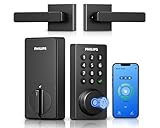
At its core, an electronic door lock replaces the mechanical cylinder and tumblers of a traditional deadbolt with electronic components. Instead of a key physically aligning pins, you’re using an electronic signal to tell the lock to retract or extend the bolt. This signal can come from a keypad, a fingerprint scanner, a smartphone app communicating via Bluetooth or Wi-Fi, or even a remote fob.
The main components usually include:
- A motorized deadbolt mechanism
- A keypad or biometric scanner for entry
- A control board or microchip
- A power source (batteries, usually)
- Communication modules (Bluetooth, Wi-Fi, Z-Wave, Zigbee)
When you enter your code, scan your finger, or tap your phone, the lock’s circuitry verifies your credentials. If they match a pre-programmed authorized entry, the motor engages, moving the bolt. Simple enough, right? Well, not always. The ‘brains’ of the operation are where things get interesting, and sometimes, problematic.
The ‘smart’ part comes from the connectivity. Wi-Fi enabled locks can be controlled from anywhere with an internet connection. This is handy for letting someone in when you’re at work, but it also means they are potentially exposed to online threats. Bluetooth locks are generally considered a bit more secure because you need to be within a certain range to communicate with them, limiting remote hacking opportunities. However, they still rely on the security of your phone and the app itself. (See Also: Are Sesame Seeds Kosher For Passoveris Pollock Kosher )
The common advice is that these offer enhanced security because you can remove physical keys altogether, which can be copied. But they introduce new attack vectors. Power outages are a concern; though most have battery backups, a dead battery can leave you stranded. And while manufacturers tout encryption for their wireless communications, I’ve seen enough poorly implemented security in other connected devices to be wary. The weakest link is often the user, not the technology itself. My own lockout debacle is proof of that.
What to Actually Look for (and What to Ignore)
Shopping for an electronic door lock can feel like navigating a minefield of marketing jargon. Everyone claims to be the ‘most secure’ or ‘easiest to use’. Here’s what I’ve learned to focus on, and what I usually tune out:
What matters is build quality and reliable connectivity. A lock that feels flimsy or has a cheap keypad is going to be a pain. Look for solid metal construction. For entry methods, a good, responsive keypad is a must. Fingerprint scanners are great when they work, but I’ve had too many that are finicky, especially with slightly damp or dry fingers. Apps are convenient, but only if the app itself is well-designed and doesn’t drain your phone battery like a sieve. I’ve spent more than I care to admit on three different smart locks, easily $180 across those versions, before finding one that felt truly solid and dependable.
Here’s a table summarizing my priorities:
| Feature | My Verdict | Why |
|---|---|---|
| Build Material | Excellent | Needs to feel solid and durable. Avoid plastic casings. |
| Keypad Responsiveness | Excellent | A laggy keypad is frustrating and can lead to errors. |
| Battery Life | Good | Frequent battery changes are a hassle. Look for warnings well in advance. |
| App Stability | Good | A crashing app renders remote features useless. |
| Guest Code Management | Good | Key for temporary access, but needs to be easy to set/remove. |
| Wi-Fi vs. Bluetooth | Preference | Bluetooth is generally safer for local use. Wi-Fi offers remote access but more exposure. |
| Brand Reputation | Moderate | Some brands are better than others, but even big names have duds. |
| Price | Be Skeptical | Expensive doesn’t always mean better. Often paying for brand name. |
What I generally ignore? Overly aggressive marketing claims. ‘Unbreakable’ and ‘Hacker-proof’ are red flags. Focus on practical, everyday usability and how well it integrates with your existing routine. Also, ignore claims about battery life that seem too good to be true; real-world usage is almost always less than advertised, especially if you use features like remote access frequently. The key is finding a balance between convenience and genuine security, without overpaying for features you’ll never use.
Are Electronic Door Locks Safer? The Real-World Test
Let’s get down to brass tacks. Are electronic door locks safer than a traditional deadbolt? The answer is, it depends on your threat model and how you use it. For the average homeowner, a well-made electronic lock can be just as, if not more, secure than a basic mechanical lock, provided you don’t make boneheaded mistakes like I did.
Traditional locks can be picked or forced open. A good quality mechanical deadbolt can be quite resistant, but a determined burglar with the right tools might get through. Electronic locks, on the other hand, introduce different challenges for attackers. They can’t be picked in the traditional sense. However, they can be vulnerable to other methods:
- Brute-force attacks on keypads: If the keypad is exposed and the lock doesn’t have tamper detection (like locking after too many wrong codes), someone could try every combination. This is time-consuming but possible.
- Exploiting software vulnerabilities: This is the big one for Wi-Fi connected locks. If the manufacturer’s servers or the lock’s firmware have security holes, they could potentially be exploited remotely. This is less common for the average user to encounter but is a real risk.
- Physical tampering: While not specific to electronic locks, someone could try to pry the lock off or bypass the motor mechanism if they can access it.
- Bluetooth hacking: For Bluetooth-enabled locks, if the encryption is weak or if someone can get close enough to jam the signal or intercept data, it could be a point of entry.
On the flip side, electronic locks offer security features that mechanical locks simply can’t match. The ability to grant temporary access codes is a huge plus. Need to let a repair person in for a specific hour? Create a code that expires. Want to give your kids a code but not your neighbor? Easy. This granular control is a significant security advantage over handing out a physical key that can be copied indefinitely.
I’ve found that the biggest differentiator isn’t the lock itself, but the ecosystem it’s part of. A lock that integrates with a reputable smart home security system, has frequent firmware updates, and uses strong encryption protocols is going to be inherently more secure than a standalone, off-brand model. The common advice to keep firmware updated is not just corporate fluff; it’s genuinely important for patching security holes. (See Also: Are Sliding Door Locks Common )
Common Mistakes and How to Avoid Them
My own lockout incident is Exhibit A, but there are plenty of other ways people shoot themselves in the foot with electronic door locks. Let’s talk about avoiding them.
Mistake 1: Weak or Obvious Codes. Seriously, ‘1234’ or your birthday is not a security feature. People also write these down and stick them near the door. Don’t do it. Use a random, multi-digit code. Most locks allow for a good number of digits, so use them. And if you’re using a fingerprint scanner, make sure it’s reliable, and have a strong code as a backup. The common advice of using a complex password for your online accounts applies here too: make it hard to guess.
Mistake 2: Neglecting Battery Maintenance. This is a big one. Most smart locks will give you a warning when the battery is low, but some don’t, or the warning isn’t prominent enough. If your battery dies and you’re locked out, it’s a real pain. Keep spare batteries handy, or know where your nearest battery stash is. Some high-end locks even have a way to get a power boost from a 9V battery from the outside if the main batteries die, which is a smart feature to look for.
Mistake 3: Over-reliance on Wi-Fi Without Understanding the Risks. While Wi-Fi connectivity is convenient, it’s also the most direct route for external attacks. If you don’t need remote access constantly, consider a Bluetooth-only lock or one that uses Z-Wave/Zigbee, which communicate with a hub rather than directly to the internet. If you do go with Wi-Fi, make sure your home network itself is secure with a strong password and updated router firmware. Don’t let your smart lock be the weakest link in your home network.
Mistake 4: Poor Guest Code Management. Granting permanent access to everyone who might ever need it is a bad idea. Only give out codes for the duration they are needed. For example, if a cleaner comes weekly, set a code that only works during their usual hours on specific days. Once their service ends, revoke the code immediately. This is a important difference compared to physical keys, which you often forget to retrieve.
Mistake 5: Ignoring Firmware Updates. I’ve seen this too many times in other smart devices. Manufacturers release updates to patch security vulnerabilities. If you disable automatic updates or simply ignore them, you’re leaving yourself exposed to known exploits. It takes two minutes to update the app or firmware; it’s worth the minimal effort.
The Contrarian View: Why I’m Wary of the ‘smart’ Upgrade
Everyone seems to be rushing to get their homes ‘smart.’ Smart lights, smart thermostats, smart speakers, and yes, smart locks. The narrative is that all this connectivity makes life easier and more secure. I disagree. While I admit there are conveniences, I’m deeply skeptical about whether the ‘smart’ upgrade truly makes your front door safer in the long run, especially for the average person who isn’t a tech expert.
My core issue is complexity. Mechanical locks are simple. They have a few moving parts, they’re powered by your hand, and their failure points are generally physical wear and tear, which are predictable and often visible. An electronic lock has circuit boards, software, wireless radios, motors, and batteries. Each of these components is a potential point of failure, a potential security vulnerability, or a potential source of frustration. The complexity doesn’t just add more things that can go wrong; it adds more things that are harder to understand and fix when they do.
Take the software. If a company goes out of business, or stops supporting a particular model, what happens to your lock’s software? Does it become a brick? Does it revert to an insecure state? I’ve seen this happen with other IoT devices, where security updates just stop, leaving users exposed. With a mechanical lock, it just keeps working. (See Also: Are The Rams Locked Into The 6th Seed )
Furthermore, the convenience factor often leads to complacency. People get lazy with their codes, forget to update firmware, or rely too heavily on remote access without securing their home Wi-Fi adequately. The very features designed to make life easier can, in practice, make security more precarious if not managed diligently.
I’ve spent more time troubleshooting battery issues, app connectivity glitches, and trying to remember temporary codes than I ever did with my old deadbolt. And while my old deadbolt could be picked, it couldn’t be remotely ‘hacked’ or rendered useless by a server outage. The potential for a silent, unfixable failure with a smart lock is what makes me hesitant to wholeheartedly recommend them over a good old-fashioned, well-made mechanical lock for maximum peace of mind.
Frequently Asked Questions About Electronic Door Locks
Can Electronic Door Locks Be Hacked?
Yes, electronic door locks can be hacked. The primary risks involve exploiting software vulnerabilities in the lock’s firmware or the manufacturer’s cloud service, especially for Wi-Fi connected models. Bluetooth-enabled locks can also be susceptible to jamming or man-in-the-middle attacks if their encryption is weak or not properly implemented. Physical tampering is also a possibility, although less common for remote attackers.
What Happens If the Power Goes Out with an Electronic Door Lock?
Most electronic door locks are battery-powered, so a power outage in your home typically won’t affect their operation. However, if the batteries die, you will likely be unable to operate the lock electronically. Many models have a backup power option, such as a 9V battery terminal on the exterior, to allow for manual operation in such cases. It’s important to monitor battery levels and replace them proactively.
Are Keyless Entry Locks Safe?
Keyless entry locks can be safe, but their security depends heavily on the specific model, its features, and how it’s used. Basic keypad entry locks are generally safer than older electronic models with known vulnerabilities. However, they are still susceptible to brute-force attacks on the keypad if not properly secured with features like auto-locking after multiple failed attempts. Advanced features like biometric scanners and solid encryption can enhance safety, but no electronic system is entirely immune to hacking.
How Often Should I Change the Batteries in a Smart Lock?
The frequency of battery changes depends on the lock model, usage patterns, and battery quality. Manufacturers typically provide an estimated battery life, often ranging from several months to over a year. Many smart locks will send alerts to your smartphone or app when the battery level is low, giving you ample warning. It’s a good practice to check the battery status regularly via the app and replace them before they become critically low to avoid being locked out.
Final Verdict
So, are electronic door locks safer? My experience tells me they can be, offering convenience and control mechanical locks can’t touch. But they aren’t a magic bullet. They introduce new ways to mess things up, from forgetting codes to relying on patchy Wi-Fi. The ‘smart’ aspect means you’re now dealing with software and connectivity, which brings its own set of risks and requires a different kind of vigilance.
If you’re considering making the switch, don’t just buy the cheapest or the flashiest. Do your homework. Look for solid build quality, reliable performance, and a manufacturer that seems to take security seriously with regular updates. And for goodness sake, don’t write your code on a sticky note. Seriously.
Ultimately, the safety of your home still hinges on more than just the lock on your door. It’s about your overall security habits. Before you upgrade, ask yourself if you’re ready for the responsibility that comes with managing a connected device on your most important entry point.