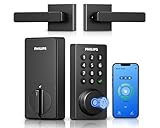
I remember staring at my shiny new smart lock, a fingerprint reader proudly displayed on the front. My buddy, who’s usually pretty tech-savvy, had just spent a fortune on a similar setup and swore it was the future. Me? I was skeptical. Years of dealing with flaky gadgets had taught me to be. So, are fingerprint door locks safe? That’s the million-dollar question we’re going to tackle, no corporate fluff, just the straight dope from someone who’s lived with this stuff.
I’ve fumbled with more keypads than I care to admit, and some smart home tech just plain underdelivers. When it comes to something as fundamental as securing your home, you want real answers, not marketing speak. Let’s get down to brass tacks about whether these fingerprint locks are actually worth the hype and, more importantly, if they’ll keep your stuff secure.
How Do These Things Actually Work?
So, you’ve got this slick little panel on your door, and you just tap your finger. Magic?
Not quite. Underneath that smooth surface is a sensor, and most modern fingerprint door locks use capacitive sensors.
Think of it like a bunch of tiny capacitors, each one measuring the electrical charge of your skin. When you place your finger on it, the ridges and valleys of your fingerprint disrupt these electrical fields differently. The sensor reads these patterns, converts them into a digital map, and compares it to the fingerprints it has stored.
If there’s a match, voilà – the lock opens. It’s pretty neat, and usually, it’s way faster than digging for a key, especially when your hands are full of groceries.
The thing I learned early on is that not all sensors are created equal. Some cheap ones can be finicky. I had one that would only read my finger if it was perfectly dry and clean. Forget about it if you’d just been sweating or your hands were a bit damp. It was frustrating, to say the least. The better sensors, the ones you pay a bit more for, use more sophisticated technology, sometimes even a combination of optical and capacitive scanning, to get a more accurate reading. They’re less bothered by a little moisture or a smudged print. It’s like the difference between a blurry old photo and a high-definition one.
Beyond the fingerprint itself, there’s the actual locking mechanism. This is usually an electronic deadbolt that’s controlled by a motor. When the fingerprint scanner gives the green light, it tells that motor to retract or extend the bolt. Most of these also have a backup keyway, which is a big deal for peace of mind. You might also have a keypad for a PIN code, and many connect to Wi-Fi or Bluetooth, allowing you to control them with your smartphone. This is where things get ‘smart,’ and it adds another layer of convenience, or sometimes, another layer of complexity, depending on how you look at it.
The security of the fingerprint data itself is also a concern for many. Manufacturers usually encrypt this data heavily. The fingerprint map isn’t a photo of your finger; it’s a mathematical representation. This is important because it means someone can’t just take that data and ‘recreate’ your fingerprint to open another lock. Still, as with any digital data, the risk of a breach is never zero, though for a home lock, the likelihood of that specific data being targeted is probably pretty low compared to, say, credit card information. The real vulnerabilities tend to be elsewhere, as we’ll get into.
What to Look for: Beyond Just the Fingerprint
Okay, so you’re thinking about getting one of these. Don’t just grab the first shiny thing you see. I’ve wasted money on products that looked good but performed like garbage. When it comes to fingerprint door locks, you need to look at a few key things beyond just the fancy finger-scanning tech. First off, build quality. This thing is going on your exterior door; it needs to withstand the elements and, frankly, a bit of a hard knock if someone’s determined. Look for solid metal construction, not flimsy plastic. I’ve seen some with a plastic front that just felt cheap and I wouldn’t trust them out in the rain for more than a season.
Next, consider the sensor type and its reputation. As I mentioned, capacitive sensors are standard, but the quality varies. Some are faster and more reliable than others.
Read reviews specifically about the fingerprint recognition speed and accuracy, especially in different conditions. Does it work well if your finger is a little sweaty?
How many tries does it usually take? I once had a lock where you had to hold your finger just so for a solid three seconds, and it still wouldn’t read half the time. It was a joke. (See Also: Are Sesame Seeds Kosher For Passoveris Pollock Kosher )
Then there’s the battery life. These things chew through batteries, especially the ones with Wi-Fi. Look for locks that have a decent battery life rating and, importantly, a clear low-battery warning system. A dead battery is just as bad as no lock at all.
I like locks that have a visible battery indicator, not just a beep you might miss.
The backup entry methods are important. I’m talking a physical key override and, ideally, a keypad for a PIN code.
Why? Because batteries die, sensors can get damaged, or you might have guests who don’t have their fingerprints programmed. Relying solely on a fingerprint is asking for trouble down the line.
Some locks also have a hidden USB port for emergency power if the batteries die completely, which is a smart addition. The app and connectivity are also a factor. If it connects to your phone, is the app intuitive and reliable? Can you grant temporary access to people?
Can you see who’s come and gone? These features can be super handy, but if the app is buggy or the connection is spotty, they become more of a headache than a benefit.
I’d rather have a slightly less ‘smart’ lock that works flawlessly than a super-smart one that’s always glitching.
Finally, think about the installation process. Most of these are designed to be DIY-friendly, replacing a standard deadbolt. But some are more complex than others. If you’re not handy, factor in the cost of professional installation. Also, check the warranty. A good warranty shows the manufacturer has some confidence in their product. I tend to trust brands that offer at least a one or two-year warranty on the electronics and mechanical parts.
| Feature | My Verdict | Why |
|---|---|---|
| Build Material | Solid Metal | Durability and weather resistance are key for an exterior lock. |
| Sensor Type | High-Quality Capacitive/Optical | Reliability and speed, especially in varied conditions. |
| Backup Entry | Physical Key + PIN Code | Key for when the fingerprint fails or isn’t an option. |
| App/Connectivity | Stable and Intuitive | Convenience is the point, but only if it works consistently. |
| Battery Life | Long-lasting with clear warnings | Avoid being locked out or stuck. |
| Installation | Simple DIY or reliable professional option | Minimizes hassle and potential installation errors. |
Common Mistakes and How to Avoid Them
Alright, let’s talk about the screw-ups I’ve seen and, honestly, made myself. The biggest mistake people make with fingerprint door locks is thinking they are impenetrable fortresses. They’re not. While the fingerprint tech itself is pretty good at preventing casual guesswork, the real vulnerabilities lie elsewhere. One common mistake is not properly setting up the backup PIN code. People will just use ‘1234’ or their birthday because it’s easy to remember. Big mistake. If someone knows your birthday, and they know you have a keypad lock, that’s an easy target. Always use a random, complex PIN, and don’t share it. I’ve seen people program their dog’s birthday, which is marginally better, but still not ideal.
Another common pitfall is neglecting the physical key. Many people toss their old keys the moment the smart lock is installed, thinking they’ll never need them. Then, the battery dies, or the electronics go haywire, and they’re locked out. Always keep the physical key somewhere safe, accessible, and not inside the house. I learned this the hard way when a power surge fried my smart lock’s circuit board. Good thing I had a spare key hidden in the garden shed. Also, don’t assume the included physical keys are top-notch. Some manufacturers provide rather basic keys that can be easily picked. If you’re really concerned, consider getting a higher-security key blank cut at a locksmith.
Over-reliance on the fingerprint scanner is another trap. If your fingers are wet, dirty, or you’ve just scraped them, the scanner might not read them. It’s happened to me.
I was coming back from a hike, hands covered in dirt, and I stood there for a good minute trying to get the lock to open, looking like an idiot while my neighbors watched. Using the PIN code or the app would have been faster. It’s about having options. (See Also: Are Sliding Door Locks Common )
I’ve also seen people install these locks on doors that are already weak or have loose frames. A determined intruder isn’t just going to try to bypass the lock; they might try to kick the door in or pry it open.
The lock is only as strong as the door and the frame it’s attached to. Make sure your entire door assembly is solid.
Finally, don’t skip the firmware updates. These updates often contain security patches that fix vulnerabilities discovered in the software. If you have a Wi-Fi connected lock and you’re ignoring updates, you’re leaving yourself open to potential remote attacks. It takes two minutes to update and can save you a lot of headaches. It’s like patching a hole in your fence; you wouldn’t leave it open, would you?
Can Fingerprint Door Locks Be Hacked?
Yes, like any electronic device, fingerprint door locks can be vulnerable to hacking, but it’s not as simple as some might think. Physical tampering can sometimes bypass simpler models. More sophisticated attacks might target the device’s wireless communication (like Bluetooth or Wi-Fi) if it’s not properly secured, or exploit software vulnerabilities through firmware updates. However, for most reputable brands, hacking a fingerprint lock remotely is difficult and often requires specialized knowledge and proximity. The biggest risks are usually related to weak PIN codes, lost physical keys, or physical force applied to the door itself, rather than a direct digital hack of the fingerprint sensor.
Real-World Use: My Experience Over Time
I’ve had various fingerprint locks on my doors for the past five years, and honestly, they’ve been a mixed bag, but mostly good. My first one was a budget model, and it was…temperamental. It was slow to read my prints, especially in cold weather, and the battery life was dismal. I swear I was changing AAs every other month.
It was a real pain because if it didn’t read, I had to pull out my phone, open the app, and then tell it to open, which felt like a step backward from just using a key. That lock eventually died after about a year and a half, probably from water ingress, despite being advertised as weather-resistant.
Lesson learned: sometimes you really do get what you pay for.
My current lock is a mid-range model that’s been going strong for about three years now. The fingerprint scanner is much faster and more reliable. I’ve programmed prints for my partner and a couple of trusted friends, and it works for them too, usually on the first try. The app is decent, and I love being able to grant temporary access to a dog walker or a repair person when I’m not home. Getting a notification on my phone when the door is locked or opened is also surprisingly useful. It gives me that extra bit of confirmation that I remembered to lock up when I’m already miles down the road.
However, it’s not perfect. About six months ago, the battery indicator started acting up, showing it was low when it wasn’t. I ended up replacing the batteries preemptively, which was annoying. Also, there was a firmware update a few months back that briefly made the fingerprint scanner less responsive. I almost resorted to using the key. Thankfully, they pushed out another update that fixed it. It highlights the importance of keeping that firmware current, as I mentioned earlier. The physical key, which I still keep handy, has never been needed, but knowing it’s there is a mental comfort blanket I won’t give up.
One thing that surprised me is how often I use the PIN code, even though I have the fingerprint. Sometimes my hands are full, or I just don’t want to bother with the fingerprint. The PIN is quick and easy. But the real win? Not having to worry about losing a key. I used to be the guy who’d leave keys in my pocket, then realize it at the grocery store. Now, if I’m going for a run or a quick trip to the corner store, I don’t need to carry anything. It’s a level of convenience that’s hard to go back from, provided the lock is reliable.
Are Fingerprint Door Locks Safe? The Verdict
So, are fingerprint door locks safe? My honest answer is: they can be, but it depends heavily on the quality of the lock, how you install and use it, and your expectations. They are not inherently unsafe, but they do introduce new potential vulnerabilities that traditional locks don’t have, primarily around electronics and software. If you buy a reputable brand, install it correctly on a solid door, use a strong PIN code, keep the firmware updated, and always maintain access via a physical key, then yes, you can feel reasonably secure. The convenience factor is undeniable, especially for everyday use.
However, if you’re buying the cheapest model you can find, planning to ignore software updates, or thinking you’ll never need that physical key, then you’re setting yourself up for potential trouble. The biggest threat isn’t usually a sophisticated hacker trying to steal your fingerprint data digitally; it’s more likely to be battery failure leading to lockout, a weak PIN being guessed, or a physical attack on the door itself. The fingerprint sensor is just one part of the equation. The entire system – the door, the frame, the electronic components, the software, and your usage habits – contributes to its overall security. Many people just don’t think about all these interconnected parts. (See Also: Are The Rams Locked Into The 6th Seed )
The common advice to just get a good brand and you’re set is only half the story. You need to be an active participant in maintaining the security. Think of it like owning a smartphone; it’s a powerful tool, but you need to run updates, use strong passwords, and be aware of phishing scams. A smart lock is no different. The technology has advanced to a point where many fingerprint locks offer a very good balance of security and convenience for the average homeowner. Just don’t treat them as completely foolproof or maintenance-free. They require a little more awareness than a simple deadbolt, but the benefits can be substantial.
What Makes a Fingerprint Lock Secure?
A secure fingerprint lock combines several elements. Firstly, it uses a reliable and accurate fingerprint sensor (often capacitive or optical) that minimizes false positives and negatives. Secondly, it employs strong encryption for storing and processing fingerprint data, making sure it’s not easily readable or reproducible. Solid physical construction prevents easy tampering. Importantly, it offers secure backup entry methods like strong, random PIN codes and a high-security physical key override. Regular firmware updates that patch security vulnerabilities are also key. Finally, secure wireless communication protocols (if applicable) prevent remote hacking attempts. The overall security is a blend of hardware integrity, sophisticated software, and user practices.
How Do I Choose a Fingerprint Door Lock?
To choose a fingerprint door lock, start by researching reputable brands known for reliability and security. Consider the type of sensor and read reviews focusing on its speed and accuracy in various conditions. Make sure it has secure backup entry options like a physical key and a keypad for PIN codes. Check battery life ratings and how low-battery warnings are communicated. Evaluate the accompanying smartphone app for ease of use and functionality, such as remote access and activity logs. Look for solid build materials that can withstand the elements and potential tampering. Finally, consider the ease of installation and the manufacturer’s warranty to make sure long-term support and peace of mind.
Practical Tips for Living with a Fingerprint Lock
Living with a fingerprint lock is mostly smooth sailing, but there are a few tricks I’ve picked up that make life easier and, more importantly, safer. First off, don’t just program your own finger and call it a day. Program prints for everyone who lives in the house. It sounds obvious, but some people forget or don’t bother.
Also, when you’re programming them, do it in a calm environment. Make sure your finger is clean and dry, and try to capture the print from a few different angles.
Some locks let you store multiple scans of the same finger, which can improve reliability if your prints change slightly due to temperature or moisture. I’ve found that scanning my thumb and index finger on each hand gives me a good backup if one gets dirty or injured.
When setting up your PIN code, make it random. Seriously. Don’t use your address, your kids’ birthdays, or any sequence of numbers that’s easy to guess. If the lock allows, use a longer PIN, like 6 or 8 digits. I also recommend using the keypad’s random number feature if it has one, where you have to press a couple of random digits before entering your actual code. This helps obscure your actual PIN from shoulder surfers. And never, ever share your PIN with anyone you wouldn’t trust with a key to your house. If you have to give someone temporary access, use the app’s temporary code feature if available, rather than revealing your main PIN.
Keep that physical key handy and accessible. I keep mine in a small, waterproof container hidden in a discreet spot outside my house. Not the fake rock that everyone knows about, but something a bit more thought-out. Alternatively, a trusted neighbor or family member could hold a spare. This is your lifeline if the electronics fail or the batteries die unexpectedly. And speaking of batteries, be proactive. Don’t wait for the low-battery warning. If you know your lock eats batteries, buy them in bulk and replace them every few months, especially before winter when cold can affect battery performance. A quick check of the battery level in the app (if it has one) weekly can save you a lockout.
Finally, maintain the sensor itself. Wipe it down with a soft, dry cloth occasionally. Fingerprints, dirt, and smudges can build up and affect its performance. If the lock is exposed to the elements, a little extra care goes a long way. Also, be aware of your surroundings. While direct digital hacking is rare for the average user, opportunistic thieves might try to exploit weaknesses. If you notice anyone loitering around your door or acting suspiciously, that’s a sign to be more vigilant. The technology is great, but it’s not a substitute for common sense and basic home security awareness. Treat it as an upgrade, not an infallible shield.
Conclusion
So, after all the testing, the fumbling, and the occasional frustration, where do we land on the question: are fingerprint door locks safe? My take is that they offer a level of convenience and security that, when implemented correctly, is more than adequate for most homes. They’ve evolved significantly, and the technology is now quite reliable. The key is that ‘when implemented correctly’ part. You can’t just slap one on and forget about it. You’ve got to be smart about setup, maintenance, and backup access.
Think of it like this: a high-security deadbolt is great, but if you leave your window wide open, your house isn’t secure. A fingerprint lock is the same. It’s a sophisticated piece of hardware that requires a bit of user intelligence to maximize its benefits and minimize its risks. If you’re willing to put in that little bit of extra effort – choosing a good brand, setting strong passwords, keeping updates current, and always having that key backup – then yes, you can absolutely make your home more secure and convenient with a fingerprint door lock.
The question really becomes less about whether they are safe, and more about whether you will make them safe. Are fingerprint door locks safe enough for you to rely on? For me, the answer is a qualified yes, provided I maintain them properly.