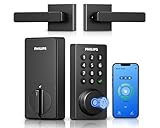
I remember the first time I saw a smart lock. It felt like something out of a spy movie, and I immediately thought, ‘This is the future!’ Fast forward a few years, and I’ve replaced three different brands because they were more hassle than they were worth. So, when people ask, ‘are Google door locks reliable?’, I tend to get a bit jaded. It’s not just about having a fancy gadget; it’s about whether it actually does the one job it’s supposed to do without making you rip your hair out.
My own journey with smart home tech has been a bumpy one, filled with overhyped promises and products that just… didn’t work as advertised. I’ve learned a lot the hard way, usually when I’m standing on my porch in the pouring rain, fumbling with a dead battery or a finicky app. Reliability is king, and frankly, most smart locks I’ve tested haven’t earned that title.
Let’s talk about Google’s take on this. Are they any different? I’ve spent more time than I care to admit testing these devices, and here’s the unvarnished truth about whether Google door locks are reliable.
Google Nest Doorbell (battery) & the Reliability Question
When we talk about Google and door locks, it’s important to clarify that Google doesn’t make a traditional deadbolt replacement that you install directly. Instead, their ecosystem typically centers around the Google Nest Doorbell (Battery), which is more of a smart camera and intercom system that can integrate with certain smart locks. This distinction is key because the reliability of your ‘Google door lock experience’ hinges on how well their doorbell camera communicates with a third-party smart lock, and how solid that lock itself is. I’ve had my Nest Doorbell (Battery) for about two years now, and while it’s a decent piece of hardware for what it is, expecting it to be the sole gatekeeper of my home is a bit much.
The core functionality of the Nest Doorbell is video streaming, motion detection, and two-way audio. It does these things pretty well, most of the time. The battery version is convenient because you don’t need to mess with wiring, but that also means you’re tethered to battery life.
I learned this the hard way during a week-long trip where the battery died unexpectedly, leaving me with no video feed and no way to see who was at the door. It wasn’t a security breach, thankfully, but it was a stark reminder that battery-powered devices inherently have a point of failure.
The charging cable is also a bit fiddly to get plugged in securely, and I’ve had to re-seat it a couple of times after heavy rain. This isn’t a direct lock issue, but it impacts the overall smart home security experience Google aims for.
The real ‘smart lock’ integration comes through partnerships. Google’s Nest ecosystem works with a variety of smart locks from brands like Yale, Schlage, and August. The reliability then becomes a two-headed coin: how reliable is the Nest Doorbell in its communication, and how reliable is the actual smart lock? My experience has shown that while the Nest Doorbell generally sends notifications promptly, the delay in the actual lock control can be frustrating. Imagine telling Google Assistant to lock the door, and it takes 5-10 seconds, or worse, requires you to repeat the command. That’s not exactly confidence-inspiring when you’re heading to bed or rushing out the door.
One common misconception is that Google makes a proprietary smart lock. They don’t. They help the control of compatible smart locks through their app and voice assistant. So, when asking if ‘are Google door locks reliable’, you’re really asking about the reliability of the integration and the underlying smart lock hardware.
I’ve found that the responsiveness can vary wildly depending on your Wi-Fi network strength and the specific smart lock manufacturer. It’s a complex chain, and any weak link can cause problems. For instance, I once had a situation where my August smart lock was working perfectly fine on its own app, but it was sluggish to respond to Google Assistant commands, leading to some awkward moments when guests arrived and I was trying to open the door remotely.
How the Google Ecosystem Controls Locks
The way Google integrates with smart locks is primarily through the Google Home app and Google Assistant. You link your compatible smart lock’s account (e.g., Yale Access, Schlage Home) to your Google account. Once linked, you can typically perform basic functions like locking and opening the door, and sometimes checking the lock’s status. For the Nest Doorbell, its role is more about being the eyes and ears. It detects motion or when someone rings the bell, and you can see and speak to them via the app. If you have a compatible smart lock linked, you can then use the app to lock or open the door for them, or for yourself when you arrive home.
This setup, while convenient in theory, is where many reliability issues can creep in. Your Wi-Fi network is the backbone of this entire operation. If your Wi-Fi is spotty, or if the signal strength is weak at your front door where the doorbell camera and potentially the smart lock’s hub are located, you’re going to have problems.
I’ve experienced dropped connections with my Nest Doorbell more times than I can count, especially during storms. When that happens, the live feed goes dark, and any commands sent through the app to a linked smart lock can either fail or take an eternity to process. It’s maddening when you’re relying on it to let a family member in and the app just shows a spinning wheel. (See Also: Are There Different Size Holes For Installing Door Locks )
Voice control via Google Assistant adds another layer. Saying “Hey Google, lock the front door” is supposed to be effortless. However, Google often requires a voice PIN for opening for security reasons, which can be a barrier if you’re trying to do it quickly or if your voice isn’t recognized perfectly (try saying it with a mouthful of coffee).
While this PIN requirement is a good security feature, it does highlight how ‘frictionless’ the experience isn’t always. Furthermore, the reliability of the voice command depends on your Assistant device understanding you clearly and your internet connection being stable.
I’ve had my Assistant misunderstand commands, leading to unintended actions or no action at all. Once, it thought I said “open the dog door” instead of “lock the front door,” which, thankfully, didn’t result in a canine escape but was a rather alarming misinterpretation.
The ‘smart’ aspect also relies heavily on software updates. Both the Nest Doorbell firmware and the smart lock’s firmware, as well as the Google Home app itself, need to be updated regularly. While updates often bring improvements, they can also introduce bugs. I’ve had periods where a Nest Doorbell update caused it to drain its battery much faster, or an app update broke the integration with my Schlage lock for a few days. This constant churn of software can make it hard to declare any smart home setup as ‘rock solid reliable’. It’s more like a living, breathing system that sometimes gets sick.
What to Look for in a Smart Lock for Google Integration
When you’re looking for a smart lock to integrate with the Google ecosystem, pay close attention to compatibility. Not all smart locks are created equal, and some integrate more smoothly than others. Here’s what I typically look for:
- Google Assistant & Google Home Compatibility: This is the obvious one. Check the product packaging or description to make sure it explicitly states compatibility with Google Assistant and the Google Home app.
- Connectivity Type: Many smart locks use Wi-Fi directly, Bluetooth, or a proprietary hub that connects to your router. Locks that connect via Wi-Fi or a dedicated hub tend to be more responsive to remote commands through the Google Home app than Bluetooth-only locks, which often require your phone to be within range of the lock.
- Battery Life and Alerts: For any battery-powered device, this is most important. Look for locks with decent battery life (ideally months, not weeks) and clear low-battery alerts that actually reach you before the lock dies. My Nest Doorbell (Battery) has a decent battery life, but I still wish it lasted longer.
- Physical Build Quality: Don’t forget it’s still a lock. It needs to be solid and tamper-resistant. Read reviews that specifically mention the physical feel and durability. Some smart locks feel plasticky and cheap, which makes me question their long-term security.
- App Ecosystem: Even though you’ll be using the Google Home app, the lock manufacturer’s own app is often where you manage advanced settings, firmware updates, and troubleshoot. A well-designed, stable app from the manufacturer is a good sign.
The key here is understanding that the Nest Doorbell is the ‘face’ of your Google smart home security, but the actual lock is a separate entity. The reliability of your ‘Google door lock’ experience is a compound score of how well these two work together, and how reliable the lock is on its own. I’ve found that some smart locks, like certain Yale models, tend to play nicer with the Google ecosystem than others. But it’s always a gamble until you try it yourself.
| Smart Lock Feature | My Verdict on Google Integration | Why |
|---|---|---|
| Remote Locking/Opening | Hit or Miss | Depends heavily on Wi-Fi and specific lock brand. Sometimes instant, sometimes a 10-second delay. |
| Voice Control (Locking) | Generally Good | Works reliably once linked, though you can’t open without a PIN. |
| Voice Control (Opening) | Requires PIN (Good for Security) | Key security feature, but makes quick access less smooth. |
| Status Updates (Locked/Opened) | Usually Accurate | Reflects the lock’s actual state most of the time. |
| Battery Life of Lock | Varies by Brand | Google doesn’t control this; it’s all on the lock maker. Some are great, some are power hogs. |
| Nest Doorbell Communication | Mostly Reliable | The doorbell itself is decent for notifications, but can suffer from connectivity dropouts. |
Common Mistakes People Make with Google Smart Locks
When people ask me if ‘are Google door locks reliable’, I often find they’re making one or more of these common blunders that set them up for disappointment. It’s not entirely their fault; marketing often paints a picture of effortless perfection that just isn’t reality.
The first big mistake is expecting Google to magically make any smart lock work flawlessly. As I’ve said, Google helps control, but it doesn’t manufacture the lock. A cheap, poorly made smart lock won’t become a high-security, ultra-reliable device just because you can tell Google Assistant to operate it.
I’ve seen people buy the cheapest compatible lock they can find, link it to their Google Home, and then complain that it jams or fails to connect. You get what you pay for, and when it comes to security hardware, cutting corners is a recipe for disaster. I once bought a smart lock on a deep discount, and while it did connect to Google, its physical mechanism felt flimsy, and the battery would die every two weeks. It was cheap for a reason.
Another common pitfall is inadequate Wi-Fi coverage at the door. Your smart lock and your Nest Doorbell (if you have one) are communicating wirelessly. If your router is in the basement and your front door is on the second floor, you’re asking for trouble. Most smart locks require a stable connection. If the signal is weak, commands will be delayed, or they might fail entirely. I had to invest in a mesh Wi-Fi system for my house after realizing my dead spots were directly impacting my smart lock’s performance and my doorbell camera’s ability to stream. Before that, I’d get notifications about my lock being offline more often than I’d like to admit.
People also often underestimate the importance of the manufacturer’s app. While you want Google integration, the underlying app from the lock maker is where you’ll manage user codes, update firmware, and troubleshoot deeper issues. If that app is buggy or rarely updated, your smart lock experience will suffer, regardless of how well it connects to Google. I’ve found that brands with active, well-maintained apps tend to offer a more consistent experience. I recall a period where my Schlage lock’s app was undergoing maintenance, and it made my Google integration completely unusable for three days. That’s not reliable.
Finally, there’s the over-reliance on voice commands. While convenient, voice control isn’t always the most practical or secure method for opening a door. As mentioned, Google requires a PIN for voice opening, which adds a step. Beyond that, relying solely on voice means if your Assistant device isn’t working, or if there’s background noise, you might be locked out. I always make sure I have a physical key as a backup, and I also make sure I can control the lock directly from my phone app. Blindly trusting one interface, especially a voice-activated one, is a mistake. I’ve learned to have multiple ways to get into my own house. (See Also: Are Sesame Seeds Kosher For Passoveris Pollock Kosher )
Real-World Use: My Experience with Google-Integrated Locks
I’ve had a few different smart locks integrated into my Google Home setup over the past few years, and the experience has been… educational. The goal was always convenience: open the door with my voice as I carry groceries, or let a friend in remotely. The reality has been a mixed bag, leaning more towards ‘sometimes works fine, sometimes drives me nuts.’
My first foray was with a Yale Assure Lock that supported Z-Wave. I used a Z-Wave hub that was Google-compatible. The setup was a bit more involved than a direct Wi-Fi lock, and the reliability was heavily dependent on the hub and the Z-Wave network itself.
There were times when I’d ask Google to lock the door, and it would respond, ‘I’m sorry, I couldn’t reach your lock.’ This usually meant the Z-Wave signal was weak, or the hub had hiccuped. It was disheartening to be standing at my car, halfway down the block, and realize I couldn’t secure my house with a simple voice command. I eventually switched to Wi-Fi-based locks for simplicity, but the underlying reliability issues often persisted due to network instability.
Then I tried an August Smart Lock. This was better in terms of setup, as it was primarily Bluetooth with a Wi-Fi bridge.
The Google integration was pretty slick initially. I could tell Google to lock and open (it required a PIN for opening, which was a good security measure).
The doorbell aspect was handled by my Nest Doorbell (Battery) and a separate Google Nest Cam at the front. The problem with August, for me, was the battery life of the lock itself. It seemed to chew through AA batteries at an alarming rate, especially in colder weather.
This meant frequent replacements, and I’d often get the low-battery alert after the lock had already become unreliable. The ‘are Google door locks reliable’ question for August was always met with a shrug – the lock was okay, the integration was okay, but the battery issue was a dealbreaker for consistent reliability.
Currently, I’m using a Schlage smart lock that connects directly to Wi-Fi. This is probably the closest I’ve come to a consistently reliable experience within the Google ecosystem.
The setup was straightforward, and the Google Home app integration is decent. I can lock and open (with PIN), and check status. However, it’s not perfect.
There are still occasional delays, and once every few weeks, I’ll have to force-close and re-open the Google Home app to get it to recognize the lock again. It’s a minor annoyance, but it’s there. The Nest Doorbell (Battery) itself is still the weakest link in terms of pure uptime; I’ve had it go offline during a thunderstorm, rendering its camera and communication features useless for a few hours. This means the ‘smart’ part of the smart lock integration – the remote access and monitoring – can be temporarily disabled by an issue with the doorbell camera’s connectivity, even if the lock itself is perfectly fine.
My biggest takeaway from real-world use is that smart locks, especially those integrated into a broader ecosystem like Google’s, are only as reliable as the weakest component in the chain. This includes your Wi-Fi, the smart lock hardware, the lock manufacturer’s app and firmware, and Google’s own ecosystem and app. It’s a complex dance, and when one partner stumbles, the whole routine can fall apart.
Reliability Verdict: Google Door Locks (integrated)
| Aspect | My Rating (out of 5) | Notes |
|---|---|---|
| Ease of Setup (with Google) | 4/5 | Generally straightforward if the lock is compatible and Wi-Fi is good. |
| Voice Command Reliability | 3/5 | Works most of the time, but occasional delays or failures. Opening requires PIN. |
| Remote Access via App | 3.5/5 | Dependent on stable Wi-Fi and app responsiveness. Can be sluggish. |
| Battery Life (Lock) | Varies Wildly | This is on the lock manufacturer, not Google. Some are great, some are power hungry. |
| Nest Doorbell Reliability | 3/5 | Good for basic functions, but prone to connectivity dropouts. |
| Overall System Reliability | 3/5 | It works well enough for convenience, but I wouldn’t solely rely on it for important security without a physical backup. |
Tips for Making Your Google Smart Lock More Reliable
So, you’ve decided to go down the smart lock route and want it to work with Google. That’s fine, but don’t just plug it in and hope for the best. I’ve learned a few tricks over the years that have genuinely improved the stability and reliability of my smart lock setup, making the ‘are Google door locks reliable’ question less of a headache. These aren’t magic bullets, but they do make a difference. (See Also: Are Sliding Door Locks Common )
First, and this is a must: get a solid Wi-Fi network. If you have dead zones or weak signals at your front door, invest in a mesh Wi-Fi system or a good-quality Wi-Fi extender. Don’t skimp here. The Nest Doorbell (Battery) and any Wi-Fi-connected smart lock are going to struggle if they can’t get a consistent, strong signal. I recommend running Wi-Fi speed tests at the exact location where your lock and doorbell will be installed. You want a signal that’s not just present, but strong and stable. I’ve seen people try to make it work with a single router at the opposite end of a large house, and it’s just a recipe for frustration and unreliability.
Second, keep firmware and app updates in check, but be cautious. Regularly update your smart lock’s firmware, your Nest Doorbell’s firmware, and the Google Home app. These updates often fix bugs and improve performance. However, I’ve also experienced instances where a new update caused problems. If a new update is released and your system was working fine, it’s sometimes wise to wait a week or two to see if widespread issues are reported before hitting that update button. If you encounter a problem after an update, try reverting to a previous version if possible, or contact support from the lock manufacturer or Google.
Third, understand your lock’s specific integration. Each smart lock brand plays a bit differently with Google Home. Some might have more features accessible via voice, while others are better controlled through the app. Spend time in the lock manufacturer’s app to understand its capabilities and limitations. Set up user codes, manage access schedules, and familiarize yourself with its troubleshooting steps. This knowledge will be invaluable if something goes wrong and you need to quickly diagnose whether the issue is with the lock itself or the Google integration.
Fourth, always have a physical backup. This is the one piece of advice that will save you from being locked out. Whether it’s a traditional key, a hidden spare key, or a keypad code that doesn’t rely on Wi-Fi, have a way to get into your house if your smart lock or Google ecosystem fails. My Schlage lock has a physical key override, and I keep that key in my car. It’s not the most convenient, but it’s the ultimate failsafe. Never, ever rely solely on a smart lock or a voice command to secure your home.
Finally, don’t expect perfection. Smart home technology is still evolving. While it can offer significant convenience, there will be glitches. Batteries will die, Wi-Fi will drop, and apps will sometimes misbehave. By managing your expectations and implementing these tips, you can significantly improve the reliability of your Google-integrated smart lock and reduce those moments of frustration.
Frequently Asked Questions About Google Door Locks
Do Google Nest Doorbells Work with All Smart Locks?
No, Google Nest Doorbells do not work with all smart locks. They are designed to integrate with specific brands and models that have been certified for compatibility with the Google Home ecosystem. You’ll need to check the product specifications of both the Nest Doorbell and the smart lock you are considering to make sure they are listed as compatible. This usually involves linking your smart lock’s account (e.g., Yale Access, Schlage Home) to your Google account.
Can I Open My Door with Google Assistant?
Yes, you can open your door with Google Assistant, but with a important security safeguard. For security reasons, Google Assistant requires you to set up and use a voice PIN for opening doors. This prevents unauthorized individuals from opening your door simply by speaking to your Assistant. You’ll need to say the command, wait for the prompt, and then state your PIN.
What Happens If My Wi-Fi Goes Out with a Google-Integrated Smart Lock?
If your Wi-Fi goes out, the reliability of your Google-integrated smart lock will be significantly impacted. Remote access through the Google Home app or voice commands via Google Assistant will likely not work. Some smart locks have a Bluetooth fallback that might allow you to control them via their native app on your phone if you are nearby, but this is not always the case. Importantly, many smart locks also retain their traditional physical key backup, which is key to have in such situations.
Are Google Door Locks Secure?
The security of Google-integrated door locks depends on both the smart lock hardware itself and the security of the Google ecosystem. Reputable smart lock brands use encryption for communication and solid physical designs. Google’s ecosystem security, including strong passwords and two-factor authentication for your Google account, is also vital. However, like any connected device, they are not immune to all potential cyber threats. The voice PIN for opening and making sure regular software updates are key to maintaining a good security posture.
Final Verdict
So, are Google door locks reliable? My honest answer is: they are reliable enough for convenience, but not always for absolute, unwavering security without a backup. The integration with Google Home and Assistant adds a layer of convenience that I’ve come to appreciate, especially when my hands are full. However, the reliability is a shared responsibility between the smart lock manufacturer, your home Wi-Fi, and Google’s own systems.
I’ve learned that expecting a flawless, always-on experience is unrealistic. There will be moments of frustration, connectivity hiccups, and battery changes. The Nest Doorbell (Battery), while a good camera, has its own moments of going offline, which impacts the whole smart lock chain. If you’re looking for that smooth, futuristic experience, be prepared for a bit of troubleshooting and always, always have a physical key as your ultimate failsafe.
Ultimately, a smart lock integrated with Google can be a great addition to your home, provided you understand its limitations, invest in a strong network, and perform regular maintenance. It’s a trade-off between latest convenience and the tried-and-true simplicity of a deadbolt. Make sure you’re comfortable with that balance before you commit.