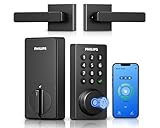
I remember staring at my front door after a long day, fumbling for my keys in the dark. Rain was starting to spit, and I just wanted to get inside. That’s when I thought, ‘There HAS to be a better way.’ Enter the keypad door lock. But then the nagging question pops up: are keypad front door locks safe? It’s a fair question. We’ve all seen those movies where hackers just magically bypass security. So, let’s cut through the noise and get real about them.
I’ve spent years messing with these things, both for my own peace of mind and just out of sheer curiosity. I’ve had some that were slicker than a greased watermelon and others that made me want to go back to a good old-fashioned deadbolt. This isn’t about shiny new tech; it’s about what actually works and keeps your home secure without turning your front door into a Fort Knox experiment.
Do These Things Actually Keep People Out?
Look, the fundamental question everyone asks is: are keypad front door locks safe? My initial thought, like many people, was ‘no way.’ My mind immediately went to some slick criminal with a laptop, a few keystrokes, and poof, they’re in my living room. But after using them extensively, I can tell you it’s far more nuanced than that. Most of these locks rely on a combination of a physical deadbolt and an electronic interface. The deadbolt itself is usually just as strong as a traditional one, assuming you get a reputable brand. The keypad part is where the magic, or the potential vulnerability, happens.
The common way they work is you punch in a personal identification number (PIN). If it matches the one stored in the lock’s memory, the motor inside engages and retracts the deadbolt. Simple enough, right? The security comes from the fact that you don’t need a physical key, which can be lost, stolen, or copied. Instead, you have a code. This is incredibly convenient. I’ve let contractors in while I was at work, granted access to family members without them needing a key, and even just walked up to my door with my hands full of groceries and punched in the code. No more digging through bags or pockets.
However, here’s where the ‘are keypad front door locks safe’ debate really kicks in for some. Early models, or cheaper ones, might have been more susceptible to brute-force attacks. Imagine someone trying every single 4-digit combination. Most locks have a lockout feature after a few incorrect attempts, meaning they’ll freeze up for a minute or two, preventing rapid-fire guessing. A good lock will have a substantial lockout period, and some even have tamper alerts that can send a notification to your phone. I’ve seen some entry-level models that felt flimsy, and I wouldn’t trust them with my grandmother’s antique vase, let alone my actual house.
The technology has gotten a lot better. Many higher-end smart locks connect to your Wi-Fi or Bluetooth, allowing you to manage access remotely through an app. This is where the real security, and potential privacy concerns, come into play. You can revoke access codes instantly, see who’s entering and when, and get notifications.
But that also means they’re connected to the internet. We’ll get into that more, but for now, the basic PIN entry on a decent model is generally pretty secure for everyday use against your average opportunistic thief. It’s definitely safer than leaving a spare key under the welcome mat. I learned that the hard way after a neighbor’s dog dug up my spare key and the ‘finder’ decided to try it out.
Lesson learned.
What Makes a Keypad Lock Actually Trustworthy?
So, if you’re nodding along and thinking, ‘Okay, I’m intrigued, but are keypad front door locks safe enough for my place?’ you need to know what to look for. It’s not just about the brand name; it’s about the build quality and the features. First off, the physical construction matters. You want a lock that feels solid. Give it a good shake. Does it rattle? Does the metal feel cheap? I’ve picked up some that felt like they were made of tin foil. That’s a non-starter. Look for sturdy metal construction – stainless steel or solid brass are good indicators.
Next, consider the keypad itself. Are the buttons responsive? Are they well-spaced so you can easily punch in your code without hitting multiple buttons at once? Some have touchscreens, which can look sleek, but I personally prefer physical buttons. In direct sunlight, touchscreens can be a pain to use, and I’ve had my phone’s touchscreen act up in cold weather, so I worry about that. Also, check the battery life and the battery type. Most use AA batteries, and you want one that has a decent lifespan, typically a year or more with normal use. It’s a pain to have your lock die when you’re locked out.
Here’s a bit of a contrarian take: everyone raves about smart locks with all the bells and whistles, like voice control and integration with smart home ecosystems. And yeah, they’re cool. But for pure security and simplicity, sometimes a solid standalone keypad lock is all you need and might even be less prone to certain types of hacking because it’s not constantly broadcasting over Wi-Fi. (See Also: Are Sesame Seeds Kosher For Passoveris Pollock Kosher )
If your main concern is convenience and avoiding key fumbling, a good quality keypad lock that doesn’t rely on internet connectivity is a solid choice. It still provides that keyless entry without the added attack surface of a network connection. For me, I’ve found a sweet spot with models that offer Bluetooth for app control but don’t require Wi-Fi to function for basic PIN entry.
Pay attention to the security certifications. While not every lock will have them, some will mention ANSI/BHMA grades. Grade 1 is the highest residential security rating. This tells you it’s been tested for durability and resistance to forced entry. Also, research the brand’s reputation. Companies that have been making locks for a while generally have better engineering and support. I once bought a no-name brand off an online marketplace, and the keypad started sticking after about six months. It was frustrating and made me feel less secure. Stick to brands you can find at reputable hardware stores or online retailers known for quality control.
Common Mistakes People Make with Keypad Locks
One of the biggest blunders I see people make, and I’ve been guilty of it myself, is choosing a lock with too few digits in the code. If a lock only allows a 4-digit code, that’s only 10,000 possible combinations. That’s not a lot. Even with lockout features, it’s just not ideal. Most modern locks allow for much longer PINs, typically 6 or 8 digits. Go for the longest option your lock supports. Longer codes mean exponentially more combinations, making brute-force attacks exponentially harder. I remember a friend who used his birth year and his kid’s birth year for his code. I just shook my head. That’s practically an invitation.
Another mistake is not changing the default PIN code. Many locks come with a factory-set code, or a very simple one that’s easy to guess. Always, always change it immediately. And speaking of changing codes, don’t write it down and stick it on the fridge. Seriously, I’ve seen people do this. If you need to write it down, store it somewhere very secure, like a password manager or a locked safe. Treat your keypad code like you would a bank PIN.
The most common mistake, though, is overlooking the physical installation. Even the best keypad lock in the world is useless if it’s not installed correctly. The deadbolt needs to align perfectly with the strike plate on the door frame.
If it’s stiff to turn, or if there’s too much play in the deadbolt, it can compromise the lock’s integrity. I once installed a lock myself and it was a nightmare. The deadbolt wouldn’t fully extend, and it felt loose.
I had to take it all apart and redo it, making sure everything was plumb and level. It took me an extra hour, but it made all the difference in how secure it felt. Don’t rush this part.
If you’re not comfortable, pay a locksmith to do it. It’s worth the peace of mind.
Finally, people underestimate battery maintenance. These locks need power to operate. Don’t wait for the low battery warning to become an emergency. When the lock starts giving you that ‘low battery’ chirp, change them promptly. Most good locks will give you ample warning, often with blinking lights and audible beeps. But if you’re in a hurry, or if the batteries just happen to die at the worst possible moment, you could find yourself locked out. I keep a spare set of fresh batteries in my car’s glove compartment just in case, and I make it a habit to swap them out every year, regardless of the warning. It’s a small effort that prevents a big headache.
Real-World Use: My Experience with Keypad Door Locks
I first jumped on the keypad lock bandwagon about five years ago. My old house had a notoriously sticky deadbolt, and I was tired of getting locked out. I went with a mid-range smart lock from a well-known brand. It looked pretty slick, and the idea of keyless entry was a dream. For the most part, it delivered. The convenience of not needing a key, especially when carrying in groceries or wrangling kids, was a revelation. I’d punch in my code and hear that satisfying thunk as the bolt retracted. It felt modern and secure. (See Also: Are Sliding Door Locks Common )
The app control was a big deal for letting people in remotely. I remember one time, my parents were visiting unexpectedly, and I was still at work. I was able to open the door from my phone, let them in, and then lock it again after they left. No rushing home, no hiding a key. It felt like I had a virtual doorman. I’ve used it to let repair people in too, granting temporary access codes that automatically expire. This level of control and notification is something you just can’t get with a traditional lock and key.
However, it wasn’t all smooth sailing. About a year in, I had a minor scare. The lock’s firmware needed an update, and for some reason, it failed to complete properly. My app kept saying it was offline, and I couldn’t change codes or check activity.
I was genuinely worried. I had to resort to the physical key backup, which felt like a step backward.
Thankfully, after a few hours of fiddling and a hard reset, it came back online. This experience really highlighted the dependency on technology. What happens if the Wi-Fi goes down for an extended period, or if there’s a major software bug?
These are the kinds of things that make you wonder, ‘are keypad front door locks safe when the tech glitches?’
Another surprise came during a really cold snap. The electronic components seemed to get sluggish.
It wasn’t a complete failure, but the keypad was less responsive, and the motor seemed to struggle a bit. It made me realize that extreme temperatures can affect electronics.
I never had that issue with my old metal deadbolt. So, while I love the convenience and the advanced features of smart keypad locks, I also appreciate the sheer reliability of a well-made mechanical lock. For my current setup, I’ve opted for a keypad lock that has a very strong mechanical override as a backup, and I make sure to test that override periodically. It gives me the best of both worlds: modern convenience with a traditional safety net.
Keypad Lock Vulnerabilities: What the Hackers Know
When people ask if keypad front door locks are safe, they’re often thinking about hackers. And yes, it’s a valid concern, but the reality is a bit different than what Hollywood portrays. For most residential keypad locks, a direct ‘hack’ into the electronics from the outside is pretty difficult for the average burglar. The most common vulnerabilities aren’t necessarily about sophisticated digital breaches.
One method people talk about is ‘relay attacks’ with smart locks. If someone has a device that can intercept and relay the signal between your phone and your lock (if you’re using Bluetooth or Wi-Fi proximity features), they could theoretically trick the lock into thinking you’re right there. This requires specific, expensive equipment and someone who knows exactly what they’re doing, so it’s less common for random break-ins. It’s more of a targeted attack. Still, if your lock relies heavily on your phone being near it to open, be aware of this possibility. Many modern locks have safeguards against this, like requiring a button press or a confirmation on the phone. (See Also: Are The Rams Locked Into The 6th Seed )
Then there are issues with weak encryption or outdated software. If a smart lock manufacturer doesn’t regularly update their software to patch security holes, a determined hacker could potentially exploit those vulnerabilities. This is why choosing a reputable brand that has a track record of providing software updates is so important. I’ve seen forums where people discuss how a specific model had a security flaw, and the company took months to fix it. That’s not good. It’s like leaving your digital back door opened.
Another angle is the physical interface itself. While not a digital hack, some older or cheaper keypads can be vulnerable to ‘de-capping’ where a skilled individual might be able to remove the plastic cover and directly interface with the circuitry. Or, in extreme cases, some might try to power surge the device to try and reset it or force it open. This is rare and requires specific knowledge and tools. However, it’s a good reason why a solid physical deadbolt is always the primary line of defense, and the keypad is just the entry mechanism. I’ve found that the strongest locks have a reinforced chassis and a well-designed keypad that’s harder to tamper with physically.
Keypad Lock Faq
Are Keypad Door Locks More Secure Than Traditional Locks?
Generally, a good quality keypad lock offers comparable or enhanced security over a basic traditional lock, especially regarding convenience and access control. They eliminate the risk of lost or stolen keys being used. However, the security of a keypad lock also depends heavily on its build quality, the strength of its encryption (for smart locks), and proper installation. A poorly installed or cheaply made keypad lock can be less secure than a high-quality traditional deadbolt.
Can Keypad Locks Be Hacked Easily?
The ease with which keypad locks can be hacked varies greatly. Simple standalone keypad locks are generally resistant to remote digital hacking and are more vulnerable to physical tampering or brute-force PIN guessing (though lockout features mitigate this). Smart locks, which connect to Wi-Fi or Bluetooth, have a wider attack surface. Sophisticated remote hacking is possible but often requires advanced technical skills and specialized equipment, making it less common for opportunistic burglars. Weak encryption or unpatched software are the most likely digital vulnerabilities.
What Is the Biggest Risk with Keypad Door Locks?
The biggest risks with keypad door locks often involve technological failures or human error. For smart locks, this can include software glitches, connectivity issues, or battery depletion leaving you locked out. There’s also the potential for exploitation of software vulnerabilities if the manufacturer doesn’t maintain updates. For all keypad locks, a significant risk is the compromise of the PIN itself through poor security practices (e.g., simple PINs, writing it down). Physical installation errors can also create weaknesses.
Do Keypad Locks Require Wi-Fi?
No, not all keypad door locks require Wi-Fi. Standalone keypad locks operate independently using their internal circuitry and battery power, and do not need an internet connection. Smart locks, however, often use Wi-Fi or Bluetooth for remote access, app control, and notifications. Many smart locks still allow basic PIN entry without an active Wi-Fi connection, but full remote functionality requires it. Always check the product specifications to understand its connectivity requirements.
How Do I Choose a Safe Keypad Door Lock?
To choose a safe keypad door lock, prioritize reputable brands known for quality and security. Look for solid construction, responsive buttons, and long battery life. For smart locks, research their encryption standards and the manufacturer’s commitment to software updates. Consider ANSI/BHMA grades (Grade 1 is best for residential security). Always plan for a strong, unique PIN and make sure proper, professional installation of the deadbolt mechanism. A physical key backup is also a wise consideration.
Verdict
So, to wrap this up, are keypad front door locks safe? My honest answer is yes, mostly, if you do your homework. They offer a level of convenience and modern control that traditional locks just can’t match. But like any technology, they aren’t foolproof. The key is choosing a quality product from a reputable brand, installing it correctly, and practicing good digital hygiene with your PINs and software updates.
Don’t be the person who uses ‘1234’ as their code or never changes the batteries. Think of it as an extension of your home’s security. You wouldn’t leave your windows wide open, so don’t leave your digital front door vulnerable. Do your research, pick a lock that feels solid in your hand, and set up those codes wisely.
Ultimately, the decision comes down to balancing convenience with your personal security needs. For me, the benefits have outweighed the risks, but I’m always mindful of the potential pitfalls. It’s an evolving technology, and staying informed is part of keeping your home secure.