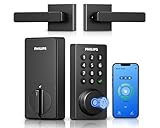
I remember the first time I saw one of those fancy keyless entry pads on a door. It looked like something out of a sci-fi movie, and I thought, ‘Sign me up!’ No more fumbling for keys in the dark, no more worrying if I left them inside. Fast forward a few years, and my initial excitement has been replaced with a healthy dose of skepticism. The question on everyone’s mind, and the one that kept me up a few nights after a scare, is: are keyless door locks secure? They promise convenience, but at what cost to our peace of mind and actual safety?
I’ve spent more time than I care to admit researching, installing, and frankly, troubleshooting these things. I’ve seen impressive tech crumble under a simple glitch, and I’ve been genuinely surprised by the resilience of others. Let’s cut through the marketing hype and get down to what really matters: keeping your home safe.
The Tech Behind the Magic: How Do They Even Work?
Alright, let’s get down to brass tacks. Keyless door locks aren’t some magical force field; they’re electronic devices with a few core ways of letting you in. Most commonly, you’ve got your keypad locks, where you punch in a code. Simple enough, right? Then there are the smart locks, which add Bluetooth or Wi-Fi connectivity. These are the ones you can control with your smartphone, grant temporary access to guests from miles away, and often integrate with other smart home gadgets. Some even use fingerprint scanners or voice commands, though those are usually on the higher end and, in my experience, can be a bit finicky.
The basic idea is that the lock mechanism itself is electronic. When you enter the correct code, scan your finger, or your phone signals permission via Bluetooth or Wi-Fi, an internal motor or solenoid retracts the deadbolt. It’s basically replacing the physical key and cylinder with an electronic circuit and actuator. The ‘brain’ of the operation is a small computer chip that verifies your input against its stored data. This is where the security, or lack thereof, really comes into play. If that chip is easily bypassed, or the way it communicates is compromised, then your fancy keyless entry becomes a very expensive paperweight… or worse, an open door.
I had one smart lock that used Bluetooth. The app would connect, and I’d hear a little ‘click’ as the bolt retracted. It was great until one day, it just… stopped. The app said it was connected, the lock made no noise, and I was left standing on my porch in a downpour, sweating. Turns out, a tiny software update had somehow corrupted the pairing process. After about 45 minutes of rebooting my phone, the lock, and reinstalling the app twice, it finally decided to work. That’s the kind of frustration that makes you question the whole ‘convenience’ factor. It wasn’t a security breach, but it sure felt like my access was being held hostage by a buggy app.
Are Keyless Door Locks Secure? The Real Vulnerabilities
This is the million-dollar question, and the answer, unfortunately, is ‘it depends.’ Let’s be blunt: no lock is 100% impenetrable. But some keyless locks are significantly more vulnerable than others. The biggest concern with many of these devices isn’t that someone will magically guess your 4-digit code (though that’s a possibility if you pick something obvious like 1234). It’s about more sophisticated attacks. For Wi-Fi enabled locks, the vulnerability often lies in the network itself. If your home Wi-Fi is poorly secured, an attacker could potentially intercept communications between your phone and the lock, or even gain access to the lock’s internal software.
Then there’s the issue of physical bypass. While you can’t pick a keyless lock like a traditional one, some older or cheaper models can be susceptible to ‘relay attacks’ or ‘signal boosting’ if they rely on key fobs or very weak Bluetooth signals. This is less of a concern with modern smartphone-controlled locks, but it’s something to be aware of depending on the specific technology. I’ve heard stories—and this is where my own skepticism really kicks in—of people using devices that amplify the signal from a homeowner’s key fob, basically tricking the lock into thinking the fob is right there. It sounds far-fetched, but the tech exists, and for determined thieves, it’s a viable, albeit advanced, tactic.
One of the most common and frankly, infuriating, vulnerabilities I’ve encountered isn’t even about hacking. It’s about power.
These locks run on batteries. When those batteries die, and you haven’t been diligent about replacing them or haven’t connected that emergency 9V battery to the terminals (which most people forget or don’t know about), you can be locked out of your own home. (See Also: Are There Different Size Holes For Installing Door Locks )
I learned this the hard way after a weekend trip. I’d put in fresh batteries before leaving, or so I thought. I came back late on a Sunday, exhausted, and the lock was completely dead.
No lights, no response. My phone app showed it as ‘offline,’ which I’d dismissed as a Wi-Fi blip. Turns out, the batteries had drained much faster than expected.
Locked out. In the dark.
With groceries melting in the car. That’s not a security breach, but it’s a major usability failure that makes you feel incredibly insecure.
What to Look for: Making a Smart Choice
If you’re going to ditch your traditional deadbolt, you need to be smart about it. Don’t just grab the cheapest one you see online. First, consider the type of access. Keypad locks are decent, but avoid codes that are too simple. Fingerprint scanners can be quick but are also more prone to errors, especially if your fingers are wet or dirty. Smartphone control via Wi-Fi or Bluetooth is generally the most convenient, but you need to make sure the app and the lock’s communication protocols are secure. Look for brands that offer regular security updates for their firmware and app. This is HUGE. A lock that hasn’t had an update in two years is a red flag.
I always check reviews specifically mentioning security. Are people reporting false alarms?
Are there discussions about firmware vulnerabilities? One brand I’ve found to be pretty solid in terms of updates and app security is Schlage.
They’ve been around in the lock business forever, and they seem to take the digital side of things seriously. Their Wi-Fi models require a strong home Wi-Fi password and have a decent encryption standard. Another thing to look for is a physical key backup. Even if you plan on never using it, having that fallback in case of electronic failure is a lifesaver. (See Also: Are Sesame Seeds Kosher For Passoveris Pollock Kosher )
My current setup has a deadbolt with a keypad and a backup keyway. It adds a layer of redundancy that gives me more confidence.
Consider the ‘smart’ features you actually need. Do you need to grant access remotely? Or is a simple keypad sufficient? Overly complex systems often mean more potential points of failure. For example, I experimented with a lock that integrated with a smart assistant. While cool, it meant another piece of technology, another potential vulnerability, and another subscription fee to keep certain remote features active. I ended up disabling most of that. Simplicity can often be more secure.
Keyless Lock Technology Comparison
| Technology | Pros | Cons | My Verdict |
|---|---|---|---|
| Keypad Entry | Simple, no phone needed | Codes can be guessed, limited sharing | Decent for basic needs, but needs strong codes |
| Bluetooth/Wi-Fi Smartphone Control | Remote access, guest codes, logging | Relies on phone battery/connectivity, app security important | Most versatile, but requires vigilance on updates and network security |
| Fingerprint Scanner | Fast, unique identifier | Can be unreliable (dirt, moisture), less common for primary entry | Good as a secondary option, not primary for me |
| NFC/Key Fob | Quick tap access | Fob can be lost/stolen, susceptible to signal boosting | Generally avoid for primary security, unless part of a solid multi-factor system |
Common Mistakes People Make with Keyless Locks
The biggest mistake I see people make is treating a keyless lock like a ‘set it and forget it’ device. It’s not. You wouldn’t ignore maintenance on your car, and you shouldn’t ignore maintenance on your digital door lock. This means regularly checking battery levels (don’t wait for the low battery warning!), updating the firmware and the associated app whenever prompted, and periodically changing your access codes, especially if you’ve shared them with anyone. I once lent my code to a dog walker who then moved out of state. Guess who forgot to remove their code until I saw their name pop up on the access log a month later?
Another colossal error is using weak or default passwords for your home Wi-Fi network, especially if your smart lock connects through it. If someone can easily get onto your Wi-Fi, they’re one step closer to potentially accessing your smart devices. Think of your Wi-Fi password as the first line of defense for your entire smart home. If it’s ‘password123,’ you might as well leave your door opened. I upgraded my router and chose a WPA3-compatible model, and I use a long, complex password that I change every six months. It’s a hassle, but the peace of mind is worth it.
People also get lazy with guest access. Granting permanent access to the plumber, the cleaning service, or that ‘friend’ who always needs to borrow a tool is a security risk. Most smart locks allow you to create temporary codes with expiry dates or time restrictions. Use them! I have a specific code for my cleaner that only works between 9 AM and 5 PM on Tuesdays. When they’re done, or if their employment ends, the code is automatically deactivated. No need to remember to change it or chase down a physical key. This granular control is one of the biggest advantages, but it’s only an advantage if you actually use it properly.
Real-World Use: My Experience and Practical Tips
I’ve had keyless locks on my front door and my garage entry for about five years now. The convenience is undeniable. Not having to carry keys when I go for a run, or being able to let a family member in if they forget their keys, is genuinely useful. But the convenience is directly tied to how well the technology is implemented and how diligent you are as a user. My first smart lock was a nightmare; my current one, a Yale Assure with a Z-Wave module connected to my home automation system, has been far more reliable. The key difference? Better firmware, more solid communication, and frankly, I’ve become much more disciplined about its upkeep.
Here are a few things I’ve learned the hard way:
- Battery Management is A must: Invest in good quality batteries (Lithium are usually best for cold weather) and replace them proactively, not reactively. Some locks will give you a low battery warning in the app, but don’t wait until you’re locked out. Many have a small 9V battery terminal on the outside for emergencies – know where yours is and have a 9V battery handy.
- Secure Your Wi-Fi Like It’s Your Front Door: If your lock relies on Wi-Fi, your network security is most important. Use strong, unique passwords, enable WPA2 or WPA3 encryption, and consider setting up a separate guest network for your smart devices if your router supports it.
- Embrace Temporary Access: Don’t give out permanent codes unless absolutely necessary. Use the scheduling features for guests, contractors, or even family members. Revoke access as soon as it’s no longer needed.
- Test Your Backup Plan: If your lock has a physical key backup, test it. Make sure the key works, and that you know where the physical key is stored securely. This is your ultimate failsafe.
- Read the Manual (Seriously): Yes, it’s boring, but the manual will tell you about emergency battery terminals, specific reset procedures, and advanced features that can enhance security.
One surprise I had was how much I actually liked the access logs. Seeing who entered and when was incredibly reassuring. It helped me track down when a package was delivered, or confirm when a service provider had been to the house. It’s a level of transparency I didn’t have with traditional locks. However, I’ve also seen logs that made me pause, like a random entry attempt at 3 AM. That’s when you need to take action, change your code, and check your network security. It’s not about blind trust; it’s about informed vigilance. (See Also: Are Sliding Door Locks Common )
Are Keyless Door Locks Secure? The Verdict
So, to circle back to the original question: are keyless door locks secure? Yes, they can be, but it’s a conditional ‘yes’. They are not inherently less secure than traditional locks, and in some ways, they can be more secure if implemented and managed correctly. The convenience is real, but it comes with responsibilities. You’re trading the simplicity of a physical key for the complexity of digital security. If you’re someone who regularly updates their phone, uses strong passwords, and keeps their software patched, you’ll likely find a well-chosen keyless lock to be a secure and convenient upgrade.
However, if you’re not technically inclined, or if you’re prone to ignoring software updates and security warnings, you might be better off sticking with a good old-fashioned deadbolt. The vulnerability isn’t always in the lock itself, but in the ecosystem surrounding it: your Wi-Fi, your smartphone security, and your own habits. It’s important to understand the specific technology of the lock you’re buying and to research its track record for security patches and reliability. Don’t just buy a ‘smart’ lock because it’s cool; buy it because you understand its risks and are prepared to manage them.
Can a Keyless Door Lock Be Hacked?
Yes, like any electronic device connected to a network, keyless door locks can be vulnerable to hacking. This can occur through weak Wi-Fi security, exploiting software vulnerabilities in the lock’s firmware or associated app, or through physical bypass methods like signal boosting for certain types of locks. The likelihood and ease of hacking depend heavily on the specific model, its security features, and the security of your home network.
Are Smart Locks More Secure Than Traditional Deadbolts?
It’s not a simple ‘yes’ or ‘no.’ A high-quality traditional deadbolt is incredibly difficult to force open without significant noise and effort. Smart locks, while convenient, introduce digital vulnerabilities. However, a well-maintained smart lock with solid encryption and secure network practices can offer advantages like access logging and remote monitoring, which traditional locks cannot. A poorly secured smart lock is definitely less secure than a good deadbolt.
What Is the Weakest Link in a Keyless Door Lock System?
The weakest link is often the user and their digital environment. This includes weak home Wi-Fi passwords, unpatched software on the lock or smartphone app, sharing access codes carelessly, and neglecting battery maintenance. For Wi-Fi connected locks, a compromised home network is a significant vulnerability. For Bluetooth locks, the phone’s security and the Bluetooth protocol itself can be points of weakness if not implemented securely.
Do Keyless Locks Require Wi-Fi?
Not all of them. Many keyless locks operate purely on a keypad or Bluetooth. However, to enable remote access, smartphone control from outside your home’s network, and integration with other smart home devices, Wi-Fi connectivity is typically required. If you don’t have reliable Wi-Fi or prefer not to connect your lock to the internet, look for models that offer keypad entry and/or Bluetooth-only control.
Final Verdict
So, are keyless door locks secure? The short answer, after all this, is that they can be, but it’s not a given. You’re trading physical security for digital. If you’re diligent about software updates, strong passwords for your Wi-Fi, and managing who has access and when, you’re probably fine. But if you’re the type who ignores app notifications and uses ‘1234’ as your Wi-Fi password, you might want to stick with your old-school deadbolt.
My advice? Do your homework. Look for brands with a good track record for security updates and a solid app. Understand the technology you’re buying into and be prepared to manage it. The convenience is real, but so are the potential headaches if you let your guard down. Ultimately, the security of your door relies as much on your habits as it does on the lock’s engineering.
Before you buy, ask yourself: am I ready to be a responsible digital homeowner, or should I just keep my trusty old key?