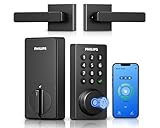
I remember fumbling for my keys in the dark, rain hammering down, bags of groceries threatening to spill. It felt like an ancient ritual, and frankly, a stupid one. That’s when I decided to ditch the metal jangle and try out a keyless entry door lock. The promise of just punching in a code or tapping my phone was incredibly appealing. But as I started looking, a nagging question kept popping up: are keyless entry door locks safe? It’s not just about convenience; it’s about the security of my home. I’ve seen too many gadgets overpromise and underdeliver, so I went in with a healthy dose of skepticism.
We’ve all heard the horror stories, or at least the whispers, about smart home tech being vulnerable. So, when it comes to something as fundamental as your front door, you need to know if you’re trading security for convenience. This isn’t about making your life easier for a moment; it’s about peace of mind, 24/7.
Let’s cut through the marketing hype and figure out if these things are actually worth the upgrade, or if they’re just a fancy way to let the wrong people in. I’ve spent a good chunk of time with these gadgets, and I’m ready to give you the straight dope.
So, Are Keyless Entry Door Locks Actually Safe? Let’s Get Real.
Look, the short answer is: yes, mostly, but it’s not as simple as plugging one in and forgetting about it. Think of it like this: a traditional deadbolt is pretty darn simple. It’s mechanical. Someone needs to physically pick it, bash it down, or have a copy of your key. Keyless entry locks, on the other hand, add layers of complexity. They have electronics, software, Wi-Fi or Bluetooth connectivity, and often a keypad or a mobile app. Each of those things is a potential point of entry for trouble, but also a potential point of enhanced security if done right.
I remember installing my first smart lock, a fancy one that promised fingerprint scanning and app control. It looked sleek, and the setup seemed straightforward enough. For the first few weeks, it was awesome. No more digging for keys when my hands were full.
Then, one Tuesday morning, I got a notification on my phone: ‘Low Battery.’ Great. Except it wasn’t just low battery; it was dead. I was locked out of my own house. I had to sheepishly call my neighbor to let me in because I’d forgotten to hide a physical backup key (rookie mistake, I know).
This whole ordeal, though, made me realize that while the tech is cool, you can’t just ignore the basics. Battery life is a real thing, and relying solely on the tech can bite you.
The biggest concern people have is hacking. Can someone ‘hack’ your door lock from the street? It’s not like in the movies, where they type furiously on a keyboard and the lock clicks open. For most modern, reputable smart locks, that kind of remote brute-force hacking is extremely difficult. The protocols they use, especially for Bluetooth and Wi-Fi, are encrypted. However, vulnerabilities can exist in the software, the mobile app, or even the router it connects to. Think about it: if your home Wi-Fi is easily compromised, that’s a gateway for all sorts of issues, including potentially your smart lock.
Then there’s the physical aspect. Even the best smart lock is still attached to a door. If someone can kick in your door, the lock’s sophistication matters less. The real question isn’t just ‘can it be hacked,’ but ‘is it more or less secure than my old deadbolt?’ For me, the answer is often more secure, provided you make smart choices.
How Do These Things Actually Work?
At its core, a keyless entry door lock replaces the traditional key cylinder with an electronic mechanism. Instead of a physical key turning tumblers, you provide an electronic credential. The most common methods are:
- Keypads: You punch in a numerical code. This is probably the most basic form of keyless entry.
- RFID/NFC Cards or Fobs: You tap a card or a small keychain fob against a reader. Think of your transit pass or hotel key card.
- Smartphone Apps (Bluetooth/Wi-Fi): Using Bluetooth, your phone communicates directly with the lock when you’re nearby. Wi-Fi allows for remote control – you can lock or open your door from anywhere with an internet connection, provided the lock is connected to your home Wi-Fi network.
- Biometrics: Fingerprint scanners are becoming more common. You place your finger on a sensor, and it verifies your identity.
Once the lock receives a valid credential (the correct code, a recognized fob, a verified fingerprint, or a signal from your authorized phone), it electronically signals a motor or solenoid to retract or extend the deadbolt. It’s a pretty neat piece of engineering when it works right. The added benefit is often the ability to grant temporary access. You can give a neighbor a code for when you’re out of town, or a cleaner a code that only works during specific hours. This is something a physical key just can’t do easily without making copies.
Choosing Your Weapon: What to Look for in a Keyless Lock
Walking into the world of keyless locks can feel like stepping into a tech convention. There are dozens of brands, each with different features, price points, and varying levels of what I’d call ‘actual security.’ So, how do you pick one that won’t leave you vulnerable? First off, ignore the marketing fluff about ‘military-grade encryption’ unless you’re installing it on Fort Knox. Focus on practical, real-world security and reliability. I’ve tried a few versions, and what separates the wheat from the chaff is often the build quality and the straightforwardness of the security features.
I once bought a lock that was ridiculously cheap. It looked okay, but the keypad felt flimsy, and the app was clunky and buggy.
I swear, the app would randomly disconnect, and I’d have to force-quit and restart it just to check if my door was locked. That’s not security; that’s an invitation to anxiety. (See Also: Are There Different Size Holes For Installing Door Locks )
A good lock needs to feel solid. When you hold it, it should have some heft. The buttons on the keypad should have a satisfying click, not feel mushy. And the app – if it has one – needs to be responsive, stable, and regularly updated by the manufacturer.
Speaking of updates, that’s a big one. Software is never perfect. Reputable companies will push out security patches.
If a company hasn’t updated its app or firmware in over a year, that’s a red flag.
Another thing to consider is the power source. Most use AA or 9V batteries. Battery life can range from a few months to over a year, depending on usage and the specific lock. Some higher-end models have rechargeable batteries, which is a nice perk. But, no matter what, always have a backup plan. This usually means a hidden physical key override. My mistake was thinking I’d never need it. Learn from my screw-up: keep a spare key hidden somewhere sensible, or with a trusted neighbor.
Connectivity is also key (pun intended). If you want remote access – locking or opening your door from work, for example – you’ll need a lock that connects to your Wi-Fi, often through a separate hub or bridge. Bluetooth-only locks are fine for when you’re close to home, and they often have better battery life and fewer potential network vulnerabilities. But if you’re forgetful and want to check your door status while you’re miles away, Wi-Fi is the way to go. Just make sure your home network is secure. A weak Wi-Fi password is like leaving your front door wide open.
The Lowdown on Connectivity and Battery Life
Connectivity is where things get interesting, and sometimes a little scary, for many people. If you opt for a smart lock that connects via Wi-Fi, it’s talking to your home network.
This means your router’s security is most important. I cannot stress this enough: change the default password on your router. Seriously. Do it now.
A lot of people skip this step, and that’s an easy entry point for anyone with a bit of know-how. Once your Wi-Fi is secure, the lock itself needs to use secure protocols to communicate. Most major brands do this.
They use industry-standard encryption like WPA2 or WPA3 for Wi-Fi and AES encryption for Bluetooth. This means that even if someone could intercept the signal, it would look like gibberish to them.
Battery life is another practical concern that trips people up. My first smart lock, the one that died on me, was a Bluetooth model. It lasted about 8 months, which wasn’t too bad, but it gave no warning before it completely conked out. Newer ones I’ve used have a battery indicator in the app, and they’ll often beep or flash a light on the unit itself when the battery is getting low.
This is a HUGE improvement. Some locks have a backup power terminal on the outside – usually a 9V battery connection. If your main batteries die, you can temporarily power the lock with a 9V battery from the outside, punch in your code, and get inside to change the dead ones.
This is a lifesaver and something I always look for now.
I’ve found that Wi-Fi locks tend to drain batteries a bit faster than Bluetooth-only models because they’re constantly maintaining that connection to your router. However, the convenience of remote access is hard to beat. It’s a trade-off you have to decide on. For me, the added security of knowing I can check my door from anywhere, or grant access remotely if a trusted person needs in, outweighs the slightly shorter battery life, especially with the backup power options available. (See Also: Are Sesame Seeds Kosher For Passoveris Pollock Kosher )
Common Mistakes People Make with Keyless Locks
You’d think that buying a fancy new lock would automatically make your home more secure, but I’ve seen plenty of people make basic mistakes that completely undermine their investment. It’s not just about the tech; it’s about how you use it. The biggest blunder I see is the ‘set it and forget it’ mentality. You install the lock, set a default PIN, and then you never touch the settings again. That’s a recipe for disaster. Many smart locks come with a default PIN like 1234 or 0000. If you don’t change that immediately, you’ve basically just told the world how to get into your house. It sounds obvious, but you’d be amazed how many people skip this important step.
Another common mistake is poor password management for the companion app. If your app password is ‘password123,’ and you use that same password for your email, your bank, and your social media, you’ve created a massive vulnerability. If any of those other accounts get hacked, the hacker might be able to access your lock. Use strong, unique passwords for everything, and enable two-factor authentication (2FA) whenever possible. Many lock apps offer 2FA, which adds an extra layer of security. It might be a minor inconvenience to get a code texted to your phone or generated by an authenticator app, but it’s a small price to pay for significantly better security.
I also see people neglecting physical security. They install a top-of-the-line smart lock, but their door frame is weak, or the screws holding the deadbolt strike plate are short and flimsy. A determined burglar doesn’t need to hack your lock if they can just kick the door in. Make sure your door itself is solid, your frame is reinforced, and that the deadbolt installation is solid. The lock is only as strong as the door and frame it’s attached to.
Finally, there’s the issue of over-reliance. I learned this the hard way with the dead battery incident. People sometimes get so caught up in the digital aspect that they forget about basic redundancies. Always have a backup key accessible, either hidden very well or with someone you trust. And understand how your lock operates when the batteries die or the Wi-Fi goes down. Knowing these things before an emergency strikes is important.
The ‘everyone Says X, I Disagree’ Section
Everyone says that older, purely mechanical deadbolts are inherently more secure because they can’t be hacked. And yes, they can’t be hacked electronically. But I disagree that this automatically makes them superior for most people. My experience is that a well-chosen, reputable smart lock offers more security in practical, everyday use.
Why? Because the vulnerabilities in mechanical locks are often more mundane but just as effective: lost keys, copied keys, or the simple fact that someone can just force or pick a standard deadbolt with enough effort and the right tools. Smart locks, with their unique codes, temporary access features, and activity logs (which tell you who opened the door and when), give you better control and visibility.
If I give a cleaner a code, I can see when they last entered. If I lose my phone, I can disable its access remotely. This level of granular control is simply not possible with a traditional lock. The potential for electronic vulnerability exists, yes, but the risk is often overstated compared to the very real risks associated with physical keys and basic mechanical locks.
Real-World Use: My Experience with Keyless Locks
After fiddling with a few different models, I’ve settled on a couple of smart locks that I’m genuinely happy with. One is a keypad-style lock that also has Bluetooth via an app.
It feels sturdy, the keypad is responsive, and the app is surprisingly reliable. I gave my parents a unique code for when they visit, and it gives me peace of mind knowing they can get in without me having to rush home.
The battery life on this one is about 10 months, and it gives me plenty of warning when it’s getting low, with a visual indicator on the lock itself and a notification on my phone. It also has a 9V battery backup terminal, which I tested once just to be sure. Worked like a charm.
The other lock I use is a bit more high-end, with a fingerprint scanner and Wi-Fi connectivity. The fingerprint scanner is incredibly fast and accurate about 98% of the time. The other 2%? Usually, it’s because my finger is wet or I haven’t pressed it quite right. But that’s still faster than digging for my phone and opening an app. The Wi-Fi connectivity means I can check if the door is locked from anywhere. A few times, I’ve been at the grocery store and had that nagging feeling, ‘Did I lock the door?’ A quick tap in the app confirms it’s secure. This is a luxury I didn’t realize I’d miss until I had it.
One funny incident happened when I was out of town. A friend was supposed to water my plants. I’d given them a temporary code. They arrived, but apparently, the code I gave them had expired (my bad, I’d set it for a shorter window). They called me, panicked. Instead of having to drive back or leave a spare key somewhere, I just opened my app, extended the code’s validity, and they were able to get in. That kind of remote management is a genuine lifesaver for busy lives. It’s not just about convenience; it’s about being able to manage access when you’re not physically there.
Keyless Lock vs. Traditional Deadbolt: A Quick Comparison
Here’s a table comparing the key aspects. This is based on my personal experience and what I think matters most for everyday security and usability. (See Also: Are Sliding Door Locks Common )
| Feature | Keyless Entry Lock (Reputable Brand) | Traditional Deadbolt | My Verdict |
|---|---|---|---|
| Ease of Entry | High (Code, App, Fingerprint) | Medium (Requires physical key) | Keyless wins for convenience, especially with full hands. |
| Key Management | No physical keys needed (mostly) | Requires physical keys, risk of loss/copying | Keyless is superior for not dealing with keys. |
| Remote Access/Monitoring | Yes (Wi-Fi models) | No | Keyless offers invaluable peace of mind and control. |
| Granting Temporary Access | Easy (Unique codes, time-limited) | Difficult (Requires key duplication) | Keyless is miles ahead for flexibility. |
| Vulnerability | Electronic (hacking, app bugs, Wi-Fi security) | Physical (picking, bumping, brute force) | Both have vulnerabilities; keyless depends on user diligence with digital security. |
| Power Dependency | Requires batteries/power | No power needed | Traditional is more reliable in a power outage, but smart locks have backups. |
| Cost | Higher upfront | Lower upfront | Keyless is an investment, but the added features are worth it for me. |
Practical Tips for a Safer Keyless Entry Experience
Alright, so you’re convinced that keyless entry door locks might be the way to go, or maybe you already have one and want to make sure you’re using it right. Here are some practical tips I’ve picked up that have genuinely made my life easier and my home more secure. First off, change all default PINs immediately. I’ve said it before, and I’ll say it again. If your lock comes with a factory-set code, it’s practically an invitation. Create a PIN that’s unique to your lock and isn’t easy to guess – avoid birthdays, anniversaries, or simple sequences like 123456.
Second, secure your home Wi-Fi network. If your smart lock connects via Wi-Fi, your router is the first line of defense. Use a strong, unique password for your Wi-Fi. Enable WPA2 or WPA3 encryption. Disable WPS if you don’t actively use it, as it can be a vulnerability. Consider setting up a separate guest network for your smart devices if your router supports it, isolating them from your main computers and sensitive data.
Third, keep your lock’s firmware and your smartphone app updated. Manufacturers release updates to patch security holes and improve performance. Don’t ignore those update notifications! It might seem like a minor hassle, but these updates are important for maintaining the security of your lock. Think of it as routine maintenance for your digital front door.
Fourth, understand your lock’s backup power options and have a physical key override. This is a must for me. Whether it’s a hidden key or a 9V battery terminal, know how to get in if your primary power source fails. Test it before you need it. I’d rather be slightly inconvenienced by a hidden key than completely locked out.
Finally, regularly review activity logs if your lock provides them. Most smart locks keep a log of who entered and when. This is incredibly useful for tracking who has access to your home and when doors are being opened. If you notice any suspicious activity, you can take immediate action, like revoking access or changing codes. It’s a simple habit that can provide immense peace of mind.
Faq: Your Keyless Entry Questions Answered
Are Keyless Entry Door Locks Susceptible to Remote Hacking?
While direct remote hacking of the lock mechanism itself is very difficult due to encryption, vulnerabilities can exist in the supporting systems. If your home Wi-Fi network is not secure, or if the lock’s companion app has flaws, a hacker could potentially gain unauthorized access. Always make sure your Wi-Fi is secure and keep your lock’s firmware and app updated.
What Happens If the Batteries Die in a Keyless Entry Door Lock?
Most keyless entry door locks have a backup power solution. This typically includes a physical key override, allowing you to use a traditional key. Many also have an external terminal where you can temporarily connect a 9V battery to power the lock long enough to enter and replace the internal batteries.
Are Keypad Codes for Keyless Locks Easy to Guess?
This depends entirely on the user. Default codes provided by manufacturers are often simple and should be changed immediately. If you create a strong, unique PIN that isn’t easily guessable (avoiding common sequences or personal information), and regularly change it, the risk of a guessed code is very low.
Is It Safe to Give Temporary Access Codes to Guests or Service Providers?
Yes, this is one of the major benefits of keyless entry. Reputable smart locks allow you to create unique, often time-limited, access codes. This is generally safer than handing out physical keys, as you can track usage and revoke access easily. Make sure you are giving codes only to trusted individuals.
Do I Need a Wi-Fi Connection for a Keyless Entry Door Lock to Work?
Not all of them. Many keyless locks operate via Bluetooth or an internal keypad without any internet connection needed for basic locking and opening. However, to gain remote access (controlling the lock from outside your home) or to receive notifications when away, a Wi-Fi connection, often through a hub or bridge, is usually required.
Conclusion
So, are keyless entry door locks safe? My honest verdict is that they can be, and often are, a significant upgrade in convenience and control over traditional locks. The key is to be informed, make smart choices, and not treat them as completely maintenance-free security devices. You wouldn’t ignore a sputtering engine in your car; you shouldn’t ignore software updates or weak Wi-Fi passwords for your door lock.
The added visibility, the ability to grant and revoke access remotely, and the sheer convenience of not fumbling for keys can’t be overstated. However, these benefits come with the responsibility of managing your digital security. Treat your lock’s PINs, your Wi-Fi password, and your app security with the same seriousness you would a physical key.
Ultimately, the decision to go keyless is a personal one. Weigh the convenience against the responsibilities. For me, the peace of mind that comes from knowing I can check my door from anywhere, and the flexibility of managing access without copies, makes it a worthwhile investment. Just remember the practical tips: secure your network, update your software, and always have a backup plan.