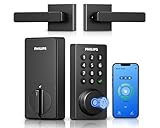
I remember staring at this cheap little magnetic lock I’d bought online. It looked so promising, this sleek metal box that was supposed to keep my shed safe. Turns out, it was about as secure as a screen door in a hurricane. I’d wasted $30, and more importantly, I’d learned a harsh lesson about products that sound good on paper but fall apart in reality.
So, let’s cut to the chase. Are magnetic door locks secure? The short answer is: it depends. Massively. Most of the ones you see advertised for simple home security are borderline useless against anything more than a determined gust of wind. But there are specific applications where they can be part of a solid plan, provided you know what you’re looking for.
How These Things Actually Work (and Why It Matters)
Alright, let’s get down to brass tacks. Magnetic door locks, or maglocks as the pros call them, are deceptively simple. You’ve got two main parts: an electromagnet and a metal plate, usually steel. One goes on the door frame, the other on the door itself. When you power up the electromagnet, it attracts the metal plate, holding the door shut with a surprising amount of force. When you cut the power, the attraction vanishes, and the door swings open.
The ‘security’ part hinges entirely on how strong that magnetic pull is, how reliably it’s powered, and what kind of door and frame you’re attaching it to. You see these little battery-operated ones advertised everywhere for interior doors or cheap gates. They’re usually rated in pounds of holding force – say, 300 to 600 pounds.
That sounds like a lot, right? For a light interior door or a flimsy garden gate, maybe. But against someone who actually wants to get through?
It’s often not enough. I once had a DIY project where I used a small 500lb maglock on a pretty standard internal door, thinking it was overkill. A firm shoulder nudge, and the door popped open. The magnet just wasn’t strong enough to overcome the use applied.
The real deal maglocks you see on commercial buildings, like office doors or emergency exits, are a different beast. These are typically wired directly into the building’s power, often with a battery backup. They’re way bigger, much more powerful, and designed to hold against serious force. They’re also usually tied into a fire alarm system, so they automatically release when the alarm is triggered – a important safety feature. The key takeaway here is that not all maglocks are created equal. The cheap, consumer-grade ones are often more of a deterrent than a true security measure. It’s like putting a padlock on a paper bag – it might make someone pause, but it won’t stop them if they’re serious.
Another angle people miss is the installation. Even a powerful maglock is useless if it’s mounted on a weak door or frame. If the frame can be pried away from the wall, or the door itself is flimsy, the lock’s holding force becomes irrelevant. It’s like having a steel chain and attaching it to a rotten plank of wood. The weakest link breaks.
What to Actually Look for When Buying (don’t Get Ripped Off)
Okay, so you’ve decided you might need a magnetic lock for something. Maybe it’s a shed, a workshop, or an internal door you want to keep consistently closed. Before you click ‘buy’ on the first shiny thing you see, here’s what you need to pay attention to. Forget the fancy marketing; focus on the numbers and the build quality.
First, the holding force. This is usually measured in pounds (lbs) or Newtons (N). For anything you genuinely want to keep secure, you want to be looking at 600 lbs (around 272 kg) as an absolute minimum for a single door.
If you can go higher, do it. More is almost always better here. I learned this the hard way with that shed lock I mentioned earlier; it was only rated for 300 lbs, and it was a joke. I ended up replacing it with a 600 lb unit, and while it wasn’t impenetrable, it was a world of difference.
Next, power supply. Most consumer maglocks come with a basic power adapter. This is fine for non-important applications. However, if you’re serious about security, you need to consider a backup power source. Battery backups are common and a good idea. Without power, the lock is useless. Think about what happens if the power goes out – your secure door suddenly becomes wide open. Some systems have a built-in battery, others require you to purchase one separately. Make sure it’s a reputable brand, not some no-name battery that’ll die in six months. (See Also: Are Sesame Seeds Kosher For Passoveris Pollock Kosher )
Installation hardware is another detail often overlooked. Does it come with sturdy mounting brackets? Is the metal plate thick and solid? Cheap, thin metal can bend or deform, compromising the seal. The magnet itself should feel substantial. Pick it up. Does it feel like a cheap toy or a serious piece of hardware? The casing should be solid, ideally metal, not brittle plastic. Some are designed for indoor use, others are weather-resistant for outdoor applications. If it’s for a shed or an external gate, make sure it’s rated for outdoor use, otherwise, the elements will kill it quickly.
Finally, consider the release mechanism. Most maglocks have a simple on/off switch or a button. For more integrated systems, you might have options like keypads, RFID readers, or even remote fobs. Think about how you want to access the locked area. If it’s just you, a simple key switch might be enough. If multiple people need access, a keypad or card reader makes more sense. But again, the underlying magnetic force and build quality are what truly determine its security, not the fancy entry method.
Here’s a quick rundown of what to expect in different scenarios:
| Application | Minimum Holding Force | Power/Backup | Verdict |
|---|---|---|---|
| Interior Privacy Door (e.g., home office) | 300-500 lbs | Basic AC adapter | Okay for basic privacy, not theft. Easily defeated. |
| Shed/Workshop Door | 600 lbs+ | AC adapter with battery backup | Decent deterrent. Might stop casual intruders. |
| Commercial Entry Door | 1000-1200 lbs+ | Hardwired with dedicated UPS/battery backup, fire alarm integration | Serious security. Professional installation required. |
| Garden Gate (basic) | 300-500 lbs | Battery operated (often) | Very weak. More of a visual deterrent. |
Common Mistakes People Make (and How to Avoid Them)
I’ve seen people install these things with the best intentions and the worst results. The number one mistake is simple: underestimating the force needed. People see ‘500 lb holding force’ and think ‘wow, that’s strong!’ They don’t realize that a door isn’t just pulled shut; it can be levered open. If someone can get even a small gap, they can apply use and pop that magnet off its plate. I saw a guy install a maglock on his garage side door, thinking it would stop break-ins. Within a month, his garage was cleaned out. Turns out, the thief just used a pry bar at the edge of the door, and the lock popped off like a champagne cork.
Another massive error is assuming they’re completely foolproof because they’re electric. People forget about power outages. If your maglock isn’t on a backup system, a simple flick of the breaker or a power cut renders your ‘secure’ door wide open. This is especially important for commercial applications where it’s not just about security but also about safety regulations. I spoke to a building manager once who’d had a maglock on an emergency exit fail during a power outage, trapping people inside. That’s not just inconvenient; it’s dangerous. Always, always consider a battery backup or a UPS (Uninterruptible Power Supply) for any maglock that’s meant for actual security or has safety implications.
Installation is a huge one. People try to mount them on flimsy wooden frames or doors that have warped over time. The metal plate needs to meet the magnet squarely and with full contact.
If the door is misaligned, or the frame is loose, the holding force is drastically reduced. I’ve seen people drill holes and screw the magnet on with just a couple of small screws, then wonder why it came loose. These things need to be mounted securely to solid material, ideally metal frames or reinforced door edges. If you’re attaching it to a standard wooden door frame, you might need to reinforce it with wood blocks or metal plates first.
It’s not just about sticking it on; it’s about creating a solid mounting point that can withstand the forces involved.
Then there’s the issue of environmental exposure. Buying an indoor-rated maglock and sticking it on your outdoor shed is a recipe for disaster. Moisture, dust, and temperature fluctuations will corrode the electronics, weaken the magnet, and generally make it unreliable. If it’s going outside, get one specifically designed for outdoor use with appropriate weatherproofing. I made this mistake with a gate I wanted to secure. I used a standard indoor maglock, and within a year, it was rusted shut and barely held anything. Had to replace the whole unit with a proper outdoor-rated one.
Finally, people often overlook the need for a release mechanism that’s convenient for authorized users but not for unauthorized ones. A simple on/off switch is fine for a shed you access infrequently, but for a main entry, you need something more sophisticated. Relying solely on cutting power can be impractical. Consider keypads, card readers, or remote openers, but remember that the security of those systems also matters. A cheap keypad can often be bypassed.
Real-World Use Cases: Where Do They Actually Shine?
So, if they’re not the be-all and end-all of home security, where do magnetic locks actually make sense? They excel in situations where you need a strong, automatic latching mechanism that’s reliable and has a clean, unobtrusive profile. Think about commercial settings first. Office doors, especially those leading into secure areas, often use maglocks. They offer a strong hold, and when integrated with access control systems (keycards, fobs, biometric scanners), they provide a good balance of security and convenience. The fact that they automatically disengage with a power cut (or when the fire alarm goes off) is a key safety feature in these environments. (See Also: Are Sliding Door Locks Common )
Another common and effective use is on server room doors or electrical closets. These are areas that need to be kept consistently locked to prevent unauthorized access, but also need to be quickly accessible by IT staff or maintenance personnel. A maglock with a keypad or card reader is perfect here. It provides a solid seal, and access can be granted or revoked electronically. I’ve seen these used in data centers, and they hold up well. The sheer holding power of commercial-grade maglocks means they are very difficult to force open, even with a pry bar, as long as they are properly installed on a solid frame.
For homeowners, the use cases are more niche, but still valid. If you have a particularly heavy, solid door that you want to make sure stays shut – perhaps a strong internal door to a home office or a workshop – a solid maglock can be a good addition. It’s not going to stop a determined burglar who’s breaking down your main door, but it can add an extra layer of security to a specific access point that you want to keep reliably closed and somewhat protected.
I have a friend who uses one on his detached garage man-door. It’s a strong, solid door, and he’s got a 600lb maglock on it, wired with a battery backup. It’s not Fort Knox, but it’s definitely a step up from a standard padlock and makes it harder for someone to just walk in if they happen to be poking around.
They also have a place in DIY projects where an automatic, consistent latch is needed. Think about creating a secure cabinet for valuable tools or sensitive documents. A well-mounted maglock can provide that satisfying ‘clunk’ of security without the need for a traditional key lock that might be cumbersome or prone to breaking. The clean look of a maglock is also appealing; there are no visible keyholes or bulky mechanisms protruding from the door or frame.
However, it’s important to distinguish between these legitimate applications and the consumer-grade ‘security’ maglocks often marketed for simple home safety. The latter are rarely up to the task of true security. They are more about deterring casual snooping or keeping pets in than stopping a break-in. For genuine security, you need to look at the specifications, installation, and power requirements very carefully. If you’re unsure, it’s always better to consult with a security professional or opt for a more traditional, proven lock mechanism.
Contrarian View: Why I Think Most DIY Maglocks Are a Waste of Money
Here’s where I might ruffle some feathers. Everyone’s always looking for the next gadget, the ‘smart’ solution. And magnetic door locks, especially the smaller, consumer-grade ones, get a lot of buzz. People see them online, they look sleek, they’re advertised as ‘easy to install,’ and they promise a modern security upgrade. I completely disagree. For the vast majority of home security needs, especially if you’re trying to secure an exterior door, a good quality deadbolt or a solid chain lock is a far better investment. Why? Because they actually work against force and are less susceptible to simple electrical failures.
My main issue is that the advertised ‘holding force’ is often misleading in real-world scenarios. As I’ve said, it’s not just about pulling force; it’s about use. A cheap maglock’s electromagnet can be defeated with a well-placed pry bar or even a strong kick near the latching edge. It’s the weakest link principle; if your door, frame, or the lock’s mounting hardware isn’t incredibly solid, the magnet is irrelevant. I’ve seen too many people install these, feel secure for a week, and then have their shed or garage raided because the lock simply wasn’t up to the job. It creates a false sense of security, which is arguably worse than having no lock at all.
Furthermore, the reliance on electricity is a huge vulnerability. Power outages happen. Breakers trip. A standard deadbolt works regardless of power. If you’re relying on a maglock for anything important, you absolutely must have a reliable battery backup system, and that adds cost and complexity. You’re basically buying a lock that needs power to be locked. If that power source fails, your security vanishes instantly. That’s a fundamental flaw for many security applications.
The installation complexity is also often glossed over. While some might be ‘easy’ to screw onto a surface, achieving true security requires solid mounting into strong materials. This often means reinforcing door frames, using specific brackets, and making sure perfect alignment – tasks that go well beyond a simple DIY screw-in job. If you can’t mount it perfectly on something solid, you’re wasting your money. I’d rather spend $50 on a really solid, well-made deadbolt that I know can withstand abuse and doesn’t rely on electricity than $100 on a maglock that might pop off with a hard shove.
Commercial-grade maglocks are different. They’re powerful, professionally installed, and integrated into larger systems. But the small, affordable ones you find online? They’re often more of a novelty or a temporary, low-security measure. If you’re looking to genuinely secure your home, focus on proven, mechanical solutions first. Invest in good deadbolts, reinforce your doors and frames, and then, maybe, consider a maglock for very specific, low-risk applications if you understand its limitations and make sure it has a backup power supply.
Practical Tips for Using Magnetic Locks Effectively
If you’ve weighed the pros and cons, understand the limitations, and still think a magnetic lock is the right choice for your specific situation, here are a few practical tips to make sure you’re getting the most out of it. First, always over-spec the holding force. If you think 600 lbs will do, buy 800 lbs. If it’s for a door that might see some abuse, aim for the highest rating you can reasonably find and afford. That extra margin can make a significant difference when force is applied. Remember, the rating is usually under ideal, direct pull conditions. Real-world scenarios involve angles and use. (See Also: Are The Rams Locked Into The 6th Seed )
Second, plan your power source meticulously. If it’s an interior door, a basic adapter might suffice, but consider a small battery backup just in case. For exterior sheds, workshops, or any application where reliable lockdown is important, a dedicated battery backup or a UPS is a must. Don’t skimp on this. Test your backup regularly to make sure it’s working. A dead battery is the same as no lock at all. I’ve set up a few systems for friends, and we always include a small UPS unit, even for a shed. It’s a bit of overkill for some, but it provides peace of mind.
Third, pay extreme attention to installation. This is where most people fail. Use the most solid part of your door frame and door edge. If you’re mounting to wood, pre-drill pilot holes and use screws that are long enough to go deep into the structural studs or solid wood. If the frame or door feels flimsy, reinforce it first with metal plates or thicker wood blocks. The metal strike plate needs to have full, flush contact with the magnet when the door is closed. Any gap drastically reduces its effectiveness. Consider using a small shim if your door frame isn’t perfectly square. Proper alignment is key.
Fourth, consider the environment. If the lock will be exposed to the elements – rain, snow, direct sun, humidity – you absolutely need an outdoor-rated or weatherproof model. These usually have sealed casings and corrosion-resistant materials. An indoor lock will corrode quickly and fail prematurely if exposed to moisture. It sounds obvious, but I’ve seen people make this mistake repeatedly. Check the IP rating (Ingress Protection) if available; higher numbers mean better protection against dust and water.
Finally, think about how you want to release the lock. For a shed, a simple key switch or a manual button might be fine. For a workshop or a home office where you need quick access without fiddling with wires, a keypad or an RFID reader integrated into the system is convenient. But choose your access method wisely; a cheap keypad can be easily bypassed. Think about the total system security, not just the magnetic lock itself. And if you’re installing this on anything beyond a simple interior door, consider getting a professional to do it. They’ll make sure it’s installed correctly, wired safely, and integrated properly with any access control or backup power systems.
Frequently Asked Questions About Magnetic Door Locks
Are Magnetic Door Locks Safe for Fire Exits?
Yes, but only when installed as part of a properly designed system. Commercial magnetic locks on fire exits are required by code to automatically disengage when the fire alarm is triggered or during a power failure. This makes sure that occupants can evacuate quickly. DIY installations on fire exits are strongly discouraged due to the important safety implications.
Can a Magnetic Lock Be Bypassed Easily?
Consumer-grade magnetic locks can often be bypassed relatively easily with a pry bar or by cutting the power supply if they lack a backup. Professional-grade maglocks, especially those with high holding forces and secure mounting, are much harder to bypass without specialized tools or knowledge. Their effectiveness heavily depends on the installation quality and the underlying door and frame strength.
Do Magnetic Door Locks Require a Power Source to Stay Locked?
Yes, most magnetic door locks are ‘fail-secure’, meaning they require continuous power to maintain their magnetic hold. When the power is cut, they release. This is why backup power (batteries or UPS) is key for any magnetic lock used for security purposes, as a power outage would otherwise leave the door opened.
Are Electric Magnetic Locks Stronger Than Traditional Deadbolts?
It depends. High-strength commercial magnetic locks can have significantly higher holding forces (e.g., 1000-1200 lbs) than most residential deadbolts. However, the actual security provided by a magnetic lock also depends heavily on the door, frame, and mounting hardware. A weak door or frame can be compromised regardless of the lock’s magnetic strength. A well-installed, high-quality deadbolt is often a more reliable and simpler security solution for exterior residential doors.
Verdict
So, are magnetic door locks secure? As you can probably tell, I’m not exactly their biggest fan for general home security. For most people looking to keep their house or apartment safe from actual intruders, a solid deadbolt and good physical security practices are a far more reliable and less complicated route. The cheap, easy-install maglocks are often more of a paper tiger – they look tough but fold under pressure.
However, if you have a specific, niche application – like securing a cabinet, a workshop door where power interruptions are unlikely or managed, or a commercial setting with professional integration – then a well-chosen, powerful magnetic lock, installed correctly with a backup power source, can be a perfectly viable and effective solution. Just understand what you’re buying, the forces involved, and the important importance of power and installation.
Don’t let the sleek look or the fancy marketing fool you. When it comes to keeping your stuff (or yourself) safe, it’s always about substance over style. For most home security needs, focus on the tried-and-true mechanical solutions. If you’re still on the fence about whether a magnetic lock is right for your specific need, maybe take a step back and reconsider the core problem you’re trying to solve. Are magnetic door locks secure enough for your situation? Probably not, but it’s worth thinking through.