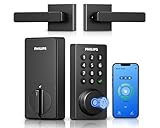
I remember the first time I saw one of those fancy push-button locks on a hotel room door. It felt like stepping into the future. No more fumbling with keys in the dark, no more worrying about losing that little metal thing. Just punch in a code and click, you’re in. But as I’ve spent years messing around with different types of door hardware, from flimsy interior knobs to ridiculously over-engineered smart locks, I’ve come to realize that ‘convenience’ often comes with a hefty asterisk, especially when you start asking: are push button door locks safe?
The truth is, while they’ve gotten a lot better, not all push-button locks are created equal. Some are genuinely solid, while others feel like they’d give way to a stiff breeze and a determined toddler. It’s not as simple as just slapping one on your door and assuming you’re good to go.
The Basic Mechanics: How Do These Things Actually Work?
Look, at their core, most push-button door locks are surprisingly simple machines. We’re not talking about complex digital encryption here for the basic mechanical ones. Think of them as a sophisticated deadbolt, but instead of a keyhole, you’ve got a keypad or a series of buttons. You press a specific sequence – the ‘code’ – and that action triggers a mechanism inside the lock body. This mechanism retracts the bolt, allowing the door to open. When you let go or the timer runs out, it extends the bolt again, securing the door.
For non-keypad types, like those with tumblers you push in a certain order, it’s often a mechanical linkage. You push button A, then button C, then button B, and if the internal pins are aligned correctly for that sequence, a latch releases. It’s like a very basic combination lock built into your door hardware. The more buttons there are, the more potential combinations, and theoretically, the harder it is to guess.
But ‘theoretically’ is the operative word here. I once had a very cheap, all-metal push-button lock on my shed.
It had about ten buttons, and you could push up to five at a time. Sounds complex, right? Wrong. After about ten minutes of fiddling, I realized that certain button combinations produced a distinct ‘click’ from the internal mechanism, even if it wasn’t the ‘correct’ sequence.
It was basically a free-for-all if you were patient enough.
The more modern electronic push-button locks are a step up. They use a small circuit board, a keypad, and a motor or solenoid to retract the bolt. The code is stored in memory.
When you enter the sequence, the keypad sends a signal to the circuit board, which checks if it matches the stored code. If it does, the circuit tells the motor to move the bolt. This is where you start getting into battery life, firmware updates, and the general reliability of electronic components.
A good electronic lock feels smooth and responsive. A cheap one can feel laggy, or worse, just plain dead sometimes. I’ve had instances where an electronic lock just wouldn’t respond, and it wasn’t a dead battery; the whole unit had just decided to take a permanent vacation. That’s a real pain when you’re trying to get into your own house after a long day.
The primary selling point, of course, is the elimination of a physical key. This can be a double-edged sword. On the one hand, no key means no key to lose, no key to copy and give to someone you shouldn’t have, and no keyhole for a determined burglar to pick or drill.
On the other hand, a lost code, a dead battery, or a malfunctioning electronic component can leave you stranded just as effectively as a lost key, and sometimes with less recourse. For a basic mechanical lock, if the combination is forgotten or jammed, you’re often looking at destruction to get it open. For an electronic one, a dead battery is usually manageable with a hidden backup, but a fried circuit board is a whole different ballgame.
What about the ‘safety’ aspect? For purely mechanical push-button locks, the safety is directly tied to the number of possible combinations and the sturdiness of the internal mechanism. A lock with, say, 6 buttons where you can push any 3 simultaneously offers significantly fewer combinations than one where you push them in a specific order. And a poorly constructed internal mechanism can be bypassed through brute force or by simply observing the wear patterns on the buttons.
The real question is whether the convenience offered by these locks outweighs the potential security vulnerabilities, and that’s where things get murky. It’s not a simple yes or no answer. It depends heavily on the quality of the lock, where it’s installed, and what your specific security needs are.
My Own Dumb Mistake: When Convenience Nearly Cost Me
I learned this lesson the hard way a few years back. I was renovating a small workshop at the back of my property. I wanted it secure but also easy to access when I was working out there and needed to pop back into the house. I found this really slick-looking mechanical push-button lock online. It was all brushed steel, promised ‘heavy-duty’ construction, and had a decent number of buttons. The seller even bragged about the ‘thousands of possible combinations’. Seemed perfect. I installed it on the workshop door, feeling pretty smug about ditching the padlock. (See Also: Are Sesame Seeds Kosher For Passoveris Pollock Kosher )
A few weeks later, I was in the middle of a big project, covered in sawdust, and my wife called me to the house for something urgent. I went to open the workshop door, punched in my code – which I’d written down and kept safe, or so I thought – and… nothing. The bolt wouldn’t retract.
I tried again, double-checking the sequence. Still nothing. Panic started to set in.
I checked my written code, and sure enough, I’d mistyped it by one button. But here’s the kicker: the lock was so poorly made that even with the wrong combination, it still felt like it was engaging and disengaging. There was no definitive ‘locked’ or ‘opened’ feel. It just felt… mushy.
I spent a good twenty minutes jiggling the handle, trying variations of the code, and finally had to get out a crowbar to pry the door open enough to get the bolt retracted. I ended up with a splintered door frame and a very expensive, completely useless door lock.
It was a stark reminder that ‘thousands of possible combinations’ means squat if the lock itself is a cheap piece of junk that can be forced open or simply fails to operate.
That experience taught me that the material quality, the internal mechanism’s engineering, and the tactile feedback of the lock are just as, if not more, important than the number of buttons. A flimsy metal casing and internal parts that feel like they’re made of butter won’t stop anyone with a screwdriver for more than a minute. It’s like having a fortress with a paper-thin gate. The external appearance can be deceiving, and I fell for it hook, line, and sinker. I also learned that if you’re going to have a mechanical lock with a code, you better have a backup plan for when it inevitably decides to betray you, or a way to override it without resorting to demolition.
The real kicker was that after I’d forced it open, I took it apart. The internal workings were incredibly crude. Several of the ‘tumblers’ were just bent pieces of metal, and the spring mechanism was weak. It was clear that even if I had entered the ‘correct’ code, a good shove would have probably popped it open. So much for ‘thousands of combinations’. That incident solidified my opinion that while the idea of a push-button lock is appealing, the execution varies wildly. You absolutely have to be discerning.
What to Look for: Avoiding the ‘cheap and Cheerful’ Trap
So, how do you avoid ending up with a decorative piece of metal that offers zero actual security? When you’re looking at push-button locks, whether mechanical or electronic, keep these things in mind. First off, material matters. I’m talking about the actual casing and internal components. For mechanical locks, look for solid metal construction. We’re talking zinc alloy, brass, or stainless steel. If it feels light and hollow, or if the buttons feel loose and wobbly even when not pressed, walk away. You want something that feels substantial in your hand. I’ve picked up cheap locks that felt like plastic painted to look like metal, and those are the first to go.
Secondly, the complexity of the code input. For mechanical locks, the more steps involved in entering the code, and the more independent buttons there are, the better. A lock where you push three buttons simultaneously is inherently less secure than one where you press buttons in a specific sequence of six. Look for locks that require a specific order and have enough buttons to offer a decent number of combinations.
For electronic locks, the interface should be responsive. Buttons shouldn’t stick, and the display (if it has one) should be clear and easy to read, even in bright sunlight or low light. Battery life is also a big deal for electronic models. A lock that requires battery changes every month is a hassle.
Look for models that promise at least a year or more on a set of batteries. And for goodness sake, make sure there’s a manual override or a hidden backup key option. I’ve heard too many horror stories about people locked out because their electronic lock died, and they had no way in.
Consider the environment where you’re installing it. Is it an interior door or an exterior door? A push-button lock on a bathroom door is mostly about convenience. A push-button lock on your front door needs to be built like a tank. For exterior use, you also need to think about weather resistance. Is it rated for outdoor use? Will it corrode or seize up in rain, snow, or extreme temperatures? This is where many cheaper mechanical locks really struggle. They look good for a while, but the elements will chew them up.
Brand reputation and reviews are your friends here. Don’t just go for the cheapest option. Read reviews from actual users, not just the marketing fluff. Look for patterns in complaints. Are people consistently saying the lock jams? Does it fail in cold weather? Does it feel flimsy? Conversely, look for positive comments about durability, ease of use, and responsiveness. For electronic locks, check if the manufacturer has a good track record for customer support and firmware updates. A company that abandons its products after release is a red flag.
Here’s a quick comparison of what to look for: (See Also: Are Sliding Door Locks Common )
| Feature | Good | Bad | My Verdict |
|---|---|---|---|
| Material | Solid metal (zinc alloy, brass, stainless steel) | Plastic, hollow metal, lightweight aluminum | Heavy and substantial. Feels like it could stop a determined shove. |
| Internal Mechanism (Mechanical) | Precise, well-machined tumblers and springs | Loose, crude parts, easily feels ‘mushy’ | Smooth, crisp action. No doubt whether it’s locked or opened. |
| Keypad/Buttons (Electronic) | Responsive, clear markings, good tactile feedback | Sticky, worn, or unresponsive buttons; dim display | A pleasure to use, not a chore. Should feel deliberate. |
| Weather Resistance | IP rated for outdoor use, corrosion-resistant | No rating, looks like it will rust or seize | Key for exterior doors. Don’t skimp here. |
| Backup Access | Hidden key override, emergency battery terminal | None, relies solely on keypad/code | A must for electronic locks. I’d only consider mechanical if I was willing to break it open as a last resort. |
Ultimately, you’re paying for engineering and quality. A lock that’s easy to guess the code for, or easy to physically bypass, is not safe, no matter how many buttons it has. You’re better off with a solid, traditional deadbolt if you can’t find a push-button lock that meets a decent standard of quality.
Are Push Button Door Locks Safe? The Real-World Security Angle
This is the million-dollar question, right? Are push button door locks safe enough for your home? My answer, as always, is ‘it depends.’ For exterior doors, especially front doors, I’m generally more cautious. The primary security concern with push-button locks, especially mechanical ones, is the potential for what’s called ‘code guessing’ or ‘shimming’.
Code guessing is pretty self-explanatory. If a lock has a limited number of buttons or a very simple sequence required, someone could theoretically try every possible combination. This is more of an issue with older, simpler mechanical designs. Modern electronic locks with tens of thousands or even millions of combinations are virtually impossible to brute-force by guessing. However, if the lock has a ‘clunk’ sound or a visible mechanism movement with each button press, a determined individual might be able to deduce the sequence by listening or watching.
Shimming is another tactic. This involves sliding a thin, flexible piece of material (like a credit card or a shim tool) between the door and the frame to push back the latch. Most basic spring latches are vulnerable to this. A deadbolt, which requires a deliberate turn of the cylinder to retract, is much harder to shim. Many push-button locks, especially the cheaper ones, use a spring latch, not a deadbolt mechanism. This is a huge security flaw. If you’re looking at a push-button lock for an exterior door, make sure it has a deadbolt function that is engaged by the code, not just a spring latch. Many higher-end electronic locks do offer this deadbolt functionality.
For interior doors, like bedrooms, offices, or even closet doors, the safety concerns are usually much lower. Here, convenience is often the main driver. You want to keep the kids out of the office, or have a bit of privacy in your study. For these applications, a less solid mechanical push-button lock is generally perfectly fine. You’re not usually worried about sophisticated break-ins for an interior door. The biggest risk is someone forgetting the code and you having to break it down, which is a nuisance, not a security breach.
One area where push-button locks excel is in environments where physical keys are problematic. Think rental properties where you need to change the code frequently, or situations where you have multiple people needing access without the hassle of distributing keys.
For example, I know a small Airbnb host who uses electronic push-button locks on their properties. They can change the code for each guest remotely, and the guests don’t have to worry about losing keys. This drastically reduces the risk of lockouts and lost keys for the host. The safety here is more about managing access than preventing a determined physical attack.
If a guest decides to overstay their welcome and the host changes the code, they’re still secure. The hotel industry has been moving towards key cards and now digital keys for the same reason – ease of access management.
So, to directly address ‘are push button door locks safe?’: For an exterior entry door, a high-quality electronic lock with a deadbolt function, good battery life, and a reliable manual override can be very safe. A cheap, purely mechanical push-button lock on your front door? Absolutely not. It’s asking for trouble. The safety is directly proportional to the quality of the engineering, the complexity of the locking mechanism, and the security features it offers beyond just a simple push-button entry.
Common Mistakes People Make (and How to Avoid Them)
People make a few classic blunders when it comes to push-button locks, and I’ve been guilty of more than one. The biggest one, hands down, is buying the cheapest option available. Seriously, if a lock costs less than a good meal, you should be suspicious. As I learned with that shed lock incident, saving a few bucks upfront can cost you a lot more in the long run, whether it’s replacing a faulty lock or dealing with a security breach. Low-quality materials and poor engineering are the hallmarks of cheap locks. They might look okay from a distance, but up close, they’re flimsy and vulnerable.
Another huge mistake is not considering the type of door and its existing hardware. You can’t just slap any lock onto any door and expect it to perform optimally. If your door is old and warped, a new lock might not align properly, leading to jamming and premature wear. If the door itself is flimsy, a super-secure lock is overkill and might even damage the door frame over time. Understanding your door’s construction and the existing strike plate and deadbolt housing is important. For exterior doors, make sure the lock you choose is designed to replace your existing deadbolt, or at least be compatible with your door’s bore hole and backset. Don’t assume they’re all interchangeable.
For electronic locks, people often forget about the battery. They install it, set their code, and then never think about it again until the battery dies, leaving them stranded. You need to have a routine for checking and replacing batteries. Most electronic locks will give you a warning, but it’s not always foolproof.
Having a backup plan – like a hidden emergency key override or a 9V battery terminal on the outside to power it up in a pinch – is vital. I know a guy who was locked out of his garage for three days because his electronic keypad died, and he didn’t have any way to bypass it. He ended up having to call a locksmith to drill out the cylinder.
Over-reliance on simplicity is also a pitfall. Just because it’s a push-button lock doesn’t mean it’s inherently more secure than a traditional deadbolt, especially if it’s a basic mechanical model. Many people see the keypad and assume it’s high-tech and therefore safe. They don’t investigate the underlying mechanism or the potential for physical bypass. It’s like thinking a car with a fancy dashboard is automatically a safe car. You need to look at the chassis, the brakes, the engine – the actual engineering. For push-button locks, this means understanding if it’s a deadbolt or a spring latch, the quality of the internal components, and the number of actual secure combinations it offers. (See Also: Are The Rams Locked Into The 6th Seed )
Here are a few things people often get wrong:
- Buying the cheapest lock: This is the most common mistake. Low cost usually means low quality and compromised security.
- Ignoring door compatibility: Not all locks fit all doors. Measure your existing hardware and check specifications before buying.
- Forgetting battery maintenance: For electronic locks, regular battery checks and replacements are key. Have a backup plan.
- Assuming simplicity equals security: A push-button doesn’t automatically mean it’s more secure than a well-made traditional lock.
- Not checking for a deadbolt function: Many cheaper models only have a spring latch, which is easily defeated. Make sure it has a deadbolt.
Avoiding these mistakes means doing your homework, investing in quality, and understanding the limitations of whatever lock you choose.
Real-World Use Cases and Practical Tips
Beyond the front door, where else do these things shine? I’ve already mentioned interior doors, but think about specific scenarios. For a home office where you need to keep kids or pets out while you’re on a video call, a simple mechanical push-button lock is perfect. It provides a quick, code-based lock that’s easy to operate and doesn’t require batteries. Same for a craft room or a personal workshop within the house. The convenience factor here is sky-high, and the security risks are minimal.
Another excellent use case is for storage sheds or detached garages. If you’re tired of dealing with padlocks that can rust, get lost, or be cut off, a sturdy push-button lock can be a good alternative. Again, for an exterior structure like a shed, you’ll want something reasonably weather-resistant and solid. I’d lean towards electronic models for garages if they have a good battery backup and a manual override, as they often have more solid locking mechanisms than basic mechanical shed locks. The ability to quickly get in and out without fumbling with a key or padlock is a significant convenience when you’re carrying tools or equipment.
Here are some practical tips based on my experience:
- For exterior doors: Always opt for a deadbolt function. If it’s a spring latch only, it’s not suitable for a primary entry point.
- Invest in quality. Spend the extra $50-$100 on a reputable brand with good reviews. It’s worth it for peace of mind.
- Change default codes immediately. This applies to both mechanical and electronic locks. The default code is often widely known or easily discoverable.
- Write down your code and store it securely (or memorize it!). For mechanical locks, if you forget it, you’re likely in for trouble. For electronic locks, make sure you have a backup.
- Regularly test your lock. Don’t just assume it’s working. Periodically operate it through its full range of motion to make sure it’s not binding or sticking. For electronic locks, check battery levels.
- Consider the environment. If it’s exposed to the elements, make sure it’s rated for outdoor use and is corrosion-resistant.
- For electronic locks, understand the backup system. How do you get in if the batteries die? Is there a hidden keyhole? A 9V battery terminal? Know it before you need it.
- Teach household members how to use it properly. Simple instructions can prevent misuse and accidental lockouts.
My general rule of thumb for front doors is this: If it doesn’t feel absolutely solid, respond crisply, and offer a clear deadbolt action, I wouldn’t trust it with my primary security. If it feels like it could be jiggled open with a credit card or a strong shove, it’s not safe for an exterior door. Push-button locks are fantastic for convenience, but that convenience should never come at the expense of genuine security, especially when it comes to your home’s main entry points.
Are Push Button Door Locks Vulnerable to Picking?
Basic mechanical push-button locks are generally not designed with anti-picking features. If the internal mechanism is simple enough, it might be vulnerable to manipulation techniques similar to lock picking, especially if the tolerances are loose. Electronic push-button locks, on the other hand, don’t have traditional keyways to pick. Their vulnerabilities lie more in electronic hacking or bypass methods, which are different from lock picking.
Can You Get Locked Out of a Push Button Door Lock?
Yes, absolutely. For mechanical locks, you can get locked out if you forget the code, if the mechanism jams, or if it malfunctions. For electronic locks, you can get locked out if the batteries die and there’s no backup access, if the keypad fails, or if the internal electronics malfunction. It’s key to have a backup entry method for any push-button lock, especially for exterior doors.
Are Mechanical Push Button Locks Secure?
The security of mechanical push-button locks varies wildly. Simple ones with few buttons and straightforward mechanisms can be relatively insecure and vulnerable to code guessing or physical bypass. Higher-end mechanical locks with more complex internal workings and a greater number of possible combinations can offer decent security, but they are still generally less secure than a high-quality deadbolt or a solid electronic lock designed for exterior use. Their safety is highly dependent on the quality of manufacturing and the complexity of their design.
What Is the Safest Type of Push Button Door Lock?
Generally, the safest type of push-button door lock is a high-quality electronic lock that incorporates a deadbolt function, has a large number of possible combinations, solid build quality, and a reliable manual override or emergency power source. These locks offer convenience while mitigating many of the security risks associated with simpler mechanical designs. Always prioritize reputable brands and models specifically designed for exterior door security.
Final Thoughts
So, after all this, are push button door locks safe? For interior doors, a decent mechanical one is usually fine for convenience. But for your front door? It’s a different story. You need a solid, well-engineered electronic lock with a deadbolt action, and even then, you’ve got to be vigilant about batteries and have a backup plan. I’ve learned the hard way that the coolest-looking lock isn’t always the smartest choice.
My advice is to do your homework. Read reviews, understand the mechanism, and don’t cheap out. If a lock feels flimsy or has a simple spring latch, it’s probably not safe enough for your main entry. You’re better off sticking with a good old-fashioned deadbolt if you can’t find a push-button model that genuinely impresses you with its security features.
Before you buy, ask yourself: what’s more important, absolute security or maximum convenience? For your main door, I think we both know the answer. But hey, for the shed? That’s a different conversation.