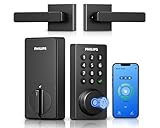
I remember the first time I thought about getting a smart lock. It was years ago, and the idea of keyless entry sounded like living in the future. No more fumbling for keys in the dark, no more worrying if I’d locked the door after leaving in a rush. But then the questions started creeping in. Are smart door locks secure? Could someone hack into my house through an app?
I’ve spent a ridiculous amount of time and money testing these things, and let me tell you, the marketing hype can be deafening. Most people just want to know if they can trust their front door to a piece of tech. So, let’s cut through the noise.
The Tech Behind the Click: How Do They Actually Work?
Look, at their core, smart door locks are pretty simple. They replace your existing deadbolt mechanism. The ‘smart’ part comes from adding electronics: a motor to turn the deadbolt, a communication module (usually Bluetooth, Wi-Fi, or Z-Wave), and a way to power it, typically AA batteries. You control it via a smartphone app, a keypad, or sometimes voice commands.
The connectivity is where things get interesting – and where the potential for trouble lies. Bluetooth locks connect directly to your phone when you’re within range, which is generally pretty secure because there’s no constant internet connection to exploit remotely. Wi-Fi locks, on the other hand, connect to your home network. This means they can be controlled from anywhere in the world, but it also means they’re potentially exposed to internet-based threats. Some systems use a bridge or hub that connects to your Wi-Fi and then communicates with the lock via Bluetooth or Z-Wave. This can offer a balance, keeping the direct lock communication more local while still allowing remote access through the hub.
The authentication process is usually a combination of your phone’s secure connection (like the Bluetooth pairing or your Wi-Fi password) and a PIN code entered on the lock’s keypad or within the app. The app itself is secured with your account login, which should ideally have strong, unique passwords and two-factor authentication enabled. It sounds straightforward, but each of these layers is a potential point of failure or strength, depending on how well it’s implemented by the manufacturer and how diligently you maintain it.
When I first got my hands on a Kwikset Kevo, the touch-to-open feature was mind-blowing. Just reaching out and touching the lock while my phone was in my pocket would engage the deadbolt. It felt like magic. But then I started thinking about the battery life. What if it died? I distinctly remember one frantic afternoon, juggling groceries, trying to get the deadbolt to recognize my phone. It took about three tries, and the low-battery chirp had started. That was my first ‘uh oh’ moment about relying solely on tech.
The actual physical mechanism is usually just a standard deadbolt, so the mechanical integrity is still there. The smarts are layered on top. The motor is usually solid enough, and the gears are designed for repeated use. The real question isn’t if the bolt will turn, but if someone can tell it to turn when they shouldn’t, or if the communication path gets compromised. The physical security of the lock itself is often unchanged from a traditional deadbolt, which is a good thing. It’s the electronic side that introduces the new vulnerabilities.
What to Actually Look for (beyond the Shiny App)
When I’m evaluating a smart lock, I’m not just looking at how cool the app looks. I’m digging into the security protocols they use. Are they using industry-standard encryption like AES-128 or AES-256? This is the digital equivalent of a strong metal door – it makes it a lot harder for someone to intercept and read the data being sent between your phone and the lock. Many cheap or older models might use weaker encryption or none at all, which is a big red flag.
Then there’s the connectivity. For most people, a Bluetooth-only lock is probably the safest bet. It requires you to be physically close, limiting remote hacking attempts. If you need remote access, a Wi-Fi lock with strong network security is necessary. But here’s the contrarian take: I actually prefer systems that use a bridge or hub. Why? Because the lock itself isn’t constantly broadcasting its presence over the open internet. The hub connects to your Wi-Fi, and the lock talks to the hub locally. This adds a layer of complexity for a hacker trying to get in from afar. It’s like having an extra guard at the gate. Brands like Yale often do this well, offering options with separate hubs.
Battery life is another huge factor. I’ve had locks that eat batteries in two months. That’s not convenient, and it’s a security risk if you don’t keep up with replacements. Look for locks that advertise at least six months to a year on a set of batteries. Most use standard AAs, which are easy to find. A good app will also give you plenty of warning before the batteries die, and some even have a backup power terminal where you can connect a 9-volt battery from the outside if they do run dry – a lifesaver I’ve thankfully only had to use once. (See Also: Are There Different Size Holes For Installing Door Locks )
Think about the physical installation too. Does it require specialized tools? Can it be easily bypassed from the outside? Most reputable smart locks are designed to fit standard door preps, but it’s worth double-checking. Some have a more solid build than others, feeling less flimsy when you turn the deadbolt. The keypad, if it has one, should also be decent. I’ve encountered keypads where the numbers wore off quickly, or where you could see greasy smudges indicating the most commonly pressed numbers. That’s a bad sign.
I also look at firmware updates. Does the manufacturer regularly push updates to fix bugs and security vulnerabilities? A lock that hasn’t had a firmware update in two years is probably not getting the security patches it needs. Companies like August and Schlage tend to be good about this, but it’s always worth a quick search for recent security news about the brand you’re considering.
Common Mistakes That Leave Your Door Vulnerable
The biggest mistake people make is treating their smart lock like a ‘set it and forget it’ device. Just like your computer, it needs attention. The number one thing is your home Wi-Fi network. If your Wi-Fi is unsecured, or uses a weak password, a hacker can get onto your network and then potentially target your smart lock. So, make sure your router has a strong, unique password and uses WPA2 or WPA3 encryption. Seriously, if you’re still using ‘password123’ or your router’s default password, you’re practically inviting trouble.
Another common blunder is using weak PIN codes for the lock itself or for the app login. People choose birthdays, anniversaries, or simple sequences like 1-2-3-4. This is a hacker’s dream. If your lock has a keypad, aim for a longer PIN, and never use the same sequence of numbers. The app login is just as important. If you don’t have two-factor authentication (2FA) enabled on your smart lock app, you’re leaving a major door open. Most reputable brands offer it now, and it means even if someone steals your password, they still need a code from your phone to log in.
Over-reliance on one method of entry is also a trap. I heard a story from a friend (okay, maybe it was me) where the app glitched, the keypad battery died simultaneously, and I was locked out of my own house in the pouring rain. That was a fun hour. Always have a backup. This could be a traditional key override on the lock itself, a hidden spare key somewhere truly hidden, or even a simple keypad lockbox on the side of the house that you can access with a code. Don’t put all your digital eggs in one basket.
People also often ignore firmware updates. I’ve been guilty of this myself. An update notification pops up, and I think, ‘Later.’ But those updates often patch security holes that have been discovered. If a company finds a way to exploit your lock, they’ll try to get the word out, and manufacturers will rush to fix it. Ignoring those updates means you’re knowingly leaving yourself exposed to known vulnerabilities. It’s like knowing there’s a hole in your roof and just hoping it doesn’t rain.
Finally, physical tampering is still a thing. While many smart locks are designed to be tamper-resistant, a determined burglar might try to bypass them physically. This is where the quality of the deadbolt and the door frame comes into play. A flimsy door or an old, weak deadbolt won’t stop a determined attacker, no matter how ‘smart’ the lock is. Investing in a solid door and a high-quality deadbolt mechanism, in addition to the smart lock, is a smart move.
Real-World Use: Convenience vs. Constant Worry
The convenience of a smart lock is undeniable. Letting a friend into your house when you’re stuck at work, granting temporary access to a contractor, or simply not having to dig for keys when your hands are full of groceries – these are genuine benefits. I once had a dog walker arrive unexpectedly early. Instead of rushing home, I just sent them a temporary access code via the app. It was incredibly liberating.
However, there’s a trade-off. For me, the initial learning curve and the constant awareness of potential vulnerabilities did add a low-level hum of anxiety. Every time I got an app notification about my lock, I’d instinctively wonder if it was a legitimate use or something more sinister. This is particularly true for Wi-Fi connected locks, which have a more direct line to the outside world. I found myself checking my lock’s activity log more often than I’d care to admit. (See Also: Are Sesame Seeds Kosher For Passoveris Pollock Kosher )
The reliability of the technology is also a factor. While I haven’t experienced any outright security breaches, I have had moments of unreliability. A Bluetooth connection that took a few tries to establish, a keypad that was slow to respond, or the dreaded low-battery warning at an inopportune moment. These aren’t security failures, but they chip away at the ‘set it and forget it’ promise of convenience.
I remember one particularly chilly autumn evening. I was out for a walk, and my partner was still at work. I decided to pop home for a quick change of clothes before meeting friends.
I got to the door, tapped my phone to the lock, and… nothing. The app showed connected, but the lock just wouldn’t engage.
Panic started to set in. I tried restarting the app, toggling Bluetooth. Finally, after about five minutes of frantic tapping and a near-miss with a very cold shoulder, it decided to work.
That experience made me appreciate the simplicity of a good old-fashioned key more than I ever thought I would. It highlighted that while convenience is great, I still need to trust the underlying mechanism to work every single time, without fuss.
For remote access, I’ve found Z-Wave or Zigbee locks, controlled by a dedicated home automation hub, to be more reliable than pure Wi-Fi. The protocols are designed for home automation, and they tend to have a more stable, localized network. Brands like Schlage offer these, and when paired with a good hub like SmartThings or Hubitat, they feel more solid than a lock that’s just trying to connect directly to your router.
A Practical Comparison: What’s Worth Your Money?
When you’re looking at smart locks, the price range is huge, from around $100 to over $300. You get what you pay for, to an extent. Cheaper locks might cut corners on encryption, build quality, or app development. The more expensive ones often have better materials, more features, and more sophisticated security.
| Brand/Model (Example) | Connectivity | Key Features | My Verdict |
|---|---|---|---|
| August Smart Lock Pro | Wi-Fi (with Connect Bridge), Bluetooth | Guest access, activity log, DoorSense™ | Convenient for renters, easy install. Wi-Fi bridge is good. App is solid. |
| Schlage Encode | Wi-Fi, Bluetooth | Built-in Wi-Fi, fingerprint reader option | Very sturdy feel, reliable connection. Fingerprint is a nice touch. App is functional. |
| Yale Assure Lock SL | Bluetooth (Wi-Fi/Z-Wave module sold separately) | Sleek keypad design, tamper alerts | Looks good, feels premium. Need to buy modules for full smart features, which adds cost. |
| Kwikset Halo | Wi-Fi | Voice control integration, remote control | Decent value for a Wi-Fi lock. App can be a bit clunky sometimes. |
My personal preference leans towards locks that offer a combination of Bluetooth and a separate Wi-Fi bridge or a Z-Wave/Zigbee hub. This provides a good balance of local security and remote access. For example, the August Smart Lock Pro, when used with its Connect Wi-Fi bridge, gives you that remote access without the lock itself being directly exposed to the internet. Schlage also makes excellent, solid locks that feel very secure, and their Encode model with built-in Wi-Fi is a solid performer if you don’t want a separate bridge.
The Yale Assure Lock series is also attractive for its design and build quality, but be aware that you often need to purchase Wi-Fi or Z-Wave modules separately, which can drive up the total cost. Kwikset’s Halo line offers integrated Wi-Fi at a more competitive price point, though I’ve found their app experience to be slightly less polished than some competitors. (See Also: Are Sliding Door Locks Common )
Ultimately, the best lock for you depends on your needs. If you’re a renter, a simple Bluetooth lock like some August models that just clamp onto your existing deadbolt might be ideal because they’re easy to install and remove. If you own your home and want maximum control and security, a Wi-Fi lock with a hub or a Z-Wave/Zigbee model integrated into a broader smart home system would be my recommendation. Just remember to factor in the cost of any necessary hubs or bridges when comparing prices.
Are Smart Door Locks Secure? The Faq
Can Hackers Remotely Open My Door?
It’s possible, but unlikely with well-designed and properly secured smart locks. Hackers would need to exploit vulnerabilities in the lock’s firmware, the connecting app, or your home Wi-Fi network. Using strong, unique passwords, enabling two-factor authentication for your app, and keeping your firmware updated significantly reduces this risk.
What Is the Biggest Security Risk with Smart Locks?
The biggest risk often stems from user error and poor network security. Weak Wi-Fi passwords, using default or easily guessable PIN codes for the lock, and neglecting firmware updates create significant vulnerabilities that hackers can exploit more easily than complex remote hacking attempts.
Are Bluetooth Smart Locks More Secure Than Wi-Fi Smart Locks?
Generally, yes, for remote hacking attempts. Bluetooth locks require a hacker to be physically close to the lock to attempt a breach, making it much harder. Wi-Fi locks connect to the internet, opening them up to remote attacks if not properly secured, though they offer greater convenience for remote access.
Do Smart Locks Drain Batteries Quickly?
Battery life varies significantly by model and usage. Some locks can last over a year, while others might need new batteries every 2-3 months. Look for models with good battery life estimates (6+ months) and that provide ample low-battery warnings. Most use standard AA batteries that are easy to replace.
Can I Still Use a Key with a Smart Lock?
Most smart locks retain a physical key override as a backup. This is a important feature, especially if the smart features fail or the battery dies unexpectedly. Always make sure your smart lock has a traditional keyhole or a reliable backup power option.
How Often Should I Update the Firmware on My Smart Lock?
You should install firmware updates as soon as they are available. Manufacturers release these updates to fix security vulnerabilities and improve performance. Ignoring them leaves your lock exposed to known exploits.
Verdict
So, are smart door locks secure? The short answer is: they can be, but it’s not automatic. They offer convenience, but that convenience comes with a responsibility to manage the technology properly. My experience tells me that focusing on strong Wi-Fi security, using complex PINs and 2FA for your app, and keeping firmware updated are a must steps.
I’ve learned that the best smart locks are those that balance solid security protocols with user-friendly features and reliable performance. Don’t just buy the cheapest option or the one with the flashiest app. Do your research, understand the connectivity methods, and always, always have a backup. A secure smart door lock requires a bit of vigilance, but the peace of mind, and the sheer convenience, can be worth the effort.
Before you buy, check recent security reports on brands you’re considering. And remember, the most sophisticated smart lock won’t help if your front door is made of cardboard.