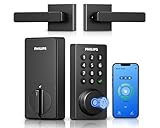
I remember the sheer panic. Standing on my porch after a late-night flight, digging through my bag for my keys, only to realize they weren’t there. I’d left them on the kitchen counter. That was the moment I swore I’d never be locked out (or locked in, for that matter) again if I could help it. It got me thinking: are there door locks that use an app? The answer is a resounding yes, and they’ve saved me more than once since then.
For years, the idea of a ‘smart lock’ sounded like overkill, something for tech nerds with too much money. But the reality is, these things have become genuinely useful, and for many of us, they’ve moved from a novelty to a near necessity. They’re not just about convenience; they can actually make your home more secure if you pick the right ones.
So, Are There Door Locks That Use an App? You Bet.
Let’s cut to the chase: yes, there are door locks that use an app, and they’ve been around longer than you might think. The technology has matured considerably from those early, clunky models that felt more like a science experiment gone wrong. Today, you can find a wide range of smart locks that connect to your smartphone, offering everything from remote locking and opening to guest access and activity logs. It’s not just a gimmick anymore; it’s a practical advancement for home security and convenience.
The core idea is simple: these locks replace your traditional deadbolt with a motorized mechanism controlled electronically. This electronic control is then managed via a wireless connection, most commonly Bluetooth or Wi-Fi, allowing your smartphone to act as the key. For a long time, I was skeptical, picturing my door being hacked open by some teenage prodigy. The reality is, the security protocols have become quite sophisticated, and frankly, a determined thief is more likely to target an easy-to-force window than try to brute-force a well-implemented smart lock’s encryption.
When you ask ‘are there door locks that use an app,’ you’re really asking about functionality. Can I lock my door from my office? Yes. Can I grant temporary access to my dog walker? Absolutely. Can I see who came and went and when? You got it. This level of control was unthinkable just a decade ago for the average homeowner. It’s about giving you more granular control over who enters your home and when, all from the palm of your hand. The shift from physical keys to digital access has been a slow burn, but it’s happening, and for good reason.
The first time I used one, it was a friend’s Airbnb. Punching in a code was one thing, but seeing the app update to ‘door opened’ as my friend arrived remotely to let me in while I was stuck in traffic felt like living in the future. It wasn’t just a lock; it was a communication channel. It made me realize the potential beyond just not fumbling for keys. It’s about a connected home, and the front door is a pretty significant connection point.
How These App-Controlled Locks Actually Work
Understanding the nuts and bolts of how these app-controlled locks function can demystify them and help you make a better choice. At their heart, smart locks are motorized deadbolts that are controlled remotely. The magic happens through communication protocols. Most commonly, you’ll find locks that use Bluetooth for direct communication with your smartphone when you’re within range (say, 30-50 feet). This is generally secure and uses less battery power than Wi-Fi.
However, Bluetooth alone can be limiting. If you want to grant access when you’re miles away, you’ll need a Wi-Fi connection. Many smart locks achieve this by either having built-in Wi-Fi or by using a separate Wi-Fi bridge or hub that plugs into an outlet near the lock and connects to your home network. This bridge then communicates with the lock via Bluetooth or a proprietary radio frequency. This setup allows your phone, connected to the internet anywhere, to send commands through your home Wi-Fi network to the bridge, which then tells the lock what to do. It’s this Wi-Fi bridge setup that truly enables remote control.
Beyond Bluetooth and Wi-Fi, some locks incorporate other communication methods like Z-Wave or Zigbee. These are often used in more complete smart home systems (think hubs like SmartThings or Hubitat) that allow your lock to communicate with other devices, like lights or security cameras. While this adds complexity, it can create powerful automations – imagine your porch light turning on automatically when the lock senses you’re approaching.
Powering all of this is usually a set of AA or 9V batteries. Battery life is a big concern for many, and it varies wildly based on usage and the specific model. A heavily used lock, or one that’s constantly checking in via Wi-Fi, will drain batteries faster. Most manufacturers provide ample warning when the batteries are running low, often through the app and sometimes with an audible chirp from the lock itself. I’ve had one lock that ate through batteries every two months, which was incredibly annoying. My current one, thankfully, lasts about six to eight months. It’s a lottery, honestly.
The actual locking and opening mechanism inside is usually a motor that turns the deadbolt. When you send a command via the app, the motor engages. You can often still use a traditional key as a backup, which is a smart safety feature. Some high-end models even have fingerprint scanners or keypads built-in, offering multiple ways to grant access without needing your phone. This redundancy is key; you don’t want to be reliant on a single point of failure. (See Also: Are There Different Size Holes For Installing Door Locks )
What to Look for: Don’t Buy a Dumb Smart Lock
When you’re looking at the sea of options and asking yourself ‘are there door locks that use an app,’ you need to go beyond just the app part. There are features that separate the genuinely useful from the frustratingly basic.
First off, consider the connection method. Do you want to be able to lock or open your door from anywhere in the world, or just when you’re within Bluetooth range? If it’s the former, you absolutely need Wi-Fi connectivity, either built-in or via a separate hub. I made the mistake of buying a Bluetooth-only lock initially, and while it was fine for letting myself in when I arrived home, it was useless for letting in a friend who forgot their key while I was at work.
Think about the app itself. Is it intuitive? Does it look like it was designed by a teenager in 2005? Read reviews. A clunky, buggy app can ruin the experience of even the best hardware. You want an app that clearly shows the lock status, allows for easy management of users and access codes, and provides a reliable activity log. Activity logs are gold. You can see exactly when the door was locked or opened, by whom, and via what method (app, code, physical key). This is invaluable for peace of mind and troubleshooting.
Guest access is another huge factor. Can you grant temporary, recurring, or permanent access to family, friends, or service providers? This is where smart locks really shine. Instead of juggling spare keys or waiting around, you can give someone a digital key or a time-limited code that automatically expires. Some apps even let you create custom schedules, so a cleaner can only enter during specific hours on certain days. This level of control is a massive upgrade from traditional keys.
Security is, of course, most important. Look for locks that use strong encryption (like AES-256) for communication. While no system is hack-proof, choosing a reputable brand with a good security track record is important. Also, consider the physical security of the lock itself. Is it a sturdy deadbolt? Does it meet ANSI/BHMA grade standards (Grade 1 is the highest)? A fancy app won’t do much good if the lock itself is flimsy and easy to pry open.
Finally, consider battery life and power backup. How often will you need to replace batteries? Does it have a backup power option, like a 9V battery terminal on the outside in case the internal batteries die while you’re locked out? This is a feature I wish I’d paid more attention to on my first purchase. One time, the batteries died unexpectedly overnight, and I had to jimmy it open with a 9V battery I happened to have in my car. It was a stressful few minutes.
Here’s a quick look at some common features and my personal take:
| Feature | My Verdict | Why |
|---|---|---|
| Wi-Fi Connectivity (Remote Access) | Must-Have | Useless if you can’t control it when you’re not home. |
| Guest Access & Scheduling | Highly Recommended | The killer feature for convenience and security. |
| Activity Log | Key | Peace of mind and troubleshooting. See who did what when. |
| Physical Key Backup | Important | Redundancy is always good. Never get locked out due to dead batteries. |
| Fingerprint Scanner | Nice-to-Have | Adds another quick access method, but not key for most. |
| Auto-Lock Feature | Very Useful | Set it and forget it. Great for those “did I lock the door?” moments. |
Common Mistakes People Make (and How to Avoid Them)
Having fumbled my way through a few smart lock purchases, I’ve learned a thing or two about what not to do. The biggest mistake I see people make, and one I’ve made myself, is assuming all smart locks are created equal. They are not. Some are just slightly more complicated deadbolts with a Bluetooth chip, offering minimal actual smart functionality beyond being able to open it from your couch. You need to look for locks with solid apps and true remote access capabilities if that’s what you’re after.
Another common pitfall is overlooking the installation process. While many smart locks are designed for DIY installation, some can be a bit fiddly. If you’re not comfortable with basic tools or following instructions carefully, you might end up with a lock that’s not installed correctly, which can lead to operational issues or even compromise its security. I’ve spent an embarrassing amount of time trying to get a deadbolt to align perfectly. It’s not rocket science, but it requires patience and precision. If you’re unsure, factor in the cost of professional installation.
People also tend to underestimate battery consumption. As I mentioned, some locks are battery hogs. If the thought of replacing batteries every couple of months fills you with dread, make sure to research battery life expectations for the models you’re considering, and check reviews specifically mentioning battery performance. Some brands are much better than others in this regard. I’d rather pay a little more for a lock that lasts a year on a set of batteries than one that needs them monthly. (See Also: Are Sesame Seeds Kosher For Passoveris Pollock Kosher )
Security concerns are valid, but sometimes people overreact or, conversely, underreact. They might worry about Wi-Fi hacking but then leave their Wi-Fi password as ‘password123’. A strong, unique password for your home Wi-Fi and enabling two-factor authentication on your smart lock app (if available) are basic but important steps. Conversely, some dismiss the entire category because of theoretical hacking risks without considering that physical locks can also be picked or bypassed. It’s about risk assessment and mitigation.
Finally, there’s the issue of ecosystem lock-in. Some smart locks work best (or only) with their own proprietary app and ecosystem. If you’re already invested in a smart home hub like Google Home or Amazon Alexa, check for compatibility. You want a lock that can integrate with your existing setup, allowing for voice control or inclusion in routines. Trying to manage multiple, disconnected apps for different smart devices is a recipe for frustration. It’s like having a remote for your TV, one for your soundbar, and another for your streaming box – just get a universal remote, or in this case, a compatible lock.
Real-World Use Cases: Beyond Just Locking the Door
So, you’ve got your smart lock, and you’ve figured out how to use the app. What can you actually do with it that makes life genuinely better? For me, the biggest win has been managing access for service providers. I have a dog walker who comes three times a week. Instead of leaving a key under the mat or rushing home, I can grant her access with a specific, time-limited code that only works during her scheduled hours. The app logs her entry and exit, so I know she completed her visit. This alone has saved me countless hours of logistical headaches.
Another scenario is letting in guests. If I’m out with friends and my partner is arriving later, I can simply send them a temporary digital key via the app. They download the app, get authenticated, and can let themselves in without me having to meet them at the door or give them a permanent code. It feels incredibly smooth. This is particularly handy for short-term rentals, but it’s equally useful for family visits.
The auto-lock feature is surprisingly useful. I’m prone to leaving the house in a rush and then having that nagging thought – “Did I lock the door?” With auto-lock set to engage after, say, two minutes, that worry disappears. The lock just takes care of it. You can usually adjust the timer or disable it if you’re frequently going in and out. It’s a small thing, but it contributes to overall peace of mind.
For those who have kids, it can be a big deal. You can give your kids their own unique codes and track when they arrive home from school. If a child forgets their key, they can still get in. If you need to check if they’re home before you arrive yourself, you can often see the last activity log. It adds an extra layer of oversight and can reduce the number of times a child is locked out.
Remote monitoring of your door’s status is also a big plus. If you’re traveling or just at the office, you can quickly open the app and confirm that your door is locked. This simple act can prevent a lot of anxiety. I’ve done it countless times while on vacation, just to double-check. It’s a quick tap, a glance at the status indicator, and then I can relax.
Finally, integration with smart home systems opens up even more possibilities. Imagine your smart lock detecting you’re approaching your home, automatically opening the door, and turning on your porch lights as dusk settles. Or, if you have a security system, you could set up a routine where arming the system also automatically locks all the smart doors. These aren’t just conveniences; they can contribute to a more efficient and secure home environment.
Are There Door Locks That Use an App? The Faq
What Is a Smart Door Lock?
A smart door lock is basically a digital lock that can be operated remotely via a smartphone app, a keypad, a fingerprint scanner, or even voice commands. It replaces your traditional deadbolt, offering advanced features like keyless entry, remote locking/opening, guest access management, and activity logging. They connect to your home network, typically via Wi-Fi or Bluetooth, allowing for smooth integration with your digital life.
Are Smart Locks Secure?
Reputable smart locks from established brands are generally very secure, employing strong encryption protocols to protect communications. While no electronic device is entirely immune to hacking, the risk of a smart lock being compromised is significantly lower than the risk of a traditional lock being picked or a physical key being lost or stolen. Basic security hygiene, like strong Wi-Fi passwords and app security, is important. (See Also: Are Sliding Door Locks Common )
How Do I Grant Access to Someone Else?
Most smart locks allow you to grant access in several ways. You can often create unique, permanent or temporary PIN codes for individuals, which they can enter on the lock’s keypad. Many apps also allow you to send “digital keys” or grant access remotely via the app, which the recipient can use to open the door using their smartphone. Some systems even support facial recognition or fingerprint scans.
What Happens If the Wi-Fi Goes Down or the Power Goes Out?
If the Wi-Fi goes down, you can still operate the lock using its physical key backup or a keypad, provided it has one. If the batteries die, most smart locks have a backup power option, often a 9V battery terminal on the exterior of the lock that you can connect to a battery to power it up enough to open. As long as the lock’s mechanism itself is functional and you have one of these backup methods, you shouldn’t be left stranded.
How Long Do the Batteries Last?
Battery life varies significantly depending on the model, how often the lock is used, and the type of connection (Wi-Fi tends to drain batteries faster than Bluetooth). Most smart locks will provide ample warning through the app and audible alerts when batteries are low, typically giving you several weeks to replace them. Expect anywhere from 3 months to over a year of battery life, with regular usage.
A Few Practical Tips Before You Buy
If you’re convinced that ‘are there door locks that use an app’ is a question with a ‘yes’ you want to act on, here are a few last bits of advice. First, check your door. Seriously. Not all doors are created equal, and some smart locks require specific door thicknesses or existing deadbolt hole sizes. Measure twice, buy once. Also, consider your Wi-Fi signal strength at your front door. If your Wi-Fi is spotty there, you might have connectivity issues, or you might need a Wi-Fi extender.
Second, think about your family’s tech savviness. If you have older relatives who aren’t comfortable with smartphones, a lock with a solid keypad is going to be more practical than one that relies solely on app control. Redundancy in access methods is key for everyone’s benefit. My dad, bless him, still struggles with his basic flip phone, so the keypad is his lifeline to my house.
Third, don’t be afraid to mix and match brands if you’re building a smart home system, but do your research on compatibility. If you’re heavily invested in Alexa, make sure your chosen lock works with it for voice commands. If you prefer Google Assistant, check that integration. Getting a lock that talks to your existing smart home platform will make the whole experience much smoother and more powerful.
Finally, consider the aesthetics. These things are on your front door, a prominent feature. While function is key, you don’t want something that looks like a bolted-on appliance. Many brands offer different finishes and styles to match your home’s exterior. It’s a small detail, but it matters.
Final Thoughts
So, to circle back to the original question: are there door locks that use an app? Yes, and they’ve evolved from a novelty into a genuinely practical upgrade for many homes. They offer convenience, enhanced security features, and control over who comes and goes. My own experience has moved from skepticism to relying on mine for daily peace of mind.
The key is choosing one that fits your needs – consider connectivity, app usability, guest access, and battery life. Don’t just buy the cheapest option; look for a reputable brand that offers a reliable and secure experience. You’ll likely find that a well-chosen smart lock makes your daily routine a little smoother and your home a lot more secure.
If you’re still on the fence, perhaps start with a model that offers both app control and a reliable keypad. That way, you can dip your toes into the world of app-controlled entry without completely abandoning traditional methods. It’s a smart move for a smarter home.