Look, I’ve been there. Staring at a can of Annie Sloan paint, dreaming of that smooth, effortless finish on a tricky piece of furniture, and wondering if I could just… spray it.
For years, the general consensus whispered that Annie Sloan chalk paint was strictly brush-on. The thick, rich texture was its magic, right? But as I tackled more projects, the allure of the sprayer became undeniable. So, can Annie Sloan chalk paint be sprayed? Let’s cut through the noise.
The Texture Trap: Why Brushing Was the Default
When Annie Sloan first blew up the DIY furniture scene, it was all about that visible brushstroke. It was part of the charm, the ‘handmade’ look that was so different from the factory-smooth finishes of old. The paint itself is formulated with a higher viscosity, meaning it’s thicker than your average latex or acrylic. This thickness is what gives it that signature matte finish and excellent adhesion without much prep. Think of it like a really dense gravy versus a watery broth; you wouldn’t spray gravy through the same nozzle you’d use for broth, right? That’s the core of the problem when people first ask if can Annie Sloan chalk paint be sprayed. The formulation wasn’t built for atomization.
I remember my first dresser. It was a beast, full of intricate carvings and deep drawers. Brushing took FOREVER. I’d get drips in the crevices, missed spots, and the drying time between coats felt like an eternity.
I’d watch videos of people spraying other chalk-style paints and felt a pang of envy. But the Annie Sloan gurus all said ‘no way, José.’ So, I stuck to the brush, sweating it out, and ending up with a finish that was… fine.
But ‘fine’ wasn’t what I was after. I wanted that professional, slick look without the professional price tag.
The thick nature of the paint meant it clung to the brush, offering that lovely texture, but it also meant it wanted to cling to itself and clump up if you tried to force it through a sprayer without some serious coaxing. This inherent quality is why the standard advice was always to brush it on.
The ‘do not spray’ narrative was so strong that for a long time, if you mentioned spraying it, you’d get met with blank stares or outright warnings. It felt like sacrilege.
The fear was always that you’d ruin the paint’s integrity, end up with a lumpy mess, or clog your sprayer so badly you’d have to buy a new one. And honestly, who has the budget for that kind of mistake? I certainly didn’t.
My early DIY days were funded by pennies saved, so experimenting with expensive paint in a way it wasn’t “meant” to be used was a terrifying prospect. But necessity, as they say, is the mother of invention, and my need for speed and a smoother finish was growing by the day.
The Actual Science (and Spraying Secrets)
Okay, so the paint is thick. That’s the main hurdle. To spray any paint, you need to reduce its viscosity so it can be atomized into a fine mist. This means thinning the paint.
For Annie Sloan chalk paint, this isn’t just a splash of water; it requires a bit more finesse. You can use water, but you have to be careful not to add too much, or you’ll dilute the pigment and binder too much, compromising the paint’s adhesion and durability. A general rule of thumb for spraying chalk-style paints is to aim for a consistency similar to heavy cream or whole milk. This usually means adding water gradually, stirring thoroughly, and testing the flow. (See Also: Can Craft Foam Be Spray Painted )
I’ve found that about a 10-20% dilution is a good starting point, but it can vary depending on the specific color and how long the can has been open.
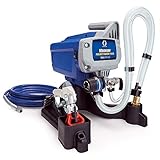
Beyond just thinning, the type of sprayer matters. You’re not going to get good results with a cheap, handheld spray gun designed for small touch-ups. You need a decent electric sprayer, like a Wagner or Graco model, preferably one with adjustable pressure and nozzle settings.
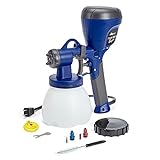
A high-volume, low-pressure (HVLP) sprayer is your best bet. These systems provide a consistent, even spray pattern and allow for more control over the paint flow and air pressure. When I first tried spraying it, I used a basic handheld unit and it was a disaster. Splatters, runs, and a texture like sandpaper.
It was only after upgrading to a proper HVLP sprayer that things started to click. It allowed me to control the fan pattern and the amount of paint coming out, which is key when dealing with a thinned-down chalk paint.
You also need to consider the nozzle size. Thicker paints, even when thinned, require a larger tip size on your sprayer. If the tip is too small, the paint won’t flow through properly, leading to spitting and an uneven finish.
For thinned chalk paint, a tip size of around 1.5mm to 2.0mm is usually a good starting point. Again, this can vary, so always check your sprayer’s manual for recommendations on paint types and tip sizes. It’s a bit of trial and error, but once you find that sweet spot, it’s major. The key is understanding that the paint’s inherent thickness is the challenge, and thinning and the right equipment are the solutions.
It’s not about fighting the paint, but working with it.
Common Mistakes and How to Dodge Them
The biggest mistake I see people make when they ask can Annie Sloan chalk paint be sprayed is trying to spray it straight from the can without thinning. It’s like trying to push a boulder uphill. It just won’t work, and you’ll end up frustrated and with a clogged sprayer. The second biggie is over-thinning. Add your thinning agent (usually water) a little at a time. Stir well, test the consistency by letting it drip off your stirring stick – it should flow smoothly, not like water, but not like a thick syrup either. If it’s too thin, it’ll run and drip like crazy. If it’s too thick, it’ll spray in splatters and won’t atomize properly.
Another common pitfall is not stirring the paint enough after thinning. When you add water to chalk paint, it needs to be mixed thoroughly to make sure the pigment and binder are evenly dispersed. If you don’t mix it well, you’ll get uneven color coverage and potentially areas where the paint doesn’t adhere properly. I learned this the hard way on a rocking chair. I thought I’d mixed it enough, but one armrest came out a slightly different shade and felt rougher. A good 5-10 minutes of gentle but thorough stirring is usually required. Don’t whisk it like you’re making meringue; you don’t want to introduce a ton of air bubbles.
Lastly, people often neglect proper sprayer maintenance. If your sprayer isn’t clean, or if you’re using the wrong nozzle, you’re setting yourself up for failure. Always clean your sprayer immediately after use, especially when spraying water-based paints like Annie Sloan. Dried paint in the lines or nozzle is a nightmare to remove.
Also, make sure your surface is properly prepared. While chalk paint is known for its minimal prep, you still need a clean, dry surface free of grease and grime. (See Also: Can Aluminum Be Spray Painted )
Dust and debris will be highlighted by the spray, and you’ll end up with a rough, unprofessional finish. Think of it like this: you wouldn’t try to paint a masterpiece with a dirty brush, so don’t try to spray a flawless finish with a dirty or improperly set-up sprayer.
Real-World Use: When Spraying Actually Works
So, when is spraying Annie Sloan chalk paint the right move? For me, it’s primarily for large, flat surfaces or pieces with a lot of intricate detail where brushing would be a nightmare. Think large dressers, cabinet doors, tables, or even entire wardrobes.
Spraying allows you to achieve a perfectly smooth, uniform finish without visible brush strokes, which is often desirable for modern or minimalist aesthetics. I recently tackled a massive media cabinet, and spraying it was an absolute lifesaver. I thinned the paint down to a milky consistency, used my HVLP sprayer on a medium setting, and got a flawless finish in about a third of the time it would have taken me to brush it.
The drawers slid in and out perfectly, and the overall look was incredibly professional.
Spraying can also be fantastic for achieving a super-fine, delicate finish on items like picture frames or small decorative boxes. The even mist lays down a thin, consistent layer that’s hard to replicate with a brush. It’s also great if you’re going for a specific look, like a subtle ombre effect or a distressed finish where you want very controlled layers of color. I experimented with spraying two contrasting colors very lightly over each other on some shelving units, and the subtle blending was something I could never have achieved with a brush without making a muddy mess. It opens up a whole new world of creative possibilities when you can control the application so precisely.
However, there are times when spraying isn’t the best option, even if you can technically do it. If you’re aiming for that strong, visible brushstroke texture that’s often associated with Annie Sloan’s traditional look, brushing is definitely the way to go. Spraying inherently smooths out those textures. Also, if you’re working in a small, poorly ventilated space, spraying can create a lot of overspray and fumes, making it impractical and potentially hazardous.
I once tried spraying in my cramped garage, and the air was so thick with paint dust it felt like I was breathing in fog for hours. Not fun, and definitely not safe.
So, while the question can Annie Sloan chalk paint be sprayed has a ‘yes,’ it’s not always the best choice for every project or every desired outcome.
A Few Practical Tips for Success
Here’s the lowdown on what I’ve learned that actually makes spraying Annie Sloan chalk paint work, based on my many, many attempts:
- Consistency is Key: Use a paint viscosity cup or a simple DIY method. Dip a stick into the paint and let it drip. It should flow like thin pancake batter or heavy cream. Aim for a consistency that allows for smooth atomization without being too watery.
- Test, Test, Test: Always, always, always test your spray pattern and consistency on a piece of cardboard or scrap wood before you spray your actual project. Adjust your thinning, pressure, and nozzle settings until you get a clean, even fan pattern with no splatters or runs.
- Thin Coats are Your Friend: Don’t try to achieve full coverage in one go. Apply multiple thin coats, allowing each to dry partially between passes. This builds up the color and finish gradually, reducing the risk of drips and runs.
- Work in Sections: Especially on larger pieces, work in manageable sections. Overlap your spray passes slightly (about 50%) to make sure uniform coverage. Keep your spray gun moving at a consistent speed and distance from the surface.
- Ventilation is A must: Always spray in a well-ventilated area. Wear a respirator mask rated for organic vapors and paint fumes. Open windows, use fans, and ideally, work outdoors if weather permits.
- Clean Your Sprayer Immediately: Seriously, do this. Dried chalk paint in your sprayer is a pain in the rear to remove. Flush thoroughly with water, and then follow your manufacturer’s cleaning instructions.
I also want to add a contrarian opinion here: some people swear you can just add Floetrol or a similar paint extender to Annie Sloan and spray it. I’ve tried it, and while it helps a bit, it doesn’t quite give you the same level of smooth atomization as thinning with water and using the right equipment. Floetrol is more for latex paints and can sometimes alter the chalky finish in ways I don’t always love. Water is cleaner, more predictable for chalk paint, and free! Stick to water first, and only experiment with extenders if you’re still struggling after getting the basics right.
What to Look for in a Sprayer
When you’re figuring out if can Annie Sloan chalk paint be sprayed, the sprayer itself is a huge part of the equation. Not all sprayers are created equal, and you definitely get what you pay for. For Annie Sloan chalk paint, I’d recommend looking for an HVLP (High Volume, Low Pressure) sprayer. These are designed to atomize paint efficiently with less overspray, which is important when you’re dealing with a paint that’s been thinned. They use a large volume of air at a lower pressure to push the paint out, creating a finer mist. This is a big step up from those little handheld pump sprayers that often just spit paint everywhere. (See Also: Can Bug Spray Damage Car Paint )
Your budget will dictate the exact model, but even mid-range electric HVLP sprayers from brands like Wagner (their FLEXiO line is popular for DIYers) or Graco can do a fantastic job. Key features to look for are adjustable air pressure, adjustable material flow, and interchangeable nozzles. Adjustable air pressure lets you control how much air is mixed with the paint, which directly impacts the fineness of the spray. Adjustable material flow means you can control how much paint is being pushed through the nozzle.
Interchangeable nozzles are vital because, as we’ve discussed, you’ll likely need a slightly larger nozzle size for thinned chalk paint than you would for a standard latex paint. A good sprayer should also have a comfortable grip and be relatively easy to clean. I once bought a super cheap, no-name sprayer, and the noise it made was deafening, it leaked constantly, and the spray pattern was utterly useless. It was money down the drain, and it made me almost give up on spraying altogether.
Here’s a quick breakdown of what I look for:
| Feature | Why It Matters for Chalk Paint | My Verdict |
|---|---|---|
| HVLP Type | Better atomization, less overspray, finer finish. | Key. Don’t bother with anything else. |
| Adjustable Air Pressure | Fine-tunes the spray pattern and paint atomization. | Very important for getting that smooth finish. |
| Adjustable Material Flow | Controls paint output, preventing drips and runs. | Important for controlling the amount of paint laid down. |
| Interchangeable Nozzles | Allows for different paint consistencies and desired finishes. | A must-have. You’ll need a bigger tip than you think. |
| Ease of Cleaning | Saves massive headaches post-project. | Priceless. Trust me on this one. |
Don’t skimp too much here. Investing in a decent sprayer will save you time, frustration, and potentially money in the long run by producing better results and lasting longer.
Can Annie Sloan Chalk Paint Be Sprayed? Faqs
Can I Spray Annie Sloan Chalk Paint Without Thinning It?
No, you absolutely cannot spray Annie Sloan chalk paint without thinning it. The paint is formulated to be thick for brush application, providing body and that signature matte finish. Spraying requires the paint to be much more fluid to atomize properly. Attempting to spray it un-thinned will result in clogged sprayers, splatters, runs, and an unusable finish.
What Do I Thin Annie Sloan Chalk Paint with for Spraying?
You can thin Annie Sloan chalk paint for spraying primarily with water. Add water gradually, stirring thoroughly, until the paint reaches a consistency similar to heavy cream or whole milk. Some people experiment with paint extenders like Floetrol, but water is generally the most straightforward and predictable thinning agent for chalk paint when spraying.
What Kind of Sprayer Should I Use for Annie Sloan Chalk Paint?
For spraying Annie Sloan chalk paint, an HVLP (High Volume, Low Pressure) sprayer is highly recommended. These sprayers provide a fine, even mist with less overspray than traditional spray guns. Look for models with adjustable air pressure, adjustable material flow, and interchangeable nozzles, as a slightly larger nozzle tip (around 1.5mm-2.0mm) is often needed for thinned chalk paint.
How Much Do I Need to Thin Annie Sloan Chalk Paint for Spraying?
The exact amount will vary, but as a general guideline, aim for about a 10-20% dilution of water to paint. The goal is a consistency that flows smoothly off a stirring stick without being too watery. Always test your spray pattern on scrap material after thinning to make sure it’s atomizing correctly before applying it to your project.
Will Spraying Affect the Durability of Annie Sloan Chalk Paint?
When done correctly, spraying should not negatively impact the durability of Annie Sloan chalk paint. The key is to thin it properly and apply it in thin, even coats. Once dry, you will still need to seal the paint with a wax or varnish for full protection, just as you would if you had brushed it on. Over-thinning or improper application, however, can compromise adhesion and finish.
Verdict
So, to finally answer the burning question: can Annie Sloan chalk paint be sprayed? Yes, but it’s not as simple as just loading up your sprayer and going. It requires preparation, the right equipment, and a willingness to experiment a little with thinning ratios. I’ve certainly wasted enough paint and time on botched attempts to know that much!
If you’re looking for that perfectly smooth, modern finish and you’ve got a larger piece or a lot of intricate details to cover, spraying is a fantastic option that can save you hours. Just remember to thin it down, use an HVLP sprayer, test your settings, and apply thin coats. Don’t be discouraged if your first try isn’t perfect; it took me a few tries to nail it down.
Ultimately, whether you brush or spray comes down to the look you’re after and the project at hand. But if you’re craving speed and a flawless surface, don’t shy away from giving spraying a shot with your Annie Sloan chalk paint. Just be smart about it, and you might surprise yourself with how good those results can look.