I stood there, staring at the Behr Ultra Exterior Satin paint can, the kind they market for brick and stucco. My neighbor, bless his heart, had insisted I needed it for my crumbling porch columns. “It’s made for this!” he’d boomed. But the thought of brushing that thick, goopy stuff onto every nook and cranny had my arms already aching. The real question in my head, though, was simpler: can Behr brick and stucco paint be sprayed? The can didn’t exactly scream ‘airless sprayer friendly,’ and I’d wasted enough money on paints that claimed to do everything but ended up looking like a lumpy mess after being sprayed. I needed the honest truth, not just marketing fluff.
So, Can You Actually Spray Behr Brick and Stucco Paint?
Alright, let’s cut to the chase. The short answer to whether Behr brick and stucco paint can be sprayed is: generally, yes, but with some pretty big caveats.
Behr makes a lot of exterior paints, and while many are designed with spray application in mind, their specific formulations for brick and stucco often have a thicker body. This isn’t just marketing jargon; it’s often due to the need for better adhesion, filling capabilities, and durability on rough, porous surfaces like brick and stucco. Trying to spray a paint that’s too thick without proper thinning or equipment can lead to spitting, uneven coverage, and a whole lot of frustration. I learned this the hard way on a shed project years ago.
I’d bought a ‘super-adhering’ exterior paint, assumed it would spray like butter, and ended up with a streaky nightmare that took twice as long to back-brush just to look halfway decent. You need to know your paint and your sprayer.
Behr’s own documentation usually has clear guidelines on sprayability for each product line. For their dedicated brick and stucco paints, you’ll often find recommendations for specific tip sizes and sometimes even mention of needing to thin the paint. If you’re looking at a can and the instructions are vague about spraying, it’s a good sign you might need to do some extra prep or consider a different product if spraying is your primary method. Some of their more premium exterior lines, like Marquee or Dynasty, might be more forgiving, but even then, always check the technical data sheet (TDS) if you can find it online. It’s usually buried deep on their website, but it’s where the real specs are, not on the colorful can.
What You Need to Know Before You Load the Sprayer
Before you even think about pulling the trigger on your sprayer, you need to get real with the paint itself. Behr brick and stucco paint is formulated differently than, say, a smooth satin finish for siding.
That extra ‘body’ helps it cling to irregular surfaces and fill tiny pores, which is exactly what you want for durability and protection. But that same quality can make it a beast to spray without the right setup. You’re looking at a paint that might have a viscosity (thickness) that’s higher than a standard latex.
If you try to force it through a sprayer tip that’s too small, or with a pump that doesn’t have enough gallons per minute (GPM) or pounds per square inch (PSI) output, you’re going to have a bad time. I’m talking about a texture that looks like you sneezed paint onto the wall, followed by runs that look like tears down a sad clown’s face. It’s not pretty, and it’s a colossal waste of time and money.
Here’s the deal: most paint manufacturers, including Behr, will specify a recommended tip size for spraying. For thicker coatings, you’ll typically need a larger tip orifice.
Think something in the .017 to .021-inch range, maybe even larger, depending on the specific product and your sprayer’s capabilities. If you’re using a standard homeowner-grade sprayer, you might find yourself limited. My first sprayer was a little electric guy that was fine for interior walls, but it choked on anything thicker than a basic interior flat.
You often need a more powerful unit, like an airless sprayer, for exterior architectural coatings. And even with the right sprayer, you might need to thin the paint. Behr usually has guidelines for thinning, often with water, but you can’t just dump water in willy-nilly. Too much, and you compromise the paint’s integrity and adhesion, which is the opposite of what you want for a surface like brick or stucco that needs to stand up to the elements.
A common recommendation is to thin no more than 10% by volume, but always, always check the TDS or product label for specific instructions.
Sprayer Setups and Tip Sizes: The Nitty-Gritty
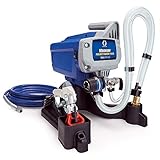
When it comes to spraying Behr brick and stucco paint, the sprayer setup is everything. It’s not just about having a sprayer; it’s about having the right sprayer and the right accessories. For this kind of job, you’re almost certainly looking at an airless sprayer. (See Also: Can Craft Foam Be Spray Painted )
These machines use high pressure to atomize the paint, meaning they break it down into a fine mist. They’re designed for thicker coatings and large areas. A decent electric airless sprayer suitable for exterior projects might set you back anywhere from $300 to $700 or more, depending on the brand and power.
If you’re thinking about renting one, factor that cost in. I once rented a Graco Magnum for a weekend project and it was about $80 for the day, plus I had to buy tips and filters.
It paid for itself in saved time and labor, but it’s an expense.
The real star of the show, though, is the spray tip. This little guy determines how the paint comes out. You’ll see numbers like ‘517’ or ‘413’. The first digit is half of the fan width (so ‘5’ means a 10-inch fan at a standard distance).
The last two digits represent the orifice size in thousandths of an inch. For masonry paints, especially thicker ones, you generally want a larger orifice to allow more paint to flow through. A common starting point for exterior architectural coatings might be a 517 or 519 tip.
However, Behr brick and stucco paint might require something even larger, like a 521 or even a 523, especially if you’re not thinning it significantly. The TDS for the specific Behr product you’re using is your best friend here. It will often list recommended tip sizes.
If you can’t find it, err on the side of a slightly larger tip and adjust your spray distance and speed accordingly. A tip that’s too small will starve the sprayer, leading to spitting and poor atomization, while a tip that’s too large might just be wasteful and cause excessive overspray. It’s a balance, and sometimes, a little trial and error on a scrap piece of material is necessary.
Common Mistakes That Will Make You Cry (and Re-Buy Paint)
I’ve made enough mistakes painting in my life to write a book, and spraying Behr brick and stucco paint is ripe for them. The biggest one? Assuming that because it’s ‘exterior’ and ‘for masonry,’ it’ll spray like a dream straight out of the can.
Wrong. I’ve seen people try to spray paint that’s thicker than gravy through a tiny tip, and the result is a crusty, uneven mess that looks like it was applied with a whisk. This leads to clogged tips, sprayer strain, and paint that doesn’t flow properly. You end up with runs, sags, and bare spots that you then have to try and fix with a brush, defeating the purpose of spraying in the first place.
It’s a vicious cycle.
Another classic blunder is not thinning the paint correctly, or at all. While you don’t want to over-thin, sometimes a little water (or the manufacturer’s recommended thinner) is necessary to achieve the right consistency for your sprayer. Behr’s own guidelines will usually state a maximum thinning percentage.
Stick to that. Going beyond it can compromise the paint’s adhesion, durability, and sheen. I learned this when I tried to spray a porch paint and thinned it too much because I was impatient. (See Also: Can Aluminum Be Spray Painted )
It looked okay initially, but after a season, it started to peel in spots where it had been over-thinned. It was a gut punch. Also, don’t skimp on the sprayer or the tip. Using a cheap, underpowered sprayer or the wrong tip size is like bringing a butter knife to a sword fight.
You need the right tool for the job. And finally, don’t forget proper masking and prep. Overspray can travel surprisingly far, and trying to clean it off delicate landscaping or windows is a nightmare.
Spend the time masking, and then spend a little more time masking again.
My Experience: The Good, the Bad, and the Ugly
I decided to tackle my old garage siding, which was a mix of wood and some questionable stucco patches. I grabbed a gallon of Behr Premium Plus Exterior in a nice deep blue.
I knew I wanted to spray it for speed. My old Wagner sprayer, bless its heart, just wasn’t cutting it for anything thicker than interior eggshell. So, I bit the bullet and rented a Graco Ultra Max.
This thing is a beast, and it came with a decent range of tips. I opted for a 517 tip to start, as the Behr TDS suggested it for general exterior use.
The paint itself felt pretty thick in the bucket, thicker than I remembered from when I’d brushed it years ago. I did add about 5% water, stirred it thoroughly, and tested it on a scrap piece of plywood first. The spray pattern was decent, a nice even fan, but I noticed it was still a little ‘thirsty’ on the edges of the fan – meaning the atomization wasn’t perfect.
I bumped up to a 519 tip, and that made a noticeable difference. The coverage was much smoother, with fewer runs, and the texture on the stucco patches looked really good, almost uniform. It did require some back-brushing in the corners and around trim, but the main siding went up in half the time it would have taken with a roller or brush.
The ‘bad’ part? The overspray. Even with careful masking, some fine mist landed on the driveway and some nearby bushes.
It wiped off the driveway easily enough with a damp rag while it was wet, but the bushes needed a gentle rinse. Also, the sheer volume of paint this thing used was impressive. I think I went through about 15 gallons for the garage, which is more than I would have expected. The ‘ugly’ moment came when I got a clog in the gun.
I hadn’t cleaned the filter properly mid-job, and a bit of dried paint got through. It took me a good 20 minutes to disassemble, clean, and reassemble the gun. So, yes, you can spray Behr brick and stucco paint, and it can save you a ton of time, but you absolutely need the right gear, a bit of know-how, and the patience to deal with potential hiccups.
It’s not a ‘set it and forget it’ operation. (See Also: Can Bug Spray Damage Car Paint )
The Verdict: Is It Worth the Hassle for Behr Brick and Stucco?
So, after all that, is spraying Behr brick and stucco paint worth the extra effort and equipment? For me, on large areas like my garage siding, the answer is a resounding yes. The time savings alone made it worthwhile, and the finish was surprisingly good.
However, it’s not a casual DIYer’s dream. You need to be prepared to invest in or rent a proper airless sprayer, buy the correct tips, understand the basics of paint thinning, and commit to thorough masking and cleanup.
If you’re just painting a small patch of brick or a single accent wall, you might find that brushing or rolling is far less hassle and gives you a more controlled, even finish without the risk of overspray or equipment issues.
Behr brick and stucco paints are designed for durability and adhesion on challenging surfaces. They often have a formulation that benefits from the application method it’s designed for, which might be brushing or rolling for maximum control. When you try to spray it, you’re fighting against its inherent thickness. The key takeaway is that it’s possible, but it demands respect for the product and the tools. If you’re tackling a big job and have the budget and the willingness to learn, spraying can be a fantastic way to get it done. But if you’re on a tight budget or just want a quick touch-up, stick to the brush. It’s honest advice from someone who’s been there.
What Is the Best Tip Size for Spraying Exterior Paint?
The best tip size for spraying exterior paint depends heavily on the paint’s thickness and the sprayer’s capabilities. For most standard exterior latex paints, a tip size between .015 and .019 inches is common. However, for thicker masonry paints like those designed for brick and stucco, you’ll often need a larger orifice, typically in the .017 to .023-inch range, or even larger. Always consult the paint manufacturer’s technical data sheet (TDS) for specific recommendations, as they will list ideal tip sizes for their products. Using a tip that’s too small will lead to poor atomization and spitting, while one that’s too large can cause excessive overspray and waste.
Can I Spray Behr Premium Plus Exterior Paint?
Yes, Behr Premium Plus Exterior paint is generally sprayable. However, like most exterior paints, its sprayability can be influenced by its thickness and the specific formulation. For best results, especially with thicker exterior paints, it’s recommended to use an airless sprayer with an appropriate tip size, often larger than what you’d use for interior paints (e.g., .017 to .021 inches or more). You may also need to thin the paint slightly according to Behr’s recommendations, usually no more than 10% water by volume, to achieve the correct viscosity for smooth atomization. Always check the product’s technical data sheet for specific spraying instructions and recommended tip sizes.
How Do You Thin Behr Brick and Stucco Paint for Spraying?
To thin Behr brick and stucco paint for spraying, you should always refer to the specific product’s technical data sheet (TDS) or label instructions. Generally, Behr allows for thinning with clean water, usually up to a maximum of 10% by volume. It’s important not to over-thin, as this can compromise the paint’s adhesion, durability, and sheen. Stir the paint thoroughly before and during thinning. It’s also a good practice to test the thinned paint on a scrap surface to make sure a proper spray pattern and consistent coverage before applying it to your project. Over-thinning can lead to runs, sags, and a compromised finish.
What Kind of Sprayer Do I Need for Stucco?
For spraying stucco or masonry coatings, you will generally need a more powerful sprayer than what’s typically used for interior walls. An electric airless sprayer is the most common and effective choice. These sprayers use high pressure to atomize the paint, allowing for good coverage on textured surfaces. Look for a sprayer with a good Gallons Per Minute (GPM) rating and sufficient PSI to handle thicker materials. You’ll also need to make sure it can accommodate larger spray tips, often in the .017 to .023-inch range, which are necessary for the viscosity of stucco paints. Rental options are often available if you don’t plan on frequent use.
Can Behr Masonry, Stucco & Brick Paint Be Sprayed?
Yes, Behr Masonry, Stucco & Brick Paint can be sprayed, but it requires careful attention to equipment and preparation. Because this paint is formulated to be thick and provide excellent adhesion and filling properties on porous surfaces, it often needs a more solid spraying setup. This typically involves an airless sprayer with a larger tip size (consult the product’s TDS for specifics, often .017″ or larger) and potentially thinning the paint slightly with water as per Behr’s guidelines to achieve optimal flow and atomization. Improper setup can lead to clogged tips, poor coverage, and runs, so preparation and the right tools are key for success.
Verdict
So, to sum it all up, while the idea of spraying Behr brick and stucco paint might seem like a shortcut, it’s one that comes with a few mandatory stops along the way. You absolutely can do it, and for large projects, it can be a lifesaver in terms of time. But you can’t just grab any old sprayer and expect perfection. You need the right gear – an airless sprayer, the correct tip size, and a willingness to thin the paint if necessary, following Behr’s guidance to the letter.
If you’re not prepared for that level of equipment investment or the learning curve, the old-fashioned brush and roller might be your better bet. They offer more control and are far less likely to give you a headache if you’re new to spraying. The key is to be honest with yourself about your tools, your time, and what you expect from the finish. Don’t let the convenience of spraying trick you into buying the wrong equipment or ruining a good can of paint.
Ultimately, if you’re looking to spray Behr brick and stucco paint, do your homework on the specific product, invest in the right sprayer and tip, and test your setup first. It’s about making an informed decision, not just hoping for the best. So, can Behr brick and stucco paint be sprayed? Yes, but only if you’re ready to do it right.