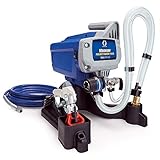
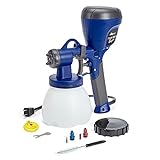
I remember the first time I tried to spray a whole car. I was young, stupid, and thought my fancy HVLP gun was all I needed. It took me three days, I ran out of breath halfway through the second coat, and the finish looked like I’d attacked it with a potato. Then someone, who looked like they actually knew what they were doing, rolled up with this monstrous airless rig. I scoffed. Surely that couldn’t be right. But it got me thinking: can automotive paint be sprayed with an airless spraygun? The short answer is yes, but it’s not as simple as just hooking up your house paint sprayer to your automotive enamel.
Most folks wouldn’t touch an airless for car paint, and honestly, I get it. There’s a lot of baggage and a steep learning curve. But after years of wrestling with different setups and watching seasoned pros, I’ve learned that for certain jobs, and with the right gear, an airless can actually be a surprisingly capable tool for automotive finishes. It’s not the silver bullet everyone thinks it is, but it’s definitely not the absolute no-go some make it out to be.
Airless vs. Traditional Spraying: What’s the Real Difference?
Let’s clear the air right now: an airless spray gun works fundamentally differently than the HVLP (High Volume, Low Pressure) guns most people associate with painting cars. With an HVLP, you’re using a large volume of air to atomize the paint and push it onto the surface. Think of it like a fine mist blown from a fan. This gives you a lot of control and is great for achieving that mirror-smooth, show-car finish. I’ve spent countless hours dialing in my HVLP pressure and nozzle sizes, and the difference it makes is night and day.
An airless, on the other hand, uses hydraulic pressure. It pumps the paint at extremely high pressure (often 1000-3000 PSI, sometimes more) through a tiny nozzle. The paint then expands rapidly as it leaves the nozzle, atomizing itself. It’s less like a mist and more like a powerful, concentrated stream that fans out. Imagine a super-fine, high-pressure water jet. This high pressure means it lays down a lot of material very quickly. I remember the first time I saw one in action on a large architectural job – the speed was astounding. It was like a paint waterfall. It’s this sheer volume and speed that gets people thinking about larger projects, including vehicles.
The big trade-off here is control and finish quality. While an airless can lay down a ton of paint, it’s generally harder to get that ultra-fine atomization needed for a flawless automotive clear coat.
You might end up with more orange peel, or even runs, if you’re not careful. The airless is brute force; the HVLP is finesse.
For touch-ups or priming, it can be a dream. For that final, show-stopping gloss coat?
You’ll be fighting an uphill battle, and most professionals will tell you to stick with what you know works best. My own experience trying to spray a single door panel with a budget airless and a standard enamel left me with a finish that looked more like a construction site than a car.
It wasn’t smooth; it was pebbly, with definite lines where the spray pattern started and stopped. It took a lot of sanding to fix.
Choosing the Right Airless Sprayer for Automotive Paint
So, you’re still here, wondering if you can make an airless work for your automotive project. Alright, let’s talk gear. You absolutely cannot just grab the same sprayer you used to paint your fence. Automotive paints, especially modern urethanes and epoxies, are often thinner and require finer atomization than house paints. That means you need an airless sprayer that’s designed for finer finishes, often referred to as ‘finish’ or ‘fine finishing’ sprayers. These machines typically have lower pressure outputs and, more importantly, a wider range of smaller, more precise spray tips available.
When looking for an airless sprayer that can handle automotive paint, pay close attention to the Gallons Per Minute (GPM) rating and the maximum PSI. For automotive work, you generally want a lower GPM, usually below 0.5 GPM. This indicates a more controlled flow.
The PSI is also key; while some airless guns blast at 3000 PSI, you’ll be looking for something that can operate effectively in the 1000-2000 PSI range for automotive applications. The spray tip is arguably the most important component.
You’ll need a very small orifice size, typically ranging from 0.008 to 0.015 inches. These small tips produce a finer spray pattern, which is key for atomizing automotive paint properly. (See Also: Are All Spray Paints Free Of Led )
Brands like Graco and Titan offer models designed for fine finishing, and you’ll want to make sure they have a good selection of RAC X or similar fine-finish tips.
Don’t skimp on the pump itself. A cheap, undersized pump will struggle to maintain consistent pressure, leading to pulsing and an uneven finish.
You’re looking for a pump that can handle the material viscosity and deliver a steady stream. I invested in a decent Graco unit a few years back for some cabinet work, and the difference in control and finish quality over my old, bargain-basement model was night and day. It cost me about $400, which felt steep at the time, but the results were worth every penny. Trying to spray anything other than thick primer with the cheap one was a nightmare.
For automotive, you’re probably looking at models starting around $500 and going up to $1000 or more for serious work. Remember, if the sprayer is struggling, you’re going to struggle even more to get a good finish.
Paint Preparation: The Unsung Hero (or Villain)
This is where most people, myself included when I was starting out, completely drop the ball. You can have the most expensive airless sprayer and the finest tips in the world, but if your paint isn’t prepped correctly, you’re doomed. Automotive paints, especially two-part urethanes and epoxies, have specific viscosity requirements. They are designed to flow and atomize best at a certain ‘thickness’. An airless sprayer relies on pressure, but it still needs that paint to be the right consistency to break up into fine droplets. If it’s too thick, you’ll get a sputtering, uneven spray pattern, and a finish that looks like sandpaper. If it’s too thin, it can run like crazy.
Most automotive paint manufacturers will specify a recommended viscosity range, usually measured in seconds using a viscosity cup (like a Ford #4 or Zahn cup). You absolutely have to check this. For airless spraying, you often want the paint to be slightly thinner than what you’d use for a conventional HVLP gun, but not so thin that it loses its body.
This is where a good understanding of your specific paint system and your spray gun’s capabilities comes in. I learned this the hard way when I tried spraying a single-stage enamel without checking the viscosity.
It was too thick for my airless setup. I ended up with massive runs and an awful texture that took hours to sand down. I thought the gun was the problem, but it was my mistake. After thinning it down to the manufacturer’s recommendation for spray application (about 15-20% reduction), the airless laid it down much more evenly.
It still wasn’t perfect, but it was a massive improvement.
Beyond thinning, filtration is also key. Automotive paints can contain small particles or contaminants that can clog those tiny airless tips in a heartbeat. You need to make sure you’re using fine-mesh filters both in the gun and in the sprayer’s intake line. Cleanliness is most important. I’ve seen paint shops shut down for a day because a microscopic piece of debris clogged every line and tip. It’s not just about the paint; it’s about the entire system being clean and calibrated. Think of it like preparing a delicate surgical instrument – that level of care is what you need.
Real-World Use: When Does Airless Make Sense for Cars?
So, can automotive paint be sprayed with an airless spraygun? Yes, but it’s not your go-to for a show car’s final clear coat. Where it really shines is for preparatory coats and for less demanding applications. Think about priming. A good epoxy primer or high-build primer applied with an airless can lay down a thick, even coat quickly, filling minor imperfections and providing a solid base for your subsequent coats. I used an airless sprayer to prime an entire ’67 Mustang body in about two hours, a job that would have taken me all day and twice as much material with an HVLP. The finish wasn’t glass-smooth, but it was perfectly uniform and ready for sanding.
Another area where airless excels is for large, flat panels or when painting older vehicles where show-car perfection isn’t the primary goal. If you’re painting a farm truck, a work vehicle, or even just doing a solid color change on a daily driver where a few minor imperfections won’t be the end of the world, an airless can save you a massive amount of time. The speed at which you can cover large areas is unmatched. (See Also: Are Oranges Spray Painted )
I’ve seen guys spray entire fleet vehicles with airless sprayers in a fraction of the time it would take with HVLP. The key is to manage expectations. You’re trading some of that exquisite detail for sheer efficiency.
For those who want a decent, durable finish without the hours of meticulous technique required for a flawless mirror-like surface, an airless can be a very practical choice.
One situation where I personally found an airless incredibly useful was for the undercarriage and chassis of a project car. These areas are rarely seen, and getting a high-gloss finish there is usually overkill. An airless sprayer, with a durable chassis paint or bedliner material, can quickly and effectively coat these tough-to-reach areas with a protective layer. It’s messy, sure, but the time savings and the ability to get good coverage in awkward spots made it a no-brainer. It’s these specific, pragmatic applications where the airless truly earns its keep in the automotive world.
Common Mistakes and How to Avoid Them
You’re not going to get a perfect automotive finish with an airless sprayer on your first try unless you’re incredibly lucky or you’ve done this a thousand times before. The biggest mistake I see, and frankly, one I’ve made myself, is not understanding the paint’s viscosity and the sprayer’s limitations. People assume if it flows, it will spray. Wrong.
Automotive paints, especially clears, need a very specific atomization. Pumping them through a system not designed for that fine spray will result in a rough, pebbly texture known as ‘fisheyes’ or just general poor atomization.
I once tried spraying a clear coat with a general-purpose airless sprayer, and it looked like I’d sprayed it through a sieve. The tiny nozzle on the airless was simply not designed for that specific material and pressure profile.
Another common pitfall is the spray tip. Using a tip that’s too large will lay down too much material too quickly, leading to runs and sags. Conversely, a tip that’s too small might not deliver enough paint, causing dry spray (a dusty, uneven coating). You need to experiment. Buy a few different tip sizes and practice on scrap panels. Get a feel for how the paint lays down at different pressures and distances. This is where that old adage about patience comes in. I remember spending an entire Saturday just practicing spray patterns on cardboard before I even touched the car. It felt like a waste of time then, but it saved me hours of sanding and repainting later.
Over-thinning or under-thinning is also a huge issue. Too thin, and you lose coverage and risk runs.
Too thick, and you get poor atomization and a rough finish. Always, always, always follow the paint manufacturer’s recommendations for thinning specific to spray application.
And don’t forget filtration! Clogged filters are the silent killers of a good paint job. If your spray pattern starts to change mid-coat, check your filters immediately.
I learned this during a truck bed liner application where a piece of debris clogged my tip, and I spent the next hour trying to figure out why the spray had gone from a nice even fan to a pathetic, sputtering line. Cleaning the filters took two minutes, but finding them took way too long.
Airless Sprayer vs. Hvlp for Cars: A Quick Comparison
| Feature | Airless Sprayer | HVLP Sprayer | Verdict |
|---|---|---|---|
| Speed | Very Fast | Moderate | Airless wins for large areas. |
| Finish Quality | Good for primer/base, challenging for clear coat | Excellent for all coats, especially clear | HVLP is king for show finishes. |
| Material Flow | High Volume, High Pressure | High Volume, Low Pressure | Airless lays down more paint, faster. |
| Learning Curve | Steeper for fine finish | Moderate, but technique is vital | HVLP requires more finesse. |
| Cost (Entry-Level) | Can be higher for fine-finish models | Generally more affordable | HVLP often cheaper to start. |
| Best For | Priming, base coats, large areas, non-important finishes | All automotive coats, show finishes, detailed work | Choose based on project and desired outcome. |
Tips for Success with Airless Automotive Painting
If you’re determined to use an airless sprayer for your automotive project, here are a few hard-won tips that might save you some grief. First, don’t be afraid to thin your paint. Many automotive urethanes are designed to be thinned for spraying. For airless, you might even need to thin it a bit more than recommended for an HVLP, but do it incrementally and check your viscosity. A good starting point for many automotive paints with an airless might be around 15-20% reduction, but this varies wildly by product. Always test on a scrap panel. (See Also: Are Mtn De Montana Colors Spray Paints Acrylic )
Second, use the smallest, finest-finish spray tip you can find that still adequately atomizes your paint. Experimentation is key here. I’d recommend a tip in the 0.008 to 0.012-inch range for most automotive paints. You might need to step up slightly for very thick primers, but for most finishes, smaller is better for atomization. Also, invest in a good quality tip extension if you need to reach awkward spots, but be aware that extensions can sometimes affect the spray pattern. I’ve found extensions are great for chassis work, but I avoid them entirely for body panels.
Third, maintain consistent distance and speed. This is the golden rule for any spray gun, but it’s amplified with airless due to the high material flow. Keep the gun moving at a steady pace, overlapping each pass by at least 50%.
If you stop or slow down, you’ll get drips or thick spots. If you move too fast, you’ll get dry spray. Think of it as painting with a very wide, very fast brush.
Lastly, clean your equipment religiously. Automotive paints are expensive and can gum up a sprayer quickly. Disassemble, clean, and lubricate your gun and pump immediately after use. I’ve spent more time cleaning my sprayers than I’d like to admit, but a well-maintained tool is a well-performing tool.
I use a specific solvent for my urethane paints and follow the manufacturer’s cleaning procedures to the letter. It’s a chore, but it prevents costly repairs down the line.
Frequently Asked Questions About Airless Paint Sprayers and Cars
Can You Get a Mirror Finish with an Airless Sprayer on a Car?
Achieving a true mirror-like show car finish with an airless sprayer is extremely difficult, bordering on impossible for most users. Airless sprayers atomize paint using high pressure, which generally results in a coarser spray pattern compared to the fine atomization of an HVLP gun. While excellent for primers and base coats, the final clear coat application typically requires the finesse and control offered by an HVLP gun to achieve that ultra-smooth, deep gloss.
Is It Cheaper to Use an Airless Sprayer for Car Paint?
It can be cheaper in terms of labor time, especially for large areas like priming or applying base coats. An airless sprayer lays down paint much faster than an HVLP. However, the cost of the sprayer itself can be higher for a fine-finish model suitable for automotive use, and you might use slightly more paint due to overspray, though this is often offset by the speed. For a single car project where perfection is key, the overall cost might not be significantly lower, and the risk of a poor finish is higher.
What Kind of Paint Can Be Sprayed with an Airless Sprayer?
Airless sprayers can handle a wide range of paints, including latex, enamels, stains, lacquers, and primers. For automotive use, they are most commonly and effectively used for primers (epoxy, high-build) and sometimes for base coats, especially in single-stage applications or when a perfect finish isn’t the highest priority. Thicker materials like textured coatings and some bedliners are also well-suited for airless application due to their high-pressure delivery system.
Do I Need a Special Airless Gun for Automotive Paint?
Yes, for automotive paint, you absolutely need a fine-finish airless sprayer and tip combination. Standard airless sprayers designed for house paint often have larger nozzles and higher pressure outputs that are too aggressive for delicate automotive finishes. You’ll want a sprayer that offers lower pressure capabilities and access to very small spray tips (e.g., 0.008 to 0.015 inches) to achieve the necessary atomization and control.
Final Verdict
So, to circle back to the big question: can automotive paint be sprayed with an airless spraygun? The answer is a resounding yes, but with significant caveats. It’s not the tool for every job, and it’s certainly not the easiest path to a flawless finish. If you’re aiming for a show-winning, mirror-smooth clear coat, you’re better off sticking with a quality HVLP setup. But for priming, base coats, older vehicles, or any project where speed and efficiency trump absolute perfection, an airless sprayer, when used with the right paint preparation, the correct tips, and a healthy dose of patience, can absolutely get the job done.
Don’t expect miracles on your first attempt. You’ll need to invest in the right equipment, understand your paint’s properties, and practice. Think of it as a specialized tool in your arsenal, not a universal solution. I’ve seen it used effectively for everything from primer on a classic muscle car to a durable finish on a utility vehicle. It’s about matching the tool to the task and managing your expectations. If you go in knowing its limitations and using its strengths, you might just surprise yourself with what you can achieve.
The next time you’re staring down a large painting project, whether it’s prepping a bare metal chassis or laying down a solid color on a work truck, consider if an airless sprayer might be the right tool for the job. Just remember the mantra: right paint, right tip, right pressure, and a whole lot of practice.