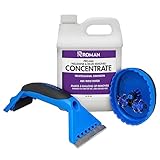
I remember staring at that god-awful floral wallpaper in my first apartment, the kind that smelled faintly of cat pee and regret. My landlord, bless his cheap heart, said it was ‘vintage charm.’ I knew it was a nightmare. The first thing I did was grab a bottle of that brightly colored spray that promised to make my life easier. Spoiler alert: it didn’t quite live up to the hype, not on its own anyway. So, does the spray for wallpaper removal work? The honest answer is a resounding ‘sometimes, but not like you think.’ It’s a tool, not a magic wand, and like any tool, how you use it makes all the difference.
I’ve peeled, scraped, and swore my way through more rooms than I care to admit, and I’ve learned a thing or two about what actually gets the job done without costing you an arm and a leg or your sanity.
The Big Question: Does the Spray for Wallpaper Removal Actually Work?
Let’s cut to the chase. When you’re facing down a wall that looks like a Jackson Pollock painting gone wrong, and it’s covered in layers of paper that have been glued, steamed, and probably cried on for decades, you’re looking for a miracle. That’s where wallpaper remover spray comes in, promising to loosen the adhesive, make the paper slide right off. And sometimes, it does.
But there’s a huge ‘if’ attached to that. The effectiveness of these sprays, which are basically a cocktail of water and surfactants (think fancy soap) with sometimes a bit of solvent, hinges on a few key things: the type of wallpaper, the adhesive used, and how long you let it sit.
For older, vinyl-coated wallpapers or those with water-soluble glues, a good spray can be a lifesaver. It breaks down the starch or latex-based adhesives, making them gooey and pliable. I once tackled a bathroom with a thin, almost tissue-like paper that had been up for 20 years. The spray worked like a charm, softening it enough to peel off in surprisingly large sheets.
It felt like I was actually winning.
However, I’ve also encountered wallpapers so tenacious, so utterly bonded to the drywall, that the spray might as well have been hairspray. These are often the really thick, textured, or foil-backed papers, or those applied with modern, industrial-strength adhesives. In those cases, the spray might soften the top layer, but the paper just sort of disintegrates into a soggy mess, leaving behind a sticky residue that’s even harder to deal with.
It’s like trying to unstick two pieces of superglue with just a damp cloth. The spray is just water and soap, after all; it can only do so much against a bond that’s basically become one with the wall.
So, while it’s a important part of the process for many situations, it’s rarely the only thing you’ll need.
What’s Actually in That Bottle and Why It Matters
The active ingredients in most wallpaper remover sprays are pretty straightforward. You’ve got your water base, which is the primary solvent. Then, you have surfactants, like sodium lauryl sulfate or similar compounds. These guys are the real workhorses. They reduce the surface tension of the water, allowing it to penetrate the porous paper and reach the adhesive underneath more effectively. Think of it like adding dish soap to greasy water; it helps break things down. Some stronger formulas might include a mild solvent, like a glycol ether, which can help dissolve certain types of glues more aggressively. But for the most part, you’re dealing with a glorified soapy water solution.
The common advice you’ll find everywhere is to ‘saturate the paper and let it soak.’ And yes, that’s generally true.
But how much to saturate and how long to soak is where the nuances lie. If you have a wallpaper that’s not porous – like vinyl or foil-backed – the spray just beads up and runs off. You need to score the surface first.
This is a important step most DIY guides gloss over. You can use a special scoring tool (which looks like a tiny pizza cutter with sharp little spikes) or even a stiff brush or a putty knife to create tiny holes. (See Also: Does Peel And Stick Wallpaper Damage Walls When Removed )
These holes allow the spray to actually soak into the adhesive. Without scoring, you’re just wasting spray and time on wallpaper that won’t absorb it. I learned this the hard way on a bathroom with a thick, washable wallpaper.
I sprayed and sprayed, and nothing happened. It was only when I was about to give up and call a professional that I remembered seeing a scoring tool mentioned in a forgotten corner of a forum. Once I scored it, the spray started to work, albeit slowly.
It’s these little details that make or break the experience.
When the Spray Is Your Best Friend (and When It’s Not)
So, when does this spray actually shine? It’s fantastic for older homes where wallpaper was likely applied with simpler, water-soluble adhesives. Think of those beautiful, but aged, patterns from the 60s and 70s. The spray gets in, loosens the glue, and you can often peel the paper off in large strips, maybe with a little scraping needed for stubborn spots. It’s also useful as a first pass on almost any wallpaper. Even on tough jobs, it softens the paper and makes scraping easier. It’s way better than dry scraping, which can gouge your walls.
The flip side is when you’re dealing with modern, high-performance adhesives or papers that are designed to be a pain in the backside. Wallpaper specifically marketed as ‘peelable’ or ‘strippable’ is often designed to come off dry, or with minimal effort. But sometimes, even those can be a nightmare if they’ve been up for years and the adhesive has cured like concrete. Then there’s wallpaper paste that’s been mixed with primer or paint. That stuff is practically a part of the drywall. In these scenarios, the spray alone is like bringing a water pistol to a bazooka fight. You might need a steamer, a chemical stripper, or even aggressive scraping with a sharp blade, often in conjunction with the spray.
My own experience with a ‘strippable’ vinyl wallpaper in a rental was a lesson in frustration. It was supposed to peel off in sheets. Instead, it came off in tiny, confetti-like pieces, leaving a gummy residue. The spray softened the paper, yes, but the underlying glue was a nightmare. I ended up using a combination of the spray, a metal scraper, and a lot of elbow grease, taking breaks every 15 minutes to avoid throwing my scraper through the window. It took me three weekends to get that one room cleared.
Wallpaper Removal Spray: A Comparison of Approaches
| Method | Pros | Cons | Verdict |
|---|---|---|---|
| Spray Only | Easy to use, readily available, generally safe | Ineffective on tough adhesives or non-porous papers, can leave residue | Good for simple jobs, but often needs backup |
| Scoring + Spray | Significantly improves spray effectiveness on vinyl/foil papers | Requires an extra tool, can be time-consuming to score | Highly recommended for most wallpaper types |
| Steamer | Very effective at breaking down most adhesives | Can be messy, risk of water damage if overused, requires equipment rental/purchase | Best for stubborn, layered, or heavily adhered papers |
| Chemical Stripper | Can be very powerful for the toughest glues | Harsh chemicals, requires good ventilation and safety gear, can damage drywall if not careful | Use as a last resort for extreme cases |
The Nitty-Gritty: How to Actually Make It Work
Okay, so you’ve got your spray. Now what? First, protect your floors and furniture. Drop cloths are your best friend.
Open windows for ventilation, even if the spray claims to be ‘low odor’ – trust me, you don’t want to breathe that stuff in all day. Then, decide if you need to score. If it’s vinyl, foil, or a thick, washable paper, get out that scoring tool. Don’t go crazy, just enough to make little dimples.
Then, start spraying. Don’t just mist it; really soak the area. You want the paper to look visibly wet, but not dripping so much that it’s running down the wall in rivers and pooling on your drop cloth. The key is to let it sit.
This is where most people rush. The bottle might say ‘5-10 minutes,’ but for stubborn wallpaper, you might need 15, 20, or even longer. I’ve even reapplied the spray after the first soak if it doesn’t seem to be working. You’re looking for the paper to start to soften and bubble a bit.
Once it feels like it’s giving way, grab your putty knife or scraper. Hold it at a low angle to the wall to avoid gouging the drywall beneath.
Start in a corner or an edge and gently work your scraper under the paper. If it comes off easily, great. If it’s still stuck fast, spray again, let it soak longer, and try again. (See Also: Can You Remove Wallpaper To Repaint )
Don’t force it. For the adhesive residue left behind – and there will be residue, especially with older papers – you’ll likely need to go over it again with the spray or a dedicated adhesive remover.
Sometimes a scrub brush and warm water will do the trick for lighter residues. For really tough stuff, a specialized product or even a light sanding might be necessary. Patience is truly the secret ingredient here.
Rushing the process is how you end up with torn walls and a deeper sense of despair.
Common Mistakes That Make You Hate Wallpaper Removal
Oh, the mistakes I’ve made so we don’t have to. The biggest one? Expecting the spray alone to do all the heavy lifting. It’s like thinking a hammer alone can build a house.
You need the right tools and technique. Another huge pitfall is not scoring. If you have anything other than plain, old, porous paper, you’re setting yourself up for failure if you skip scoring. I’ve seen people spend hours spraying a vinyl-covered wall with zero results because they didn’t pierce the surface.
Then there’s the opposite mistake: using way too much water or letting it soak for too long on certain types of drywall. While the spray is mostly water, excessive saturation can weaken the paper facing on your drywall, leading to gouges when you scrape. You want it wet enough to work, but not so wet that your wall turns to mush.
A good rule of thumb is to work in manageable sections, maybe 3×3 feet at a time, so you can keep the sprayed area moist without oversaturating the entire wall.
Lastly, and this is a big one for me, is not having the right tools for scraping. A flimsy plastic scraper or an old credit card just won’t cut it for anything but the most cooperative wallpaper. You need a good quality metal putty knife with a sharp edge (but be careful!), or a dedicated wallpaper scraper. And when I say sharp, I mean sharp enough to get under the paper, not so sharp that you’re digging into the drywall.
Holding the scraper at a low angle is important. Aim for about 30 degrees.
If you’re holding it straight up and down, you’ll inevitably dig into the drywall and create gouges that you’ll then have to patch and sand. I once spent a whole day scraping and ended up with what looked like a battleground on my wall.
It turned out I was holding the scraper too aggressively. Once I adjusted my angle and used more of a lifting motion, the paper came off much cleaner, with less damage.
What About Steaming? Is Spray Even Necessary?
This is where the contrarian in me kicks in. Everyone says you need a steamer for tough jobs. And yes, steamers are powerhouses. (See Also: Can You Use Removable Wallpaper On Desk )
They use heat and moisture to liquefy even the most stubborn old wallpaper paste. If you’re facing multiple layers of paper or old, hardened glue, a steamer will absolutely make your life easier. You rent one, or buy a cheap one, and basically steam sections of the wall until the paper softens. It’s effective.
BUT, is the spray ever necessary if you have a steamer? I’d argue that for most wallpaper, a good spray and scoring is often sufficient. A steamer can be overkill, especially in smaller rooms. It can also be messy, with water running everywhere, and there’s a risk of damaging your drywall if you over-steam an area.
Plus, renting or buying a steamer adds to the cost and hassle.
I’ve found that a good quality wallpaper remover spray, combined with scoring and patient scraping, can handle 80-90% of wallpaper jobs. The spray helps break down the adhesive before you even introduce the heat and moisture of a steamer. So, you might end up steaming for less time, or needing less aggressive scraping.
For very, very old houses with multiple layers of ancient paste, a steamer might be the ultimate weapon. But for the average homeowner tackling a room or two, the spray is a more accessible and often sufficient starting point. It’s the first line of defense.
If the spray and scoring aren’t cutting it, then consider a steamer or a chemical stripper. But don’t default to the steamer just because it’s the ‘heavy-duty’ option. Sometimes, simpler is better, and the spray, used correctly, is the simpler, cheaper, and often effective solution.
Faq: Your Burning Wallpaper Removal Questions
How Long Should I Leave the Wallpaper Remover Spray on?
This is the million-dollar question! The bottle usually says 5-10 minutes, but that’s often just a starting point. For most wallpaper, especially if you’ve scored it, you’ll want to leave it on for at least 15-20 minutes. For really stubborn, old wallpaper, you might need to let it soak for 30 minutes or even reapply the spray after 15-20 minutes and let it soak again. You’re looking for the paper to feel soft and pliable, not dry and stiff.
Can I Just Use Hot Water and Dish Soap Instead of Spray?
Yes, you absolutely can, and it’s basically what most wallpaper remover sprays are made of anyway. Hot water is a great solvent for many wallpaper adhesives, and a good surfactant like dish soap helps break down the glue and allows the water to penetrate better. Just mix a generous amount of dish soap into a bucket of hot water. Apply it generously with a sponge or roller and let it soak. It might not be quite as effective as a commercial product designed for the job, but it’s a cost-effective alternative that often works well.
Will the Spray Damage My Drywall?
The spray itself, being primarily water and soap, is unlikely to damage drywall significantly unless you’re leaving it saturated for days. The real risk comes from over-saturation, which can weaken the paper facing of the drywall, making it prone to tearing when you scrape. It also comes from aggressive scraping with a sharp tool, which can gouge the drywall material itself. Work in manageable sections, don’t let water pool excessively, and use a moderate scraping technique to minimize drywall damage.
What If the Spray Doesn’t Work at All?
If the spray isn’t making any headway, it means the adhesive is too tough for a simple water-based solution alone, or the wallpaper is not porous. In this case, your next steps would be to make sure you’ve scored the wallpaper thoroughly if it’s vinyl or foil-backed. If scoring doesn’t help, you’ll likely need to move to a more powerful method like a wallpaper steamer or a chemical wallpaper stripper. These methods use more aggressive heat, steam, or chemical action to break down the adhesive effectively.
Final Thoughts
So, does the spray for wallpaper removal work? Yes, but with major caveats. It’s a valuable tool, especially when paired with scoring and patience, and it’s often the best first step. It’s not a magical potion that will make paper vanish. You’ll probably need a scraper, maybe some elbow grease, and definitely a good dose of patience. Don’t expect miracles, but don’t dismiss it as useless either. It’s a workhorse, not a show pony.
My advice? Go into it with realistic expectations. Arm yourself with the spray, a scoring tool, a good scraper, and a willingness to put in the time. If it’s a simple paper, you might be done in an afternoon. If it’s a beast, well, you’ll have learned something about your home and your own resilience. Just remember to protect your floors, open a window, and take breaks. You’ll get there.