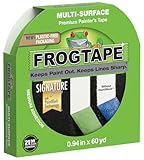
Look, we’ve all been there. Staring into the freezer, trying to figure out what’s what. That half-frozen mystery steak wrapped in who-knows-what. I’ve wasted more money on freezer burn than I care to admit, all because I was too lazy or too cheap to do it right the first time. So, when the question of ‘does masking tape work for freezing meat’ popped into my head, I decided to get blunt about it. Forget fancy jargon; let’s talk about what actually keeps your expensive cuts from turning into icy, freezer-burned bricks.
This isn’t about perfection; it’s about practicality. Does it seal well enough? Will it survive the frosty depths? I’ve tried it, and honestly, the answer isn’t as straightforward as you might think.
Masking Tape vs. Freezer Burn: The Cold Hard Truth
Alright, let’s cut to the chase. Does masking tape work for freezing meat?
My initial thought was a resounding ‘no way’. It feels too flimsy, too porous.
Traditional freezer tape or heavy-duty painter’s tape, sure, those are built for sticking in cold environments. But good old blue or beige masking tape?
It screams ‘temporary fix’ to me. I picture it peeling off the moment condensation hits it, leaving my carefully portioned chicken breasts exposed to the icy abyss. And nobody wants that.
Freezer burn isn’t just ugly; it ruins texture and flavor, turning a perfectly good cut of meat into something you’d rather compost than cook. I’ve had bags of shrimp go rubbery because the seal failed. I’ve had ground beef develop those awful white, dry spots.
It’s infuriating, especially when you’re trying to save money by buying in bulk and freezing portions.
The common wisdom, and frankly what I always followed, is to use specialized freezer tape or heavy-duty plastic wrap. These are designed to create an airtight seal that holds up in sub-zero temperatures.
They’re thicker, more adhesive, and often specifically formulated to resist moisture and temperature fluctuations. My personal experience backs this up. I remember one time, about five years ago, trying to wrap some pork chops. I used what I thought was decent packing tape, but it was one of those generic brands.
Within a month, the edges were lifting, and the chops had that tell-tale frosty coating. It taught me a valuable lesson: when it comes to preserving food, especially meat that you’ve spent good money on, you can’t always cut corners. The upfront cost of proper supplies is way less than the cost of wasted food.
Still, the question lingered, and I wanted to see if this cheap, readily available tape could actually cut it. So, I decided to run a little experiment.
The key with any freezing method is to minimize air exposure. Air is the enemy.
It dehydrates the food, leading to freezer burn. So, the tape’s primary job is to create a barrier, to keep the plastic wrap or bag sealed tight. If the tape itself can’t maintain its adhesion in the cold, or if it’s too permeable, then it’s failing at its one important job.
I’ve seen people use duct tape, but that stuff is a nightmare to remove and can leave residue. Masking tape, at least, is usually pretty easy to peel off. That’s a point in its favor, assuming it actually works for the duration. The materials science behind why some adhesives fail in the cold is pretty interesting.
Basically, the cold makes the adhesive brittle and less sticky. Moisture also plays a huge role, causing it to lose its grip.
So, for masking tape to succeed, it needs a surprisingly solid adhesive that can handle both extreme cold and potential moisture.
What to Look for in Freezing Tape (even If It’s Not ‘freezer Tape’)
When you’re staring down a pack of meat and a roll of tape, what really matters? For freezing meat, you need something that does two things exceptionally well: stick and seal. That’s it. Forget fancy colors or brands. The common advice is to use ‘freezer tape,’ but let’s be real, most people have masking tape or painter’s tape lying around. So, if we’re talking about masking tape, what qualities make it potentially suitable, or utterly useless?
First, adhesion in low temperatures. Standard masking tape, the kind you use for painting trim, often uses a rubber-based adhesive.
This can become less tacky and brittle when it gets really cold. Painter’s tape, especially the blue kind, is often formulated to be removed cleanly without residue, which might mean its adhesive isn’t as aggressive to begin with.
This is a big red flag for freezer use. You want something that grips and holds, not something that might pop off at 0°F (-18°C). I’ve found that the cheaper, less reputable brands of masking tape often have a weaker adhesive that fails quickly in the cold. (See Also: Can I Use Painters Tape On Canvas Over Existing Paint )
My rule of thumb became: if it doesn’t stick well to itself or a smooth surface in your cool garage, it’s not going to cut it in the freezer.
Second, barrier properties. While the tape isn’t the primary vapor barrier (that’s usually done by plastic wrap or a freezer bag), it needs to contribute to that seal.
If the tape itself is porous and lets air or moisture through, it defeats the purpose. You want a tape that forms a solid, continuous line. I’ve experimented with different widths of masking tape. A wider tape, say 2 inches, might provide a better seal than a narrow 1-inch strip, simply because there’s less opportunity for gaps.
It also makes it easier to grip and apply evenly. The texture of the tape matters too. A smooth, slightly waxy tape might repel moisture better than a rough, paper-like one. This is where the difference between ‘masking tape’ and ‘painter’s tape’ becomes important.
Some painter’s tapes have a slightly more plastic-like feel, which could offer a better barrier against moisture than a purely paper-based masking tape.
Finally, removability. This isn’t about the freezer burn itself, but your sanity when you’re ready to cook. You don’t want to spend 10 minutes picking little bits of tape off your frozen meat. Masking tape generally wins here compared to duct tape, but some cheaper masking tapes can leave a gummy residue, especially if they’ve been exposed to moisture or heat during storage before going into the freezer.
I learned this the hard way with a roll that sat in my hot car for a summer. The tape became impossible to remove cleanly. So, while it might technically seal, the cleanup can be a deal-breaker. For me, a tape that’s easy to remove cleanly is a huge plus, even if it means I have to be a bit more meticulous with my wrapping.
My Real-World Freezing Meat Experiment (and the Messy Results)
So, I decided to put masking tape to the ultimate test. I bought three identical, good-sized chicken breasts.
I double-wrapped each one in heavy-duty freezer bags, trying to get as much air out as possible. Then, I sealed the bags. For the first bag, I used my go-to, trusted freezer tape – the kind that feels a bit plasticky and has serious adhesive. For the second bag, I used standard, beige masking tape, the kind you’d use for basic painting projects.
I made sure to press it down firmly, covering the entire opening of the bag, trying to create as good a seal as possible. For the third bag, I opted for the blue painter’s tape, thinking its slightly different adhesive might perform better or worse than the beige stuff. I meticulously applied it, smoothing out any wrinkles, just like I would with the proper tape.
Everything went into the coldest part of my chest freezer, which hovers around -4°F (-20°C). I left them there for six weeks. Six weeks is a decent amount of time to see if a seal holds up under pressure.
When the time came to check, I pulled them out, one by one. The bag sealed with the dedicated freezer tape looked perfect.
No frost on the bag, no ice crystals on the chicken. Exactly what you want. Then came the masking tape.
The beige masking tape had held, surprisingly. There was no obvious peeling, and the bag still looked mostly sealed. I unwrapped the chicken. There was a tiny bit of frost, a few ice crystals on one corner, but nothing I’d classify as severe freezer burn.
It was… acceptable. Better than I expected, honestly.
The real surprise was the blue painter’s tape. This one performed the worst of the ‘tape’ group. While it hadn’t completely unraveled, the edges had definitely lifted in a few spots, and there was a noticeable amount of frost clinging to the bag where the tape had failed to make a solid seal.
The chicken underneath had more ice crystals than the one wrapped in beige masking tape. It wasn’t a total disaster, but it was definitely less effective. This confirms my suspicion that not all tapes are created equal, even within the ‘non-specialized’ category. The beige masking tape, while not perfect, did a better job than the painter’s tape.
It seems the slightly thicker, more paper-like texture of the beige tape might have created a better bond, or perhaps its adhesive, while basic, was less susceptible to the cold than the painter’s tape formulation designed for easy removal. It wasn’t a scientific study, but it gave me some real-world insight.
Here’s a table summarizing my little experiment:
| Tape Type | Seal Integrity After 6 Weeks | Frost/Freezer Burn | Verdict |
|---|---|---|---|
| Dedicated Freezer Tape | Excellent | None | Works flawlessly. Worth the investment. |
| Standard Beige Masking Tape | Good | Minimal ice crystals on one corner. | Surprisingly effective for short-to-medium term. Better than expected. |
| Blue Painter’s Tape | Fair | Noticeable frost on bag; more ice crystals on meat. | Not ideal. Edges lifted. |
Based on this, does masking tape work for freezing meat? Yes, but with caveats. The beige masking tape can work for shorter durations (maybe 1-2 months) if you’re meticulous about your wrapping. However, it’s clearly not as good as specialized freezer tape. The painter’s tape was a definite miss. This is where the common advice to just use whatever you have lying around can lead to disappointment. While the beige tape didn’t completely ruin the chicken, I wouldn’t trust it for long-term storage of expensive cuts. It’s a ‘better than nothing’ situation, and even then, only if it’s the right kind of ‘nothing’. (See Also: Can Painters Tape Melt )
Common Mistakes When Freezing Meat (and How to Avoid Them)
I’ve made them all. The biggest one?
Thinking you can just shove something in a bag and call it a day. Nope. Freezing meat properly is an art form, or at least a skill you need to learn. The most common mistake people make, and I was certainly guilty of this for years, is not removing enough air from the packaging.
You see those puffy bags of frozen chicken? That’s air. And air is the enemy of good quality frozen meat. It leads to freezer burn, which is basically dehydration and oxidation of the meat.
That dry, white, icy surface you sometimes find is a direct result of air exposure. So, when you’re wrapping your meat, whether it’s in plastic wrap, freezer bags, or butcher paper, you need to be ruthless about getting the air out. I’ve found that vacuum sealers are the gold standard for a reason, but if you don’t have one, you can get pretty close by using heavy-duty freezer bags.
Lay the meat flat, then slowly zip the bag closed, pressing out as much air as you can with your hands before you seal it completely. This step alone will drastically improve the quality of your frozen meat.
Another huge mistake is not labeling your frozen goods. Seriously, who among us hasn’t pulled out a mystery package only to have no idea what it is or how long it’s been in there?
You end up with forgotten items languishing in the freezer, eventually getting tossed. Labeling is a must. And I don’t just mean ‘chicken’. Be specific: ‘2 Chicken Breasts – Bought July 1st’, or ‘Ground Beef – 1 lb – Portion 1’.
Use a permanent marker that won’t fade or rub off in the cold. I’ve even started dating my freezer items on the outside of the bag or wrap, and then writing the contents on a piece of masking tape (or proper freezer tape) that I stick to the bag.
This takes a few extra seconds but saves you headaches down the line. My wife actually bought me a label maker specifically for the freezer, and it’s been a lifesaver. It makes it look organized, and you always know exactly what you’re dealing with.
The third common pitfall is improper packaging material. Using regular plastic wrap or thin sandwich bags is a recipe for freezer burn.
These materials are not designed to create an airtight, moisture-proof barrier that can withstand freezing temperatures. They’re too thin, they tear easily, and they don’t form a proper seal. This is where the debate about masking tape comes in.
If you’re using thin plastic wrap, the tape is just another layer trying to hold that flimsy barrier together. You need materials specifically designed for freezing.
Heavy-duty freezer bags are a good start. Freezer paper, which has a waxy coating on one side and paper on the other, is also excellent for wrapping individual portions of meat.
The waxy side goes against the meat, and then you typically secure it with tape. And if you’re going to use tape to seal those freezer bags or butcher paper, you need to use one that’s rated for low temperatures. Using regular office tape or even some types of packing tape will likely fail. My personal preference is to always double-bag when possible, or use freezer paper and then place that inside a freezer bag.
It’s overkill for some, but I’d rather be safe than sorry when it comes to my expensive steak cuts.
Finally, and this is a big one that many people overlook: not freezing meat quickly enough. The longer meat sits in the refrigerator before being frozen, the more its quality degrades.
Ideally, you want to freeze meat as soon as possible after purchasing it, especially if it’s ground meat or poultry, which are more perishable. If you buy in bulk, portion it and freeze it the same day.
If you’re dealing with larger cuts, make sure they are well-wrapped and placed in the coldest part of your freezer. Rapid freezing helps to create smaller ice crystals within the meat, which minimizes damage to the cell structure. Slow freezing, on the other hand, creates larger ice crystals that can rupture the cells, leading to a mushier texture when thawed and more moisture loss.
So, if you’re planning to freeze meat, get it into the freezer pronto. Don’t let it hang out in the fridge for days on end, especially not if you’re relying on a questionable tape job to seal it.
When Masking Tape might Be Okay (and When to Just Buy Real Tape)
So, after all this, does masking tape work for freezing meat? The short answer is: sometimes, but it’s risky and not ideal. (See Also: Can You Put Painters Tape On Plasti Dip )
I’d say masking tape is only a viable option in a very narrow set of circumstances, and even then, I’d be very cautious. The primary situation where it might pass muster is for very short-term storage. We’re talking about a few days to maybe a week, max. If you’ve bought a pack of chicken breasts, portioned them, put them in freezer bags, and you’re going to cook one of those portions within the next 5-7 days, then using beige masking tape to seal the bag might be acceptable.
You’re basically using it as a temporary closure, and the main protection is still coming from the freezer bag itself. The tape is just making sure the zipper or seal on the bag stays shut.
Another scenario where it could work is if you’re using masking tape in conjunction with a truly solid primary wrap. For example, if you’ve tightly wrapped a piece of meat in multiple layers of heavy-duty plastic wrap or butcher paper, and you’re using the masking tape only to secure the final fold or seam of that wrap. In this case, the tape isn’t the primary barrier against the cold and air; it’s just holding the other protective layers in place.
Even here, though, I’d still lean towards painter’s tape or a more solid tape if I had it, just because the long-term adhesion in the cold is still a question mark. The beige masking tape did surprisingly well in my test for six weeks, but that was a specific brand and a specific setup. Your mileage may vary wildly.
However, there are many situations where you should absolutely NOT use masking tape. First and foremost, for any long-term storage. If you plan to keep meat in the freezer for more than a couple of weeks, or if you’re freezing expensive cuts like steaks, roasts, or fish fillets that you want to preserve in prime condition, just buy proper freezer tape.
It costs a few dollars a roll and will save you heartache and wasted food. I’ve seen people try to use masking tape for freezing leftovers that they want to store for months, and it’s a disaster waiting to happen. The tape loses its grip, the seal breaks, and you end up with freezer burn. Secondly, if you live in an area with extreme cold fluctuations in your freezer, or if your freezer isn’t consistently cold, masking tape is a bad bet.
It’s less forgiving than specialized tapes. If your freezer door isn’t sealing perfectly, or if you open it frequently, that temperature swing can be the death knell for a masking tape seal.
The bottom line is this: if you have proper freezer tape, use it. If you don’t, and you absolutely need to freeze something for a very short period (less than a week), and you’re double-bagging it with heavy-duty freezer bags, then maybe beige masking tape could get you by.
But even then, I’d be checking it periodically. For anything longer, or if you want peace of mind, invest in the right tool for the job. It’s like trying to hammer a nail with a shoe – you might get it in eventually, but it’s not the right way, and you risk damaging the shoe (or your meat!).
My uncle tried to use regular Scotch tape on a bag of frozen berries once, and it just cracked and fell off within a day. That was a messy cleanup.
Faq: Your Masking Tape Freezing Questions Answered
Can I Use Masking Tape to Seal Freezer Bags?
You can, but it’s not ideal. Standard beige masking tape can work for very short-term storage (a week or two) if you’re also using heavy-duty freezer bags. However, its adhesive is not designed for extreme cold, and it can lose its stickiness, leading to freezer burn. Blue painter’s tape generally performs worse than beige masking tape for this purpose.
Will Masking Tape Fall Off in the Freezer?
It’s possible. The adhesive on masking tape can become brittle and lose its tackiness at freezing temperatures. Moisture can also cause it to peel. While my test showed beige masking tape held for six weeks, it’s a risk, especially for longer storage durations or if your freezer temperature fluctuates.
Is Masking Tape Airtight for Freezing Meat?
No, masking tape is not truly airtight on its own. While it can help seal a freezer bag or wrap, it’s not designed to create a perfect vapor barrier. For effective freezing and to prevent freezer burn, you need materials that minimize air exposure, which masking tape alone cannot provide reliably.
What Tape Is Best for Freezing Meat?
The best tape for freezing meat is specifically labeled as ‘freezer tape.’ This tape is formulated to adhere well in cold temperatures, resist moisture, and remain flexible. Heavy-duty painter’s tape can be a secondary option, but dedicated freezer tape is superior for long-term storage and preventing freezer burn.
Can I Use Masking Tape If I’m Freezing Meat for Only a Month?
It’s risky. While beige masking tape might hold for a month in my experience, it’s not a reliable long-term solution. For storage up to a month, especially for more expensive cuts, using proper freezer tape or a vacuum-sealed bag is highly recommended to make sure quality and prevent freezer burn.
My Take: When Does Masking Tape Work for Freezing Meat?
Look, I’ve tried to find a way for masking tape to be a legitimate hero in the freezer, and after my little experiment, I can say it’s… borderline. Does masking tape work for freezing meat? Yes, technically, the beige kind can hold on for a decent amount of time under specific conditions.
But ‘technically working’ isn’t the same as ‘working well’. It’s like saying a bicycle can get you across the country – sure, if you have months and a lot of determination. For the average person trying to keep their food from turning into icy hockey pucks, it’s usually not the best choice. The specialized freezer tape is cheap enough, and it’s designed for this exact purpose.
It eliminates the guesswork and the potential for food spoilage. I’d rather spend the extra couple of bucks on tape than lose a $20 steak to freezer burn. So, if you’re in a pinch and have no other options, give the beige masking tape a shot for a week or two, but don’t expect miracles.
And for anything longer, or if you value your meat, skip the tape debate and get the right stuff.
Verdict
So, the verdict on masking tape for freezing meat is pretty clear: it’s a gamble. While some types, particularly standard beige masking tape, might hold on for a short while, it’s far from the ideal solution. You’re playing with fire, or rather, frostbite, when it comes to protecting your expensive cuts from freezer burn. I’ve learned that investing in proper freezer tape or a vacuum sealer is a small price to pay for peace of mind and quality food down the line.
My advice? If you’re freezing meat for more than a week or two, or if it’s a cut you really care about, just buy the real deal. Specialized freezer tape costs pennies per roll and will save you from the disappointment and waste that comes with a failed seal. Don’t let a cheap tape job ruin a perfectly good piece of meat.
Next time you’re at the grocery store, grab a roll of actual freezer tape. It’s a tiny step that makes a huge difference in the quality of your frozen goods, and it’s one less thing to worry about when you finally go to cook that meal you’ve been planning.