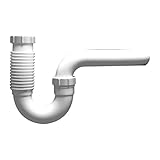
I remember the first time my AC decided to take a permanent vacation in August. No cold air, just that lazy whirring sound. Turns out, the drain line was clogged solid with goo, and water was backing up everywhere. My first thought? That little plastic doohickey I saw on the drain line must be doing something important, right? The question of whether are p traps necessary on condensate lines is one that trips up a lot of people, and frankly, the advice out there can be confusing.
Most folks just want their AC to work, and they don’t want to deal with water damage or mold. I get it. I’ve been there, staring at a soggy ceiling tile, wondering what went wrong. Let’s cut through the noise and talk about what these things actually do, and if you really need one.
Why That Little Bend Matters (more Than You Think)
So, what’s the deal with that little loop of pipe under your AC unit, or wherever your condensate drain line comes out of the wall? It’s called a P-trap, and yeah, it’s generally necessary. Think of it like a tiny water seal. Your air conditioner, whether it’s a central AC, a furnace, or even some high-efficiency boilers, works by cooling air. As it cools the air, moisture in the air condenses onto the cold evaporator coils. This water then needs a place to go, and it drips into a collection pan, from which it’s drained away through a pipe.
Now, that condensate line often runs horizontally for a bit before it heads outside or to a drain. Without a P-trap, that open pipe would basically be a highway for air to move freely between the inside of your house and the outside environment, or wherever the pipe eventually leads. This might not sound like a big deal, but it causes a couple of problems. First, it can mess with the air pressure inside your HVAC system.
Modern HVAC systems are designed to operate within specific pressure parameters. If air can easily flow in and out of the condensate line, it can create negative pressure, which can actually suck that collected water back up into the drain pan, causing overflows. I learned this the hard way during a heatwave a few years back.
My AC was running constantly, but the drain pan kept filling up. Turns out, the wind was blowing into the drain line opening outside, pushing water back up.
A simple P-trap would have stopped that dead.
Second, and perhaps more importantly for folks who aren’t on city sewer systems or who have older plumbing, that open pipe can allow unpleasant odors, sewer gases, or even small critters like insects or rodents to enter your home through the HVAC system. Imagine waking up to the smell of the sewer because a gust of wind blew down your drainpipe.
No thank you. The P-trap holds a small amount of water, and this water acts as a barrier, blocking gases and pests from coming back up.
It’s a simple physics trick, really. Water is denser than air and will settle at the lowest point of the trap, preventing anything lighter from passing through.
So, while it looks like a minor plumbing detail, that P-trap is doing some heavy lifting to keep your system running efficiently and your home smelling fresh.
When ‘necessity’ Gets a Little Fuzzy
Okay, so I’ve hammered home that P-traps are generally a good idea. But are there ever situations where you might think twice, or where the common advice is just plain wrong? Here’s where it gets interesting.
In some very specific, often commercial, HVAC setups, you might see condensate drains that don’t have traditional P-traps. These usually involve a direct vertical drop to a sewer line or a specialized condensate pump with its own built-in check valve and venting system designed to prevent backflow. If you’re looking at a brand-new, high-end commercial system installed by professionals, it might have a different setup. (See Also: Are Omega Watch Straps Real Alligator )
But for your average residential split system, a furnace, or a window AC unit, a P-trap is the standard and the safest bet.
I’ve also heard people argue that if your condensate line has a really steep downward slope all the way to the drain, you don’t need a P-trap. The idea is that the water will just flow out quickly due to gravity, and there won’t be any standing water for pressure issues to affect. While a good slope is always a good thing for drainage, I disagree with ditching the trap entirely based on slope alone.
Why? Because wind can still push air back up a pipe, even with a decent slope. And those smells?
They’ll find a way. I once saw a guy try to ‘optimize’ his setup by removing the P-trap, claiming it would improve airflow.
His house started smelling like a damp basement within a week. It cost him more to fix the smell and reinstall the trap than he saved by skipping it. It’s just not worth the gamble for the small amount of water and the few inches of pipe involved.
The common advice is often right on this one: keep the trap.
Another thing people get confused about is the difference between a P-trap on a condensate line and the P-traps under your sinks. They serve the same basic principle – holding water to block gases – but the application is different. Sink traps are primarily for sewer gas. Condensate line traps are for both air pressure balance and preventing backflow/gases from the drain system itself. So, don’t go thinking the plumbing under your kitchen sink is a direct blueprint for your AC drain. They have different jobs, even if the basic mechanism is similar.
The Nitty-Gritty: What to Look for and What to Avoid
When you’re dealing with your AC’s condensate line, whether you’re installing a new system or just doing some maintenance, pay attention to the type of P-trap you’re seeing or installing. The most common type for residential use is a simple PVC or ABS fitting, usually a 1-inch or 1.5-inch diameter, that forms that characteristic ‘P’ shape. It needs to be installed correctly, with the trap arm (the horizontal part) having a slight downward slope away from the AC unit, and the vent arm (the vertical part leading up) being properly sealed.
Here’s a breakdown of what to look for:
| Feature | Good | Bad | Verdict |
|---|---|---|---|
| Material | PVC, ABS (standard plumbing plastics) | Metal, flexible tubing (prone to corrosion/cracks) | Stick to proper plumbing-grade plastics. |
| Trap Depth | About 2-4 inches of water | Too shallow (ineffective seal) or too deep (can get sluggish) | Standard fittings usually get this right. |
| Slope | Slight downward slope on the trap arm away from the unit | Level or upward slope (water won’t drain) | Proper installation is key. |
| Access | Accessible for cleaning/maintenance | Buried in walls, inaccessible | You need to be able to get to it! |
| Sealing | All connections are properly glued/sealed | Loose fittings, unsealed vent openings | A poor seal defeats the purpose. |
What to avoid? Anything that looks makeshift.
I once saw a DIY job where someone used a section of flexible dryer vent hose, bent into a loop, and taped it together. It worked for about two weeks before it started leaking and, you guessed it, smelled like a swamp. That’s the kind of thing that makes me cringe.
Another thing to avoid is making the trap too large or too complex. While some specialized industrial applications might require more elaborate traps, for a home AC, simple is usually best. Overly complicated traps can become more prone to clogging, and cleaning them is a nightmare. (See Also: Are Traditional Mouse Traps Humane )
The goal is a functional water seal, not a plumbing art project. Remember, the condensate line is dealing with relatively clean water initially, but it can quickly become a breeding ground for algae and slime, so ease of cleaning is most important.
Common Mistakes That Lead to a Soggy Mess
I’ve made my share of DIY mistakes over the years, and plumbing is definitely one area where you can end up with a really wet, expensive mess. One of the most common mistakes people make with condensate P-traps is not cleaning them.
Over time, dust, debris, and biological growth can build up inside that little trap. If it gets clogged, water can’t drain, and you get that dreaded overflow.
I learned this lesson during a particularly humid summer. My AC drain pan was full, and water was starting to drip into the basement. I pulled out the P-trap, and it was coated in this thick, green slime. A good flush with a bleach solution (diluted, of course!)
and some mild scrubbing cleared it right up. It took me about twenty minutes, and saved me potentially thousands in water damage and mold remediation.
Another frequent error is incorrect installation. This can happen during the initial setup of the HVAC system or if someone is replacing a section of the drain line.
If the P-trap isn’t installed with the proper downward slope on the trap arm, water can pool or not drain effectively, leading to the same clogging issues. Conversely, if the vent side of the trap isn’t properly connected or sealed, it can lead to air pressure problems that can suck water out of the trap, defeating its purpose.
I’ve seen installers skip the trap altogether thinking it’s an unnecessary component, especially if the drain line has a good slope. While a good slope is beneficial, as I mentioned earlier, it’s not a complete substitute for the air/gas barrier a trap provides. This is a classic case of people thinking they’re being clever or saving a few bucks by cutting corners, and then paying for it later with system malfunctions or property damage. There’s also the issue of using the wrong fittings, like connecting a smaller diameter line into a larger trap opening without proper adapters, which can create turbulence and sediment buildup.
Finally, and this is a big one for anyone living in a colder climate where their furnace shares the condensate drain with their AC, people often forget to winterize the trap. If the trap is exposed to freezing temperatures, the water inside can freeze and expand, potentially cracking the pipe. You can get specialized traps with insulating jackets, or you can make sure the area where the trap is located is adequately heated. I’ve had to replace a cracked condensate line in January once, and let me tell you, it was a miserable job, and the AC repair guy charged a premium for a house call in the freezing cold.
When Do You Actually Need to Worry About a Trap?
Let’s get down to brass tacks. If you have a central air conditioner, a heat pump, a high-efficiency furnace, or even a whole-home dehumidifier that produces condensate, you absolutely need a P-trap on the condensate drain line. Period. There are very few exceptions, and those exceptions usually involve specialized commercial applications or systems where the manufacturer has explicitly designed an alternative method for managing pressure and backflow.
For the vast majority of homeowners, the P-trap is not optional; it’s a fundamental part of the system’s design to prevent water damage, mold growth, and operational issues. The amount of water produced by an AC can be significant – sometimes several gallons a day during peak operation – so managing that water effectively is important.
If your condensate drain line is routed to a location where sewer gases could be an issue (like a basement floor drain that’s rarely used), the P-trap is doubly important for odor control. It’s not just about preventing your AC from leaking; it’s also about maintaining indoor air quality. I’ve seen people try to bypass the P-trap on a condensate line that goes directly into a plumbing drain. They think gravity will take care of it. (See Also: Are Sticky Mouse Traps Humane )
What they don’t realize is that the water seal in the P-trap on the main drain line (like your sink) can be siphoned out by the fast-moving condensate, allowing sewer gas to creep into the line and then into your home through the AC vents. This is a surprisingly common oversight, and it can make your house smell pretty rank.
So, even if the condensate line connects to a plumbed drain, the P-trap on the condensate line itself is still the primary defense.
Consider this: the cost of a few PVC fittings to make a P-trap is pennies compared to the potential cost of water damage, mold remediation, or even just the discomfort of foul odors. I once had a neighbor who insisted his AC unit was just “sweating” and that the water pooling on the floor was normal. It wasn’t until his ceiling started to sag that he called a professional, who immediately pointed out the missing P-trap and the extensive water damage. Don’t be that neighbor. If you have a condensate line, and it doesn’t have a P-trap, get one installed. It’s a small investment for significant peace of mind and property protection.
Practical Tips for P-Trap Peace of Mind
Alright, enough doom and gloom. Let’s talk about how to make sure your P-trap is actually doing its job and how to keep things running smoothly. First and foremost, regular maintenance is your best friend. I recommend checking and cleaning your condensate drain line and P-trap at least once a year, ideally in the spring before the heavy AC usage starts.
A simple method is to pour about a cup of diluted bleach (say, 1 part bleach to 10 parts water) down the drain line access point (if you have one) or directly into the trap. Follow it with a gallon of plain water to flush it out. This helps kill off any algae or slime that might be growing and prevents clogs.
Some people use a wet/dry vac to suck out any gunk from the end of the drain line outside, which can also be very effective.
If you don’t have an easily accessible clean-out port for your condensate line, consider having one installed. It makes maintenance so much easier. You can find them at any hardware store. They usually just screw onto the end of the pipe. Another handy tip is to periodically check the water level in the trap. If you notice the drain is making slurping noises or you can smell odors, the water might have been siphoned out. You can often just pour a little water into the trap to reseal it. If this happens frequently, you might have an issue with air pressure or venting in your system that needs professional attention.
For those of you living in colder climates, make sure your condensate trap is protected from freezing. If it’s in an unheated garage or crawl space, consider using an insulating jacket designed for pipes. This will help prevent the water inside from freezing and cracking the trap or the line. If you’re installing a new system or having work done on your existing one, always ask the technician if they’ve installed a properly sloped P-trap and checked the overall drainage path.
Don’t be afraid to ask questions and understand what they’re doing. I once had a tech try to tell me a P-trap wasn’t needed on my furnace condensate line because it had a pump. I pushed back, and he eventually admitted it was best practice to still have one, even with a pump, for added protection.
It pays to be informed!
Finally, if you ever suspect your condensate line is clogged or overflowing, don’t ignore it. Turn off your AC unit to prevent further water backup and potential damage. You can often clear minor clogs yourself by using a wet/dry vac on the exterior end of the drain line or by carefully using a stiff wire (like a straightened coat hanger, being careful not to puncture the pipe) to dislodge any blockage in the trap or the first few feet of pipe. For more persistent clogs or if you’re uncomfortable doing it yourself, call a qualified HVAC technician. They have specialized tools and knowledge to diagnose and fix the problem safely and effectively.
Final Thoughts
Look, nobody wants to deal with water damage or a smelly house. The simple fact is, that little bend in your condensate line – the P-trap – is doing some important work. It keeps your system balanced, prevents nasty smells, and stops pests from coming inside. While there are always edge cases and fancy commercial setups, for most homes, if you have an AC, furnace, or dehumidifier that produces condensate, you need that trap.
Don’t fall for the ‘it’s not necessary’ line if your system is standard residential. I’ve seen too many people learn that lesson the hard way, with soggy floors and expensive repairs. If you’re unsure if you have one, or if it’s properly installed, take a look. It’s a small thing, but it matters. Making sure your AC condensate line has a P-trap is a basic maintenance step that protects your home and your sanity.