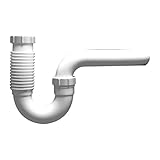
I remember staring at this leaky drain under my sink, a pathetic little puddle forming on the cabinet floor. My go-to hardware store guy, bless his heart, handed me a plastic P-trap kit. “Easy fix,” he said. But then I saw it – a rubber P-trap kit. My brain immediately went, “Wait, is that even allowed? Are rubber P traps legal to even buy, let alone install?” It felt too simple, too… rubbery. I’d always seen the white plastic or the shiny metal ones. This felt like a shortcut, and my plumbing experience has taught me shortcuts often lead to floods.
So, I grabbed both, the plastic and the rubber, armed with a healthy dose of skepticism. The question of legality kept nagging at me. You don’t want to do work that’s going to bite you later. This isn’t just about saving a few bucks; it’s about doing it right, even if ‘right’ looks a bit unconventional.
My First Encounter with the Flexible Trap
The first time I considered a rubber P-trap, it was less about legality and more about sheer desperation. I was trying to fix a notoriously awkward under-sink setup in a rental property. The existing pipework was a mess of weird angles and mismatched connectors.
Standard plastic or metal P-traps were fighting me at every turn, refusing to align without a degree of contortion that would make a yoga master weep. Then, tucked away on a dusty shelf, I spotted a flexible, accordion-style rubber P-trap kit. It looked almost like a Slinky for your plumbing. My immediate thought was, “This has GOT to be illegal or some shoddy, temporary nonsense.”
I mean, rubber? For draining water and holding back sewer gas? It seemed… flimsy.
But the salesperson, who looked like he’d seen it all, assured me it was a common solution for tricky spots. Skeptical but cornered by my failing attempts with rigid pipes, I bought it.
Installation was, I have to admit, ridiculously easy. It bent and twisted into place with minimal fuss. It sealed up surprisingly well, and for the first week, I kept peeking under the sink, half-expecting a geyser. The big surprise?
It didn’t leak. Not a drop. And that horrible gurgling sound from the drain? Gone.
It was silent. This experience really made me question the conventional wisdom that only metal or rigid plastic is the ‘proper’ way to do things.
It’s often not about the material itself, but the design and the seal. The flexibility was the key here, allowing it to connect misaligned pipes without needing special adapters or cutting.
The Plumbing Codes: Are Rubber P Traps Legal?
This is where we get into the nitty-gritty. The question of ‘are rubber p traps legal’ boils down to plumbing codes. (See Also: Are Omega Watch Straps Real Alligator )
In the United States, the International Plumbing Code (IPC) is widely adopted, though individual states and municipalities can adopt their own versions or amendments. Generally speaking, the IPC and most local codes are concerned with a few key things for P-traps: material, dimensions, and performance. They need to be durable, resistant to corrosion, and able to hold a water seal to prevent sewer gases from entering the building. When I dug into the actual code language, I found that it usually specifies acceptable materials like PVC, ABS, cast iron, and even certain metals like brass or lead (though lead is less common now due to health concerns).
The code doesn’t explicitly ban ‘rubber’ P-traps by name. However, it does have requirements for materials to be “smooth, non-absorbent, resistant to [chemical] action, and … not deleteriously affected by [sewage] water.”
This is where the rubber ones can get a bit murky. Most flexible drain connectors, often made of thermoplastic elastomers (which are a type of rubbery plastic), are designed to meet these standards.
Manufacturers will typically state if their product is code-compliant for residential or commercial use. The key is often that the rubber material used has to be rated for plumbing use, meaning it won’t degrade quickly from exposure to hot water, cleaning chemicals, or the sewer environment. So, while you won’t find a section saying “Thou shalt not use rubber,” you will find requirements that a rubber P-trap must meet to be considered legal and safe for installation.
It’s not the material in isolation, but its properties and how it performs against the code’s intent, which is primarily about safety and preventing leaks and gas ingress. I’ve seen some installers use cheap, flimsy rubber tubing for temporary fixes, and that’s definitely not code-compliant. The products designed and sold specifically as flexible P-traps are usually engineered to pass muster.
What to Look for When Buying One
If you’re considering a flexible rubber P-trap – perhaps because, like me, you’re wrestling with an impossibly angled pipe – don’t just grab the cheapest thing you find. There are definite differences in quality and compliance. First off, check the packaging.
Reputable brands will usually state that their product meets specific plumbing codes (like the IPC or UPC – Uniform Plumbing Code). This is your first sign that it’s not just some snake-oil solution. Look for materials that are specifically designed for plumbing. While it might be labeled ‘rubber,’ it’s likely a thermoplastic elastomer (TPE) or a similar compound that’s resistant to heat, common drain cleaners, and the general gunk that goes down your sink.
Avoid anything that feels overly soft, sticky, or smells strongly of cheap plastic. The connection points are also important. A good flexible trap will have sturdy, well-designed slip-joint connections or integrated seals that are meant to grip standard drain pipes securely.
Some have large, easy-to-tighten nuts, which is a huge plus if you’re working in a tight space. I once bought a generic brand online that looked okay, but the rubber was too stiff, and the connections wouldn’t quite seal properly, leading to a slow, annoying drip. It wasn’t worth the $5 I saved. Another thing to consider is the flexibility range.
Some are just slightly pliable, while others can bend significantly. For truly awkward situations, you’ll want something with a wider range of motion. Think about the diameter of the pipe you’re connecting to as well. Most will be standard 1-1/2 inch or 1-1/4 inch for sinks, but it’s always good to double-check. (See Also: Are Traditional Mouse Traps Humane )
Finally, read reviews. See what other DIYers or even plumbers have to say about their experiences with a particular brand or model. Do they hold up? Are they easy to install?
This kind of real-world feedback can be invaluable.
Here’s a quick rundown on what separates the good from the potentially problematic:
| Feature | Good Quality/Code-Compliant Indicator | Red Flag / Potential Problem |
|---|---|---|
| Material | Clearly labeled as TPE, EPDM, or plumbing-grade rubber; smooth, flexible but firm. | Generic ‘rubber,’ feels flimsy, sticky, or brittle; strong chemical odor. |
| Code Compliance | States compliance with IPC, UPC, or local codes; manufacturer certification. | No mention of code compliance; sold as a ‘universal’ or ‘temporary’ fix. |
| Connections | Sturdy slip-joint nuts, integrated rubber seals, precise fit for standard pipe sizes. | Loose-fitting connections, no visible seals, requires excessive force to tighten. |
| Flexibility | Easily bends and twists without kinking; holds shape after adjustment. | Stiff, kinks easily, or snaps back to its original shape; requires extreme force to bend. |
| Durability | Feels substantial, resistant to kinks and tears. | Thin walls, easily punctured or damaged. |
Common Mistakes and How to Avoid Them
One of the biggest mistakes people make when considering these flexible traps is assuming they’re a universal fix for any leaky pipe. They are brilliant for specific situations, particularly when dealing with non-standard pipe alignments or when you absolutely cannot get rigid pipes to connect cleanly. However, they are NOT a substitute for proper pipe fitting in a standard setup.
If your drain pipes are already aligned perfectly, using a flexible trap might be overkill and could introduce a potential failure point that a rigid PVC or metal trap wouldn’t have. My first mistake, as I mentioned, was practically buying the cheapest option I could find online, assuming all flexible traps were created equal. That led to leaks and a lot of frustration trying to get a good seal. Another common error is over-tightening.
Because the material is flexible, it’s tempting to just crank down on the nuts. This can actually crush the seal or even damage the threads, leading to leaks that are harder to fix than if you’d just done it right the first time. Hand-tightening, followed by a quarter-turn with pliers, is usually sufficient.
Be mindful of the temperature range too. While most are designed for hot and cold water, extreme heat or prolonged exposure to boiling water might degrade some materials faster than others. Always check the manufacturer’s specifications.
Also, don’t forget the trap’s purpose: to hold water and prevent sewer gas. If the trap is installed in a way that it sags excessively or doesn’t have a proper downward slope to retain water, it won’t function correctly. This often happens if you have a very long, unsupported run of flexible pipe.
Make sure there’s a consistent downward slope towards the drain connection. Finally, the most obvious mistake related to legality: buying and installing a product that explicitly states it is not code-compliant, or using a non-plumbing flexible tube. That’s a recipe for trouble, potentially costing you more down the line in repairs or even having to redo the work to meet code.
Real-World Use Cases: When They Shine
I’ve come to appreciate these flexible P-traps for what they are: specialized tools for specific, often frustrating, plumbing challenges. They truly shine when you’re dealing with older homes where the drainpipe alignment from the wall to the sink trap is… let’s just say ‘creative.’ I used one in a tiny bathroom sink where the drain pipe came out of the wall at a weird angle, and no amount of fiddling with standard PVC elbows and couplings would create a watertight seal without putting stress on the connections. (See Also: Are Sticky Mouse Traps Humane )
The flexible trap just sighed and bent into place. It was a beautiful thing. Another situation is when you’re installing a new sink or vanity, and the existing drain rough-in is just slightly off.
Instead of cutting and re-gluing PVC, which can be a nightmare in tight cabinet spaces, a flexible trap can bridge that small gap or angle difference with ease. They are also fantastic for temporary fixes. If you’ve got a leak and need to get your sink functional while you wait for parts or a plumber, a flexible trap can be installed in minutes and provide a reliable seal. I’ve even used them in a pinch for laundry tub drains where the standpipe was a bit wonky.
The accordion design allows for expansion and contraction too, which can be helpful in areas with minor seismic activity or where the building might settle slightly over time. However, and I can’t stress this enough, they are not a magic bullet for all plumbing problems. If you’re doing a new build or a complete renovation where you have control over pipe placement, rigid PVC or ABS is generally the preferred and more durable option. These flexible connectors are best suited for situations where you’re working with existing, less-than-ideal pipe configurations or need a quick, adaptable solution.
Faq: Answering Your Burning Questions
Are Flexible Rubber P Traps Allowed by Code?
Generally, yes, provided they are made of approved materials and meet performance standards for sealing and durability. Codes typically don’t ban ‘rubber’ specifically but require materials to be smooth, non-absorbent, and resistant to degradation. Look for products that state compliance with plumbing codes like the IPC or UPC. If a product is designed and sold for plumbing use and meets these performance criteria, it is usually legal to install.
Can a Rubber P Trap Fail?
Yes, like any plumbing component, a rubber P trap can fail. Common failure points include cracks in the material due to age, UV exposure, or chemical damage, or leaks at the connection points if not installed properly or if the seals degrade. Over-tightening can also damage the seals. Regular inspection and maintenance, just like with any plumbing, are recommended.
Are They Harder to Install Than Standard Plastic P Traps?
In many cases, flexible rubber P traps are easier to install than standard plastic P traps, especially in situations with misaligned pipes or tight spaces. Their flexibility allows them to bend and twist into position without needing precise angles or special fittings. The primary challenge with standard P traps is getting the rigid pieces to align perfectly, whereas the flexible trap offers much more forgiveness.
How Long Do Flexible Rubber P Traps Typically Last?
The lifespan can vary significantly depending on the quality of the material, environmental factors (like exposure to sunlight or harsh chemicals), and how it’s installed. High-quality, code-compliant flexible traps can last many years, potentially a decade or more, similar to rigid plastic. However, cheaper, non-certified ones might degrade much faster, sometimes within just a few years. Always check manufacturer specifications and warranty information.
Do They Hold a Water Seal Effectively?
Yes, when installed correctly and not sagging excessively, flexible rubber P traps are designed to hold a water seal effectively. The ‘P’ shape is standard across trap types and is what retains water to block sewer gases. Their flexibility doesn’t inherently prevent them from holding this water seal, as long as they are installed with a slight downward slope towards the drain outlet.
Conclusion
So, to circle back to that initial question: are rubber p traps legal? The short answer is usually yes, but with important caveats. They’re not some shady, underground plumbing solution. They are legitimate products designed for specific situations where rigid pipes are a hassle or simply won’t work. The key is making sure you’re buying a product that’s actually designed for plumbing, made from appropriate materials, and ideally, states its compliance with relevant codes. Don’t go grabbing some random piece of flexible tubing from the auto parts store; that’s where you’ll get into trouble.
My own experience, and a bit of digging into how these things actually work, has shown me that flexibility can be a real asset in plumbing, not a weakness. They’ve saved me from some truly awkward pipe fitting nightmares. Just remember to do your homework on the product itself, check those connections, and make sure it’s suitable for your specific need.
If you’re staring down a plumbing puzzle that feels impossible with standard parts, a flexible rubber P trap might just be the honest, practical solution you need. Just make sure it’s the right kind of rubber.