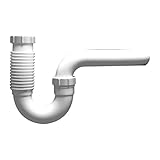
You’re staring at that U-shaped pipe under your sink, wondering if it’s just a weird decorative flourish or something actually important. I’ve been there. After a botched DIY drain replacement where I nearly flooded my kitchen, I learned the hard way that plumbing isn’t always intuitive. So, are p traps required? The short answer is, for most of your home’s plumbing, yes. They’re not optional decorations; they’re fundamental to keeping your house livable and healthy.
Forget what you see in cartoon plumbing diagrams. The actual job of a P trap is far more important than just looking like a bent pipe. It’s a guardian against some seriously unpleasant invaders from your sewer lines. Let’s break down why you absolutely need them and what happens when they’re not there.
Why That Soggy U-Bend Matters So Much
Look, most people just see that curve of pipe under the sink, toilet, or shower and think it’s just… there. Maybe to hold water?
Maybe just because the pipe had to bend somewhere? I used to think that too.
I once tried to ‘improve’ my bathroom sink drainage by replacing a standard P trap with a straight piece of PVC because it looked cleaner and I figured less bends meant faster draining. Big mistake. Within a day, the smell started.
Not just a little ‘oops, forgot to run the water’ smell, but a full-on, stomach-churning sewer gas aroma that made my entire apartment smell like a swamp. It took me three days of scrubbing and a panicked call to a plumber to realize I’d removed the single most important component for preventing that odor.
The P trap, in its humble, bent form, is designed to hold a small amount of water. This water acts as a seal. Think of it like a plug.
The sewer gases that naturally rise from your main sewer line are held back by this water barrier. Without it, those gases—which contain all sorts of unpleasantness, including methane and hydrogen sulfide—would travel straight up through your drainpipes and into your living space. And trust me, you do NOT want that. Beyond the smell, these gases can be a health hazard, causing headaches, nausea, and in extreme cases, can even displace oxygen.
So, that little bit of trapped water isn’t just incidental; it’s your primary defense. It’s a simple mechanism, but it’s incredibly effective, and it’s why plumbing codes almost universally mandate them for fixtures that connect to a drainage system.
The common advice is always ‘install a P trap.’ But the real advice, based on years of dealing with leaky pipes and unexpected smells, is ‘install the right P trap and make sure it stays filled.’
I learned that you can’t just ignore it. If you have a fixture that isn’t used often, like a guest bathroom sink or a seldom-used shower, you need to run water in it periodically to make sure that water seal doesn’t evaporate. I’ve seen people blame faulty vent systems for sewer smells when the real culprit was simply a dry P trap because the toilet in that bathroom was rarely flushed. It’s a simple fix, but one that’s often overlooked in the grand scheme of plumbing maintenance.
The basic design, a simple bend holding water, is genius in its simplicity and effectiveness. (See Also: Are Omega Watch Straps Real Alligator )
What Does This Water Seal Actually Do?
Let’s get down to brass tacks about that little pool of water. Its primary function, as I’ve hammered home, is to block sewer gases. These gases are a cocktail of nasty stuff produced by decomposing waste in your sewer lines. They’re not just smelly; they can actually be corrosive over time, and the hydrogen sulfide component can be harmful to your health if concentrated. The water in the P trap creates a physical barrier, preventing these gases from seeping into your home. When you run water down a drain, it flushes out the old water and replenishes the trap with fresh water, maintaining that seal.
Now, here’s where things get a bit more nuanced, and where I’ve seen people mess up. The size and shape of the P trap matter, but more importantly, the air pressure in your drainage system matters. If your plumbing system isn’t properly vented, negative pressure can build up when water flows through the pipes. This negative pressure can actually suck the water right out of your P trap, breaking the seal and allowing those sewer gases to come through.
This is called ‘siphonage,’ and it’s a common reason for recurring sewer smells even when the trap itself is intact. It’s why plumbers often talk about vent pipes – those are the unsung heroes that equalize pressure in the system, allowing water to flow smoothly without siphoning the trap dry.
I remember a time I was helping a buddy remodel his basement bathroom. He was insistent on skipping the vent stack connection for a new shower, saying it was too much work and the existing plumbing looked fine.
Well, guess what? Every time he flushed the toilet upstairs, the shower drain would gurgle and a faint, unpleasant odor would waft up. He blamed cheap fixtures. I blamed his refusal to connect the vent.
Once we finally ran a proper vent line for that shower, the gurgling stopped, and the smell disappeared. It hammered home that the P trap doesn’t work in isolation; it’s part of a system. The water seal is most important, but maintaining the correct air pressure is what keeps that seal from being compromised. So, when you ask are P traps required, the answer is yes, and they require a properly functioning vent system to do their job effectively.
Are P Traps Required by Code?
This is where things get official. Yes, in almost every jurisdiction with modern plumbing codes, P traps are not just recommended; they are required by law for fixtures like sinks, tubs, showers, and toilets. The International Plumbing Code (IPC) and Uniform Plumbing Code (UPC) are widely adopted in North America, and both specify requirements for trap seals. For example, the UPC states that traps shall be self-scouring and equipped with a water seal of not less than 2 inches and not more than 4 inches.
Why these specific dimensions? The 2-inch minimum is generally considered sufficient to prevent air from passing through while still allowing for a decent volume of water to prevent evaporation over short periods. The 4-inch maximum is to prevent the trap from becoming too deep, which can lead to sluggish drainage and potential blockages as debris can get caught. A trap that’s too deep also makes it harder for the water seal to be re-established quickly if siphonage occurs. So, there’s a science behind that simple curve, aiming for optimal performance in everyday use.
The code also dictates the type of traps allowed. You’ll typically see them made of PVC, ABS, or brass. Each has its pros and cons. PVC is cheap, easy to work with, and readily available.
ABS is similar but can be more brittle. Brass is more durable and aesthetically pleasing but significantly more expensive. When I was initially installing my kitchen sink, I just grabbed the cheapest plastic P trap kit from the hardware store.
It did the job, but I’ll tell you, wrestling with those slip-nut connections and trying to get a perfect seal was a bit of a headache. The plastic felt a little flimsy. If I were doing it again for a high-traffic area like a kitchen, I might spend a bit more for a heavier-duty brass or thicker-walled plastic trap. The code requires a functioning trap, but not necessarily a specific material, so you have some choice, just make sure it meets the dimensional requirements and is designed for drainage. (See Also: Are Traditional Mouse Traps Humane )
The building codes are there for a reason: public health and safety. They are the accumulated wisdom of countless plumbers, engineers, and building inspectors who have seen what happens when things go wrong. So, when you’re plumbing a new bathroom or replacing an old drain, don’t just wing it. Grab a copy of your local plumbing code or, better yet, consult with a licensed plumber. They know the requirements inside and out, and they can make sure your installation is up to snuff, meaning you won’t have to deal with those nasty sewer smells or potential code violations down the line. It’s about more than just preventing leaks; it’s about creating a safe and healthy environment in your home.
Common Mistakes People Make with P Traps
I’ve made my fair share, and I’ve seen others make them too. The biggest one, as I mentioned, is removing or bypassing the P trap entirely. This is usually driven by a misguided attempt to simplify the plumbing or improve drainage speed. It never works out well. Another common error is installing the wrong type of trap for the fixture. While most basic sink P traps look similar, there are variations for specific applications, like drum traps (though less common now) or deeper traps for certain industrial uses. Using the wrong one can lead to issues with venting or inadequate water seals.
Improper installation is another biggie. Those slip nuts on plastic P traps are notorious for leaks if not tightened correctly, or if the washers are missing or damaged. I once spent an entire Saturday trying to stop a slow drip under my bathroom sink, only to find out I’d slightly cross-threaded one of the nuts. The water was slowly seeping out, creating a perfect little puddle that I initially dismissed as condensation. It’s those small, seemingly insignificant drips that can lead to bigger problems like water damage and mold. Always double-check your connections, and don’t overtighten plastic fittings, as they can crack. Metal fittings are more forgiving but can seize up if overtightened.
Here’s a real-life example from a friend’s place: he had a really slow draining shower. He kept snaking it, thinking it was a hair clog. Turns out, the P trap under the shower was installed at a slight upward angle, or worse, it was installed backward in some bizarre DIY attempt.
This prevented it from holding a proper water seal, and during heavy use, water would back up and then drain out, taking the water seal with it. The result? A constantly stinky shower.
We ended up having to rip up a section of the subfloor to correct it. So, make sure your P trap has a consistent downward slope after the U-bend towards the drainpipe. It needs to fill with water, not be a highway for air to bypass the water seal.
Finally, ignoring the need to periodically run water in seldom-used fixtures is a huge mistake. I’ve seen vacation homes where the guest bathrooms had that distinct sewer odor because the toilets and sinks hadn’t been used in months, allowing the P trap water seals to evaporate. It’s such an easy fix – just run some water for 30 seconds once a month – but people often forget or don’t know. It’s not just about the smell; it’s about maintaining a healthy indoor environment. So, vigilance is key.
| Potential Issue | Common Cause | My Verdict |
|---|---|---|
| Sewer Gas Odor | Dry P trap (evaporation/siphonage), Venting issue | HIGH PRIORITY: Fix immediately. Your health and comfort depend on it. |
| Slow Drainage | Clog in trap/pipe, Incorrect trap slope, Trap too deep | MEDIUM PRIORITY: Annoying, but usually not an immediate health risk. Investigate drain line. |
| Leaks at Connections | Loose slip nuts, Damaged washers, Cracked fittings | MEDIUM PRIORITY: Fix promptly to prevent water damage. |
| Gurgling Sounds | Siphonage, Partial clog, Venting issue | MEDIUM PRIORITY: Often a sign of impending trap issues or clogs. |
When Are P Traps Not Required (and What Replaces Them)?
This is where the ‘almost’ in my earlier statement comes into play. There are a few specific scenarios where a traditional P trap isn’t used or is replaced by a different type of trap mechanism. The most common example is a floor drain in a basement or garage that might not be connected to the main sewer line but rather to a sump pump system. These often have a simple drain grate with a deeper, larger trap basin designed to hold more water and resist evaporation longer, but sometimes the fixture itself might be designed to prevent backflow without a traditional water seal, relying more on gravity and the sump pump’s operation.
Another situation involves dry traps or trap primers. In areas or fixtures that are used very infrequently (think old laundry tubs in unused basements, or even some industrial floor drains), a standard P trap might be specified, but with an automatic trap primer. This is a device that senses when the drain is being used or, more commonly, periodically injects a small amount of water into the trap to make sure the water seal is maintained.
I’ve seen these in commercial kitchens where a particular sink might only be used for cleaning large equipment once a week. Instead of relying on someone remembering to run water, the primer makes sure the trap never dries out.
It adds a layer of automation to a simple plumbing problem. (See Also: Are Sticky Mouse Traps Humane )
Some specialized fixtures might also have integrated trapping mechanisms that aren’t a visible ‘U’ bend. For example, certain types of laboratory sinks or medical facility drains might have specially designed traps that are easier to clean or offer a more solid seal against specific chemicals or pressures. However, even in these cases, the fundamental principle of creating a water barrier or an equivalent seal to prevent the ingress of sewer gases is still employed. It’s just executed in a different form. The key takeaway is that the function of the P trap—preventing sewer gas ingress—is always required for any fixture connected to a drainage system, even if the physical form of the trap varies.
There are also some very old plumbing systems that might have used different methods, like drum traps, which are basically larger cylindrical chambers designed to hold water and trap debris. While they serve a similar purpose, they are often harder to clean and less efficient than modern P traps. Building codes today generally mandate modern P traps or their functional equivalents. So, while the visual U-bend might not be present in every single plumbing fixture’s design, the requirement for a functional trap seal is a universal plumbing principle. You’re not going to find a mainstream fixture that is intentionally designed to be un-trapped. The codes are quite clear on this for good reason.
Practical Tips for Your P Traps
First and foremost: don’t mess with them unless you know what you’re doing. If you’re replacing a sink or dealing with a leak, get the right parts. Most standard sinks use a 1-1/4 inch or 1-1/2 inch diameter P trap. Measure your existing pipes before you go to the store. And remember those washers I mentioned? Make sure they’re present and oriented correctly – usually, the tapered side faces the fitting it’s sealing against. Finger-tighten first, then give it a quarter-turn with a pipe wrench or channel locks. Over-tightening plastic can crack it, under-tightening means leaks.
Regular maintenance is key. For sinks and tubs, the P trap is a common place for hair, grease, and gunk to accumulate, leading to slow drains. You can often clear minor clogs by using a plunger or by disassembling the trap itself. Yes, you have to unscrew those slip nuts. Keep a bucket underneath! Once disassembled, clean out any debris with an old toothbrush or rag. For deeper clogs, a drain snake can be helpful, but be gentle. I’ve found that a mix of hot water and baking soda, followed by vinegar, can sometimes help break down minor grease buildup without harsh chemicals. It’s not as effective as a good snake for tough clogs, but it’s a good preventative measure.
Here’s my little trick for dealing with those stubborn traps that refuse to budge: a bit of WD-40 or penetrating oil on the threads of the slip nuts if they’re metal and corroded. Let it sit for a few minutes, then try again. For plastic, it’s usually just a matter of grip and technique. If a trap is constantly drying out because the fixture isn’t used, consider installing a trap primer, or simply make it a habit to run water for 30 seconds once a month. This is especially important in guest bathrooms, basement sinks, or any fixture that sits idle for extended periods. It’s a small habit that prevents a big stink.
Finally, if you’re ever unsure about a leak or a persistent smell, call a professional. A licensed plumber has the tools, knowledge, and experience to diagnose the problem correctly and fix it properly. The cost of a service call is often less than the damage you could cause by trying to fix it yourself and getting it wrong. They can also advise on upgrades or specific types of traps if your needs are unusual. It’s a small investment for peace of mind and a healthy home environment.
What Happens If There Is No P Trap?
If there is no P trap, sewer gases from your drainage system will enter your home. These gases are not only incredibly foul-smelling but can also be a health hazard, potentially causing headaches, nausea, and in extreme cases, displacing oxygen. You’ll notice a constant, unpleasant odor emanating from drains that lack a functional P trap.
Can You Have a Drain Without a P Trap?
No, for most standard plumbing fixtures connected to a sewer line, you cannot legally or safely have a drain without a P trap. Plumbing codes universally require P traps to maintain a water seal that prevents sewer gases from entering your living space. Any fixture designed to drain into a sewer or septic system needs this protective barrier.
How Often Should You Clean a P Trap?
The frequency of cleaning depends on usage and what goes down the drain. For kitchen sinks, which handle grease and food particles, cleaning every 3-6 months is a good preventative measure. Bathroom sinks, which primarily handle soap and hair, might only need cleaning annually or when you notice slow drainage. Fixtures that are used infrequently still need their water seal maintained, but the trap itself may not require frequent physical cleaning unless a clog occurs.
Do Toilets Have P Traps?
Yes, toilets have an integrated trap, often called a ‘trapway’ or ‘s-trap’, built directly into the ceramic fixture. This internal passage is designed to hold water, creating a seal that prevents sewer gases from entering the bathroom and also helps to reduce odors by trapping waste within the bowl until flushed.
Verdict
So, are p traps required? Unequivocally, yes, for the vast majority of your home’s plumbing. That simple bend isn’t just a piece of pipe; it’s a important guardian of your home’s air quality and your family’s health. I learned that lesson the hard way, and it’s one I won’t forget. Don’t underestimate its importance, and don’t try to bypass it. Making sure your P traps are installed correctly, remain filled with water, and are kept reasonably clean will save you a world of stink and potential problems.
If you’re experiencing persistent smells or slow drains, don’t just assume it’s a lost cause. Check your P traps, make sure they have water, and if you’re doing any plumbing work, invest in the right parts and take your time with the connections. A little attention to this unassuming piece of pipe goes a long, long way in maintaining a comfortable and healthy living space.
Next time you’re under the sink, give that P trap a nod of respect. It’s doing a dirty but vital job, and it deserves to be treated right.