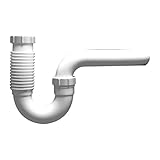
I remember the first time I had to replace a P-trap under a sink. The old plastic one just felt… flimsy. Like it was one bad clog away from disaster. So, I started digging around, looking for something more substantial, something that wouldn’t make me nervous every time the water flowed. That’s when I stumbled onto the idea of semi-cast P-traps. I thought, ‘This is it. The upgrade I’ve been looking for.’
But here’s the thing: not everything that looks beefier is actually better. I’ve wasted my fair share of cash on plumbing parts that promised the moon and delivered a leaky mess. So, are semi cast P-traps good? Let’s cut through the noise.
Why I Swapped My Old P-Trap for Semi-Cast (and If It Was Worth It)
Look, nobody gets excited about P-traps. They’re the unsung, often unseen, heroes of your plumbing. Their job is simple: hold a bit of water to stop sewer gas from wafting up into your living space. It’s a important role, but one that often gets overlooked until something goes wrong. My first P-trap was standard white plastic. It did its job for a while, but I always had this nagging feeling about its long-term durability. Was it going to crack? Was it going to leak after a few years? This doubt led me down the rabbit hole of plumbing parts, and eventually, to the concept of semi-cast P-traps.
What exactly is a ‘semi-cast’ P-trap? The term itself is a bit of a marketing blend.
You’ll find P-traps made from materials like ABS plastic, PVC, or even brass. ‘Cast’ usually refers to the traditional method of making metal parts, especially cast iron.
So, ‘semi-cast’ isn’t a strict industry term, but it generally implies a P-trap that uses a combination of materials or a design that mimics the solid feel of cast metal, often with a metal or metal-coated interior and a plastic exterior, or vice versa. The idea is to give you some of the perceived strength and longevity of metal without the full weight and cost of solid cast iron or solid brass. It’s an attempt to find a middle ground, a ‘best of both worlds’ scenario.
When I first encountered them, I was optimistic. The ones I saw looked hefty, with a satisfying heft and a finish that suggested they’d last longer than my ex-girlfriend’s New Year’s resolutions. I pictured them as the ultimate solution to my plumbing anxieties.
I imagined them holding up to whatever gunk my kitchen sink could throw at them, without a single drip or groan. The promise was durability, a solid feel, and a premium look.
It’s easy to get swept up in the aesthetics and the perceived superiority of a heavier-feeling product. We associate weight and solidness with quality, and for good reason in many applications.
But in plumbing, there’s more to it than just heft. The seal, the material compatibility, and the design of the threads are just as important, if not more so, than how much it weighs.
My initial thought process was purely about avoiding future headaches. I’d dealt with leaky connections before, and the thought of trying to find a leak in a concealed pipe was enough to make me want to overkill it from the start.
So, I went ahead and bought what I thought was a premium semi-cast P-trap. It looked fantastic, felt solid, and the installation seemed straightforward enough. For about six months, it was a dream. No leaks, no strange noises, just silent, efficient plumbing.
Then, a slow drip started. Nothing major, just a tiny bead of water forming at one of the threaded connections after a sink full of hot water. It wasn’t the main body of the trap; it was the seal.
And that’s where my initial, albeit positive, experience started to get complicated. This is precisely why understanding the nuances beyond the ‘semi-cast’ label is so important for anyone asking if are semi cast p traps good.
The Real Deal: How Do They Actually Work?
Let’s get down to brass tacks – or, in this case, whatever material your P-trap is actually made of. The fundamental function of any P-trap, whether it’s the cheap plastic kind or one with a fancy ‘semi-cast’ label, is the same. It’s a U-shaped bend in the pipe that’s designed to retain a small amount of water. This water acts as a barrier, a seal, preventing unpleasant and potentially harmful sewer gases from making their way up from your drain lines and into your home. Think of it like a water gate. When water flows down the drain, it fills the trap, and then a small amount remains behind after the flow stops.
The ‘semi-cast’ aspect usually comes into play with the materials and construction. Often, what’s marketed as ‘semi-cast’ is actually a solid plastic trap with a metallic finish or coating, or a trap made from a composite material that feels heavier and more substantial than standard PVC or ABS. Some might be hybrid designs, where a key component, like the coupling nut or a specific internal section, is made of metal while the main body is plastic. The intention behind these designs is usually to offer a perceived increase in durability, resistance to impact, and perhaps a more premium aesthetic.
Manufacturers might aim to combine the corrosion resistance and rigidity associated with metal traps (like brass or cast iron) with the ease of installation and lower cost of plastic. It’s a balancing act.
The performance of a semi-cast P-trap hinges on several factors. Firstly, the quality of the seal at the connections.
This is where my earlier drip originated. Even the most solid-looking trap is useless if its threads or gaskets aren’t up to par. Look for clean, well-machined threads and high-quality rubber or neoprene gaskets.
Secondly, the material itself. If it’s a coated plastic, how durable is that coating? Will it scratch or chip over time, potentially exposing the plastic underneath? (See Also: Are Biodegradable Mouse Traps Available )
If it’s a composite, how does it react to various drain contents – hot water, grease, cleaning chemicals? Standard plastics like PVC and ABS are chosen for their chemical resistance and smooth interiors, which help prevent clogs from accumulating. A poorly designed ‘semi-cast’ material might compromise these properties.
My experience with the drip taught me a valuable lesson: don’t just judge a P-trap by its cover, or its weight. The ‘semi-cast’ descriptor can be misleading if it doesn’t translate to superior seal integrity and material performance under real-world conditions. While the idea of a more durable, solid P-trap is appealing, the execution is what matters. A well-made standard plastic trap can often outperform a poorly designed ‘semi-cast’ one. The key is understanding that the ‘semi-cast’ label is more about marketing and feel than a guarantee of superior function. It’s about the marriage of form and function, and sometimes, the form can distract from functional shortcomings.
What to Look for: Beyond the ‘semi-Cast’ Hype
Alright, so you’re looking at P-traps and you’re wondering if this ‘semi-cast’ thing is the way to go. Based on my own trial and error, I can tell you that the label itself is just the starting point. You need to dig deeper.
When I’m shopping for plumbing parts, especially something I don’t want to mess with again for a good long while, I look for a few key things that tell me more than any fancy marketing term. First off, the material composition.
If it’s marketed as ‘semi-cast,’ what does that actually mean? Is it a metal-coated plastic, a composite, or a hybrid with metal components?
I prefer a solid, non-porous material. For me, a trap made entirely of brass or a high-quality, thick-walled ABS plastic has proven more reliable over time than those with superficial coatings that can wear off.
Next up: thread quality. This is absolutely a must.
The threads on the nuts and the pipe ends need to be clean, well-defined, and free of burrs or inconsistencies. Poorly cut threads are a prime culprit for leaks, no matter how stout the rest of the trap looks.
I’ve learned to run my finger over them – they should feel smooth and consistent. If you can feel rough spots or unevenness, walk away. I once bought a kit where the threads on one of the slip-joint nuts were slightly off.
I tried tightening it, it leaked. I tried re-taping the threads, it still leaked.
In the end, I had to buy a separate, standard plastic nut to get a proper seal. That little mistake cost me an extra $15 and a solid hour of frustration.
The design of the slip-joint and the gasket is another important area. Standard P-traps use a conical washer (often rubber or neoprene) that compresses as you tighten the nut, creating a watertight seal. I look for traps that come with thick, pliable gaskets made from good quality rubber.
Some cheaper traps come with thin, hard plastic washers that just don’t compress well. The ‘semi-cast’ traps I’ve encountered often use metal or metal-look nuts, but the real seal is still made by a gasket. If the gasket looks flimsy or already compressed in the packaging, it’s a red flag.
Sometimes, a trap might have a built-in gasket or an O-ring seal, which can be superior if done right, but I’ve found traditional cone washers to be reliable when they’re well-made.
Here’s a contrarian opinion for you: everyone talks about the weight and heft of ‘semi-cast’ or metal traps, suggesting they’re inherently better. I disagree, at least sometimes.
A heavy, solid cast iron or brass P-trap is fantastic for durability and sound dampening, but it’s also much more expensive and harder to install. For a standard bathroom or kitchen sink, a well-made ABS or PVC trap with good quality fittings and gaskets can be just as effective and far more forgiving for a DIYer. The ‘semi-cast’ marketing often plays on the idea of premium quality without always delivering it. My advice is to focus on the quality of the components – the gasket, the threads, and the integrity of the main pipe material – rather than just the label or the perceived weight.
If a ‘semi-cast’ trap meets these criteria, great. If not, a good quality standard plastic one is likely a safer bet.
Material Comparison: My Take
| Material Type | Pros | Cons | Verdict |
|---|---|---|---|
| Standard Plastic (PVC/ABS) | Inexpensive, lightweight, easy to cut/install, good chemical resistance. | Can become brittle over time, lower impact resistance than metal. | Reliable for most DIYers if installed correctly with good parts. |
| Metal (Brass, Chrome-Plated) | Durable, aesthetically pleasing, good corrosion resistance. | Expensive, heavier, can corrode if plating wears off, requires precise installation. | Great for visible areas where aesthetics matter, but overkill for many hidden applications. |
| ‘Semi-Cast’ (Hybrid/Coated) | Can offer a heavier feel and premium look, potentially better impact resistance than basic plastic. | Marketing can be misleading, coating can wear off, seal quality is most important and not guaranteed by the ‘semi-cast’ label. | Inspect very carefully; quality of seal and actual material is more important than the label. Can be good, but requires scrutiny. |
Common Mistakes and How to Avoid Them
I’ve made my fair share of plumbing mistakes, and P-trap installation is definitely on that list. One of the biggest errors I see people make, myself included initially, is over-tightening the slip-joint nuts. You’d think tighter is better, right? (See Also: Can 42mm Strap Fit 38mm )
Wrong. Overtightening can actually damage the plastic threads on the trap or the drainpipe, or worse, it can crush and deform the rubber gasket. When that gasket is deformed, it can’t create a proper seal, and you end up with a slow, annoying leak that’s often hard to spot.
I once spent an hour convinced I had a bad trap, only to realize I’d basically mangled the gasket by cranking down too hard on the nut. The fix? Snug it up until you feel resistance, then give it about a quarter to a half turn more. You want it firm, not fighting for its life.
Another common pitfall is not making sure the trap is properly aligned and supported. P-traps connect two pieces of pipe that might not be perfectly aligned. The slip-joint design allows for some flexibility, but if you’re forcing it into place, you’re asking for trouble. Make sure your drainpipe and your sink tailpiece are reasonably straight and centered.
If there’s a significant gap or angle, you might need to adjust your piping or use a longer or shorter tailpiece to get a clean connection. I’ve seen people try to force connections that are way off, leading to leaks and stress on the joints. A good alignment means the nuts and gaskets can do their job without being put under undue stress. It’s like trying to screw two pieces of wood together when they’re at a 30-degree angle – it’s not going to hold well.
People also often forget about the washers or gaskets. They might reuse old ones, thinking they’re still good.
Or they might not realize that the washer needs to be seated correctly. There’s usually a beveled side that needs to face the direction of the tightening nut to create that seal.
I’ve seen people install them backwards, leading to immediate leaks. Always use the new gasket that comes with the trap, and double-check its orientation.
It’s a small detail, but it’s the difference between a dry under-sink area and a growing puddle. And while we’re on the topic of small details, don’t underestimate the power of plumber’s tape or pipe dope on threaded connections. While slip-joint connections are designed to seal with the gasket, for any other threaded fittings (like the ones connecting the trap to the wall pipe, if it’s not a slip-joint), a bit of tape or dope can provide an extra layer of security against leaks. It’s cheap insurance.
Finally, and this is a big one related to my own experience, people sometimes focus too much on the ‘look’ or ‘brand’ of the P-trap and not enough on the actual material quality and seal. A ‘semi-cast’ trap might look impressive, but if the underlying plastic is thin or the threads are poorly cut, it’s going to fail. I learned that lesson the hard way.
I bought a fancy-looking ‘semi-cast’ trap once, and while it felt solid, the actual seal was mediocre and it started dripping within months. The common advice often suggests metal is always better, but for hidden traps, a high-quality, thick-walled ABS or PVC trap from a reputable brand, paired with a good gasket, can be just as effective and much more cost-efficient.
Don’t be swayed solely by the ‘semi-cast’ marketing; inspect the actual components for quality.
Real-World Use: My Experience and Observations
My journey with P-traps, from basic plastic to the intriguing ‘semi-cast’ options, has been an education. After that initial drip from my first ‘semi-cast’ trap – which, to be fair, was likely a budget model that was trying too hard to look good – I went back to basics for a while.
I installed a really solid, thick-walled ABS P-trap, the kind you find in professional plumbing supply stores, not the bargain bin at the big box. It wasn’t flashy, it didn’t have a metallic sheen, but it was well-made.
The threads were perfect, the gasket was thick and pliable, and it just felt… right. It’s been installed for about two years now, and not a single drop of water has appeared where it shouldn’t. It just works.
This experience reinforced my belief that quality of construction trumps marketing hype.
However, I haven’t entirely written off the ‘semi-cast’ concept. I’ve seen some higher-end models that do seem to integrate metal components or solid composite materials in a way that feels genuinely superior. For instance, I installed one in a friend’s older house where the existing drain setup was a bit wonky.
The P-trap in question had a solid brass nut and a very sturdy, thick plastic body. The combination allowed for enough flexibility to connect the misaligned pipes without stressing the joint, and the brass nut provided excellent grip and durability. Importantly, the gasket was top-notch.
Months later, it’s still perfectly dry. This shows that when ‘semi-cast’ means a thoughtful combination of durable materials with a focus on the seal, it can be a really good option.
What I’ve observed is that the term ‘semi-cast’ is often used broadly. Sometimes it means a plastic trap with a metallic finish painted on, which offers no functional advantage. Other times, it means a trap made from a denser, possibly composite material that has a heftier feel. And sometimes, it’s a genuine hybrid design where metal and plastic are used strategically. The key takeaway for me has been this: don’t assume ‘semi-cast’ automatically means ‘better.’ You need to feel the weight, inspect the threads, check the gasket, and understand what you’re actually buying. If it feels flimsy or the coating looks like it could chip easily, it’s probably not worth the premium over a good quality standard plastic trap. (See Also: Can 26mm Strap Fit In 24mm Watch )
For visible installations, like under a pedestal sink where the P-trap is on display, a chrome-plated brass or a well-finished ‘semi-cast’ trap can definitely enhance the look. But even then, I’d prioritize a reliable seal. I’ve seen beautiful chrome traps that started tarnishing within a year because the underlying metal wasn’t great quality or the plating was thin.
So, the decision often comes down to budget, aesthetics, and your own comfort level with installation. For most situations where the P-trap is hidden behind cabinetry, a high-quality standard plastic trap is perfectly adequate and often the most sensible choice. The good news is that whether you go ‘semi-cast’ or standard plastic, the fundamental job remains the same, and with careful selection and installation, you can achieve a reliable, leak-free result.
Are Semi Cast P Traps Good? Key Factors Summarized
So, are semi cast P-traps good? My answer is: it depends. They can be good, but the label itself is not a guarantee. Here’s what matters most in real-world use:
- Seal Integrity: This is most important. Look for a thick, pliable gasket and clean, well-machined threads. This is where most failures happen.
- Material Quality: If it’s plastic, is it thick-walled ABS or PVC? If it’s ‘semi-cast,’ what is the actual material? Avoid thin coatings that can chip.
- Build Quality: Does it feel solid? Are the connections smooth? Avoid anything that feels cheap or poorly assembled.
- Installation: Proper alignment and not overtightening are important, regardless of the material.
I’ve found that a high-quality, standard ABS plastic P-trap often performs just as well, if not better, than many ‘semi-cast’ options that rely more on appearance than substance. But a well-designed hybrid or composite ‘semi-cast’ trap, especially one with metal components where it counts and a superior gasket, can be an excellent choice, particularly for visible installations or where extra durability is desired.
Practical Tips for Installing Your P-Trap
Alright, you’ve picked out your P-trap, whether it’s a fancy ‘semi-cast’ model or a trusty standard plastic one. Now comes the part where you actually put it in. First thing’s first: turn off the water supply to the fixture. This is usually a valve under the sink.
If there isn’t one, you might need to shut off the main water to your house. Open the faucet to relieve any pressure remaining in the lines. Then, place a bucket or a shallow pan directly underneath the P-trap you’re removing. Trust me, there will be water in it, and you don’t want that spilling all over your cabinet floor.
I learned this the hard way after my first attempt resulted in a mini-flood, despite my best efforts.
When removing the old trap, loosen the slip-joint nuts gently. They might be stiff. Once they’re off, carefully pull the old trap away. Clean the threads on the pipes you’ll be connecting to. This is important! Any old pipe dope, debris, or mineral buildup can prevent a new, good seal. A clean rag and maybe some warm, soapy water usually do the trick. For stubborn buildup, a plastic scraper can be useful, but avoid anything metal that could scratch the pipe threads, especially if they’re plastic.
Now, for the new trap. Most P-traps come with gaskets (washers) and nuts. Make sure you use the ones provided with the new trap, as they are designed to work together. Slide a nut onto the pipe first, followed by the gasket. Pay attention to the gasket’s orientation – the tapered or beveled side usually faces towards the fitting you’re tightening against. Slide the P-trap into place, connecting it to both the sink tailpiece and the drainpipe extending from the wall. Once everything is roughly aligned, start threading the nuts by hand. This helps prevent cross-threading, which can ruin the threads and lead to leaks. Tighten them until they are snug.
Here’s where the ‘snug but not too tight’ rule comes in. Once you can no longer turn the nut by hand, use pliers (channel locks or a pipe wrench work well) to give it about a quarter to a half turn. You’re looking for a firm connection that compresses the gasket enough to create a watertight seal, but you don’t want to deform or crack the plastic. A good rule of thumb: if you feel excessive resistance or hear creaking, stop.
You can always tighten it a little more later if you find a slight leak. After installation, turn the water supply back on slowly and run water through the fixture. Check all connections carefully for drips.
Run hot water, cold water, and fill the sink to test under pressure. If you find a small leak, try tightening the nut another eighth of a turn. If it persists, you might need to disassemble, check the gasket, and reassemble.
Frequently Asked Questions About P-Traps
What Is the Main Purpose of a P-Trap?
The primary function of a P-trap is to create a water seal that prevents foul-smelling sewer gases from entering your home. It’s a simple U-shaped bend that holds a small amount of water, acting as a barrier against airborne contaminants from the drainage system.
Are Plastic P-Traps Good Enough?
Yes, high-quality plastic P-traps (like those made from ABS or PVC) are perfectly adequate for most residential applications. They are cost-effective, easy to install, and offer good resistance to common household chemicals and waste. Their main limitation compared to metal is lower impact resistance.
When Should I Consider a Metal P-Trap Over Plastic?
Metal P-traps, typically brass or chrome-plated, are a good choice for visible installations where aesthetics are important. They are also generally more durable and resistant to impact than plastic. However, they are more expensive and can be heavier to install.
Can a P-Trap Cause Slow Drains?
While the P-trap itself is designed to hold water, it can become a source of slow drains if it gets clogged with hair, grease, or debris. If you notice slow draining, the P-trap is often the first place to check and clean out.
How Often Should a P-Trap Be Replaced?
P-traps don’t have a set replacement schedule. They should be replaced if they are leaking, cracked, corroded, or severely clogged beyond cleaning. A well-maintained plastic or metal P-trap can last for many years, often decades.
Final Verdict
So, are semi cast P-traps good? My verdict is that they can be, but don’t let the term fool you into thinking they’re automatically superior. The ‘semi-cast’ label often hints at a more solid feel or appearance, but the real test is in the quality of the seal, the actual materials used, and the precision of the construction. I’ve had less-than-stellar experiences with budget ‘semi-cast’ options that looked good but failed to deliver on leaks, and I’ve had excellent, long-lasting results with high-quality standard plastic traps.
If you’re looking for maximum durability and a premium look for a visible installation, a thoughtfully designed ‘semi-cast’ trap with solid metal components and a superior gasket is worth considering. But for most hidden applications, a well-made ABS or PVC trap from a reputable brand is usually the more practical and cost-effective choice. Always inspect the threads and the gasket closely, and remember that proper installation is just as important as the product itself.
My advice? Focus on the quality of the seal and the integrity of the material, rather than just the marketing term. If you do that, you’ll likely end up with a P-trap that does its job reliably for years to come.