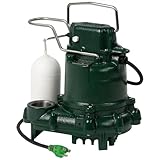
I remember the first time I bought a “high-performance” vacuum pump for a woodworking project. The sales guy raved about its “dual-stage capability,” and I, wide-eyed and trusting, shelled out nearly $300. It arrived, a sleek, black box, and I eagerly hooked it up. The initial pull-down was decent, but then… it just sort of plateaued.
I checked all my seals, fiddled with the connections, even read the manual cover-to-cover (a rare event for me). Turns out, “dual-stage” in that instance just meant it had two separate internal chambers that individually pulled a decent vacuum, but they didn’t really synergize for a deeper ultimate vacuum. It was a marketing gimmick, plain and simple.
This whole experience got me thinking: are many rotary vane pumps two stage, and if so, does it actually matter?
The short answer is: yes, many rotary vane pumps are designed with two stages, but understanding why and how is key to not getting fleeced like I did. It’s not just about the number of stages; it’s about the engineering behind them and what you actually need the pump to do.
Why the ‘two-Stage’ Buzz? It’s About Getting Lower
Look, nobody buys a vacuum pump to achieve a middling vacuum. You want it to suck. You want it to suck hard.
And that’s where the concept of a two-stage rotary vane pump comes into play. Think of it like this: a single-stage pump is like a one-man band. It can play a tune, and it might be okay, but it’s got its limits. A two-stage pump is like a full orchestra.
The first stage does the heavy lifting, pulling out the bulk of the air quickly. It gets you down to a certain pressure level, but it’s still got a ways to go.
Then, the second stage kicks in, taking over from that point and digging deeper, pulling the pressure down to much lower levels – the kind of deep vacuum you need for things like degassing resins, achieving ultra-dry environments, or certain scientific applications. I’ve seen firsthand how much faster a proper two-stage pump can evacuate a chamber compared to a single-stage one, especially as you approach the lower pressure thresholds. It’s not just about the ultimate vacuum; it’s about the speed at which you get there and the efficiency of the process.
The core of a rotary vane pump is its rotor, which spins eccentrically inside a stator. Vanes slide in and out of slots in the rotor, creating expanding and contracting chambers. On the intake side, the chamber expands, drawing in gas. As the rotor turns, the chamber volume decreases, compressing the gas, and then it’s expelled out the exhaust.
In a two-stage design, you basically have two such pump mechanisms arranged in series. The first stage pumps into the second stage, which then pumps out to the atmosphere. This arrangement allows the first stage to work at a lower pressure difference, making it more efficient at removing large volumes of gas. (See Also: Are Pumpkin Seed Husks Edible )
The second stage, operating under a more favorable pressure differential from the first stage, can then achieve a much deeper vacuum. It’s a clever way to overcome the inherent limitations of a single pumping mechanism when you’re chasing those really low pressures. Many industrial applications, particularly in HVAC for deep vacuum brazing or in scientific labs, rely on this multi-stage principle to achieve repeatable and reliable results.
A common misconception I’ve run into is that any pump with two internal pumping mechanisms is automatically a good two-stage pump. That’s not always true. The integration and design of the stages, the quality of the seals, and the oil system (for oil-sealed pumps) all play a massive role. A poorly designed two-stage pump can actually perform worse than a well-built single-stage unit.
I once spent a frustrating afternoon trying to get a cheap, no-name two-stage pump down to 100 microns. It sputtered and struggled, never quite getting there. My old, reliable single-stage pump, while slower, could at least consistently hit that mark.
That taught me that the label ‘two-stage’ is just a starting point; the actual engineering and build quality are what truly matter.
What to Actually Look for: Beyond the Two-Stage Label
So, if just saying “two-stage” isn’t enough, what should you be scrutinizing? It boils down to the pump’s specifications and its intended application. The most important spec is the “ultimate vacuum” or “ultimate pressure,” usually measured in Torr or Pascals.
For a single-stage pump, you might see ultimate vacuums in the 25-100 Torr range. A decent two-stage pump should be able to pull down significantly lower, often into the 1-10 Torr range, and high-end models can go even deeper, into the millitorr range. If a manufacturer claims a pump is two-stage but the ultimate vacuum spec isn’t much better than what you’d expect from a good single-stage unit, be suspicious.
I always look for a clear drop in pressure capability when comparing a two-stage to a single-stage of similar horsepower.
Another thing to consider is the pump’s displacement, usually measured in CFM (cubic feet per minute) or L/min. This tells you how much volume of air the pump can move at a given pressure. A higher displacement means faster evacuation.
While a two-stage pump excels at achieving deep vacuum, it’s still important that the first stage has adequate displacement to get you to the operating pressure of the second stage efficiently. If the first stage is too small, it becomes a bottleneck, and the pump might struggle to reach its full potential, even with two stages. When I’m choosing a pump, I often look at application notes or charts that show the pump’s performance curve – how its flow rate changes with decreasing pressure. This gives you a much better idea of its real-world capabilities than just a single number. (See Also: Are Pumpkin Seed Acid Or Alkaline )
Then there’s the build quality and the type of pump. For general-purpose use, oil-sealed rotary vane pumps are common and effective. They lubricate the internal components and help seal clearances, contributing to their vacuum capabilities.
However, they do require regular oil changes and maintenance to prevent contamination from moisture or debris, which can degrade performance. Dry rotary vane pumps exist, and they eliminate the need for oil changes, but they often have limitations in terms of ultimate vacuum and can be more prone to wear, especially in demanding environments. For many hobbyist applications, like vacuum bagging composites or degassing small resin batches, a good quality oil-sealed two-stage pump in the 5-10 CFM range with an ultimate vacuum of 10 millitorr or lower is usually more than sufficient.
Anything overkill can be a waste of money and potentially more complex to maintain.
| Pump Type | Typical Ultimate Vacuum (Torr) | Best For | My Verdict |
|---|---|---|---|
| Single-Stage Rotary Vane | 25 – 100 | General purpose, quick evacuation of larger volumes to moderate vacuum (e.g., basic vacuum bagging). | Good for basic tasks, but don’t expect deep vacuum. Often overhyped for anything serious. |
| Two-Stage Rotary Vane | 1 – 10 (can go lower) | Degassing resins, vacuum ovens, freeze-drying, HVAC, scientific applications requiring deep vacuum. | The go-to for serious vacuum needs. Worth the extra cost if you need low pressures. |
| Rotary Lobe (Roots) Booster (often used with a backing pump) | < 0.001 (with appropriate backing pump) | High-throughput industrial processes, semiconductor manufacturing, high-vacuum systems. | Serious industrial overkill for most people. Amazing performance, but complex and expensive. |
Common Mistakes People Make (and How to Avoid Them)
The biggest mistake, as I learned the hard way, is falling for the “two-stage” label without digging into the actual specifications. People see it and assume it’s automatically superior, or that it will magically solve all their vacuum problems. It doesn’t.
You need to understand what kind of vacuum you require. Are you trying to pull a vacuum on a large industrial chamber, or are you just degassing a small cup of resin for a tabletop? For the latter, a $500 two-stage pump with a 1 millitorr ultimate vacuum is overkill and likely more maintenance than you need. Conversely, trying to degas a large batch of resin with a single-stage pump that only pulls down to 75 Torr will result in bubbles that never quite go away, no matter how long you wait.
It’s a frustrating waste of materials and time.
Another common pitfall is neglecting pump maintenance. This is especially true for oil-sealed rotary vane pumps. If you don’t change the oil regularly, it becomes contaminated with moisture, air particles, and whatever else it’s pumping. This sludge degrades the pump’s ability to seal, reduces its efficiency, and can even lead to internal damage.
I’ve seen pumps that were practically seized up because the owner hadn’t changed the oil in years. The oil should be clear and have a slight amber tint.
If it’s black, cloudy, or smells burnt, it’s time for a change. Many manufacturers recommend changing the oil every 50-100 hours of run time, but for intermittent use, checking it visually every few months and changing it if it looks dirty is a good habit. For my own pumps, I try to do it after every major project or at least every 6 months, whichever comes first. It’s a messy job, but it’s the single most important thing you can do to keep your pump running optimally. (See Also: Are Organic Pumpkin Seeds From China Bad )
People also often overlook the importance of proper connections and seals. A vacuum pump, no matter how sophisticated, is only as good as the system it’s connected to. Leaky fittings, cracked hoses, or poorly sealed chambers will prevent you from achieving the ultimate vacuum the pump is capable of.
I’ve spent hours chasing vacuum leaks, only to find a tiny crack in a cheap O-ring or a loose hose clamp. Always use good quality fittings, appropriate vacuum-rated tubing, and check all your connections regularly. For important applications, a vacuum gauge is indispensable. It tells you what vacuum level you’re actually achieving, helping you diagnose leaks or confirm performance.
Trying to achieve a deep vacuum without a gauge is like trying to bake a cake without a timer – you’re just guessing.
People Also Ask:
What Is the Difference Between Single Stage and Two Stage Vacuum Pump?
The fundamental difference lies in how they achieve vacuum. A single-stage pump uses one set of internal pumping mechanisms to draw in gas and expel it. It’s capable of moderate vacuum levels. A two-stage pump basically has two such mechanisms arranged in series. The first stage pumps gas to a slightly lower pressure, and then the second stage takes over from that point, pulling the gas down to much deeper vacuum levels. This staged approach allows for greater efficiency and a significantly lower ultimate vacuum compared to a single-stage pump of similar horsepower.
What Is Considered a Deep Vacuum?
Generally, a “deep vacuum” refers to pressures significantly below atmospheric pressure. While a single-stage rotary vane pump might achieve pressures around 25-100 Torr (which is a partial vacuum), a deep vacuum is typically considered anything below 1 Torr. High-end two-stage pumps can achieve vacuums in the millitorr range (thousandths of a Torr), which is often considered ultra-high vacuum for many practical applications like degassing resins or performing certain scientific experiments.
What Is the Best Vacuum Level for Degassing Resin?
For most epoxy resins, a vacuum level of around 10-50 Torr is generally sufficient to effectively remove trapped air bubbles. However, achieving a deeper vacuum, ideally below 5 Torr (and even better if it’s closer to 1 Torr or lower), will yield the best results, making sure minimal to no bubbles in your cured resin. This is where a good two-stage rotary vane pump truly shines, as it can reliably reach and maintain these lower pressure levels. My personal experience suggests that the lower you can go, the cleaner the final product.
What Is a Two Stage Rotary Vane Pump Used for?
Two-stage rotary vane pumps are versatile and used in a wide range of applications where a deep vacuum is required. This includes degassing resins for casting and 3D printing, vacuum impregnation, vacuum ovens for heat treatment and drying, freeze-drying processes, HVAC system evacuation (for deep vacuum brazing), scientific laboratories for experiments, and certain industrial manufacturing processes. Their ability to achieve low pressures makes them indispensable for tasks where even small amounts of air or moisture can be detrimental.
Conclusion
So, to circle back to that initial question: are many rotary vane pumps two stage? Yes, they absolutely are, especially when you start looking at pumps designed for anything beyond basic air removal. But the label itself is only half the story. The real value comes from understanding what those two stages are actually doing and whether that capability aligns with what you need to achieve. Don’t get caught up in the jargon; focus on the ultimate vacuum spec and the pump’s performance curve.
If you’re serious about achieving a low vacuum for degassing, fabricating, or any process where air is the enemy, investing in a quality two-stage pump is often the smartest move. I’ve learned that skimping on pump performance is a false economy, leading to wasted materials, frustration, and subpar results. My advice? Do your homework, understand your pressure needs, and don’t be afraid to ask for clarification on specs. A good pump is a tool that lasts, and the right one will save you more headaches than it costs.