Let’s cut to the chase. You’ve got a basement that sweats, a crawlspace that weeps, or a yard that’s starting to resemble a lily pad convention. You’re staring down the barrel of a sump pump purchase, and the internet is screaming about submersible versus pedestal. But are pedestal sump pumps better? I’ve been knee-deep in leaky basements and soggy crawlspaces for years, wrestling with more pumps than I care to admit. I’ve seen the fancy gizmos fail and the simple workhorses keep chugging. So, let’s have a real talk about what’s worth your hard-earned cash and what’s just marketing fluff. I’ll tell you straight up what I’ve learned, the hard way.
The question of whether pedestal pumps reign supreme isn’t just about horsepower; it’s about reliability, maintenance, and frankly, your sanity when water decides to become an unwelcome houseguest. Forget the jargon for a minute. We’re talking about keeping your home dry and your wallet from getting soaked by unnecessary repairs or replacements.
The Down-and-Dirty on How They Actually Work
Alright, let’s get down to brass tacks on how these things operate before we even think about which type is ‘better’. At its core, a sump pump’s job is simple: move water out of your basement or crawlspace and away from your foundation. Water collects in a sump pit, which is basically a hole dug in the lowest part of your basement floor.
This pit has a float switch. When the water level in the pit rises high enough, it lifts the float, which then signals the pump to turn on. The pump sucks up the water and, via a discharge pipe, sends it out of your house, hopefully far away enough that it doesn’t just seep back in.
Simple, right? Well, the devil, as always, is in the details, and the main difference between a pedestal and a submersible pump is how the motor and the pump assembly are housed.
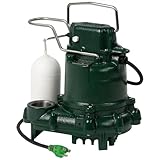
A pedestal sump pump has its motor mounted on a long shaft, lifting it above the water level in the sump pit. The pump itself is at the bottom of this shaft, submerged in the water. Think of it like an extension cord for the motor, keeping the electrical guts nice and dry.
This design makes them generally easier to access and service because you don’t have to pull the whole pump unit out of the pit to get to the motor. You can often just lift the shaft out. This is a big deal when you’re dealing with a dark, damp, and frankly gross sump pit. The motor on top is also usually cooled by air, which can be more efficient than water cooling.
On the other hand, submersible sump pumps have their motor and pump housed together in a sealed casing, completely submerged in the water. This means the motor is cooled by the water it’s pumping. This can be a good thing for longevity if the seal is perfect, but it also means if that seal fails, your motor is toast, and you’re pulling the whole unit out, often with a significant amount of water still sloshing around.
They tend to be quieter because the water muffles the sound of the motor and impeller. Plus, they’re generally considered more aesthetically pleasing since you don’t see the motor sticking out of the pit. But the maintenance aspect is where the pedestal pump often shines for the DIYer.
I once had a submersible pump fail during a massive downpour. The water rose so fast I was frantically trying to bail it out with a bucket while simultaneously trying to pull this heavy, waterlogged unit out of the pit. It was a mess, and honestly, a bit terrifying. The motor casing was corroded from years of submersion. It took me nearly two hours and a fair bit of cursing to replace it. That experience alone solidified my preference for accessibility. The ease of lifting out just the pump end of a pedestal setup, leaving the motor safely tucked away on its pedestal, felt like a revelation. It’s the difference between a quick fix and a full-blown, muck-filled ordeal.
Pedestal vs. Submersible: The Real-World Showdown
Now, let’s get down to the nitty-gritty of which one actually performs better in the trenches. The internet will tell you submersibles are quieter and more powerful.
And yeah, they can be. The sealed unit design often allows for more solid impeller designs, leading to higher pumping capacities in some models.
But ‘more powerful’ doesn’t always translate to ‘better for your specific situation.’ A common misconception is that submersible pumps are always superior. I disagree.
For the average homeowner dealing with intermittent flooding or high water tables, the accessibility and serviceability of a pedestal pump often outweigh the marginal gains in raw power or quiet operation you might get from a submersible. My first basement flood, which happened about fifteen years ago, was with a submersible pump.
It failed after three years, and I was so frustrated pulling it out. That’s when I switched to a pedestal.
The biggest advantage of a pedestal pump, in my book, is maintenance. When something goes wrong – and pumps do go wrong, it’s mechanical – you can usually lift the pump end out of the pit without disturbing the motor. This means less dirt, less water, and less hassle. You can inspect the impeller, clean out any debris, and often fix the issue right there. With a submersible, if the motor fails or the impeller gets clogged, you’re pulling the whole heavy, often slimy, unit out. It’s a wet, dirty job that’s exponentially worse when you’re doing it under pressure because the water is rising.
Noise is another factor. Submersibles are generally quieter because the motor is encased and underwater, which muffles the sound. Pedestal pumps can be a bit noisier because the motor is exposed to air. But let’s be honest, when your basement is filling up, the sound of the pump is secondary to its ability to do its job. (See Also: Are Pumpkin Seed Husks Edible )
I’d rather hear a pump working than listen to the gurgling of water encroaching on my belongings. Plus, you can always add some sound-dampening material around the pit if noise is a serious concern. The longevity argument is also debatable.
While a sealed submersible motor should last longer if the seal is perfect, that seal is a potential point of failure. Once that fails, the motor is exposed to water and corrosion. A pedestal pump’s motor is air-cooled and generally protected from submersion, which can lead to a longer lifespan for the motor itself.
The pump end is the part that sees the most wear, and on a pedestal pump, that’s the easier part to replace.
Here’s a little table I put together based on years of tinkering and fixing:
| Feature | Pedestal Sump Pump | Submersible Sump Pump | My Verdict |
|---|---|---|---|
| Maintenance Access | Excellent (motor stays dry) | Poor (entire unit must be removed) | Pedestal wins big here. Less mess, less hassle. |
| Noise Level | Moderate to High | Low to Moderate | Submersible is quieter, but not a dealbreaker for me. |
| Durability/Longevity | Good (motor protected from water) | Variable (depends heavily on seal integrity) | Pedestal motor often outlasts submersible motor. |
| Pumping Capacity | Good to Very Good | Good to Excellent (often higher peak) | Submersible can have an edge, but most homes don’t need top-tier. |
| Initial Cost | Generally Lower | Generally Higher | Pedestal is often more budget-friendly. |
| Ease of Installation | Slightly simpler (less to submerge) | Can be trickier to position correctly | Tie, both require basic plumbing and electrical. |
The common advice is often to go submersible for power and quiet. But if you’re a homeowner who likes to understand their systems and potentially do minor fixes yourself, the pedestal’s ease of access is a massive win. I’ve seen many submersible pumps fail due to corrosion on the motor housing, even with supposedly solid seals. The simple engineering of keeping the motor out of the water just makes sense for long-term reliability in a damp environment.
What to Look for When Buying a Pedestal Pump
So, you’re leaning towards a pedestal pump. Good.
Now, what makes one good and another… well, less good? It’s not just about picking the cheapest one you see online.
First off, consider the horsepower. For most residential basements, a 1/3 or 1/2 horsepower pump is plenty. You’re not trying to drain a swimming pool here. A 1/2 HP pump can typically move 40-60 gallons per minute (GPM) at a 10-foot lift, which is more than enough for typical basement water accumulation.
Don’t get suckered into buying a 3/4 or 1 HP unit unless you have a truly massive basement or a history of extreme flooding. More power means more electricity usage, and often a more expensive unit, for no real benefit.
Next, look at the discharge size. Most pedestal pumps have either a 1-1/4 inch or 1-1/2 inch discharge outlet. Stick with 1-1/2 inch if you can.
A larger diameter pipe means less resistance, less chance of clogging, and potentially better flow. You’ll need a corresponding fitting to connect it to your existing discharge pipe, but it’s a worthwhile upgrade.
The length of the pedestal shaft is also important. You want it long enough so the motor is well above any expected water level in the pit, but not so long that the pump end is ridiculously far from the motor. Standard lengths are usually fine, but measure your pit if you have any doubts.
Some models allow for shaft extension or adjustment, which is a nice bonus.
Material is key. Look for cast iron or heavy-duty thermoplastic for the pump housing and impeller. Cast iron is durable and can handle some abuse, but it can also rust over time if not properly coated.
Thermoplastic is lighter, corrosion-resistant, and often quieter. Avoid flimsy plastic components wherever possible. The float switch is another important component.
Many pedestal pumps use a tethered float switch, which is basically a ball on a cord. As the water rises, it lifts the float. These are generally reliable, but they can get hung up on debris. (See Also: Are Pumpkin Seed Acid Or Alkaline )
Vertical float switches, which move up and down on a rod, are often considered more reliable because they are less prone to getting stuck, but they require a bit more space in the pit. Make sure the switch mechanism looks solid and has a decent warranty. A limited 1-year warranty on a important piece of equipment like a float switch?
Run the other way.
Finally, check the warranty. A good manufacturer will stand behind their product with at least a 2-year, and preferably a 3-year or even 5-year warranty.
This tells you they have confidence in its build quality. Also, read reviews, but take them with a grain of salt. Look for patterns in complaints or praise.
Are people consistently complaining about the float switch failing? Or are they raving about how easy it was to install and how reliably it runs?
I once bought a pump where everyone complained the float switch was too sensitive and would turn off prematurely. I ignored it, and sure enough, within a month, it was shutting off when the water was only halfway up the pit.
Lesson learned: listen to the crowd when they’re all saying the same thing.
Common Mistakes and How to Avoid Them
Let’s talk about the stuff that trips people up. The most common mistake I see, and one I’ve made myself, is buying a pump that’s simply too small for the job. You look at the price tag of a 1/3 HP pump and think, “That’ll do,” without considering your home’s specific water issues.
If you have a history of significant flooding or a very high water table, a 1/3 HP might struggle, leading to the pump running constantly and burning out prematurely. Conversely, buying a massive 1 HP pump when you only get a couple of inches of water every few months is just wasteful. You’re paying more upfront, using more electricity, and potentially stressing components unnecessarily.
It’s a Goldilocks situation: you need the right size, not just the biggest or smallest.
Another big one is improper installation, specifically with the discharge line. If your discharge pipe has too many sharp bends, is too small in diameter, or has a poorly functioning check valve, your pump will have to work much harder.
This can lead to overheating, reduced efficiency, and premature failure. Make sure your discharge line is as straight as possible, has a gradual upward slope away from the house, and that the check valve is working freely. A check valve is that little one-way gate that prevents water from flowing back into the pit when the pump shuts off.
If it’s stuck or clogged, you’re basically re-pumping the same water over and over. I had a client once who installed his pump with a discharge pipe that ran horizontally for 50 feet before sloping down. The pump sounded like it was choking, and it died within six months. We rerouted it with a proper slope, and the new pump lasted years.
Ignoring the need for a battery backup is another colossal error. Power outages happen, and they often happen during storms when you need your sump pump the most. A good battery backup system can keep your pump running for hours, or even days, depending on the battery and pump usage. It’s a relatively inexpensive investment that can save you thousands in water damage. I learned this lesson the hard way during a major ice storm. The power went out, and my sump pump was useless. My basement flooded, ruining carpets and some furniture. I installed a battery backup system the very next week. It’s not a matter of if you’ll need it, but when.
Finally, and this sounds obvious but bears repeating: don’t let debris clog your pit. Leaves, dirt, small rocks, or even bits of construction material can get into the sump pit and either clog the pump’s intake or damage the impeller. Regularly inspect your sump pit and clean out any accumulated debris. If your pit is prone to collecting a lot of sediment, consider installing a filter bag around the pump intake. It’s a small bit of preventative maintenance that can save you a major headache down the line. I try to check my pit at least twice a year, and after any major storm.
Real-World Use Cases: Where Pedestal Pumps Shine
Let’s talk about where pedestal pumps really earn their keep. For older homes, especially those with unfinished basements or crawlspaces, pedestal pumps are often the go-to. These spaces can be tight, damp, and not exactly user-friendly for complex maintenance. The ability to easily lift out just the pump end of a pedestal setup makes inspections and minor repairs far less daunting. (See Also: Are Organic Pumpkin Seeds From China Bad )
Imagine wrestling a heavy, wet submersible pump out of a cramped crawlspace versus simply lifting a shaft. It’s night and day. My buddy Dave, who lives in a 1950s bungalow with a notoriously soggy basement, swore by his pedestal pump for this very reason. He’s not exactly a DIY guru, but he could manage to pull the pump out, clear a clog, and get it back in without calling a plumber.
Another excellent use case is for seasonal homes or rental properties. When you’re not there regularly, you want a system that’s as low-maintenance and easy to troubleshoot as possible. A pedestal pump offers that peace of mind. If a neighbor or a property manager needs to check on it, the operation is straightforward. They don’t need to be a plumbing expert to understand how to lift the pump out if there’s a suspected issue. This reduces the likelihood of minor problems escalating into major water damage.
I’ve also found pedestal pumps to be very effective in sumps that are prone to sediment buildup. While you still need to clean them, the accessible design means you can get at the intake and impeller more easily to clear out muck. If you’re in an area with a lot of clay soil or near a construction site, sediment can be a constant battle. A pedestal pump allows for more frequent and easier cleaning of the pump intake and impeller, potentially extending its life and making sure it doesn’t get overwhelmed.
Furthermore, for homeowners who want to be proactive about their home’s systems, a pedestal pump offers a more hands-on approach. You can easily see the float mechanism, the intake, and the general condition of the pump. This visibility encourages more regular checks and minor interventions, which can prevent larger, more expensive failures. It’s not about being a mechanic; it’s about having a system that allows for basic upkeep without requiring specialized tools or a service call. The simplicity of the design – motor up high, pump down low – is its greatest strength in these practical, everyday scenarios. It’s the unsung hero of reliable basement water management for many homes.
Practical Tips for Sump Pump Success
Alright, you’ve got your pedestal pump, it’s installed, and you’re feeling good. But your job isn’t done. To make sure this thing actually keeps your basement dry when you need it most, a few practical tips can save you a world of hurt. First, and I can’t stress this enough: test it regularly. Don’t wait for a storm to find out your pump doesn’t work. Grab a bucket of water and pour it into the sump pit. Watch the float rise, listen for the pump to kick on, and make sure water is being discharged. Do this at least twice a year, ideally in the spring and fall. It takes five minutes and could save you thousands in damages.
Second, consider a secondary pump or a battery backup system. I already waxed poetic about battery backups, but a secondary pump is also a smart move.
Many pedestal sump pumps have an option for a secondary pump that sits slightly higher in the pit, kicking on only if the primary pump fails or if the water level gets dangerously high. Some systems come with this integrated, or you can add a second independent pump with its own float switch. It’s like having a backup parachute; you hope you never need it, but you’re damn glad it’s there if you do. I’ve got both a battery backup and a secondary pump system.
It’s overkill for some, but after my past experiences, I sleep better knowing I’ve got layers of protection.
Third, maintain your discharge line. This isn’t just about keeping it clear of leaves and debris, though that’s important. It’s also about making sure it’s not frozen in the winter. If your discharge line runs above ground and freezes, your pump will be trying to push water into a solid block of ice. This can damage the pump or the pipe. You can buy pipe heaters or insulation wraps to prevent freezing. Alternatively, some people install a secondary weep hole a few inches from the pump outlet to allow any water trapped in the line to drain out if it freezes, preventing a backup. It’s a small detail but can prevent a burst pipe or a damaged pump.
Fourth, think about a water-level alarm. These are relatively inexpensive devices that sound an audible alarm if the water level in your sump pit reaches a certain height, indicating a pump failure or a major influx of water. They are often battery-powered and can alert you to a problem even when you’re away from home. I installed one in my elderly mother’s house because she’s not always home during the day, and it gave her peace of mind. A loud beep can mean the difference between a minor inconvenience and a major disaster. These simple, practical steps turn a piece of equipment into a reliable defense system for your home.
Frequently Asked Questions About Sump Pumps
What Is the Lifespan of a Pedestal Sump Pump?
A typical pedestal sump pump can last anywhere from 10 to 15 years, though this can vary significantly based on usage, water quality, installation, and maintenance. Regular testing and cleaning are key to maximizing its lifespan. Units that operate frequently due to high water tables or frequent rainfall may have a shorter lifespan than those used intermittently.
Can a Pedestal Sump Pump Run Dry?
Yes, a pedestal sump pump’s motor is designed to operate above the water level, so it can run dry without immediate damage to the motor itself. However, running a pump dry for extended periods is not recommended, as it can cause wear and tear on the impeller and seals. The pump is designed to move water, and prolonged dry running can lead to overheating and damage to those specific components.
Do Pedestal Sump Pumps Need a Check Valve?
Absolutely. A check valve is a mandatory component for any sump pump system, including pedestal pumps. It prevents water from flowing back into the sump pit after the pump shuts off, which would cause the pump to cycle on and off unnecessarily, reducing its efficiency and lifespan. It makes sure that the water pumped out stays out.
Are Submersible Sump Pumps More Efficient Than Pedestal Sump Pumps?
Generally, submersible pumps are considered slightly more energy-efficient due to their design, which allows the motor to be cooled by the water it’s pumping, potentially leading to less wasted energy on cooling. However, the difference in efficiency for most residential applications is often marginal, and the benefits of a pedestal pump’s accessibility can outweigh this slight efficiency gain for many homeowners.
How Often Should I Test My Sump Pump?
You should test your sump pump at least twice a year, preferably in the spring and fall. Pouring a bucket of water into the sump pit is a quick and easy way to make sure the float switch activates the pump and that water is being discharged effectively. More frequent testing might be advisable in areas prone to heavy rainfall or if you experience power outages regularly.
Verdict
So, are pedestal sump pumps better? For my money, and my sanity when dealing with basement water, the answer is often a resounding yes. Their ease of maintenance, the protection of the motor from submersion, and the often lower initial cost make them a highly practical choice for most homeowners. While submersible pumps have their place, particularly where noise is a most important concern or in very specific installation scenarios, the rugged simplicity and user-friendliness of a pedestal pump are hard to beat.
Don’t just buy the cheapest one you find, though. Pay attention to horsepower, discharge size, and material quality. And for the love of dry carpets, invest in a battery backup system. It’s the single best insurance policy you can get against water damage during a power outage, and it works for both types of pumps.
Ultimately, keeping your basement dry is about having a reliable system in place. For many, that system starts with a well-chosen and properly maintained pedestal sump pump. Do your homework, consider your home’s specific needs, and make the choice that gives you the most peace of mind.