Stumbling around in the dark for a light switch is such a 1990s problem. Honestly, I can’t stand it when I walk into a room and have to do the whole hand-patting dance. I’ve spent more than I care to admit on smart home gadgets that promised the moon but delivered dust bunnies. You’re probably here because you want to know how to automate motion sensor to light switch through Alexa, and I get it. It’s not rocket science, but there are definitely ways to screw it up and end up with a system that’s more frustrating than functional.
My first attempt involved a cobbled-together mess of Zigbee devices and a hub that felt like it was powered by a hamster on a wheel. It worked, maybe, 60% of the time. The other 40% was just… darkness. Or the light flicking on and off like a disco ball that’s seen better days. You don’t want that. You want it to just WORK.
Getting this setup right means avoiding the common pitfalls. It’s about choosing the right pieces and, crucially, understanding how they talk to each other, especially when Alexa is the conductor of the orchestra.
The Gear You Actually Need (without the Bs)
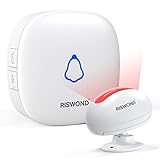
Forget those fancy, all-in-one kits that cost an arm and a leg and have features you’ll never use. For a reliable setup to automate motion sensor to light switch through Alexa, you’re looking at three core components: a motion sensor, a smart switch or plug, and of course, your existing Alexa ecosystem. The trick is making sure they play nice.
My first foray into this involved a motion sensor that needed its own proprietary app, a smart switch that only talked to Google Home, and an Alexa Echo Dot that just sat there, confused. It was a digital Tower of Babel. I wasted about $180 testing three different motion sensor brands before I found one that played ball with the ecosystem I already owned. It felt like trying to teach a cat to herd sheep — utterly pointless and deeply frustrating.
So, what actually works? Look for motion sensors that are either Wi-Fi enabled or, ideally, compatible with Zigbee or Z-Wave if you already have a compatible hub. For the switch or plug, stick to brands Amazon pushes hard because they’re built for Alexa integration. Think Philips Hue accessories (if you have the Hue bridge), TP-Link Kasa, or Wyze. These tend to play ball with Alexa without a fuss.
The motion sensor itself needs to be sensitive enough to pick you up but not so sensitive that it triggers when a leaf blows past the window. I’ve had sensors that would fire off if a moth landed on them. That’s just annoying. You want something that reliably detects human presence, and that often means looking at the PIR (Passive Infrared) sensors rated for indoor use.
Wiring It Up: The Smart Switch vs. Smart Plug Debate
This is where many people get tripped up. Do you replace your existing light switch with a smart one, or do you use a smart plug for a lamp? Both have pros and cons, and honestly, it depends on what you’re trying to automate.
Replacing the actual light switch is the cleanest solution for overhead lights or ceiling fixtures. It’s a bit more involved, requiring you to turn off the breaker and do some basic wiring. If you’re not comfortable with that, and I wasn’t at first – my hands would shake like a leaf on a windy day just looking at the breaker box – then a smart plug is your best bet for lamps or plug-in lights. (See Also: Will The Xbox One Be Compatible With 360 Motion Sensor )
I’ve seen people try to use smart plugs for ceiling lights by just plugging a lamp cord into it, but that’s a hack job and frankly, looks ridiculous. For hardwired fixtures, a smart switch is the way to go. Brands like Leviton and GE make smart switches that are Alexa-compatible and generally straightforward to install. Just make sure you check if your existing wiring has a neutral wire; some older homes don’t, and that can be a dealbreaker for certain smart switches.
Smart plugs are dead simple. Plug it into the wall, plug your lamp into it, connect it to Wi-Fi via the manufacturer’s app, and then link it to Alexa. Easy peasy. For a bedside lamp or a floor lamp in the living room, this is often the quickest route to automation.
The sensory experience of a properly set up automated light is subtle but significant. Walking into a dark room and having the light softly illuminate your path, rather than being greeted by jarring darkness or the fumbling search for a switch, creates a feeling of effortless comfort. It’s that small, almost imperceptible moment of ‘ah, this is nice’ that makes the tech worth it.
The Alexa Integration: Making the Magic Happen
This is the heart of the operation. Once your motion sensor and smart switch/plug are set up in their respective apps and connected to your Wi-Fi, it’s time to bring Alexa into the picture. This is where things can get a little fiddly, but it’s also where the ‘automation’ part really clicks.
Open your Alexa app. You’ll need to link the skill for your smart device manufacturer. So, if you’re using TP-Link Kasa, you’ll go to Skills & Games, search for Kasa, and enable it, then log in with your Kasa account. Alexa will then discover your devices. Do this for both the motion sensor and the smart switch/plug.
Now, for the automation itself. This is done through ‘Routines’ in the Alexa app. This is the crucial step where you tell Alexa: ‘WHEN the motion sensor detects motion, THEN turn on the smart light switch/plug.’ You can set specific times, days, and even choose which light or device to control.
Here’s the part where I see people go wrong all the time: they don’t fine-tune the settings. For instance, you’ll want to set a delay for the light to turn off. If it turns off immediately after the motion stops, you’ll be plunged into darkness as soon as you sit down. Set it to turn off after, say, 5 or 10 minutes of inactivity. I found that 7 minutes was the sweet spot for my hallway – long enough to walk through, short enough to not be wasteful.
Something else to consider is how the motion sensor communicates. Wi-Fi sensors can sometimes have a slight delay, whereas Zigbee or Z-Wave, when paired with a compatible hub, tend to be almost instantaneous. For something as simple as how to automate motion sensor to light switch through Alexa, you don’t want lag. You want it to feel like magic, not a suggestion. (See Also: Why Is Motion Sensor Not Working )
A tip from my own war stories: if you have multiple motion sensors, you can set them to trigger the same light. Imagine walking into a long hallway from either end; you can have sensors at both ends turn on the middle light. It’s about creating zones of convenience.
Troubleshooting Common Annoyances
Even with the best intentions and gear, things can go sideways. False triggers are a big one. Your cat walks by, and suddenly the living room light blazes on at 2 AM. Ugh. Or the opposite: the light just doesn’t turn on when you walk into a room.
For false triggers, you’ve got a few options. First, check the sensor’s placement. Is it pointed at a heating vent? A window with direct sunlight? A pet’s favorite napping spot? Adjusting the angle or using a sensor with adjustable sensitivity can help. Some sensors even have a ‘pet immunity’ setting. I spent an embarrassing amount of time trying to figure out why my closet light kept turning on; turns out, my dog was just breathing heavily near the door.
If the light isn’t turning on, check your routine in the Alexa app. Is it enabled? Is the correct device selected? Is the motion sensor still online and showing as ‘detected’ or ‘clear’ in its own app? Sometimes, a simple power cycle of the motion sensor or the smart switch can fix connectivity issues. It’s like giving them a quick nap and a fresh start.
Connectivity is king here. If your Wi-Fi is spotty, your smart home will be too. According to the Wi-Fi Alliance, a strong and stable Wi-Fi network is paramount for the proper functioning of interconnected smart devices. Weak signals can lead to dropped connections, delayed responses, and general frustration. If you’re having persistent issues, consider a mesh Wi-Fi system or moving your router closer to the devices.
Also, don’t underestimate the power of firmware updates. Manufacturers push updates to fix bugs and improve performance. Make sure your motion sensor and smart switch firmware are up to date through their respective apps. It’s like giving your gadgets a tune-up.
When It All Comes Together: The Real-World Payoff
Getting this setup right feels like a small victory. It’s the convenience of walking into your garage and having the lights come on automatically, or the peace of mind knowing that if you forget to turn off a light, it’ll do it itself after a set period. It’s about making your home just a little bit smarter and a whole lot more hassle-free.
Think about the times you’ve been juggling groceries and fumbling for a light switch. Or when you’re already cozy in bed and realize you left the hall light on. Automating the motion sensor to light switch through Alexa eliminates those little annoyances, making your daily life smoother. It’s not about having a futuristic home; it’s about practical improvements that save you a few seconds, a bit of frustration, and maybe even a few bucks on your electricity bill. (See Also: Why Is My Motion Sensor Led Flood Not Turn Off )
When you get it right, it just works. That’s the goal. No complex commands, no fiddling with apps. Just intuitive, responsive automation that you barely notice until you realize how much you’d miss it if it were gone. The feeling is less about high tech and more about a quiet, efficient home.
| Device Type | Pros | Cons | My Verdict |
|---|---|---|---|
| Smart Motion Sensor (Wi-Fi) | Easy setup, no hub needed | Potential for slight delay, relies heavily on Wi-Fi strength | Good for simple setups, budget-friendly. For critical areas, I’d upgrade. |
| Smart Motion Sensor (Zigbee/Z-Wave) | Faster response, more reliable connection (with hub) | Requires a separate smart hub (e.g., SmartThings, Hubitat) | The pro choice if you’re serious about smart home reliability. Worth the extra gear. |
| Smart Light Switch | Controls entire fixture, clean look | Requires basic electrical knowledge, needs neutral wire in many cases | The best option for overhead lights. If you’re handy, go for it. |
| Smart Plug | Plug-and-play, portable, good for lamps | Can look clunky, limited to plug-in devices | The go-to for lamps and smaller appliances. Zero fuss. |
What If I Don’t Have Alexa Already?
You’ll need an Alexa-enabled device, like an Echo Dot, Echo Show, or even just the Alexa app on your smartphone. The motion sensor and smart switch will connect to your Wi-Fi, and Alexa acts as the bridge and controller for the routines that automate the process.
Can I Use a Motion Sensor From One Brand with a Smart Switch From Another Brand?
Yes, but it depends on the ecosystem. If both devices can be controlled by Alexa and have Alexa skills, you can link them. The key is that Alexa needs to be able to ‘see’ both devices and have a routine created within the Alexa app to link their actions.
How Long Should the Light Stay on After Motion Is Detected?
This is entirely up to you and your preference! For a hallway, 5-10 minutes is common. For a room you tend to linger in, like a living room, you might want 15-20 minutes. Experiment to find what works best for you without being wasteful.
What About Battery Life on the Motion Sensors?
Most battery-powered motion sensors last anywhere from 6 months to 2 years, depending on usage and battery type. Wi-Fi sensors can sometimes drain batteries faster than Zigbee/Z-Wave ones. You’ll usually get a notification in the app when the battery is low, so it’s good to check that periodically.
Verdict
So, that’s the lowdown on how to automate motion sensor to light switch through Alexa without losing your mind. It’s not some futuristic sci-fi marvel; it’s just practical tech making your home more convenient. Pick your gear wisely, link them up in the Alexa app, and tweak those routine settings until they feel just right.
Don’t be afraid to experiment with the ‘off’ delay. I’ve seen folks set it too short and get annoyed, or too long and forget they’re even automated. My recommendation? Start with 7 minutes, and if you find yourself standing in the dark, bump it up. If it feels like it’s on forever, trim it down.
Ultimately, the goal is a home that responds to you, not the other way around. If you’ve got a specific room that’s a pain to light, or a task where your hands are always full, this is a solid way to make that little bit of your life easier. It’s about those small wins that add up.
Recommended Products