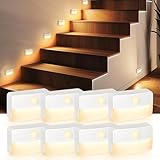
Knocking around in my dimly lit hallway late one night, fumbling for the light switch that always seemed to be just out of reach, I swore I’d figured out the answer. It was for catching clumsy idiots like me. Turns out, that’s only part of the story.
Honestly, what is the motion sensor in the hallway for? It’s not just some futuristic gadget meant to make your home feel like a spaceship. It’s practical, and frankly, after years of dealing with half-baked smart home tech that just promised more hassle than it solved, I’ve learned to appreciate the simple, effective stuff.
It’s easy to dismiss these little gadgets as overkill, another thing to set up, another thing to potentially go wrong. But when they work, they just *work*, quietly making life a bit more convenient without you even thinking about it. The trick is knowing what you’re actually getting.
Why Your Hallway Has a Little Eye Watching It
Look, let’s cut the fluff. That little doodad on your hallway ceiling or wall isn’t there to judge your late-night snack runs. It’s a sensor, plain and simple, designed to detect movement. The ‘why’ is where it gets interesting. Most often, it’s tied to your home’s lighting system. It’s called an occupancy sensor or a vacancy sensor, and its primary job is to turn lights on and off automatically.
Think about it: you walk into a dark hallway, hands full of groceries. Instead of dropping everything to find the light switch, BAM, the lights flicker on. You walk through to the other side, and a few minutes later, the lights switch off. Saves energy, saves you the awkward dance of juggling bags, and prevents that sinking feeling when you realize you left the hallway light on all day.
But there’s more to it. Some people integrate these into their security systems. A motion sensor in the hallway can be the first line of defense, triggering an alert if someone unexpected is moving through your home when they shouldn’t be. It’s like a silent alarm that doesn’t need you to press a button.
My Own Dumb Move with a Hallway Sensor
I remember installing my first smart home setup about eight years ago. I was so hyped about all the automation possibilities. I got a fancy motion sensor for the hallway, convinced it would be the ultimate convenience. I wired it up, programmed it to turn on the hall light when I entered and off when I left, and felt like a genius. For about a week. (See Also: Do I Need Motion Sensor Baby Monitor )
Then, I started noticing something weird. The lights would randomly switch off while I was still in the hallway, usually when I was standing perfectly still, trying to sneak past my sleeping kids. Or worse, they’d stay on for ages after I’d gone to bed, creating a weird, faint glow that kept me up. I spent around $150 testing three different sensor sensitivity settings, convinced the hardware was faulty. Turns out, my ‘set it and forget it’ programming was the problem. I hadn’t accounted for the fact that if I sat down in the hallway for a minute to tie my shoes, the sensor would think I’d vanished into thin air.
It took me a solid two weeks of frustration, and a few conversations with a surprisingly patient tech support guy, to realize I needed to adjust the ‘timeout’ setting. It was a humbling reminder that even ‘smart’ tech needs a bit of human brains behind the programming.
Beyond Just Lights: Unexpected Uses
This is where things get a bit more interesting, and where most basic guides will just tell you ‘it turns on the lights’. That’s like saying a car is just for getting from point A to point B. Sure, but it misses the nuance. A hallway motion sensor can be integrated with smart plugs to turn on a bedside lamp when you enter your bedroom from the hall, or even trigger a smart speaker to announce a gentle wake-up chime.
For people with mobility issues, this is a genuine lifesaver. No more stumbling in the dark. The hallway lights come on automatically, providing a safe, illuminated path. Some systems can even differentiate between pets and people, so your cat triggering the lights at 3 AM doesn’t send you a notification about an ‘intruder’. It’s a subtle thing, but it adds a layer of thoughtfulness to your home’s automation.
What about security? If you have a connected camera system, a hallway motion sensor can be configured to start recording video the moment movement is detected. This is far more reliable than relying solely on camera-based motion detection, which can sometimes be fooled by shadows or glare. The sensor acts as a dedicated trigger, ensuring you capture activity right from the start of an event. According to the National Institute of Standards and Technology (NIST), using multiple, layered detection methods in smart home security can significantly improve reliability and reduce false alarms.
The ‘just Stand Still’ Problem
Here’s the contrarian take: Everyone talks about motion sensors turning lights *on*. I think their real value, often overlooked, is their ability to turn lights *off*. Think of all the electricity wasted because someone forgot to flip a switch. A hallway sensor that reliably turns off the lights after a set period is a silent money-saver and good for the planet. It’s not about the ‘wow’ factor of the light coming on; it’s about the quiet efficiency of it going off when it’s no longer needed. (See Also: How To Replace Batteries In Older Motion Sensor )
The catch, as I learned the hard way, is the timeout. Set it too short, and you’re back to fumbling for switches. Set it too long, and you defeat the energy-saving purpose. Finding that sweet spot, maybe 5-10 minutes for a hallway, feels like a small victory. It’s akin to tuning a guitar; you’re not just hitting the strings, you’re finding the precise tension for the right sound.
Different Types and What They Mean
You’ve got a few main types of sensors: Passive Infrared (PIR) and Microwave. PIR sensors detect heat signatures, which is why they’re great for detecting body heat. Microwave sensors emit low-level microwave pulses and measure the reflection, meaning they can detect movement through thin walls or obstacles, but they can also be more prone to false triggers from things like air vents. Some high-end units combine both technologies (dual-tech sensors) for increased accuracy. For a hallway, a good PIR sensor is usually more than enough. It’s like choosing between a screwdriver and a power drill; for most hallway tasks, the screwdriver is perfectly adequate and less likely to strip the screw.
What’s the Actual Deal with Hallway Motion Sensors?
| Sensor Type | How it Works | Pros | Cons | My Verdict |
|---|---|---|---|---|
| Passive Infrared (PIR) | Detects changes in infrared radiation (heat) | Energy efficient, good for detecting body heat, common | Can be blocked by obstacles, less effective for very slow movements |
Best for most hallways. Simple, reliable for human movement. |
| Microwave | Emits microwaves and measures reflections | Can detect through obstacles, wider detection range | Can be prone to false alarms, potentially higher energy use |
Use with caution. Might be overkill for a standard hallway, good for tricky spots. |
| Dual-Tech | Combines PIR and Microwave | High accuracy, fewer false alarms | More expensive, more complex installation |
Premium choice if budget allows and you need rock-solid reliability. |
Frequently Asked Questions About Hallway Motion Sensors
Can a Motion Sensor in the Hallway Detect Pets?
Yes, but it depends on the sensor’s sensitivity settings and whether it’s designed to ignore smaller heat signatures. Many modern sensors offer pet-immune features. You can often adjust the sensitivity or use specific mounting positions to minimize false triggers from your furry friends. It’s a bit of trial and error to find the sweet spot for your specific pet and sensor. (See Also: Is The 6s Motion Sensor Serviceable )
How Far Away Can a Hallway Motion Sensor Detect Motion?
The detection range varies significantly by model, but for typical ceiling-mounted hallway sensors, you’re looking at anywhere from 15 to 30 feet (about 4.5 to 9 meters). Some specialized units might go further. Always check the product specifications for the exact range and the angle of detection – usually around 90 to 180 degrees.
Do Hallway Motion Sensors Use a Lot of Electricity?
Generally, no. Passive Infrared (PIR) sensors, which are the most common, use very little power. They are designed to be ‘passive,’ meaning they don’t emit anything themselves, just detect ambient infrared. They typically consume less power than a small LED night light, so you won’t see a noticeable spike in your electricity bill just from the sensor itself.
What’s the Difference Between a Motion Sensor and a Presence Sensor?
A motion sensor detects movement. If you stop moving for too long, it might assume you’ve left. A presence sensor, often using more advanced technology like radar or ultrasonic waves, can detect if someone is still in the room, even if they’re not moving much – think reading a book or sleeping. For a hallway, a standard motion sensor is usually sufficient because people are typically passing through rather than lingering.
Final Verdict
So, what is the motion sensor in the hallway for? It’s a simple piece of tech that can genuinely make your home feel a bit smarter and more convenient, from automatically lighting your path to acting as a subtle security trigger. Don’t dismiss it as just another gadget; when properly set up, it’s one of those things that just makes daily life a little smoother.
My own blunders taught me that the tech itself is only half the battle; understanding how to configure it for your specific needs is the other, often more frustrating, half. It’s not always plug-and-play, and you might have to fiddle with settings a bit. That’s the real-world experience speaking.
If you’re thinking about adding one, consider your specific hallway use case. Is it purely for lighting, or are you looking at security integration? Knowing that will help you pick the right type and avoid the frustration I had with my lights turning off while I was still standing there. Give it a shot; the convenience, once dialed in, is surprisingly worth the initial setup headache.
Recommended Products