Honestly, for the longest time, I just didn’t get the Philips Hue motion sensor T button. It felt like another piece of plastic cluttering up my smart home setup, another thing to charge or replace batteries for. I’d already sunk a fair bit of cash into Hue bulbs and those ridiculously overpriced Hue dimmer switches, so I was wary of adding more gadgets that might just gather dust.
But then, a lightbulb (pun intended, sorry) went off. I realized I was looking at it all wrong. It wasn’t just a ‘motion sensor’ in the traditional sense; it was a versatile little trigger, a gateway to truly *automating* my lighting without needing my phone or voice commands.
So, what is the Hue motion sensor T button? It’s more than you might think, and after months of messing around with it in my own house, I’ve figured out where it shines and where it’s just… well, not.
Why I Almost Gave Up on What Is the Hue Motion Sensor T Button
Bought my first one on a whim, thinking it’d be a no-brainer for the hallway. You know, walk in, lights on. Simple. Except it wasn’t. The motion detection was a bit too eager, turning the lights on when a cat brushed past the doorway, or worse, not picking up my slow shuffle in the dark until I was practically tripping over the rug. It felt less like a smart convenience and more like an annoying toddler constantly demanding attention. I spent about three evenings fiddling with the sensitivity settings, feeling increasingly frustrated. The little plastic disc felt mocking.
Then there was the battery life. I swear, the first one I bought died after about eight months, and I hadn’t even used it that much. It was a genuinely disappointing experience, especially considering the price point. I’d seen plenty of reviews online, most of them glowing, talking about how these things are essential. Honestly, at that point, I thought they were overrated and just another way for Philips to milk more money out of the Hue ecosystem. I’d almost written it off as a failed experiment, another $40 down the drain.
What the Hue Motion Sensor T Button Actually Does (and Doesn’t)
The core function, obviously, is detecting motion. It uses infrared to sense movement within its field of view, which is about 100 degrees horizontally and 120 degrees vertically. It’s designed to be pretty low-power, hence the battery. When it detects movement, it sends a signal to your Hue Bridge, which then triggers an automation you’ve set up. This could be turning on a light, changing its color, or even playing a sound if you’ve got other smart devices integrated.
But here’s where things get interesting, and where most people probably miss the boat. It’s not *just* a motion sensor. You can also set it to react to ambient light levels. So, it can be programmed to only turn on lights if motion is detected *and* it’s dark outside, or if the room is already dimly lit. This is a crucial distinction that a lot of the quick-start guides gloss over. I found this out the hard way after my hallway light kept blazing during broad daylight. (See Also: Why Would Living Motion Sensor Go Off )
The ‘T’ in the name, by the way, isn’t some secret code. It’s just part of the product naming convention for the small, circular sensors in the Hue line. Don’t let it confuse you into thinking it’s some special, advanced version. It’s the same button-style sensor you’ve probably seen in product photos.
People Also Ask: Is the Hue Motion Sensor T Button Worth It?
This is the million-dollar question, isn’t it? For me, after my initial grumbles, the answer became a resounding ‘yes,’ but with massive caveats. It’s worth it if you understand its limitations and leverage its smart features. It’s not worth it if you expect it to be some all-seeing eye that flawlessly controls your entire home. My dad, who’s still wrestling with a thermostat that’s older than I am, looked at it and just shook his head, muttering about how complex everything is these days. He has a point, but the payoff can be surprisingly seamless.
My Personal Mistake: The ‘always On’ Hallway Disaster
I remember one weekend, I was determined to make the hallway sensor perfect. I’d set it to turn on the hall light when motion was detected. Easy. But I forgot to factor in the fact that it also detects light. So, any time a car drove past our front window at night, casting a fleeting shadow, BAM – hallway light on. Or if the sun hit it just right in the morning, even though the hall was already bright. It was like living in a poorly programmed disco. I must have looked like a madman, running down the hall to turn the light off, only for it to spring back on seconds later because I was still in its range. It took me a solid hour of fiddling with the light sensitivity settings, plus adjusting the placement, to finally get it right. That experience taught me to read the fine print on the light sensor functionality, which I’d completely ignored initially.
Contrarian Opinion: Forget ‘set It and Forget It’
Everyone online talks about how these sensors are the pinnacle of ‘set it and forget it’ smart home automation. I disagree, and here’s why: the ‘forget it’ part is where you fail. These little devices, like any technology, require occasional tweaking. The environment changes – sunlight patterns shift through the seasons, new furniture might block a sensor’s view, or pets might get more active. If you just install it and never revisit the settings in the Hue app, you’re almost guaranteed to get frustrated. You have to be willing to occasionally check in, maybe adjust the motion sensitivity by one notch, or fine-tune the ambient light threshold. It’s not a one-time setup; it’s an ongoing, albeit minor, maintenance task.
The Unexpected Comparison: It’s Like a Smart Dog Walker
Think of the Hue motion sensor T button like a very, very patient and specialized dog walker. You don’t need to be there to tell them when to pick up the leash, but you *do* need to give them clear instructions: ‘Only walk Fido when it’s raining, and only between 3 PM and 4 PM.’ If you just tell them ‘walk Fido,’ they’ll be out there at 3 AM in a blizzard. This little sensor needs those specific parameters to be truly useful. It’s not just a button you push; it’s an input device that needs context to trigger a useful output.
Who Needs What Is the Hue Motion Sensor T Button?
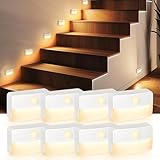
I’d say if you have a Hue Bridge and you’re already invested in the Hue ecosystem, it’s a solid addition for specific use cases. Hallways, staircases, closets, bathrooms (especially at night), and even garages are prime candidates. Anywhere you frequently enter and exit, and where you want lights to come on automatically without fumbling for switches, is a perfect fit. I’ve got one by my bedside that turns on a dim, warm-toned lamp for a few minutes when I get up in the middle of the night. It’s a small thing, but it’s made those middle-of-the-night bathroom trips so much less jarring. I also have one in my walk-in pantry that turns on the overhead light the moment I open the door – it’s so satisfying not having to reach for a switch when my hands are full of groceries. (See Also: Why Motion Sensor Bulb On All The Time )
The Hue Motion Sensor T Button: Key Features and My Verdict
| Feature | My Experience / Verdict |
|---|---|
| Motion Detection | Good, but can be finicky. Adjusting sensitivity in the app is key. Sometimes triggers on shadows or pets, sometimes misses slow movement. Verdict: Needs fine-tuning. |
| Ambient Light Sensor | This is the game-changer. Allows for smarter automations (e.g., only activate when dark). Very useful. Verdict: Essential for smart use. |
| Battery Life | Variable. I got about 8 months on my first one, but the current one is pushing 15 months. Philips claims up to 2 years. Use quality batteries. Verdict: Decent, but monitor it. |
| Hue App Integration | Seamless. Easy to set up automations, adjust settings, and check battery status. The app is generally well-designed. Verdict: Excellent integration. |
| Form Factor | Small and unobtrusive. Blends in well with most decor. Easy to mount. Verdict: Discreet and practical. |
I’ve seen reports from sources like the Consumer Reports testing labs that highlight the reliability of Philips Hue products in general, and while they might not have specifically tested this exact sensor in their latest report, their overall findings on Hue’s ecosystem stability are reassuring. They often point out how important it is to have connected devices that ‘just work’ when you need them, and that’s precisely what you get with the Hue system when configured correctly.
Frequently Asked Questions About the Hue Motion Sensor T Button
Can I Use the Hue Motion Sensor T Button Without a Hue Bridge?
No, you absolutely cannot. The Hue motion sensor T button communicates wirelessly with a Philips Hue Bridge, which then connects to your home network. The Bridge is the central hub that translates the sensor’s signals into commands for your lights and other Hue accessories. Without it, the sensor is just a pretty piece of plastic.
How Far Away Can the Hue Motion Sensor T Button Detect Motion?
Philips states the optimal detection range is up to 16 feet (5 meters). However, this can vary based on factors like the size of the moving object, its speed, and the temperature of the environment. For best results, aim for placement within that 16-foot range and ensure it has a clear line of sight.
Can I Use Multiple Hue Motion Sensors T Buttons in One Room?
Yes, you can. You can have several motion sensors in the same room or area. However, you’ll need to be mindful of how you configure their automations in the Hue app to avoid conflicting commands. For instance, if two sensors are set to trigger the same light, you might want to adjust their sensitivity or placement to prevent them from both activating simultaneously and causing odd behavior.
Does the Hue Motion Sensor T Button Have a Delay?
There’s typically a very minimal delay, usually under a second, between the sensor detecting motion and the Hue Bridge sending the command to turn on the light. This is dependent on your network speed and the Hue Bridge’s responsiveness. In most real-world scenarios, the delay is imperceptible and feels instantaneous. The ambient light sensor also adds a slight processing step, but it’s generally very quick.
Can the Hue Motion Sensor T Button Trigger Non-Hue Smart Devices?
Indirectly, yes, through integrations. If you use platforms like IFTTT (If This Then That) or have a more advanced smart home hub that integrates with both Hue and other brands (like Amazon Alexa, Google Home, or Apple HomeKit), you can create routines where a Hue motion event triggers actions on non-Hue devices. The sensor itself only directly talks to the Hue Bridge. (See Also: Why Would Living Motion Sensor Go Off During Night Setting )
The Bottom Line on What Is the Hue Motion Sensor T Button
After wrestling with it, learning its quirks, and finally getting it to work *for* me instead of against me, I can confidently say the Hue motion sensor T button is a worthwhile component of a well-thought-out Philips Hue setup. It’s not a magic bullet, and you absolutely have to engage with the app to get the most out of it. But when you do, it adds a layer of effortless convenience that genuinely makes your smart home feel, well, smarter.
The key is understanding that its ambient light sensor is just as important as its motion detection. If you treat it as a dual-function device and program it with that in mind, you’ll be far happier than if you just expect it to blindly turn on lights. My initial frustration stemmed from not fully grasping its capabilities, a mistake I think many people make. The initial outlay might seem steep for such a small device, but the daily, almost subconscious, convenience it offers can be surprisingly significant over time.
Verdict
So, what is the Hue motion sensor T button? It’s a tiny piece of tech that, when used correctly, can make your smart home lighting feel less like a novelty and more like an integrated part of your life. It’s about automating the mundane, like not having to fumble for a light switch when your hands are full of groceries, or having a gentle glow appear when you get up in the dead of night. My advice? Don’t dismiss it too quickly. Give it a fair shake, engage with the Hue app, and see if you can’t make it work for your specific needs.
The biggest takeaway for me, after all the trial and error, is that smart home devices aren’t always ‘set it and forget it.’ They require a little bit of thoughtful configuration. If you’re willing to put in that minimal effort, the Hue motion sensor T button can become one of those quiet, reliable workhorses in your home that you rarely think about, but would really miss if it were gone.
If you’re already in the Hue ecosystem, grab one and try it in a high-traffic area like a hallway or a bathroom. Pay attention to the light sensor settings. It might just surprise you how much a small automation can improve your daily routine. It’s the little things, right?
Recommended Products