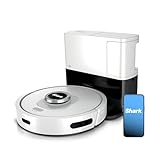
Seriously, can I remap my Shark robot vacuum? It’s a question that pops up when your little automated friend decides the living room rug is now a forbidden zone, or worse, it’s painting the same circle over and over like a confused toddler with a crayon.
I’ve been there. Spent hours watching mine bump into the same chair leg, convinced it was performing some kind of interpretive dance rather than cleaning. Then it would get stuck under the sofa, its little beeping a sad, electronic whimper.
You think you’re getting this smart device, this futuristic helper, but then you’re left wondering if you can just… tell it where to go, instead of it having a meltdown every Tuesday. The short answer, for most folks, is probably not in the way you’re imagining.
Understanding Your Shark Robot’s ‘brain’
Let’s get this straight right off the bat: Shark robot vacuums, especially the more common models, aren’t like your smartphone where you can download a new operating system or tweak settings with an app that lets you draw custom cleaning zones. They operate on pre-programmed logic, often relying on a combination of sensors and internal mapping that, frankly, feels more like educated guesswork than a precise GPS system. When you ask, “can I remap my Shark robot vacuum?” what you’re usually hoping for is a way to either correct its existing map or draw new boundaries. The reality is often less about ‘remapping’ and more about helping it understand its environment better, or accepting its limitations.
Consider it like this: trying to remap your Shark robot vacuum is a bit like trying to teach an old dog a new trick by shouting louder. It doesn’t quite grasp the concept. These machines have sensors – cliff sensors to stop them falling down stairs, bump sensors to detect walls, and sometimes a basic camera or lidar for navigation. These create a digital representation of its surroundings, but it’s not a blueprint you can directly edit like a CAD file.
The ‘no Remap’ Reality: What You Can Actually Do
So, if you can’t technically ‘remap’ it, what’s the next best thing? You’re essentially working with the existing system. This means focusing on improving the robot’s perception and its cleaning performance within its given parameters. I remember one particularly frustrating morning, my Shark vacuum, a model that cost me a frankly embarrassing $350 (don’t ask), decided the entryway rug was a hostile alien planet. It spent twenty minutes just spinning in place, beeping accusingly at the fringed edges. I’d expected it to just *know* to avoid that mess, but nope. It needed a little… guidance, which isn’t the same as remapping.
Many of these robots have what’s called a ‘no-go zone’ or ‘virtual wall’ feature, but this isn’t remapping the map itself; it’s just telling the robot to avoid specific areas. You often set these up through the SharkClean app. These are your best bet for keeping it out of places it shouldn’t be, like pet food bowls or delicate plant stands. Some advanced models might offer room mapping, where you can designate rooms within the app, but again, this isn’t about editing the core map the robot uses for navigation. It’s more like labeling sections of its existing understanding.
My Take: Everyone talks about how smart these things are, but honestly, the ‘smart’ part is often just fancy sensors and an algorithm that works about 70% of the time. When it doesn’t, you’re stuck trying to coax it out of a corner. (See Also: Should I Turning My Shark Robot Vacuum Off )
Why I Ditched the ‘smart’ Room Mapping Hype
Everyone raves about how these robots build a map of your house and let you clean specific rooms. Sounds great, right? I disagree, and here is why: the ‘mapping’ is often a one-time affair that gets corrupted easily, and then you’re back to square one. My first Shark model would create a map, then a week later, after I moved a single chair, it would act like it was in a foreign country. Trying to ‘re-establish’ the map became a weekly chore. It felt like the robot was suffering from a persistent case of digital amnesia. I spent about two hours every other weekend just trying to get it to recognize my living room layout again. This wasn’t efficiency; it was a time sink.
These mapping features are more like a suggestion box for the robot. It acknowledges the room labels, but if its sensors get confused – say, after a power outage or if it gets stuck and you have to manually move it – that sophisticated map can go right out the window. It’s less about a permanent, editable map and more about a temporary guide.
When Your Shark Robot Vacuum Gets Confused
What happens when your Shark robot vacuum gets confused? It might start cleaning the same small area repeatedly, miss entire sections of rooms, or get stuck in predictable places. A common culprit is how it perceives the environment. Dark carpets can sometimes confuse cliff sensors, making the robot think there’s a drop where there isn’t one. Shiny surfaces can also play havoc with its navigation. I once watched mine spend a good fifteen minutes trying to clean a sunbeam on my hardwood floor, treating it like a particularly stubborn patch of dirt. It looked absurd, and frankly, a bit depressing given what I paid.
Clean the sensors regularly! Seriously, this is not optional. Dust and debris can obscure them, leading to all sorts of navigational errors. Think of it like trying to drive with smudged glasses. You wouldn’t do it, so why expect your robot to? A gentle wipe with a dry microfiber cloth is usually all it takes. Also, ensure your home’s lighting is consistent when it’s scheduled to clean, especially if it uses optical sensors. Wild fluctuations can throw it off.
Sometimes, a simple reset does wonders. Turn the robot off, wait 30 seconds, then turn it back on. It’s the tech equivalent of a stern talking-to, and it can sometimes clear out temporary glitches that are making it behave erratically.
Here’s the deal with navigation problems: your Shark robot vacuum isn’t going to magically learn new paths without intervention. Think of its mapping as a fixed starting point, not a dynamic, evolving entity. When it gets stuck, it’s usually because of something physical in its way or a sensor misinterpretation. If your vacuum keeps getting stuck under a specific piece of furniture, the best approach isn’t to remap it, but to create a no-go zone around that furniture or physically block its access. I’ve used furniture risers on my couch to prevent my robot from getting lodged underneath. It’s a bit of a hack, but it works better than trying to reroute its digital brain.
For those who have models with advanced mapping, try to keep the environment as consistent as possible. Major furniture rearrangements can confuse the robot and necessitate a full map recalibration, which, as I’ve experienced, can be a headache. If it’s constantly getting lost, check the charging base placement; ensure it has clear access and isn’t obstructed. A confused robot is often a sign that its perception of the world is being distorted. (See Also: Is It Best Robot Vacuum With Self Emptying Bin )
Shark Robot Vacuum Models: What’s Possible?
The capabilities vary wildly between Shark models. The entry-level ones are basically random navigators, bumping around until they’ve covered what they can. They definitely don’t have remapping capabilities.
Mid-range models often introduce some form of mapping, usually through a camera or basic lidar. These might allow you to define rooms and set cleaning schedules for them. However, this isn’t ‘remapping’ in the sense of editing the robot’s internal map. It’s more like giving it labels for the areas it has already mapped. If you want true control over how your robot cleans, like drawing specific obstacles or truly customizing its routes, you’re likely looking at higher-end models from other brands that use more advanced lidar or camera systems, and even then, direct map editing is rare.
The most advanced Shark models might offer features that *feel* like remapping, such as the ability to set up ‘exclusion zones’ directly on a map displayed in the app. You can draw a rectangle around a dog’s water bowl, and the robot will avoid it. This is fantastic, but it’s a boundary setting, not a fundamental change to how the robot builds and interprets its environment. I’ve seen some users try to game the system by intentionally letting the robot map a new layout, but this is often a temporary fix and can cause more problems than it solves.
| Feature | Typical Shark Models | My Verdict |
|---|---|---|
| Random Navigation | Entry-level | Basically a glorified bumper car. Fine for small, open spaces. |
| Basic Mapping (Room Definition) | Mid-range | Helpful for scheduling, but don’t expect precision editing. |
| Advanced Mapping (Exclusion Zones) | Higher-end | This is as close as you get to ‘remap.’ Great for problem areas. |
| True Map Editing | Rare on Shark, more common on premium brands | If this is your goal, you might need to look elsewhere. |
The ‘remapping’ Myth and What to Actually Expect
Let’s be clear: the idea of ‘remapping’ your Shark robot vacuum, in the way you might remap a game controller or reprogram a device, is largely a myth. You can’t just upload a new map or edit existing pathways directly within the robot’s core programming. The SharkClean app gives you some control, yes, but it’s about setting boundaries and directing its existing ‘intelligence,’ not fundamentally altering its navigational capabilities.
What you *can* do is optimize its environment and ensure its sensors are clean. This is how you get it to perform better. Think of it like tuning up a car; you’re not rebuilding the engine, but you’re making sure all the parts are working optimally so it runs smoothly. The American Automobile Association (AAA) recommends regular maintenance for vehicles to ensure peak performance and longevity, and while a robot vacuum isn’t a car, the principle of consistent upkeep for optimal function is the same.
If you’re expecting a level of customization that allows you to draw specific cleaning routes or permanently alter its understanding of your home layout beyond what the app offers, you’ll likely be disappointed. Shark’s approach is more about user-friendly features like ‘no-go zones’ rather than deep-level map manipulation.
Can I Remap My Shark Robot Vacuum? Final Thoughts
Ultimately, if you’re asking, “can I remap my Shark robot vacuum?” the answer is nuanced. You can’t ‘remap’ it in the way you might imagine, by editing a digital blueprint of your home. However, you *can* influence its behavior significantly. (See Also: Is It Best Robot Vacuum For Cleaning Large Homes )
Focus on using the app’s features like no-go zones and virtual walls to guide its cleaning. Keep those sensors spotless. Sometimes, a simple reboot is all it takes to clear its virtual head.
Don’t expect it to learn complex new layouts overnight or to be as adaptable as a much pricier model from a competitor known for advanced lidar navigation. For what it is, when it works, it’s a handy tool, but managing expectations is key.
Verdict
So, can I remap my Shark robot vacuum? No, not in the way you might be hoping. You can’t fundamentally change its internal map or draw custom routes with precision. It’s more about working within its existing framework.
Think of it as setting up clear rules and boundaries through the app, rather than giving it a whole new brain. Keep those sensors clean, ensure good lighting, and don’t expect miracles if you rearrange your entire living room furniture every other day.
If you’re struggling with a specific area, your best bet is to use the exclusion zones or virtual barriers offered in the SharkClean app. These are your most effective tools for telling the robot, ‘Stay out of here,’ without needing to perform a software miracle.
Recommended Products