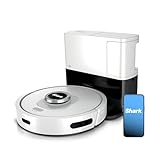
My Shark robot vacuum, bless its little spinning brushes, decided to stage a silent protest last Tuesday. Just… stopped. Dead. Mid-clean. Of course, this was the day I had people coming over. Panic doesn’t even begin to cover it.
So I did what anyone would do: I flailed. I poked. I threatened it with a trash can. Nothing.
Getting this thing to cooperate again when it decides to go on strike isn’t rocket science, but frankly, I wish it came with a clearer manual for this specific kind of tantrum. Figuring out how to restart my Shark robot vacuum became my sole mission.
It took me about twenty minutes of frantic searching and a near-meltdown, but I figured out a few tricks that usually get it back in the cleaning game.
When Your Shark Vacuum Just… Quits
Sometimes, your Shark robot vacuum just throws a digital fit. It’s not always a deep-seated mechanical issue; often, it’s just a stubborn little bot that needs a firm nudge. Think of it like trying to reboot your laptop when it locks up. You don’t immediately call tech support for a new motherboard; you hit the power button and hold it. This is pretty much the same, just with more dust bunnies involved.
Last spring, I spent a solid hour trying to get mine to respond after it just sat there, blinking a single red light like a tiny, angry Mars rover. I’d accidentally kicked a stray toy car into its path, and instead of just rerouting, it decided to enter the void. The sheer frustration of it, knowing it was probably just a simple glitch, was immense. I’d already wasted about $75 on a specialized cleaning solution that smelled like burnt plastic and did nothing but make the floors sticky. This time, I was determined not to waste money on snake oil.
The ‘turn It Off and on Again’ Method (yes, Really)
Everyone says ‘have you tried turning it off and on again?’ It’s the oldest trick in the tech book, and for a reason. Your Shark robot vacuum is a mini-computer on wheels. Sometimes, the software just needs a hard reset to clear out whatever digital cobwebs are making it unresponsive.
How to do it: (See Also: Should I Turning My Shark Robot Vacuum Off )
- First, find the power button. It’s usually on the top of the vacuum.
- Press and hold that button. You’ll need to hold it down for a good 10-15 seconds. Keep holding it until the lights on the robot turn off completely. Don’t just press it; you have to really hold it down.
- Wait. Give it a solid minute. This part feels like forever when you’re waiting for your floors to get clean, but it’s important. Let the internal components fully discharge.
- Press the power button again to turn it back on.
This is the most basic step, but it fixes more problems than you’d think. If it boots back up and starts beeping or its lights look normal, you’re probably good to go. It’s like waking up a teenager from a deep sleep – sometimes they just need a little jolt.
When the Dock Isn’t Talking to the Bot
Your robot vacuum and its charging dock have a relationship. Sometimes, that relationship goes south. If your robot isn’t charging, or if it’s refusing to start a clean from the dock, the communication might be broken.
I once spent three days convinced my Shark was kaput because it refused to charge. It would just sit there, looking defeated. I’d cleaned the contacts, I’d cleaned the dock, I’d even tried plugging the dock into a different outlet. Turns out, the little metal prongs on the robot itself were just slightly misaligned after it bumped into a particularly stubborn chair leg. I gently nudged them back into place with a dry microfiber cloth – and boom, it started charging.
Check these things:
- Charging Contacts: Make sure the metal contacts on both the robot and the charging dock are clean and free of debris. A dry cotton swab or a soft brush works wonders.
- Dock Placement: Is the dock stable? Is it pushed all the way against the wall? Any obstructions around it? The robot needs a clear path to dock.
- Power to the Dock: Is the dock actually plugged in and receiving power? Sounds dumb, but I’ve done it.
This process is similar to making sure your Wi-Fi router is properly plugged in and has a strong signal. If the signal is weak or the connection is bad, nothing else works, right?
The ‘factory Reset’ Option (use Sparingly)
Okay, so the simple restart didn’t work, and the dock seems fine. What next? Some Shark models have a factory reset option. This basically wipes all its custom settings, maps, and schedules, returning it to the state it was in when you first took it out of the box. It’s like performing a brain wipe on your robot. Use this as a last resort because you’ll have to set everything up again.
My neighbor, bless her, tried this once because her Shark kept getting stuck in the same corner. She forgot to write down her cleaning schedule. Two days later, she was still trying to re-enter her Wi-Fi password and preferred cleaning zones. It was a mess. The process usually involves pressing a combination of buttons for an extended period, often while the unit is off or on the dock. You’ll need to consult your specific Shark model’s manual for the exact button sequence, as it varies. (See Also: Is It Best Robot Vacuum For Cleaning Large Homes )
When to consider a factory reset:
- Persistent errors that won’t clear.
- The vacuum behaving erratically (e.g., constantly bumping into walls, not cleaning in straight lines).
- Connectivity issues that can’t be resolved by troubleshooting the Wi-Fi or app.
According to the Consumer Electronics Association, a simple reboot resolves about 70% of minor electronic glitches. Anything beyond that, and you might be looking at something that requires a deeper reset. It’s a bit like defragmenting your computer’s hard drive – it can be a pain, but it sometimes fixes underlying performance issues.
Troubleshooting Error Codes
Your Shark robot vacuum will often tell you what’s wrong using error codes displayed on the unit or through the app. These are usually a series of beeps or flashing lights. Don’t ignore them! They’re your robot’s way of speaking to you.
One time, mine started making this weird, grinding noise and stopped dead. The app flashed an ‘Error 7’ code. I thought it was a goner, ready for the scrap heap. After a quick search, I found out ‘Error 7’ on my model meant the brush roll was jammed. A quick check revealed a tangled mess of hair and a lost sock that had wound itself around the roller. After clearing it, the vacuum worked perfectly. The sheer relief was palpable. It had cost me nothing but a few minutes of picking out knots. I’d almost been ready to order a replacement unit, which would have been at least $300 down the drain.
| Common Error Code | Likely Cause | My Verdict |
|---|---|---|
| Error 1 (Bump Sensor) | Sensors are dirty or obstructed. | Easy fix. Just wipe ’em down. Don’t overthink it. |
| Error 2 (Wheel Stuck) | A wheel is jammed. | Probably a hair clog. Check the wheels thoroughly. |
| Error 7 (Brush Roll Jammed) | Debris caught in the main brush. | My nemesis. Always check the brush first. |
| Error 12 (Cliff Sensor) | Cliff sensors are dirty or blocked. | Essential for not falling down stairs. Clean them! |
When to Just Let It Go (or Call for Help)
There comes a point where you’ve tried everything. You’ve restarted it, you’ve cleaned it, you’ve even contemplated therapy for it. If your Shark robot vacuum continues to malfunction, shows persistent error codes you can’t resolve, or simply won’t power on after multiple attempts, it might be time to admit defeat. Check your warranty. If it’s expired, you’ll have to weigh the cost of professional repair against buying a new one. I once spent $150 trying to fix a vacuum that ended up needing a $200 motherboard replacement anyway. That was a hard lesson.
My Shark Robot Vacuum Won’t Connect to Wi-Fi?
This is a common headache. First, ensure your Wi-Fi network is 2.4GHz, as most robot vacuums don’t support 5GHz bands. Try restarting your router and your vacuum. Make sure the password you’re entering is correct. Sometimes, simply moving the charging dock closer to the router temporarily can help establish the initial connection. If all else fails, check your router’s settings to see if there are any MAC address filters preventing new devices from connecting.
Why Is My Shark Robot Vacuum Making Strange Noises?
Unusual noises are usually a sign of something physical being caught or worn out. Most often, it’s debris tangled in the main brush roll or side brushes. Occasionally, it can be a sign of motor trouble, but start with the brushes. Turn the unit over, remove the brush roll, and clear away any hair, string, or small objects. You might hear a slight whirring or grinding sound if a wheel is also obstructed, so check those too. (See Also: Is The Shark Robot Vacuum Better Than The Irobot Roomba )
My Shark Vacuum Keeps Returning to the Dock Prematurely?
This can be frustrating. It might be that the battery is critically low and the robot is prioritizing charging over finishing its job. Check the battery health if your app provides it. Alternatively, it could be getting confused by its environment. Ensure its sensors (especially cliff sensors) are clean. If it’s consistently doing this on a particular cleaning cycle, it might be getting disoriented in a complex room layout. Sometimes, a full factory reset can help recalibrate its internal navigation.
How Do I Clean the Dustbin Properly?
Cleaning the dustbin is simple but often overlooked. Most Shark models have a dustbin that slides out from the back or side. Simply press the release button and pull it out. Open the lid and dump the contents into your trash can. For a deeper clean, you can rinse the dustbin with water (make sure it’s completely dry before reinserting it into the robot – we’re talking at least 24 hours to be safe). The filters, often located inside the dustbin, may also need regular cleaning or replacement according to your manual.
Can I Use Other Brands of Cleaning Solution?
Generally, no. Shark, like most robot vacuum manufacturers, recommends using only water in their reservoirs for mopping functions, or specific cleaning solutions approved by them. Using third-party cleaning solutions can damage the internal components, clog the spray nozzles, or leave residue that irritates your floors or the robot’s sensors. Stick to what the manual says; it’s not worth voiding your warranty or breaking your expensive appliance over a few dollars saved on a questionable cleaner.
Conclusion
So, if your Shark robot vacuum has decided to take an unscheduled nap, don’t panic. Most of the time, a good old-fashioned hard reset is all it needs to get back to work. Seriously, the number of times I’ve solved a problem by just holding down that power button is embarrassing.
If that doesn’t do the trick, it’s time to get hands-on. Clean those sensors, check those brushes, and make sure the dock is talking to the bot. These little machines are pretty smart, but they’re still susceptible to the same glitches as any other piece of tech.
Remember, figuring out how to restart my Shark robot vacuum isn’t about complex engineering; it’s about basic troubleshooting. If none of the above works, and you’ve double-checked your manual, then maybe it’s time to think about contacting Shark support or considering a replacement if it’s truly given up the ghost after years of service. Sometimes, old reliable just needs a final, dignified send-off.
Recommended Products