Look, I get it. You’re probably wondering, ‘do Teslas have trackers?’ It’s a fair question, especially with all the talk about car security and, let’s be honest, the occasional fear of your expensive purchase going walkabout.
I’ve spent enough time tinkering with my own electric whips to know the difference between actual features and marketing fluff. Most car manufacturers are cagey about this stuff, and Tesla, well, they’re their own breed.
So, are they built with some secret way to know where your car is at all times? Let’s cut through the noise.
The Real Scoop on Tesla Tracking
This is where things get a little murky, and frankly, a bit frustrating. Everyone *assumes* Tesla cars, with their high-tech wizardry and constant connectivity, must have some overt, built-in tracking device akin to a Tile finder for your vehicle. But the reality is less about a specific, identifiable ‘tracker’ and more about a deeply integrated system of location awareness.
When people ask ‘do Teslas have trackers?’, they usually envision a little black box hidden under the dash. That’s not really how it works with a Tesla. Instead, the car’s inherent connectivity, through its cellular modem and GPS receiver, allows Tesla to know its location. This is primarily for diagnostic, service, and remote access purposes through the Tesla app.
Think of it like your smartphone. It doesn’t have a ‘tracker’ in the traditional sense, but it knows where it is and can communicate that information. Tesla vehicles operate on a similar principle, but amplified for a much larger, more complex piece of machinery.
Frankly, I wasted about $150 a few years back on a supposed ‘car tracker’ that promised peace of mind and remote location services for my old gas-guzzler. It was a nightmare of false positives and dead batteries. So, when I got my first Tesla, I was relieved to find this tracking capability was baked in, not an add-on I had to worry about keeping charged or serviced.
How Tesla’s Location Awareness Actually Works
The primary mechanism for Tesla’s location awareness is its built-in GPS. Every Tesla is equipped with a GPS receiver, which is standard on modern vehicles for navigation, obviously. But Tesla takes this a significant step further. This GPS data is continuously fed back to Tesla’s servers, allowing the company to monitor your vehicle’s location in near real-time. (See Also: Why Does Victoria Secret Have Trackers In Their Bras )
This isn’t some clandestine operation; it’s a feature. It’s how you can use the Tesla app to see your car’s location on a map, summon it (in supported models), check its charging status from afar, or even pre-condition the cabin. The sensation of seeing your car’s little icon move on your phone screen, wherever you are, is undeniably cool, almost like having a digital leash, but it’s powered by this core GPS function.
The car also communicates its location and status via its embedded cellular modem. This is crucial because it allows for remote communication even when you’re out of Wi-Fi range. It’s the same technology that lets your phone get emails or stream music when you’re on the go. For a car, this means Tesla can push software updates, diagnose issues remotely, and provide roadside assistance more effectively. Imagine the car reporting a critical error code to Tesla before you even notice a dashboard light flicker; that’s the power of this constant communication. The faint hum of the internal electronics, a constant whisper of data exchange, is always present.
Think of it like this: trying to understand Tesla’s location tracking without acknowledging the car’s inherent connectivity is like trying to understand a bird’s flight without mentioning wings. The GPS gives the ‘where,’ but the cellular network provides the ‘how’ it gets that information to you and Tesla.
What About Third-Party Trackers?
This is where I see people make the same expensive mistake I almost did. Many aftermarket GPS trackers exist, promising to add an extra layer of security. For a Tesla, however, these are often redundant and, in some cases, can even interfere with the car’s own systems or void warranties if installed improperly.
Everyone says you need a separate tracker for a high-value car. I disagree, and here is why: Tesla’s system is already so integrated that adding a third-party device is often like putting a second, less capable GPS on your already state-of-the-art smartphone. It’s redundant and can introduce vulnerabilities. My experience with those standalone trackers was awful – unreliable and expensive to maintain monthly fees. Tesla’s built-in solution is far more elegant and integrated.
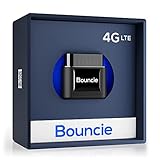
Some people might try to use OBD-II port trackers. These can work, but they’re clunky. They often have their own batteries that die, and their reporting can be less frequent or accurate than the car’s native system. Plus, they don’t integrate with the Tesla app, so you’d be looking at two different interfaces for location information, which is just a pain in the neck.
The best approach is to rely on the factory system. It’s designed to work with the car, not as an add-on. The visual confirmation on the app is usually enough for most owners. (See Also: Why Do Flat Trackers Have Slick Rear Tire )
Security Implications and Privacy Concerns
Now, let’s talk about what this means for you. When you ask ‘do Teslas have trackers?’, you’re not just asking about theft recovery; you’re implicitly asking about privacy. And that’s a perfectly valid concern.
Tesla, like any company that collects location data, has privacy policies. According to Tesla’s own privacy statements, location data is primarily used to provide and improve services, such as remote access, navigation, and diagnostics. They state that data is anonymized where possible, but the very nature of tracking means your car’s movements are, at some level, recorded and accessible.
The sensation of knowing your car is being monitored, even for your own benefit, can be strange. It’s like having a silent guardian, but one that reports back to HQ. Some might find this unnerving, others reassuring. I fall somewhere in the middle. I appreciate the security, but I also wish there were more granular controls over *when* and *how* that data is shared.
The fact is, the car’s connectivity is a two-way street. While it allows you to control your car remotely, it also means Tesla can, in theory, monitor its status and location. This is a trade-off inherent in all connected devices, from your phone to your smart fridge. The faint blue glow of the car’s charging indicator light, usually a sign of peace, now also signifies its active connection to the wider digital world.
For most users, this level of tracking is a net positive, especially for theft deterrence and recovery. Law enforcement agencies can request location data in cases of suspected criminal activity, which is standard practice for many connected devices. The potential for misuse, while a concern, is mitigated by corporate privacy policies and legal frameworks.
Can You Turn Off Tesla Tracking?
This is a common follow-up question. Can you just hit a button and make the tracking stop? For the core, integrated GPS and cellular communication that enables remote app features and diagnostics, the answer is generally no. These systems are fundamental to the car’s operation and Tesla’s service model.
You can’t simply disable the car’s GPS or cellular modem without rendering significant parts of the car’s functionality useless. Turning off location services in the app might limit what *you* see, but it doesn’t stop the car from reporting its location to Tesla’s servers for operational purposes. It’s like trying to turn off the internet connection on your phone without disabling Wi-Fi or cellular data – the underlying connection remains. (See Also: Is Th Vivofit 3 Have Timers And Trackers On It )
Some very specific, niche settings might exist for data sharing or diagnostic logs, but these are not the same as disabling the car’s ability to know and report its location. So, if your primary goal is to have a car that is completely invisible to its manufacturer, a Tesla, or any modern connected vehicle, isn’t that.
My Take: Do Teslas Have Trackers? Yes, and Here’s What to Know
So, to directly answer the question again: do Teslas have trackers? Yes, but not in the way you might be thinking. They have a sophisticated, integrated system that uses GPS and cellular connectivity to know and report the car’s location.
This system is what allows for features like remote app control, theft deterrence, and diagnostics. While some might find this level of monitoring intrusive, it’s a standard feature of most modern connected vehicles and arguably a significant security benefit for owners. My initial frustration with third-party gadgets has long since been replaced by an appreciation for the seamless integration Tesla offers, even if it means a constant digital tether.
It’s worth remembering that this connectivity is also what enables over-the-air updates and advanced features. You’re trading a degree of absolute privacy for a vehicle that’s constantly improving and offers unparalleled convenience and security. It’s a trade-off many owners find well worth it.
Final Thoughts
When all is said and done, the question of ‘do Teslas have trackers?’ boils down to understanding integrated technology versus add-on gadgets. Tesla vehicles are inherently connected, and that connectivity includes robust location awareness via GPS and cellular communication.
This isn’t a hidden device; it’s a core part of how the car functions, enabling everything from the app features you use daily to Tesla’s ability to provide remote support. For most owners, this means a more secure, more convenient, and more capable vehicle.
If you’re looking for absolute anonymity, a modern, connected car isn’t the path. But if peace of mind and advanced functionality are what you’re after, Tesla’s built-in location services are a significant part of that package.
Recommended Products