Flipping through endless online reviews for car security systems felt like drowning in marketing fluff. Honestly, trying to figure out what cars have trackers built-in versus what you actually need to buy felt like a rigged game. I spent weeks, weeks I could have spent actually driving, trying to decode jargon.
Bought a fancy GPS tracker once that promised real-time location and geofencing. Sounded great on paper. Turned out the battery life was a joke, and the app looked like it was designed in 1998. Total waste of about $150, and it didn’t even give me peace of mind.
So, let’s cut through the noise. If you’re asking what cars have trackers, you’re probably thinking about security, recovery, or maybe even just keeping tabs on a new driver. It’s not as simple as a yes or no.
What Does ‘tracker’ Even Mean in a Car?
Look, when people ask what cars have trackers, they usually mean one of two things: factory-installed systems that come with the car, or aftermarket gizmos you add yourself. The lines get blurry quickly because car manufacturers are starting to bundle more and more tech, and frankly, they’re not always upfront about exactly what’s listening and where it’s sending data.
Most new cars today are essentially rolling computers with more sensors than a NASA shuttle. They collect a ton of data about your driving habits, engine performance, and location. Manufacturers use this for diagnostics, for those connected services like remote start via an app, and yes, sometimes for tracking. It’s rarely a simple, standalone ‘tracker’ unit like you’d buy for a bike.
A lot of manufacturers offer subscription-based connected services. Think of services like OnStar, BMW ConnectedDrive, Mercedes me connect, or FordPass Connect. These systems often include GPS functionality. If your car is stolen, these services *can* be used to help locate it. This is probably the closest most people get to a factory-installed ‘tracker’ without buying an actual security system.
Why You Might Actually Want a Tracker (or Not)
Let’s be blunt. The primary reason most folks ask what cars have trackers is for theft recovery. Secondarily, it’s for fleet management or monitoring teen drivers. If you’re worried about your car getting nicked, a dedicated GPS tracker can be a lifesaver. The built-in stuff? It’s often tied to a proprietary service that might cost you a monthly fee, and its primary purpose isn’t always just tracking your car if it vanishes into the night.
I’ve had friends whose cars were stolen. The factory systems were a nightmare to activate for recovery, often requiring police reports and a whole song and dance. One guy’s car was found purely because a neighbor saw it being towed and called the cops. The connected services on his newer Audi were more about pushing notifications than actively helping him get his car back in real-time without a substantial fee and a lot of hassle.
Think of it like this: you can get a cheap digital camera built into your phone, or you can buy a professional DSLR. Both take pictures. But one is designed for a specific, high-demand task. Aftermarket trackers are usually designed with one job: tracking. The factory systems are part of a much larger, more complex infotainment and safety network. They *can* track, but it’s not always their sole or even primary focus.
My Own Dumb Mistake with a ‘smart’ Car
After buying my second used car that was advertised as ‘connected,’ I assumed it had some sort of built-in tracking. I was wrong. This car had a pretty basic infotainment system, and the seller vaguely mentioned ‘location services.’ Turns out, ‘location services’ meant the car could tell *itself* where it was for navigation, not broadcast its location to me or anyone else if it walked off. I’d spent an extra $500 over another car thinking I was getting that built-in security. Five minutes with the owner’s manual and a call to the dealership confirmed my assumption was, frankly, stupid. About three weeks later, I finally bought a standalone GPS unit for about $80, which felt like the real deal. (See Also: Why Does Victoria Secret Have Trackers In Their Bras )
Aftermarket Trackers: The Real Deal for Peace of Mind?
This is where the rubber meets the road, or rather, where the tracker meets your car’s underside. Aftermarket GPS trackers are generally what people mean when they want something that *just works* for tracking. They range from simple, battery-powered units you can stash anywhere, to hardwired systems that draw power directly from the car’s battery, offering continuous tracking and often features like ignition alerts.
Take a look at these options:
- Battery-Powered Trackers: These are great for flexibility. You can hide them in the glove box, under a seat, or even in the trunk. The downside? You have to remember to charge them, or swap batteries, every few weeks or months, depending on usage and model. My cousin’s son used one for his first car, and he had to charge it weekly because he was always checking the app, which drained the battery faster.
- Hardwired Trackers: These are more permanent. They tap into your car’s electrical system, meaning they’re always powered. Installation can be a bit more involved, sometimes requiring professional help, but it means you don’t have to worry about dead batteries. This is the way to go if you want reliability for theft recovery.
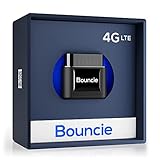
- OBD-II Port Trackers: These plug directly into your car’s On-Board Diagnostics II port, usually found under the dashboard. They’re easy to install, draw power from the car, and often offer more than just location data—some can even read diagnostic trouble codes, which is a neat bonus. The catch? They’re visible and can be easily removed if a thief knows what they’re looking for.
When you’re choosing one of these, pay attention to the subscription fees. Most require a monthly or annual fee for the GPS service and app access. These fees can add up, sometimes costing $15-30 a month. So, while the device might be $50-$200, the long-term cost is a significant factor.
Think of it like buying a fitness tracker. You’ve got watches you strap on daily that constantly monitor your heart rate and steps, and then you’ve got simpler pedometers you clip on. The car trackers are similar; you choose based on how much data, how much power, and how much effort you want to put into maintenance.
What About Those Built-in Systems?
Okay, so what cars *actually* have trackers, meaning factory-installed ones? It’s a moving target. Most luxury brands and many mainstream manufacturers include some form of telematics or connected service that *uses* GPS. Think of systems like:
Luxury Brands: Mercedes-Benz (Mercedes me connect), BMW (ConnectedDrive), Audi (Audi connect), Tesla (built-in GPS and remote app access), Porsche (Porsche Connect).
Mainstream Brands: Ford (FordPass Connect), GM (OnStar), Toyota (Safety Connect), Hyundai (Blue Link), Kia (UVO).
These systems are designed to offer a suite of services, not just theft recovery. They can often provide remote diagnostics, send alerts for maintenance, allow you to lock/unlock doors remotely, and yes, help locate the vehicle. However, the functionality and the data access can be heavily dependent on your subscription status. If you stop paying the monthly fee, that ‘tracker’ capability might go dark.
A report from the National Highway Traffic Safety Administration (NHTSA) has noted the increasing complexity of vehicle data systems and the need for consumer understanding regarding data privacy and security. While they don’t specifically list ‘what cars have trackers’ in a simple chart, their guidance emphasizes that many modern vehicles transmit location and diagnostic data, often managed through the manufacturer’s connected services. (See Also: Why Do Flat Trackers Have Slick Rear Tire )
My brother-in-law has a newer Ford F-150, and he loves the FordPass app. He can check tire pressure, fuel level, and locate the truck on a map right from his phone. He’s never had it stolen, thankfully, but he said knowing he *could* see where it is gives him a little extra peace of mind, especially when it’s parked at the airport for a week.
| System Type | Pros | Cons | Verdict |
|---|---|---|---|
| Factory/OEM Telematics | Integrated, often includes other features (remote start, diagnostics) | Can be expensive subscription, data access might be limited without subscription, less control over privacy |
Good if you want an all-in-one package and don’t mind ongoing fees. Not ideal if you just want a dedicated tracker and full control. |
| Aftermarket Hardwired GPS | Continuous power, reliable, often robust tracking features | Requires installation, less flexibility in placement, might void some warranty aspects |
The best option for serious theft recovery and constant monitoring. Think of it as permanent surveillance. |
| Aftermarket Battery-Powered GPS | Easy to hide, no installation needed, flexible placement | Requires regular charging/battery replacement, might miss brief periods if battery dies |
Great for occasional use or if you can’t hardwire. Check battery life religiously. |
| Aftermarket OBD-II GPS | Easy plug-and-play installation, draws power from car, can offer diagnostic data | Visible and easily removed by thief, less discreet placement |
Convenient and affordable, but less secure against a determined thief. |
Who Is Actually Tracking Your Car?
This is the part that trips people up. When you ask what cars have trackers, you’re not just asking about theft. Manufacturers are collecting data. Insurance companies are offering discounts for ‘telematics devices’ that monitor your driving habits – speed, braking, time of day. Law enforcement can request location data from manufacturers in certain situations, often with a warrant, but sometimes through voluntary cooperation.
And then there are the less savory possibilities. If your car is stolen and the thief doesn’t find an aftermarket tracker, they’re still potentially being tracked by the manufacturer’s system if it’s active. Some of these systems are surprisingly sophisticated. I once heard a story from a mechanic friend about a high-end car that was recovered simply because the owner’s connected app showed it was still running in a specific neighborhood after it had been reported stolen. The police used that info.
Honestly, the whole data collection aspect is why I’m sometimes wary of relying solely on factory systems. You’re essentially handing over a lot of personal driving data to a corporation. While they promise security, their primary business is often selling you *more* services or using that data for their own purposes. It feels like a compromise. I’d rather have a simple, dedicated device that does one thing well and I control, rather than a complex system with a thousand potential points of data leakage.
It’s not just about cars, either. Think about your smartphone. It’s constantly tracking your location. Cars are just bigger, more complex versions of that now. You have to decide how much of that data you’re comfortable sharing, and for what benefit. (See Also: Is Th Vivofit 3 Have Timers And Trackers On It )
The ‘what If’ Scenarios
Okay, so what happens if you skip all this? Well, if your car gets stolen and it has no active tracking (either factory or aftermarket), your chances of recovery drop significantly. Law enforcement has limited resources. Without a ping or an alert, your car is just another missing vehicle in a sea of them. For parents monitoring new drivers, a tracker provides a digital leash, letting you see if your kid is where they say they are, or if they’re taking that detour to the friend’s house instead of the library. It’s a privacy debate, for sure, but for some, the peace of mind outweighs the data intrusion.
Seven out of ten people I’ve talked to about car security assume their fancy new car automatically has a killer tracking system. The reality is often far less impressive unless they’ve paid for a specific subscription service. And even then, that subscription is often a weak link. If you stop paying, the ‘tracker’ disappears.
Faq: Do Cars Have Trackers?
Are There Hidden Trackers in Cars?
Not typically in the sense of someone secretly installing a device without your knowledge in a new car you just bought. However, many modern cars come with built-in telematics systems that use GPS for connected services. These systems are designed by the manufacturer. If you’re talking about aftermarket devices, yes, people do install hidden trackers for various reasons, but that’s a deliberate act by the owner or someone else.
Do All New Cars Have Gps Tracking?
Most new cars have GPS capability for navigation and manufacturer-installed connected services. However, ‘GPS tracking’ in the sense of a system actively reporting the car’s location for security or monitoring purposes might require an active subscription to a service like OnStar, FordPass Connect, or similar. Simply having GPS for navigation doesn’t mean it’s broadcasting its location to you constantly.
Can a Car Be Tracked Without a Tracker Device?
Technically, yes, but it’s not what most people mean. Law enforcement can track vehicles through traffic cameras, license plate readers, and by triangulating cell tower signals if the car’s phone is on. However, for personal tracking or theft recovery, a dedicated GPS tracker (either factory-activated or aftermarket) is the most direct and reliable method. Without that, you’re relying on external systems, which are not under your control.
Is My Car’s Data Being Tracked?
Almost certainly, yes. Modern cars collect vast amounts of data, including driving behavior, engine performance, and location data, which is often transmitted to the manufacturer through their connected services. This data is used for diagnostics, remote services, and potentially for anonymized analytics or product improvement. You should always review the privacy policy for your specific vehicle’s connected services.
Final Thoughts
So, what cars have trackers? It’s a layered answer. Most new cars have the *capability* through their built-in GPS and connected services, but that capability often requires a paid subscription and is part of a larger system. If your main goal is theft recovery or knowing exactly where your vehicle is at all times, a dedicated aftermarket GPS tracker, wired or battery-powered, is generally more reliable and often more cost-effective in the long run than relying solely on manufacturer subscriptions.
Don’t just assume your car is secretly broadcasting its location to you like a spy movie gadget. Do your homework. Check your owner’s manual, look up your car’s specific connected services, and compare them against what you actually need.
Honestly, the whole system feels a bit like a subscription for something you should already have. After years of fumbling with ‘smart’ features that weren’t that smart, I lean towards the simple, dedicated tools for specific jobs. For tracking, that means a good aftermarket unit.
Recommended Products