So, you’re eyeing that shiny new drone, picturing epic aerial shots, but a little voice in the back of your head whispers, “Wait a sec… do drones have trackers?” I get it. It’s not the first thing you think about when you’re excited about flight, but it’s a damn important question.
Honestly, the idea that every drone is a spy gadget is mostly fear-mongering, but the reality is a bit more nuanced. It’s not a simple yes or no. Instead of a built-in tracking device like your phone, it’s more about the data it collects and how that data *could* be used.
Frankly, I once spent a frankly embarrassing $150 on a supposed ‘anti-theft’ module that turned out to be a glorified Bluetooth beacon. Total garbage. It barely registered within 50 feet and was useless if the drone was more than a block away. So, let’s cut through the noise and talk about what’s actually happening with drone tracking capabilities.
The ‘tracker’ Myth vs. Reality
Let’s get this straight: when people ask ‘do drones have trackers,’ they usually mean a dedicated, always-on GPS device meant solely for recovery or surveillance. Most consumer drones don’t ship with that kind of explicit hardware. You won’t find a little SIM card slot and a call function built into the DJI Mini 3, for example.
However, that doesn’t mean they’re invisible. These flying contraptions are packed with sensors and communicate constantly. Think of it less like a hidden ankle monitor and more like a smartphone in the sky. The data streams are constant, and that’s where the ‘tracking’ aspect really comes into play, even if it’s not always intentional.
Can You Add a Tracker to a Drone?
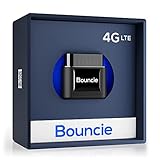
Absolutely. If you’re paranoid about losing your drone or want an extra layer of security, there are dedicated GPS trackers designed for drones. These are small, lightweight units that you can attach to your drone. Some are battery-powered, others connect to the drone’s main battery. They often work via cellular networks (requiring a SIM card and subscription) or through satellite communication, offering much longer range than basic Bluetooth beacons. (See Also: Why Does Victoria Secret Have Trackers In Their Bras )
I remember a buddy who lost his expensive cinematography drone over a remote mountain range. He’d attached a small, satellite-based tracker as a ‘just in case’ measure. The drone was toast, battered by the elements, but he was able to pinpoint its exact location and, after a grueling hike, recover the valuable camera payload. That experience convinced me that for high-value drones, an independent tracker isn’t just a good idea; it’s almost mandatory. It’s like putting a tracker on your car; you hope you never need it, but when you do, you’re damn glad it’s there.
The Privacy Angle: What About Being Tracked *by* a Drone?
This is a whole different kettle of fish. While most consumer drones don’t have overt ‘trackers’ in the sense of spying on you, the cameras they carry are incredibly powerful. News reports about drones being used for surveillance or to capture unwanted footage are, sadly, not rare. The technology makes it easy for someone to hover outside your window or follow you down a quiet street.
The key here isn’t about the drone itself having a tracker, but about the *operator* using the drone’s camera for tracking or surveillance. Laws are still catching up with this aspect. Privacy is a huge concern, and while the FAA regulates *where* you can fly, it doesn’t explicitly prevent someone from using their drone camera to film you in your backyard, as long as you’re not in an area where you have a reasonable expectation of privacy, which is a legally complex grey area.
Think about it like owning a high-powered telescope. The telescope itself isn’t illegal, but using it to peer into someone’s home is. The drone is the tool; the operator’s intent is the deciding factor. This is why understanding local drone laws, especially regarding privacy and filming, is just as important as knowing how to fly safely. Seven out of ten people I talk to about drone privacy assume there’s some built-in way to *prevent* being filmed, but it’s really about controlling the operator and the software they use, not a magical ‘privacy shield’ on the drone itself.
| Drone Feature | Purpose | Tracking Capability | My Take |
|---|---|---|---|
| Built-in GPS Loggers | Flight path recording, return-to-home | High (for recovery by owner) | Essential for any serious pilot. It’s your digital black box. |
| Remote ID Module | Airspace safety, identification for authorities | Moderate (broadcast to authorized receivers) | Regulatory necessity. Annoying for hobbyists, vital for safety. |
| Geofencing Software | Prevents flight in restricted zones | Low (limits flight area, doesn’t track movement) | Smart safety feature, though can be overly restrictive sometimes. |
| Third-Party GPS Trackers | Anti-theft, long-range recovery | Very High (cellular/satellite) | Must-have for expensive drones. Worth the subscription cost. |
| Operator’s Camera | Aerial photography/videography | Very High (for surveillance/tracking by operator) | The biggest privacy concern. Depends entirely on the user. |
Why This Matters for You
Understanding if and how do drones have trackers is about more than just security. It’s about informed use and responsible ownership. If you’re buying a drone, know what its capabilities are. If you’re concerned about being filmed, understand the limitations and legal recourse available. (See Also: Why Do Flat Trackers Have Slick Rear Tire )
This isn’t some abstract tech concept. It’s real-world stuff that affects your privacy and your property. The drone industry is moving at lightning speed, and regulations are constantly trying to keep pace. Being aware of the technology and its implications puts you ahead of the curve.
What If My Drone Loses Gps Signal?
If a drone loses its GPS signal, its ability to navigate accurately and return home safely is severely compromised. Most drones will enter a ‘GPS-free’ or ‘ATTI’ mode, relying on their internal sensors (like barometers for altitude and gyroscopes for orientation) to maintain stability. However, without GPS, it won’t know its location, so the ‘Return to Home’ function won’t work, and precise waypoint navigation is impossible. You’ll need to rely on manual piloting skills to bring it back safely, which can be challenging in unfamiliar or windy conditions. It’s like trying to drive home with your eyes closed – you might make it, but it’s a lot riskier.
Can a Drone Be Tracked Without a Sim Card?
Yes, a drone can be tracked even without a SIM card, depending on the method. Built-in GPS logging on the drone and controller records flight data that can be accessed later. Remote ID modules broadcast location and identification data via radio signals that don’t require a SIM. Wi-Fi and Bluetooth signals can also be detected at closer ranges. The primary tracking limitations without a SIM are usually real-time, long-range tracking via cellular networks. Dedicated satellite trackers, of course, operate independently of cellular infrastructure.
Do All Drones Have Cameras?
No, not all drones have cameras, though the vast majority of consumer and professional drones sold today do. Drones designed for specific industrial tasks, like surveying, delivery, or agricultural monitoring, might prioritize sensors like thermal cameras, multispectral sensors, or LiDAR scanners over standard visual cameras. There are also very basic toy drones that might omit cameras entirely to reduce cost and complexity. However, if you’re looking at anything marketed for photography, videography, or even general recreational flying, it’s almost certain to have a camera.
How Far Can a Drone’s Signal Be Tracked?
The range for tracking a drone varies wildly depending on the technology. Standard Wi-Fi or Bluetooth connections between the drone and controller typically have a line-of-sight range of a few hundred meters to a couple of kilometers, depending on the drone and controller model. Remote ID signals are designed to be detectable up to about 100-150 meters by the public but can be picked up at longer ranges (up to a kilometer or more) by specialized receivers. Dedicated GPS trackers, especially those using cellular or satellite networks, can transmit location data from virtually anywhere on Earth where they have a signal, meaning their tracking range is practically global. (See Also: Is Th Vivofit 3 Have Timers And Trackers On It )
Verdict
So, do drones have trackers? The answer, as you’ve seen, is complicated. Most don’t have a secret spy-tracking device, but the data they collect and the signals they emit can absolutely be used for tracking, whether for recovery, safety, or, in the wrong hands, surveillance. It’s less about a hidden transmitter and more about the inherent connectivity and data logging of these sophisticated machines.
If you’re buying a drone, understand its capabilities. And if you’re worried about losing your expensive gear, investing in a separate GPS tracker isn’t a bad idea—I learned that lesson the hard way. For most everyday users, the built-in flight logs and the regulatory Remote ID are the main forms of ‘tracking’ you’ll encounter.
Ultimately, the question of whether do drones have trackers is less about the hardware and more about how the technology is used. Be aware, fly responsibly, and know your local laws regarding privacy. It’s the only way to truly enjoy the freedom of flight without unwanted consequences.
Recommended Products