Got that nagging feeling about those gadgets that supposedly track your speed? You know, the ones promising to keep you honest on the road.
Honestly, I bought one of those first-gen speed trackers, the kind that looked like a cheap USB stick, hoping it would magically make my kids drive slower. Spoiler alert: it didn’t. It just gave me more data I didn’t know what to do with.
So, do the speed limit trackers have cameras in p? Let’s cut through the marketing fluff.
This whole speed tracking thing is a minefield of privacy concerns and dubious functionality.
When Does a Speed Tracker Actually Have Eyes?
This is the core question, isn’t it? Most of the devices marketed as ‘speed limit trackers’ or ‘driver monitoring systems’ for personal use aren’t packing high-definition cameras aimed at the road ahead like a dashcam. Think about it: if they all had cameras, the data storage and transmission requirements would be insane, not to mention the battery drain. They’re usually designed to monitor the *driver’s* behavior and the *vehicle’s* speed data, not to record external events.
For example, some systems are designed for fleet management. These might have cameras, but they’re often looking *inside* the cabin to monitor driver fatigue or distraction. The ones you’d buy for your personal car or to monitor a teen driver? Less likely to have a forward-facing camera in the ‘p’ you’re thinking of. They rely more on GPS and OBD-II port data from the car itself to infer speed and location. The ‘p’ usually refers to the device’s physical housing, and inside that, you’re more likely to find GPS chips and accelerometers.
My Own Dumb Purchase: The ‘smart’ Speed Monitor That Wasn’t
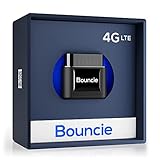
I remember spending around $150 on a sleek little device from a company whose ads promised peace of mind for parents. It was supposed to alert me if my daughter went over the speed limit or drove somewhere she shouldn’t. It plugged into the OBD-II port, and the app interface looked slick. What it *didn’t* have, despite the implication, was any kind of real-time video feed. All I got were notifications: ‘Your daughter exceeded the speed limit by 7 mph on Elm Street.’ Great. (See Also: Why Does Victoria Secret Have Trackers In Their Bras )
The worst part? It kept disconnecting from the cellular network, so half the time I got no alerts at all. It was basically a glorified GPS logger that occasionally told me the truth about her driving, but without any context or actual visual proof. I felt like I’d bought a fancy paperweight that occasionally flashed a red notification. Seven months later, it’s gathering dust in a drawer, a monument to marketing hype.
The Real Functionality: Gps and Obd-Ii, Not Video
So, if they don’t usually have cameras, how do they work? It’s mostly a combination of GPS and the vehicle’s own computer via the OBD-II (On-Board Diagnostics II) port. The GPS module in the tracker locks onto satellites to determine the device’s location and, by extension, its speed. Simultaneously, it can often piggyback on the car’s speed data directly from the ECU (Engine Control Unit) through that OBD-II connection. This is generally more accurate for instantaneous speed than GPS alone, especially in areas with poor satellite reception.
These systems transmit this data wirelessly, usually via cellular (like a mini-phone) or sometimes Bluetooth to a connected smartphone app. The app is where you’ll see reports, set geofences (virtual boundaries), and get alerts. The ‘p’ in ‘cameras in p’ is misleading because the primary sensor isn’t optical. Think of it like a modern Fitbit for your car, reporting activity (driving) rather than recording it visually.
Fleet vs. Personal: A Crucial Distinction
It’s vital to distinguish between devices designed for commercial fleets and those marketed for individual consumers. Businesses managing dozens or hundreds of vehicles need robust oversight. Their systems might include cameras, but they are often integrated into a much larger telematics package that includes driver behavior monitoring (harsh braking, acceleration), engine diagnostics, and route optimization. These systems are expensive and complex, far beyond what a typical car owner would consider.
For personal use, especially when you’re just trying to keep tabs on a new driver or a specific vehicle, the market is flooded with GPS trackers. They are generally much simpler and significantly cheaper. The primary data points are location, speed, time, and mileage. If you see a device marketed for personal use that boasts extensive video capabilities, it’s almost certainly a dedicated dashcam that *also* has GPS logging, not a ‘speed tracker’ in the traditional sense.
Contrarian Take: Why You Might Not Want a Camera Anyway
Everyone says more data is better, right? WRONG. I disagree. If a speed tracker *did* have a camera that constantly recorded, you’d be drowning in video clips. Imagine trying to sift through hours of driving footage just to find that one time your kid went 5 mph over. It’s like trying to find a specific grain of sand on a beach. Plus, the privacy implications are massive. Who owns that footage? How is it secured? For personal use, the added complexity and potential legal headaches of a camera on a basic speed tracker just aren’t worth it. The current crop of camera-less trackers, while imperfect, offer a more focused and manageable solution for the core task of monitoring speed and location. (See Also: Why Do Flat Trackers Have Slick Rear Tire )
The Unexpected Comparison: It’s Like a Smart Thermostat for Your Car
Trying to understand how these trackers work without cameras is a bit like trying to understand a smart thermostat. A thermostat doesn’t have cameras watching you; it uses sensors (temperature, humidity) and programmed logic to control your HVAC system. Similarly, a speed tracker uses GPS and vehicle data sensors to report on your car’s movement without needing to ‘see’ it. Both are designed to gather specific data points and act on them according to pre-set rules or user input, rather than providing a continuous visual record.
Sensor Details: What’s Inside That ‘p’?
Peeling back the plastic on these things (metaphorically, of course; I’m not voiding warranties for fun) reveals a circuit board with a GPS receiver, usually a cellular modem for communication, and often an accelerometer to detect motion and potential impacts. Some might have Bluetooth for local pairing. The ‘p’ is just the housing. The real tech is buried inside. You might feel a slight vibration when the device is active, a subtle hum if it’s a more complex unit, or just the cold, smooth plastic against your fingertips when you install it. No visual sensors here, usually. The entire setup is designed for efficient data collection and transmission, not surveillance-style recording.
Speed Tracker Functionality Comparison
| Feature | Typical Camera-Less Tracker | Fleet Tracker with Camera | Opinion/Verdict |
|---|---|---|---|
| Primary Function | GPS Speed & Location Monitoring | Comprehensive Fleet Management, Driver Behavior | Personal use needs are simpler. |
| Camera | No (generally) | Yes (Driver/Cabin Facing) | Avoids data overload and privacy issues for personal use. |
| Data Collected | Speed, location, time, mileage | All of the above + harsh braking/acceleration, G-force, driver ID, engine codes | More data isn’t always better for individuals. |
| Cost | $50 – $200 (device + subscription) | $500+ per vehicle (device + high monthly fees) | Significant price difference reflects complexity. |
| Installation | OBD-II port or plug-in adapter | Professional installation often required | Easy DIY is a plus for personal devices. |
How Are They Different From Dash Cams?
This is where a lot of confusion happens. A dash cam is primarily a video recording device for your car. Yes, many dash cams come with GPS logging capabilities, allowing you to see the speed and route on a map when you review the footage. However, their core purpose is to capture video evidence in case of an accident or incident. Speed trackers, on the other hand, are designed to *report* on speed and location, often with alerts and geofencing, without necessarily recording any video footage at all. Think of a dash cam as a security camera for your car, and a speed tracker as a performance monitor.
Addressing Common Concerns
Do Speed Limit Trackers Log Driving Habits?
Yes, most speed limit trackers log driving habits. This typically includes data points like maximum speed reached, average speed over trips, duration of trips, and harsh braking or acceleration if the device has a sensitive enough accelerometer. Some advanced systems can even infer cornering speeds.
Are These Devices Legal?
In most places, personal speed trackers are legal for you to install in your own vehicle or in a vehicle you own and permit someone else to drive, provided you are transparent about it. Laws become murky when it comes to tracking someone without their knowledge or consent, especially if they are over 18. Always check your local regulations regarding vehicle tracking and privacy.
Can They Detect If I’m Speeding?
Absolutely. That’s their primary function. They use GPS and/or OBD-II data to compare your vehicle’s current speed against the posted speed limit for that road segment. Many allow you to set custom alerts for exceeding the limit by a certain percentage or by a fixed amount. (See Also: Is Th Vivofit 3 Have Timers And Trackers On It )
How Do They Know the Speed Limit?
They rely on mapping data. The GPS coordinates are matched against a database of known speed limits for various road segments. These databases are maintained by companies that aggregate map information. Accuracy can vary, so occasional discrepancies can occur, especially in areas with frequent road construction or changes.
Do the Speed Limit Trackers Have Cameras in P?
Generally, no. The ‘p’ refers to the physical device, and inside, you’ll find GPS and communication modules, not typically cameras for recording road events. If a camera is present, it’s usually for driver monitoring in commercial fleet contexts, not for general speed tracking in personal vehicles.
Conclusion
So, to circle back to the original question: do the speed limit trackers have cameras in p? For the vast majority of personal-use devices, the answer is a resounding no. You’re mostly looking at GPS and OBD-II technology, not visual recording hardware.
My advice? If you’re looking for peace of mind regarding speed, a dedicated GPS tracker is your best bet. If you genuinely need video evidence, then a dashcam is the way to go, but don’t expect it to function as a primary speed limit alert system. This whole segment of tech is often about managing expectations versus marketing promises.
Before you buy, always read the product specs carefully. Look for mentions of ‘cameras’ and clarify what they’re actually used for. Don’t assume ‘tracker’ means ‘video recorder’.
Recommended Products