So, you’re wondering, does BMW have trackers in their cars? It’s a question that pops up, especially when you hear those hushed whispers about car security or, let’s be honest, when you’ve accidentally left your keys inside and a friend with a slightly too-enthusiastic view of technology offers to ‘ping’ it.
Honestly, I’ve spent more time than I care to admit wrestling with various automotive tech, trying to figure out what’s genuinely useful and what’s just snake oil designed to empty your wallet. This whole tracker thing with BMWs? It’s got layers.
Forget the glossy brochures for a second. Let’s talk about what actually happens on the ground, with that slightly greasy smell of your garage and the lingering frustration of a system that might not do what you think it does. So, does BMW have trackers in their cars? Yes, but it’s not as simple as you might imagine.
My Own Dumb Tracker Blunder
Years ago, I bought a used motorcycle. The seller raved about this ‘advanced security system’ it had, which he said was practically invisible. Sounded great, right? I paid a premium for it, assuming it was some kind of factory-installed GPS tracker that would ping my phone if it was ever stolen. Turns out, ‘advanced security system’ was marketing speak for a very expensive, very basic kill switch wired by some guy named Barry out of his van, and the ‘tracking’ was a rumor he spread to justify the price. I learned that day, after spending an extra $400 I absolutely didn’t have at the time, that you have to dig deeper than the sales pitch. This experience haunts me every time I hear about built-in vehicle tech.
It’s like buying a fancy coffee machine that promises barista-quality espresso but only ever produces lukewarm, watery brown stuff. You stare at it, defeated. That’s how I felt.
Bmw’s Connecteddrive and What It Actually Does
Most modern BMWs come equipped with BMW ConnectedDrive, and this is where the ‘tracking’ discussion really begins. It’s not a singular, standalone tracker in the way you might imagine a Tile or an AirTag. Instead, it’s a suite of services that uses your car’s built-in telematics unit. This unit, often referred to as the Telematics Control Unit (TCU) or Communications Module, is the brain behind many of the connected features.
Think of it less like a discrete GPS device you can easily rip out and more like a SIM card and modem integrated into the car’s electronics. This module facilitates services like remote diagnostics, emergency calls (eCall), traffic information, and yes, remote vehicle location services. So, when people ask, ‘does BMW have trackers in their cars?’, the answer is essentially that they have the *capability* for location tracking built-in, primarily through ConnectedDrive.
This capability allows you to, for instance, use the My BMW app on your smartphone to see your car’s current location on a map. It’s handy if you’ve forgotten where you parked in a massive shopping mall parking lot, or, more seriously, if the car is stolen. The system can communicate its position back to BMW’s servers, which then relay it to you via the app. It’s a digital leash, if you will, but one that’s managed by BMW’s infrastructure.
I remember one time, I swore I left my E90 parked on Elm Street, but the app showed it a mile away near the park. Turns out, my wife had borrowed it for an emergency run to the store and forgotten to mention it. Saved me about an hour of panicked searching. The TCU itself is a fairly robust piece of kit, tucked away somewhere behind the dashboard trim, humming along silently until you need it.
The Privacy Debate: Who’s Watching the Watcher?
Now, this is where things get sticky. Privacy is a massive concern, and rightly so. When you ask, ‘does BMW have trackers in their cars?’, the follow-up question is almost always about who can access that data and why. BMW, like any major automaker, collects a considerable amount of data about your vehicle’s performance, usage, and location. This is primarily done to improve their services, diagnose issues remotely, and offer features like predictive maintenance. (See Also: Why Does Victoria Secret Have Trackers In Their Bras )
According to BMW’s own privacy statements, the data collected through ConnectedDrive is used to provide and improve their services, and they state that location data is not shared with third parties without consent, except in specific circumstances like legal requirements or emergencies. However, the specifics can be complex. You’re essentially agreeing to a data-sharing agreement when you activate ConnectedDrive services. It’s not a physical tracker that a private investigator can slap on your bumper without anyone knowing; it’s integrated into the car’s own communication systems.
I’ve seen too many privacy policies that are dense enough to be used as doorstops, and BMW’s is no exception. The key is that the location data is tied to your BMW ID and your vehicle. If the car is stolen, law enforcement can request BMW’s assistance in locating it. This is a positive aspect for theft recovery, but it does mean that your car’s location is theoretically accessible by BMW and potentially by authorities. It’s a trade-off for the convenience and security features offered.
Consider this: it’s like having a smartwatch. It tracks your steps, your heart rate, your sleep. All that data is collected. Does it mean you’re being spied on 24/7? Not exactly. But the *potential* is there, and you’re implicitly trusting the company with that information. This is the same dynamic at play with BMW’s tracking capabilities.
Aftermarket Trackers: The ‘diy’ Approach
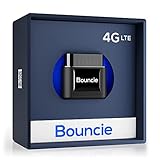
If you’re really concerned about theft and want a more robust, independent tracking solution than what BMW offers, or if you have an older BMW that doesn’t have ConnectedDrive, then aftermarket GPS trackers are a viable option. These range from simple, battery-powered units you can hide in the car, to more sophisticated hardwired systems. They operate independently of the car’s manufacturer systems.
I remember a friend who had his classic M3 stolen. The factory alarm did nothing, and BMW’s older systems didn’t have the robust location tracking we see today. He ended up installing a hidden, battery-powered tracker that cost him about $150 and a monthly subscription. It ran for two weeks before the thieves were caught trying to sell it. The battery life on those things can be a bit hit-or-miss; his died just 12 hours before the police would have lost the trail. Close call.
When you look at aftermarket options, pay attention to battery life, subscription costs, and the clarity of the tracking interface. Some of them feel like they were designed in the early 2000s, with clunky websites and delayed updates. Others are surprisingly slick. It’s a jungle out there, and you can easily spend $300 on something that’s less reliable than a cheap burner phone.
Everyone says you need the most expensive, professional installation for aftermarket trackers. I disagree. For a basic peace-of-mind tracker, a simple, self-installed unit that you can check once a day is often enough. Unless you’re tracking a Lamborghini, the advanced features are usually overkill and add to the cost unnecessarily.
This is where the real frustration kicks in for many people. Sometimes, dealers might install their own tracking devices, especially on financed vehicles, as a way to repo the car if payments stop. These are often separate from BMW’s official ConnectedDrive system. They can be hardwired or even battery-powered and hidden very well. This isn’t exclusive to BMW; many dealerships across brands do this.
If you’re buying a new or used car, especially one with financing, it is absolutely worth asking your salesperson directly: “Are there any third-party tracking devices installed on this vehicle for collateral purposes, other than BMW’s own ConnectedDrive system?” Their reaction might tell you a lot. I’ve heard stories of people finding these devices tucked away in the OBD-II port or even under the dash, installed without their explicit knowledge beyond the fine print of a financing agreement. It feels a bit like being watched by a suspicious neighbor who’s always peering over the fence. The sheer audacity of installing something like that without clear disclosure drives me mad. (See Also: Why Do Flat Trackers Have Slick Rear Tire )
The technology used in these dealer-installed trackers can vary wildly. Some are basic GPS units that send their location periodically. Others might have more advanced features like geofencing or even remote disabling capabilities, though the latter is rarer and usually reserved for high-risk loans. It’s a bit of a gray area, legally and ethically, in many places. The average car owner isn’t going to be crawling under their dashboard with a flashlight and a signal detector, so dealerships can get away with it if they’re not transparent.
A friend bought a used sedan from a dealership, and about six months later, the car just died. The finance company said they were remotely disabling it because of missed payments. Turns out, the dealer had installed a device that allowed for remote shutdown. He’d never been late on a payment, but a processing error caused the issue. It took him three weeks and multiple calls to get it sorted, all while his car sat uselessly in his driveway.
What About Stolen Bmws?
So, does BMW have trackers in their cars that help if it’s stolen? Yes, the ConnectedDrive system, when active and subscribed, offers remote vehicle location services. If your BMW is stolen, you can report it to the police, and they can then work with BMW’s emergency services to attempt to track the vehicle. This relies on the car’s TCU being functional and able to transmit its location.
However, it’s not a magic bullet. Sophisticated thieves can potentially jam GPS signals or disable the TCU. If the car is taken to a garage where it can be shielded or dismantled quickly, the tracking might be rendered useless. The effectiveness also depends on the subscription status of your ConnectedDrive services. If you let that lapse, your ability to track the car remotely might be compromised. It’s a bit like having a great security system that you forget to pay the monthly fee for.
Consumer Reports has noted that while these built-in systems are improving, they are not foolproof. They’ve tested systems where the app was slow to update or occasionally lost connection, which would be incredibly frustrating in a theft scenario. The accuracy can also be affected by obstructions like underground parking garages or dense urban environments. So, while it’s a valuable tool, it’s not an infallible one. Think of it as an additional layer of security, not the only layer.
The data from BMW’s systems, according to the National Highway Traffic Safety Administration (NHTSA) guidelines, is primarily for safety and service. This means that in the event of a theft, law enforcement has a legitimate pathway to request this data, assuming appropriate legal channels are followed. This is a far cry from a private individual planting a tracker; it’s a structured process involving official channels.
Can You Turn Off Bmw Trackers?
This is a question that often comes up for those concerned about privacy or who want to avoid being tracked. If we’re talking about BMW’s official ConnectedDrive system, disabling the tracking isn’t as straightforward as flipping a switch. You can’t simply unplug it without potentially impacting other services. However, you can typically manage your ConnectedDrive services through your BMW ID account online or via the My BMW app. This allows you to opt-out of certain data collection or services, which might limit the tracking capabilities.
Some owners might consider disabling the TCU unit itself. This is a complex task that usually requires significant technical knowledge and often involves disconnecting power or signal lines to the module. It’s not a DIY job for the faint of heart and could have unintended consequences for other vehicle functions. Furthermore, attempting to tamper with these systems could void your warranty or cause electrical issues. It’s generally not recommended unless you fully understand the implications.
For aftermarket trackers, yes, you can usually turn them off or remove them. That’s the point of their independence. But if it’s a dealer-installed device for loan collateral, turning it off might be seen as a violation of your agreement. So, tread carefully. (See Also: Is Th Vivofit 3 Have Timers And Trackers On It )
A common misconception is that simply turning off GPS on your phone stops your car from being tracked. This is incorrect. The car’s TCU uses its own internal GPS receiver and cellular connection, independent of your phone’s connectivity. Your phone’s GPS setting has no bearing on the car’s built-in telematics.
Do Bmws Have Built-in Gps Trackers?
Yes, BMW vehicles equipped with ConnectedDrive services have a built-in telematics unit (TCU) that enables location tracking. This system allows for features like remote vehicle location via the My BMW app.
Is Bmw Connecteddrive Tracking Mandatory?
No, ConnectedDrive services are optional, and you can manage your subscription and data preferences through your BMW ID. However, disabling certain services might limit the functionality of location-based features.
Can the Police Track a Stolen Bmw?
Yes, if ConnectedDrive services are active and a report is filed, law enforcement can request BMW’s assistance in tracking a stolen vehicle. This process is subject to legal procedures.
Can I Disable the Tracker in My Bmw?
You can manage your ConnectedDrive preferences to limit data collection. Physically disabling the TCU is complex, not recommended, and may void warranties.
| Feature | BMW ConnectedDrive | Aftermarket GPS Tracker | Dealer Collateral Tracker | Opinion/Verdict |
|---|---|---|---|---|
| Primary Use | Convenience, safety, remote services | Theft recovery, fleet management | Collateral security, repossession | ConnectedDrive is great for convenience. Aftermarket is best for dedicated theft protection. Dealer trackers are a red flag for transparency. |
| Installation | Factory-installed | Varies (DIY to professional) | Dealer-installed | Factory is seamless. Aftermarket installation varies in difficulty. Dealer installation can be hidden. |
| Privacy Control | Manage via BMW ID, opt-outs exist | Full control by owner | Limited to none; depends on agreement | ConnectedDrive offers some control. Aftermarket offers the most. Dealer trackers offer the least. |
| Subscription Cost | Monthly/annual fee after trial | Monthly/annual fee | Often bundled into financing | Subscription costs add up for all. |
| Reliability | Generally high, depends on service | Varies greatly by brand | Varies, can be basic | Factory and reputable aftermarket are reliable. Cheap options are risky. |
Conclusion
So, to finally put it to rest: does BMW have trackers in their cars? Yes, through their ConnectedDrive system, they have the capability for location tracking. It’s integrated, it’s tied to their services, and it can be a lifesaver if your car gets nicked.
But it’s not a magical, untraceable device. Thieves can be clever, and privacy concerns are valid. If you’re seriously worried about theft, especially with an older BMW or if you want complete control, an independent aftermarket tracker, carefully chosen and installed, might be worth the expense and monthly fee.
Always ask dealers directly about any extra tracking devices they might install, especially on financed cars. That little device tucked away could be more than just a security measure; it could be a financial leash. Digging into those details is part of being a smart car owner.
Recommended Products