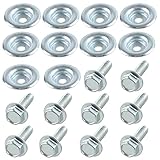
Look, nobody actually enjoys wrestling with hardware. Especially when it’s supposed to be simple, like connecting two things that just should fit together. I remember a few years back, trying to adapt a really specific plumbing fitting. I ended up with a box full of adapters, none of which quite did the job, and a sinking feeling I’d just blown cash on junk. That’s where the humble ‘a 1 bolt together converter’ comes in. It’s supposed to be the hero, the one piece that makes everything click. But does it? Let’s get real about it.
The idea is simple: take two things that aren’t meant to mate and make them play nice with minimal fuss. Usually, this means a threaded rod, some washers, and maybe a nut or two, all designed to bridge a gap or change a fitting size. Sounds easy, right? Well, the execution can be a whole different story.
What Exactly Is a 1 Bolt Together Converter, Anyway?
Alright, let’s break down what we’re actually talking about when someone says ‘a 1 bolt together converter’. Forget fancy jargon; it’s fundamentally a connector. Think of it as a bridge. You’ve got two pieces of equipment, or pipes, or brackets, that have different connection points. Maybe one is threaded with a fine pitch, and the other is smooth for a clamp. Or one has a 1/2-inch NPT thread and the other needs a 3/4-inch flare fitting. The ‘converter’ in this context is the intermediary, the go-between that translates one connection type to another.
The ‘1 bolt together’ part usually refers to the most basic forms. This could be a simple threaded rod with different threads on each end, or a flange with holes for bolts on one side and a different connection on the other. The ‘bolt together’ implies that you’ll be using bolts, nuts, and washers to secure at least one end of the connection. It’s not usually a weld-on or a complex molded piece; it’s designed for assembly with standard tools.
I’ve seen them used in everything from basic shelf mounting to more intricate setups in custom automotive projects or even some DIY agricultural equipment. The beauty, in theory, is their versatility and the fact that you don’t need specialized welding equipment or complex fabrication skills to make them work.
A common scenario where you might encounter this is trying to adapt a standard pipe thread to a quick-connect fitting. Or maybe you have a motor with a specific shaft size and need to attach a pulley or a flywheel that uses a different mounting system. The converter becomes the single component that bridges that difference, often secured with a bolt and nut on one side and screwing into the other component.
It’s the mechanical equivalent of a universal adapter, but for physical connections. The key is that it simplifies a potentially complicated adaptation into a single, manageable part that requires only basic assembly. This is why they’re often favored for quick fixes or when dealing with off-the-shelf components that weren’t originally designed to work together.
When ‘simple’ Becomes a Headache: What to Watch For
This is where my personal war stories start to pile up. I once bought what was advertised as ‘a 1 bolt together converter’ for a small generator I was rigging up for off-grid power. The online picture looked solid, and the description promised a perfect fit.
What arrived was a flimsy piece of stamped metal that felt like it would bend if you sneezed on it. The threads were rough, and the bolt holes were slightly off-center.
It was supposed to connect a PTO shaft to a water pump, a fairly important link. I spent about three hours trying to force it, filing down edges, and ultimately realizing I was going to break something expensive if I continued.
The whole point was supposed to be a quick, secure connection, and instead, I had a frustrating, potentially dangerous situation. (See Also: Are All Honda Atv Bolt Patterns The Same )
So, what should you be looking for to avoid this kind of mess? Material is huge. For anything that’s going to see significant load, vibration, or environmental exposure (like rust from rain), you want solid metal. Steel, particularly hardened steel, is usually your best bet. Aluminum can work for lighter duty, but it’s softer and can strip threads more easily. For plumbing or high-pressure applications, you’re looking at brass or stainless steel. Don’t be fooled by shiny chrome plating on cheap metal; that’s just cosmetic.
The finish and machining are also massive indicators of quality. Threads should be clean, well-defined, and free of burrs. If you can feel rough edges or see unevenness, it’s a red flag. Bolt holes should be cleanly drilled, not ragged. Also, consider the tolerances. Does it feel sloppy when you try to screw it in? Does the bolt wobble excessively in its hole? These aren’t just minor annoyances; they’re signs of poor manufacturing that can lead to vibrations, leaks, or outright failure down the line. The common advice here is often just ‘buy the right size,’ but that ignores the fact that even the right size can be poorly made.
I’ve learned to be very skeptical of universal adapters. While the idea is appealing, a truly universal converter for a specific application is rare. Often, you need something designed for a particular set of standards, like SAE threads or specific pipe fittings. A generic ‘converter’ might fit the thread count but have the wrong taper, the wrong sealing surface, or the wrong material strength. My rule of thumb now: if it looks too generic, too cheap, or the description is vague, walk away. It’s almost always cheaper in the long run to buy a slightly more expensive, well-made part than to deal with the fallout from a cheap one.
How Does It Actually Work? The Nitty-Gritty Mechanics
At its core, a 1 bolt together converter functions through mechanical engagement and, sometimes, sealing. Let’s take a common example: adapting a threaded pipe. You have a male threaded end (sticking out) and a female threaded end (a hole). The converter will have one of these to match your existing part and the other to match the part you want to connect. For instance, a female NPT (National Pipe Taper) thread on one side might mate with a male NPT on your pipe. On the other side, it might have a male JIC (Joint Industry Council) fitting, which is a standard for hydraulic hoses, requiring a specific flare angle and sealing surface.
The ‘bolt together’ aspect usually comes into play when you have a flange or a plate-like connection. Imagine you need to attach a motor bracket to a frame. The motor might have mounting holes spaced in a certain pattern, and the frame might have a different pattern or no holes at all. A converter plate, in this case, would have the correct pattern of holes on one side to bolt to the motor, and on the other side, it might have larger holes to accept bolts that go through the frame, or perhaps threaded inserts for the frame’s bolts.
Washers are often used here to distribute the load and create a better seal or prevent the bolt head from digging into the material. The bolt itself acts as the primary fastener, drawing the two parts (and the converter) together.
For sealing, especially in fluid applications, the design is important. Tapered threads like NPT rely on the metal-to-metal contact of the threads themselves to create a seal, though pipe dope or Teflon tape is usually added to fill any microscopic gaps. Flared fittings, like JIC or AN (Army-Navy) fittings, use a cone-shaped seal where the flared end of one fitting presses against a matching cone on the other. The bolt in a flanged connection might be solely for structural integrity, or it might be part of the system that compresses a gasket or O-ring to create a seal between flat surfaces. The basic principle is always the same: providing a compatible interface between two otherwise incompatible components using mechanical fasteners and designed surfaces.
Here’s a little chart I put together to illustrate common types and their typical uses. It’s not exhaustive, but it gives you an idea of the variety:
| Converter Type | Description | Typical Use Case | My Verdict |
|---|---|---|---|
| Threaded Rod Adapter | A rod with different threads on each end. | Extending a threaded shaft, joining pipes. | Simple, but make sure thread compatibility and material strength. |
| Flange Adapter | A plate with bolt holes on one side and a fitting/thread on the other. | Connecting pumps to motors, mounting accessories. | Very versatile, but check hole patterns and mating surface. |
| Reducer Bushing | A fitting that screws into a larger threaded opening to accept a smaller thread. | Plumbing, electrical conduit. | Common and effective for threaded pipes, watch for quality of threads. |
| Shaft Coupler | Connects two shafts, often with set screws or bolts. | Joining motor shafts to pumps, fans. | Good for aligning shafts, make sure it’s rated for torque. |
Common Mistakes People Make (and How Not To)
The biggest mistake I see, and one I’ve made myself, is assuming that because it looks like it fits, it will work. This is especially true with thread types. Not all threads are created equal. You might have a bolt that threads into a nut, but if it’s the wrong thread pitch or diameter, it’s going to seize up or cross-thread. For example, trying to force a metric bolt into an SAE (Society of Automotive Engineers) thread. They look similar, but they won’t mesh properly and will damage both components. Always double-check the thread specifications. If you’re unsure, take a picture and search online, or even better, try to find the original spec sheets for the parts you’re connecting.
Another common pitfall is underestimating the load. That ‘a 1 bolt together converter’ might be made of a material that looks solid, but if it’s not rated for the torque, shear force, or vibration you’re throwing at it, it will fail. I learned this the hard way when a cheap steel coupler snapped on a small industrial fan, sending the fan blade flying. Thankfully, no one was hurt, but it was a stark reminder. Always check the manufacturer’s specifications, if available, for the intended load capacity. If there are no specs, err on the side of caution and choose a beefier option, especially if the connection is important or safety-related. (See Also: Are Ak Bolts Interchangeable )
People also forget about the environment. Is this connection going to be exposed to water, salt, chemicals, or extreme temperatures? A plain steel converter might rust away in a matter of months in a damp environment. An aluminum one might corrode when used with certain other metals (galvanic corrosion). If your application is harsh, you need to specify materials like stainless steel, brass, or even specialized plastics or composites, depending on the need. Skipping this consideration means you might fix a problem now only to have a new, bigger problem appear later.
Finally, the installation itself. Over-tightening can strip threads or crack fittings. Under-tightening means the connection will be loose, prone to vibration, and likely to leak or fail. Using the wrong tools can damage the converter or the parts it’s connecting to.
For example, using a pipe wrench on a fitting that requires a specific type of wrench (like a flare nut wrench) will mar the surface and potentially cause leaks. Always use the right tool for the job and follow torque recommendations if they exist.
It’s not just about screwing it in; it’s about doing it correctly for a lasting connection. I once spent an hour trying to get a good seal on a garden hose splitter because I was using pliers instead of a proper wrench, and I just kept damaging the fittings.
Real-World Applications: Where You Actually See Them
You’d be surprised where these little adapters pop up. In automotive, they’re common for custom exhaust systems, where you might need to connect a different diameter pipe or adapt to a specific muffler flange. I’ve seen them used to adapt fuel lines, brake lines, and even to mount aftermarket accessories like oil coolers or intercoolers where the mounting points don’t match the frame. A friend of mine built a custom off-road buggy and used several threaded rod adapters to connect various hydraulic lines and vacuum hoses. It’s a go-to for hobbyists who are piecing together systems from disparate parts.
In plumbing, while many systems use standard fittings, there are always exceptions. You might need to adapt from a PVC fitting to a metal pipe, or from one type of thread to another where standard reducers or expanders aren’t readily available. I used a brass threaded converter once to hook up a small, high-efficiency water heater to my existing copper pipework, as the heater had a slightly different thread size that wasn’t a standard reducer. It was a simple screw-in, bolt-on fix that saved me a lot of hassle.
DIY projects abound. Someone building a custom workbench might need to adapt a standard pipe leg to a specific caster wheel mounting plate. A gardener might adapt a standard hose connector to a more specialized irrigation system component. Even in the world of home brewing or distilling, where custom setups are the norm, these converters are invaluable for linking different tanks, pumps, and valves. The key is that they solve a specific, often one-off, adaptation problem without requiring extensive modification or specialized skills. They are the unsung heroes of the tinkerer’s toolbox, making incompatible parts play nicely together.
A good example is attaching a new stereo system to an older car. The car’s wiring harness might have proprietary connectors, while the new stereo uses standard Spade connectors or ISO plugs. You’d use an adapter harness, which is basically a form of converter, to bridge that gap. It’s designed to plug into the car’s existing harness and present the correct terminals for the new stereo. This is precisely the function of ‘a 1 bolt together converter’ – to make disparate systems connectable with minimal fuss.
Tips for Success: Making It Work Right the First Time
First off, measure twice, buy once. This sounds cliché, but it’s the gospel truth for adapters. Get out your calipers or a good tape measure. Know the exact diameter, thread pitch, and type of connection you have on both ends. Don’t guess. Take pictures of the existing fittings. If possible, look up the part numbers or specifications of the components you’re trying to connect. This homework will save you a ton of frustration and wasted money.
Second, always check reviews, but read them critically. Look for comments about the material quality, thread accuracy, and ease of installation. If multiple people mention the same problem (e.g., “threads stripped easily,” “leaked immediately,” “holes didn’t line up”), it’s a strong indicator of a poor product. Conversely, positive reviews that mention durability and a good fit are worth their weight in gold. I filter reviews for keywords like “fit,” “leak,” “strong,” and “easy.” (See Also: Are All Bolt Patterns The Same )
Third, don’t be afraid to spend a little more for quality. As I mentioned, the cost of a cheap adapter that fails can be far higher than the initial savings when you factor in downtime, potential damage to other components, and the need to buy a replacement. For important applications, or anything under significant stress, opt for reputable brands known for quality materials and manufacturing. Sometimes, spending an extra $10-$20 on a well-made part is the smartest move you can make.
Fourth, have some basic tools on hand. This includes a good set of wrenches (open-end, box-end, and possibly pipe wrenches or specialized fittings wrenches), screwdrivers, thread sealant (like pipe dope or Teflon tape for threaded connections), and possibly some lubricant for easier assembly. For bolt-together connections, make sure you have the correct size bolts, nuts, and washers. Sometimes, the converter doesn’t come with fasteners, and you’ll need to supply your own, making sure they are of adequate strength and corrosion resistance for the application.
Finally, if you’re dealing with fluids, pressure, or anything safety-important, consider adding a secondary safety measure. This could be safety wire on important fasteners, a hose clamp as backup for a threaded connection, or simply making sure that if the connection does fail, it won’t cause a major hazard. It’s a bit of belt-and-suspenders thinking, but when you’re relying on a single ‘a 1 bolt together converter’ to hold things together, a little extra caution goes a long way.
What Is a Bolt Together Converter?
A bolt together converter is a mechanical device designed to bridge the gap between two components that have incompatible connection methods. It typically involves at least one end that fastens using bolts and nuts, allowing it to be secured to a surface or component. The other end will have a different type of connection, such as a specific thread size, a flange, or a hose fitting, to mate with a second component. Its purpose is to simplify adaptation and allow parts that weren’t originally designed to work together to be joined.
Are Bolt Together Converters Universal?
No, bolt together converters are generally not universal in the way a smartphone charger might be. While some are designed for very common standards (like basic pipe threads), their effectiveness depends entirely on matching the specific requirements of both components being connected. A converter designed for one specific thread size and type, or one specific bolt pattern, will not work for a different set of specifications. It’s important to identify the exact connection types needed for both parts before selecting a converter.
What Materials Are Bolt Together Converters Made From?
The materials vary widely based on the application and required strength, corrosion resistance, and temperature tolerance. Common materials include steel (often zinc-plated or hardened for durability), stainless steel (for corrosion resistance), brass (for plumbing and moderate pressure), and sometimes aluminum for lighter-duty applications. For specialized uses, you might find them made from plastics or other composite materials, though these are less common for load-bearing or high-pressure scenarios.
How Do I Choose the Right Bolt Together Converter?
Choosing the right converter starts with precise measurement and identification of the connection points on both the ‘from’ and ‘to’ components. You need to know the thread size and type (e.g., NPT, BSP, SAE), the diameter and pattern of bolt holes, or the type of fitting required. Always verify the intended load, pressure, and environmental conditions to make sure the converter’s material and construction are suitable. Consulting product specifications or consulting with a knowledgeable supplier is highly recommended if you’re unsure.
Can I Use a Bolt Together Converter for High Pressure Applications?
Yes, but with extreme caution and only if the converter is specifically designed and rated for high-pressure applications. Many basic bolt together converters are intended for mechanical fastening or low-pressure fluid transfer. For high pressure, you need converters made from solid materials (like specific grades of steel or stainless steel), with properly machined threads, flares, or sealing surfaces, and a rating that exceeds your system’s maximum operating pressure. Always check the manufacturer’s specifications and consult an engineer if safety is most important.
Conclusion
So, there you have it. ‘A 1 bolt together converter’ is a simple concept that can save you a heap of trouble, or create a whole new set of problems, depending on what you buy and how you use it. They’re not magic, but they are incredibly useful when you need to join two things that just weren’t made to connect directly. My biggest takeaway after years of wrestling with these things? Don’t cheap out. Measure precisely, understand the specs, and if it looks too good to be true for the price, it probably is.
If you’re staring down a project that requires an adapter, take the time to do your homework. Get the right measurements, understand the thread types, and choose a material that can handle the job. A few extra bucks for a quality part will almost always pay for itself in saved headaches and a connection that actually lasts. It’s the difference between a quick fix and a ticking time bomb.
Next time you’re faced with mismatched parts, remember this. A little knowledge and a bit of care can turn what seems like an impossible connection into a straightforward assembly. Just be sure to choose wisely.