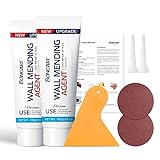
I remember staring at that cracked patch in my living room ceiling, a testament to a leaky pipe I’d thankfully fixed months ago. The hole was maybe the size of a dinner plate, but the idea of patching it myself felt like climbing Everest in flip-flops. I’d seen plenty of DIY videos, but the smooth finish I wanted seemed miles away from my usual clumsy attempts with spackle and a putty knife. That’s when I started looking into options beyond the big box store sheets, specifically into what people were calling ‘a 1 custom drywall’.
Let’s be blunt: drywall work can be a total pain. You either end up with visible seams, lumpy patches, or a dust cloud that makes the Sahara look like a dewdrop. So, when the term ‘a 1 custom drywall’ popped up, my cynical brain immediately went to ‘overpriced gimmick’. But I’d wasted enough money on fancy tools that promised miracles and delivered mediocrity, so I decided to dig deeper.
Is it really a step up, or just a more expensive way to get the same result? I spent weeks wrestling with this question, talking to folks who’d actually used it, and honestly, trying it out myself on a few smaller projects.
When ‘regular’ Drywall Just Isn’t Enough
Look, for a standard wall or ceiling, those big 4×8 or 4×12 sheets of gypsum board are fine. You tape the seams, mud it, sand it, and if you’re lucky and have the patience of a saint, it looks pretty decent. But ‘decent’ isn’t always ‘invisible’. Especially in older homes where walls aren’t perfectly plumb or ceilings have settled unevenly, getting those perfectly flat, smooth joints can be a nightmare.
This is where the idea of ‘a 1 custom drywall’ starts to make sense for some people, even if the name itself sounds a bit like it belongs on a cheap sign. It’s not usually about a specific brand, but more about the approach: using smaller, often pre-finished, or specially designed panels that are meant to integrate more smoothly into existing structures or create specific architectural features.
Think about it: if you’re replacing a small section, or trying to create a niche, a curved wall, or a soffit around some ductwork, wrestling with a huge sheet of standard drywall can be incredibly awkward and wasteful. You’re cutting out massive chunks that become scrap. Custom solutions often mean panels that are cut to size, or have specialized edges designed for easier fitting and finishing.
I once tried to patch a hole behind some plumbing in a tight corner. I ended up cutting a piece of standard drywall about six times before I managed to get something small enough that wasn’t completely mangled by the time I wrestled it into place. It was a frustrating afternoon, and the patch was still obvious. That’s the kind of situation where people start looking for something ‘custom’.
The reality is, ‘custom drywall’ often refers to a few different things. It could be the DIYer cutting their own precise shapes from standard board for a unique project. More commonly, it’s about using specialized panels or systems that are designed for less visible seams or specific applications. Some systems might involve interlocking panels, or panels with factory-applied finishes that require minimal joint compound.
The ‘a 1’ part of the phrase, in my experience, is often just a placeholder for ‘top-quality’ or ‘premium’ in the minds of folks who are searching for a better solution than the standard, budget options. It’s not a registered product name, but a descriptor for a desired outcome: a flawless finish, no matter the complexity of the job.
What’s Really Different (and What’s Just Marketing)
Let’s cut to the chase: not all ‘custom’ drywall is created equal, and a lot of it is just regular drywall done by someone who is really, really good at it. The actual difference often comes down to the materials used and the installation methods. For example, some systems might use thinner, more flexible boards that are easier to bend for curved walls. Others might incorporate a built-in vapor barrier or a sound-dampening layer, which are features you won’t find on standard sheets.
Then there are the specialized edge profiles. Instead of the simple square edge or tapered edge of standard board, you might find tongue-and-groove edges or profiles designed to accept specific types of adhesive or tape for a truly smooth look.
I’ve seen companies touting ‘smooth drywall systems’ that are basically just panels with precisely manufactured edges that, when fitted together, leave a gap so fine it’s almost invisible even before mudding. This requires a level of precision in manufacturing that you just don’t get with mass-produced standard sheets. The trade-off, of course, is cost. These specialized panels can be significantly more expensive per square foot than the stuff you get at Home Depot. I remember looking into a system for a basement bar I was building; the panels themselves were almost double the price, and the special joint compound and tape were extra. I ended up going with standard drywall and a lot of patience, but the idea was tempting. (See Also: Are There Studs At The Corners Of Drywall )
The ‘a 1 custom drywall’ moniker, as I mentioned, is more about the goal than a specific product. If you’re looking for something truly custom, you’re often talking about either a very skilled drywall contractor who can make standard materials look exceptional, or a proprietary system designed for specific applications. One common area where custom solutions shine is in decorative applications – think coffered ceilings, elaborate soffits, or even built-in shelving.
Standard drywall can do these things, but achieving a flawless, professional look without visible seams or taped joints can be incredibly difficult for the average DIYer. The marketing often tries to sell you on a ‘revolutionary’ system, but sometimes it’s just good old-fashioned craftsmanship with slightly different materials. My advice? Ask what makes it ‘custom’.
Is it the material? The edge profile? The installation technique? Don’t just buy the fancy name.
Here’s a little table I put together to break down some common distinctions:
| Feature | Standard Drywall | ‘Custom’ Solutions (General) | My Verdict |
|---|---|---|---|
| Cost per sq ft | Low | Moderate to High | You get what you pay for, usually. |
| Seam Visibility | Can be visible if not done perfectly | Designed for minimal to no visibility | The biggest selling point. |
| Flexibility/Curving | Limited, requires scoring or specialized boards | Often designed for easier bending | Great for arches and curves. |
| Installation Complexity | Moderate (requires taping/mudding skill) | Varies; some systems are easier, others require specialized tools/techniques | Don’t underestimate the skill needed for ANY drywall. |
| Special Features (e.g., sound dampening) | Rarely | Common | Can be worth it for specific needs. |
Mistakes I’ve Made (so You Don’t Have To)
When I first got into DIY home improvement, drywall was one of those things I thought, “How hard can it be?” Famous last words. My first real attempt at a patch job after a minor electrical mishap resulted in a patch that looked like a topographical map of a mountain range. I used too much mud, didn’t let it dry long enough between coats, and sanded way too aggressively, creating a halo of dust and a visible depression. That was a humbling experience. I learned that ‘a 1 custom drywall’ wasn’t just about buying fancier materials; it was about understanding the process and having the right tools and patience.
One of the biggest mistakes I see people make, and one I’ve definitely made, is underestimating the importance of the mudding and sanding stages. You can slap up the best ‘custom’ drywall panels in the world, but if your finishing work is sloppy, it’ll still look like amateur hour.
I remember trying to smooth out a corner where two pieces of ‘custom’ board met. I was so eager to get it done that I applied the mud too thick, and it dried with tiny cracks. Sanding it down revealed that I’d gone too far, creating a divot.
It took two more rounds of feathering it out with thinner coats of mud and a lot of careful sanding to make it disappear. It felt like I spent more time on the mud than on the actual board installation.
Another mistake is not planning for the inevitable imperfections in your walls. ‘Custom’ solutions sometimes imply a perfect, smooth finish, but if your underlying studs are warped or your existing wall isn’t flat, you’ll still have issues.
You can’t just slap a perfectly fabricated panel onto a wonky surface and expect magic. You might need to shim studs, add furring strips, or use a thicker skim coat to compensate. I learned this the hard way when I tried to install a decorative drywall niche.
I assumed the wall was flat behind it, but it wasn’t. The edges of my niche looked uneven, and I had to go back and add some extra compound around the perimeter to make it look right. It’s a good reminder that even with ‘premium’ materials, the foundation matters. (See Also: Are There Bugs That Eat Drywall )
Finally, and this is a big one: trying to rush the drying times. Especially with certain types of joint compounds, impatience is your enemy. Some quick-setting compounds can be a lifesaver, but they often require a specific technique and can be harder to sand if you mess up. If you’re using standard all-purpose or lightweight mud, you need to give it ample time to dry completely.
Trying to sand or apply the next coat too soon will lead to tearing, clumping, and a much longer, more frustrating process. I’ve lost count of the times I’ve impatiently tried to sand a patch that wasn’t quite dry, only to gum up my sandpaper and create a bigger mess. Patience, my friends, is key.
The allure of ‘a 1 custom drywall’ can’t overcome bad finishing habits.
Real-World Use Cases: Where It Actually Shines
So, when does investing in something beyond standard drywall sheets actually make sense? I’ve found a few scenarios where the term ‘a 1 custom drywall’ really does describe a tangible improvement over the basic stuff.
The most obvious is for curved walls or rounded corners. Trying to bend standard 1/2-inch drywall into a tight radius is practically impossible without scoring and breaking it, which often leads to a less-than-perfect curve. There are thinner, more flexible drywall panels specifically designed for this, and when installed correctly, they provide a smooth, consistent curve that looks professionally done.
I used some of these flexible boards for a bowed window seat I built, and the difference compared to trying to fight with standard board was night and day. The resulting curve was smooth, and the finishing was far less labor-intensive.
Another area where custom solutions can be a lifesaver is in situations requiring enhanced soundproofing or fire resistance. While you can add these properties with standard drywall by layering it or using specialized acoustic compounds, some ‘custom’ systems come with these features integrated into the panel itself. Imagine a home theater room or a shared wall between apartments. Using a panel that’s already designed for superior sound dampening can save you a lot of hassle and potentially deliver better results than trying to retrofit standard materials. I’ve heard good things about certain gypsum boards with added mineral fibers for fire resistance, and while they’re pricier, for code-required areas or high-risk zones, they could be a solid choice.
Decorative applications are also a prime candidate. If you’re building intricate soffits, complex ceiling designs, or custom built-in shelving units that need to look like they’re part of the original architecture, the precision and finish of specialized drywall panels can be a huge advantage. These aren’t necessarily ‘custom cut’ panels, but rather systems designed for tighter tolerances and cleaner joints that minimize the need for extensive finishing work to achieve a smooth, high-end look. Think about installing wainscoting or intricate crown molding – the smoother the surface you’re working with, the better the final result. For these types of projects, the slight extra cost of a more refined drywall product can pay off in a much more polished final appearance.
It’s also worth considering for repairs in high-traffic or visible areas where a perfect match and smooth repair is most important. If you have a small ding or hole in a wall that’s highly visible, you want the patch to be as invisible as possible. Sometimes, using a slightly different type of panel or a system designed for minimal joint visibility can make that repair disappear. I had a situation where a door knob punched a hole in a wall.
I managed to find a small piece of paneling that was slightly thicker and had a different edge profile, and by carefully feathering the mud, I was able to make the repair almost undetectable. It wasn’t ‘a 1 custom drywall’ in a branded sense, but it was a custom-sized and chosen piece that solved a specific problem better than a generic patch would have.
Practical Tips for Tackling Custom Drywall Jobs
If you’re thinking about tackling a project that calls for something beyond the standard drywall sheets, here are a few things I’ve learned that might save you some headaches. First, and I can’t stress this enough: measure twice, cut once. This is amplified when you’re dealing with specialized panels or custom-cut pieces. Mistakes are far more costly, both in terms of material expense and the time it takes to get replacements. Before you make that cut, double-check all your measurements, account for any necessary overlap or fitting, and visualize how the piece will go into place. It sounds obvious, but in the heat of a project, it’s easy to get sloppy. (See Also: Are Premade Inside Drywall Corne Goodrs )
Second, understand the specific finishing requirements for whatever ‘custom’ material you’re using. Not all drywall is created equal when it comes to joint compound and tape. Some systems might require specialized tapes (like fiberglass mesh tape or paper tape with a specific adhesive), while others might be designed to be finished with a skim coat of veneer plaster or a particular type of joint compound. Read the manufacturer’s instructions religiously. I once tried to use standard paper tape on a system that called for fiberglass mesh, and the adhesion was terrible, leading to bubbling and cracking later. It was a lesson learned about respecting the system.
Third, don’t skimp on the tools. While you can get by with a basic set for standard drywall, specialized jobs often benefit from specialized tools.
For curved walls, a good drywall screw gun with a depth-setting nosepiece is invaluable for consistent screw depth. For very smooth finishes, a good quality drywall sanding pole with interchangeable heads and good dust collection can be a big deal.
And for any job involving many cuts, a good quality drywall router or even a jigsaw with a fine-tooth blade can make precise cuts much easier. Investing in a few key tools can significantly improve the quality of your work and reduce frustration. I found a decent drywall sander for about $120 a few years back, and it was worth every penny for the reduced dust and smoother finish it gave me.
Finally, consider the skill level required. While some ‘custom’ drywall systems are designed to be easier to install, others can be more complex than standard drywall. If you’re a novice, it’s often best to start with simpler projects or to hire a professional for the important stages.
For instance, if you’re building a complex curved wall, and your primary goal is a smooth, professional look, you might consider hiring a drywall installer who specializes in those types of applications. You can always do the prep work or the initial installation of standard drywall yourself, and then bring in an expert for the important finishing touches that will make the ‘a 1 custom drywall’ look a reality. It’s about knowing your limits and when to get help.
Faq: Your Custom Drywall Questions Answered
What Is the Main Advantage of Custom Drywall Systems?
The primary advantage of custom drywall systems is their ability to create smooth finishes, especially in applications where standard drywall struggles. This includes achieving perfect curves, intricate architectural details, or highly visible repairs with minimal joint lines.
Is Custom Drywall Always More Expensive Than Standard Drywall?
Generally, yes. Specialized panels, factory-finished edges, or materials with integrated features like sound dampening or fire resistance come at a higher cost per square foot compared to basic gypsum board. The increased cost is often justified by reduced labor for finishing or superior performance characteristics.
Can I Install Custom Drywall Myself?
The installability of custom drywall varies. Some systems are designed for easier DIY installation, particularly those focusing on simpler seam concealment. However, many intricate or high-performance custom solutions require specialized tools, techniques, and a higher level of skill for optimal results, making professional installation advisable.
What Are Some Common Applications for Custom Drywall?
Common applications include curved walls, arched doorways, custom soffits and bulkheads, built-in shelving, home theater rooms (for acoustics), and high-end renovations where a flawless, invisible finish is desired.
Final Verdict
So, after all that, is ‘a 1 custom drywall’ a thing you should rush out and buy? Not necessarily for every project. For most simple walls and ceilings, standard drywall, installed well, will do the job just fine and save you a good chunk of change. But if you’re wrestling with a tricky curve, a complex architectural detail, or just can’t stand the thought of visible seams on a high-visibility repair, then yes, the specialized options might be worth the splurge.
The key is to understand what you’re actually getting. Is it a thinner board for bending? An interlocking edge for tighter seams? Or is it just marketing hype for a standard product? Do your homework, ask specific questions about the materials and installation, and weigh the added cost against the benefit you’re seeking. Don’t let the name ‘a 1 custom drywall’ fool you into thinking it’s a magic bullet; good craftsmanship still matters most.
Ultimately, the best drywall is the kind that makes your wall look exactly how you want it to. Sometimes that’s achieved with a big, cheap sheet and a lot of skill. Other times, it might require a more specialized approach.