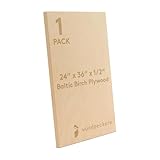
I remember the first time I tried to build an outdoor bench. I grabbed the cheapest plywood I could find, figured ‘water-resistant’ was just marketing fluff anyway. Big mistake. That bench lasted maybe two seasons before it started looking like a spongy, sad excuse for furniture. Turns out, not all plywood is created equal, especially when you’re dealing with the elements. If you’re eyeing up a 3 4 piece of moisture resistant plywood for your next project, you’re smart to ask if it’s actually worth the extra cash.
I’ve spent my fair share of weekends wrestling with subpar materials, so let me cut to the chase: when it comes to keeping your projects from turning to mush outdoors, the right kind of plywood matters. A lot.
Why You Can’t Just Grab Any Old Plywood for Damp Spots
Look, we’ve all been there. You’re building a garden planter box, a small shed extension, or maybe just some shelves for the garage where the condensation is a constant battle. You see ‘plywood’ and think, ‘Easy enough.’ But then you hit the lumberyard and suddenly there are a dozen types.
Standard construction grade? That’s fine for framing walls that will eventually be covered by siding and drywall, but chuck that stuff outside or in a perpetually humid spot and you’re asking for trouble. The glue layers in regular plywood can break down when they get wet, leading to delamination – basically, the layers start peeling apart like a bad sunburn.
The edges swell up, the surface gets fuzzy, and your project looks like it aged twenty years overnight. That’s why knowing about a 3 4 piece of moisture resistant plywood is a big deal if you want things to last.
Moisture resistant plywood, often stamped with ‘PS 1-19’ or ‘APA Rated’ with an ‘MR’ (Moisture Resistant) designation, uses a different kind of glue. It’s designed to hold up better when exposed to damp conditions, not necessarily full immersion in water, mind you, but consistent humidity, rain, and splashes. Think of it like the difference between a cheap umbrella and a decent one.
The cheap one might keep you dry for a bit, but the first gust of wind or steady downpour, and you’re soaked. The decent one?
It’ll handle a lot more before you start questioning its life choices. I learned this the hard way building a dog house. Used regular exterior grade, and within a year, the roof was sagging and the sides were bowing.
Replaced it with the MR stuff, and it’s still looking solid five years later. It’s not magic, but it’s a significant upgrade for anything living in an environment where water is more than just a passing visitor.
The trick is understanding what ‘moisture resistant’ actually means. It’s not waterproof.
You can’t build a boat hull out of it and expect it to float indefinitely. But for things like shed floors, outdoor furniture, utility trailers, or even the subfloor in a workshop that might get a bit damp? It’s the sweet spot between the cheap stuff that fails and the ridiculously expensive marine-grade plywood that you absolutely do not need for 95% of projects. When I was building a raised garden bed that would sit directly on soil, I debated going overboard. (See Also: Can A 4x8 Plywood Fit In A Honda Pilot )
But after reading up, I realized the MR grade was the right call for its ability to handle the ground moisture and occasional watering without falling apart. It’s about matching the material to the specific challenge.
What’s Actually Inside That ‘mr’ Stamp?
So, what separates a moisture-resistant panel from its soggy cousin? It’s primarily the glue and, to some extent, the wood species used. Regular plywood uses glues that are sensitive to moisture. Think of it like sugar dissolving in water; the bond breaks down. Moisture-resistant plywood, on the other hand, uses waterproof or highly water-resistant adhesives. The most common type you’ll find is a phenolic resin glue, which is incredibly durable and doesn’t break down when exposed to water. This is the same kind of glue used in marine-grade plywood, though marine-grade has other stringent requirements like having no internal defects.
When you’re looking at a 3 4 piece of moisture resistant plywood at the store, check for the stamp. You’ll typically see ‘APA’ (American Plywood Association) or a similar testing agency’s mark, along with grades like ‘PS 1-19’ and an ‘MR’ designation. ‘PS 1-19’ is a performance standard for construction and industrial plywood, and it often incorporates moisture-resistant adhesives. The ‘MR’ classification specifically tells you it’s been manufactured with adhesives that resist moisture. This isn’t just a coating; it’s built into the glue that holds the veneer layers together.
Beyond the glue, the quality of the wood plies can matter. While not as important as the glue for moisture resistance itself, better quality veneers (fewer voids, better wood grading) mean a stronger, more stable panel overall.
A well-made MR panel will have a smooth, uniform surface, with no large gaps or soft spots that could absorb moisture more readily. I once bought a sheet that looked okay from the front, but when I picked it up, I could see huge voids on the edge where the glue hadn’t penetrated.
That’s a recipe for delamination, MR glue or not. So, give the edges a quick look-see if you can.
For my outdoor workbench, I deliberately chose a panel that felt solid and looked well-constructed, not just one with the MR stamp. It’s the combination of good glue and good construction that gives you peace of mind.
The Numbers Game: What to Expect to Pay
Let’s talk brass tacks. Nobody wants to throw money away, but nobody wants their project to rot either. So, how much extra are you really shelling out for that moisture resistance? The price difference between standard construction-grade plywood and MR plywood can vary, but generally, you’re looking at a jump of about 15-30% per sheet. For a 3 4 piece of moisture resistant plywood, I’ve seen prices range from around $50 to $80 or more, depending on the grade, the specific manufacturer, and where you buy it. Compare that to a standard sheet of CDX (common construction grade) which might be $30-$50. It’s not a chasm, but it’s noticeable when you’re buying multiple sheets.
I recently priced out materials for a deck railing project that needed some solid backing panels. I needed four sheets of 3/4” plywood. The standard stuff was about $45 a sheet, bringing the total to $180. The MR-rated equivalent was $65 a sheet, totaling $260. That’s an $80 difference for the set. For me, that was a no-brainer. The railing is exposed to rain and sun, and I wanted to avoid having to replace those panels down the line. If I were building interior cabinets where humidity wasn’t an issue, I’d absolutely stick with the cheaper option.
The key is to weigh the cost against the lifespan and the potential hassle of replacement. If your project is going to be outside, exposed to the elements, or in a basement that tends to get damp, the extra $15-$30 per sheet for MR plywood is usually a wise investment. (See Also: Can Bondo Be Applied To Plywood )
If it’s going inside a climate-controlled home or office, and won’t see significant moisture, you can likely save your money. It’s a calculated decision based on the intended use and environment.
I always keep a mental checklist of where things will live, and that guides my plywood choice. For a tool cart that lives in my garage, MR is the way to go.
For bookshelves in my living room? Not so much.
| Plywood Type | Typical Use Cases | Pros | Cons | My Verdict |
|---|---|---|---|---|
| Standard Construction Grade (CDX) | Interior framing, temporary structures, sheathing under roofing/siding | Lowest cost, readily available | Poor moisture resistance, delaminates easily when wet, can swell | Good for dry, protected interior use ONLY. Avoid for any outdoor or damp applications. |
| Moisture Resistant (MR) Plywood (PS 1-19 with MR) | Sheds, outdoor furniture, utility trailers, workshop floors, planter boxes, some exterior sheathing | Good resistance to humidity and occasional splashes, holds up better than standard grade, cost-effective for its durability | Not fully waterproof, can still be damaged by prolonged submersion, more expensive than standard grade | My go-to for anything exposed to the elements or consistent dampness. Worth the small price premium. |
| Marine Grade Plywood | Boat building, high-end exterior applications, areas requiring extreme water resistance | Highest water resistance, virtually no internal defects, very durable | Most expensive, overkill for most DIY projects, heavier | Fantastic if you need the absolute best, but often unnecessary and costly for typical backyard projects. |
Common Mistakes People Make (and How to Avoid Them)
One of the biggest blunders I see, and honestly, one I’ve made myself, is assuming ‘moisture resistant’ means ‘waterproof.’ It doesn’t. You can’t dunk a 3 4 piece of moisture resistant plywood in a pond and expect it to emerge unscathed. This stuff is designed to handle rain, humidity, and splashes – the kind of exposure typical for outdoor structures like sheds, garden beds, or furniture. Prolonged submersion, however, will eventually break down even the best adhesives. So, if you’re building something that’s going to sit in standing water, you need a different material altogether, or you need to design it so water drains away immediately.
Another mistake is overlooking the edges. While the core of the plywood and the glued surfaces are treated to resist moisture, the exposed edges of the veneer can still absorb water like little sponges. This can lead to swelling and delamination over time, even if the face of the plywood holds up.
My advice? Always seal the edges.
A good quality exterior-grade paint, a couple of coats of polyurethane, or even a dedicated edge sealer will make a massive difference in the longevity of your project. I learned this when I built a garden bench and only sealed the top surfaces. Within a year, the bottom edges were starting to look fuzzy. Now, I always hit the edges, especially on outdoor projects, with extra coats of sealer.
People also sometimes skimp on fasteners. When you’re using materials that are designed to handle more stress (or potential moisture-related movement), it’s wise to use appropriate fasteners. Stainless steel or galvanized screws are a must for outdoor projects to prevent rust stains and corrosion that can weaken the connection over time. I’ve had cheap screws bleed rust all over nice plywood, making it look terrible. Also, don’t over-tighten screws, especially on thinner veneers, as you can crack the wood and create entry points for moisture. It’s about building a system where all the components work together to resist the elements. A great piece of plywood can be undone by a cheap, rusting screw.
People Also Ask: Can I Use Moisture-Resistant Plywood Outdoors?
Yes, you absolutely can use moisture-resistant plywood outdoors. It’s specifically designed with adhesives that can withstand humidity, rain, and occasional splashes, making it a far better choice than standard construction-grade plywood for outdoor projects like sheds, garden boxes, and outdoor furniture. However, it’s important to remember that ‘moisture resistant’ does not mean ‘waterproof.’ For maximum longevity, you should still seal the edges and surfaces with a good exterior-grade paint or sealant, and make sure the project is designed to allow water to drain away.
People Also Ask: How Long Does Moisture-Resistant Plywood Last?
The lifespan of moisture-resistant plywood outdoors can vary significantly depending on the quality of the plywood itself, the specific environmental conditions (how much rain, sun, and humidity it’s exposed to), and how well it’s sealed and maintained. Generally, you can expect it to last many years – often 5-10 years or even longer if properly cared for and protected with sealants and paint. In contrast, standard plywood might only last a year or two before showing significant signs of degradation in similar conditions. Regular inspection and reapplication of protective finishes will extend its life considerably. (See Also: Can Cat Plywood Be Used For Exterior Siding )
Real-World Applications: Where This Stuff Shines
Beyond the basic ‘outdoor use,’ where does a 3 4 piece of moisture resistant plywood truly prove its worth? Think about utility trailers. The bed of a trailer is constantly exposed to road spray, dirt, and whatever you haul on it. Using standard plywood would be a disaster within a couple of years. MR plywood provides a solid, durable surface that can handle this kind of abuse much better. I helped a friend rebuild the floor of his old utility trailer, and we used MR plywood. It’s been three years, and it still looks and feels great, even after hauling gravel and mulch through all sorts of weather. That’s the kind of real-world performance that justifies the slightly higher cost.
Another area is anything that sits directly on the ground or is frequently in contact with soil, like raised garden beds or compost bins. The constant wicking of moisture from the soil can destroy regular wood. While you might still want to seal these thoroughly, the MR plywood’s inherent resistance to moisture breakdown gives you a much stronger starting point. I built a set of large planter boxes for my patio using MR plywood, and I didn’t even bother with an interior liner. A few coats of exterior paint on the outside, and they’ve held up beautifully for four seasons, with no signs of the wood softening or delaminating.
Garages and workshops are also prime candidates. Even a well-built garage can have humidity issues, especially near the floor. Spilled oil, coolant, or just general dampness can wreak havoc on standard plywood floors or workbench tops. MR plywood offers a more resilient surface that’s easier to clean and less prone to damage. I’ve also seen it used for the subfloor in small outbuildings or sheds where budget is a concern, but durability against ground moisture is still important. It strikes a good balance. It’s not always the flashiest material, but for these practical, demanding applications, it’s often the unsung hero that keeps your projects from falling apart prematurely.
Putting It All Together: Practical Tips for Success
When you’re working with a 3 4 piece of moisture resistant plywood, especially for outdoor projects, don’t skip the finishing steps. Seriously. That MR rating is great, but it’s not a shield against everything. Before you paint or seal, give the surface a good sanding. Start with a coarser grit (like 80 or 100) to smooth out any imperfections and then move to a finer grit (150 or 180) for a nice, smooth finish. This not only makes your final coating look better but also helps the paint or sealant adhere more effectively.
As I mentioned, edge sealing is a must for anything exposed. Use a good quality exterior primer and then at least two coats of high-quality exterior paint. If you’re going for a natural wood look, use a marine-grade varnish or a good exterior polyurethane, applying multiple coats. Pay special attention to the edges and any cut ends. For projects that will be in constant contact with the ground, consider lifting them slightly with feet or risers to allow for air circulation and drainage. This simple step can significantly increase the lifespan of your project by preventing water from sitting and soaking into the bottom edges.
When cutting, use a sharp blade on your saw. This will give you cleaner cuts and reduce tear-out, which can create rough edges that are more prone to moisture absorption. If you’re drilling holes for fasteners, drill them slightly larger than the screw or bolt shank to avoid splitting the wood, especially near the edges. And always, always use appropriate fasteners – stainless steel or hot-dipped galvanized for outdoor use. It might seem like a lot of little steps, but when you’re spending the extra on MR plywood, you want to make sure you’re getting the maximum benefit and longevity out of your project. These aren’t complicated techniques; they’re just good building practices that pay off big time.
People Also Ask: Can I Paint Moisture-Resistant Plywood?
Yes, you can paint moisture-resistant plywood. In fact, painting it with a good quality exterior-grade paint is highly recommended, even with its moisture-resistant properties. Painting provides an additional layer of protection against the elements, helps seal the edges, and prevents potential water absorption through any minor imperfections in the wood or glue. Make sure the surface is clean, sanded, and primed before applying your exterior paint for the best adhesion and durability.
Final Thoughts
So, is a 3 4 piece of moisture resistant plywood worth the extra dough? In my book, for anything that’s going to live outside or in a damp garage, the answer is a resounding yes. It’s not a magic bullet, but it’s a solid upgrade that buys you time and peace of mind, preventing the premature rot and swelling that plagues lesser materials. It’s about making smart choices upfront so you’re not doing the same job twice.
Don’t forget that even with MR plywood, proper sealing of edges and surfaces is key. Think of it as giving your project a good raincoat and boots. Invest a little more time and effort in finishing, and you’ll be rewarded with a project that stands up to the weather, not one that turns into compost after a couple of seasons.
Next time you’re staring down a project that’s going to face the elements, remember the MR stamp. It’s a small detail that makes a big difference in the long run.