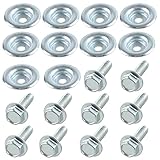
I remember staring at a pile of hardware, a mental fog thicker than any workshop dust settling in. I needed a specific bolt, a damn 307, and felt like I was deciphering an ancient script. Companies love to throw around jargon, and the world of fasteners is no different. It’s enough to make anyone want to just grab whatever looks vaguely right and hope for the best. But that’s how you end up with stripped threads and a project that’s going nowhere fast.
This isn’t some corporate seminar; it’s a straight talk about a 307 bolt data and what actually matters when you’re trying to get a job done. Forget the marketing fluff. We’re talking about the real deal, the stuff that saves you time, money, and a whole lot of frustration.
Cracking the Code: What ‘307 Bolt’ Even Means
Alright, let’s cut to the chase. When someone mentions ‘a 307 bolt data,’ they’re usually talking about a specific type of bolt defined by its size and thread pitch, often used in automotive applications.
The ‘307’ isn’t some magical number; it’s a designation, typically referring to a bolt that’s 3/8 inch in diameter with a 24 threads-per-inch (TPI) pitch. This is a fine thread, which is important. Think of it like this: finer threads mean more threads in the same amount of space, which generally leads to a stronger hold and less chance of stripping compared to coarser threads. For example, a standard 3/8-16 bolt (16 TPI) is coarser.
The 3/8-24 is the fine thread counterpart. You’ll often see this type of bolt used for things like intake manifold bolts on certain engines or other components where a secure, vibration-resistant connection is key.
The ‘data’ part usually refers to the specifications you need to know: diameter, thread pitch, length, material grade, and any relevant head type. Getting this wrong means the bolt either won’t fit, won’t hold, or will fail under stress. I learned this the hard way trying to replace a seemingly simple bolt on an old motorcycle carb. I grabbed what I thought was the right size, but the thread pitch was off by just a hair.
It looked like it was screwing in, but it was just mangling the threads in the carburetor body. Ended up costing me a whole lot more than just a bolt to get that repaired. So, understanding the difference between a 3/8-16 and a 3/8-24 is step one. It’s not rocket science, but it’s details that prevent headaches.
These fine threads are good for thin materials or when you need to make sure a very precise fit, as they distribute the load over a larger surface area within the threaded hole.
Material Matters: Don’t Skimp on Strength
This is where a lot of people, myself included early on, make a costly mistake. You can get a bolt that looks like a 307, but if it’s made of garbage material, it’s going to let you down. The ‘data’ here is often in the form of SAE grades.
For common 3/8-24 bolts, you’ll most often encounter Grade 5 or Grade 8. Let’s break that down, because it’s important. Grade 5 bolts are pretty standard, good for general-purpose fastening. They have three radial lines on the bolt head.
Grade 8 bolts, on the other hand, are significantly stronger. They have six radial lines on the head. These are made from a higher-strength steel alloy and are heat-treated to handle much higher tensile loads. For anything involving engines, suspension, or any part of a vehicle that experiences significant vibration or stress, you absolutely want Grade 8. (See Also: Are All Honda Atv Bolt Patterns The Same )
Trying to use a Grade 5 where a Grade 8 is specified is just asking for trouble. I once tried to cheap out on some suspension bolts, thinking they were ‘good enough.’ A few hundred miles later, I heard a terrifying clunk and found one of them had snapped clean off.
Never again. It’s not worth the risk, or the tow truck bill.
The material isn’t just about brute strength; it’s also about corrosion resistance. Stainless steel bolts are an option, especially if your project is exposed to the elements. However, stainless steel, especially certain grades, might not have the same sheer strength as a hardened alloy steel like that used in Grade 8.
So, the ‘a 307 bolt data’ needs to include not just the dimensions but also the material specification. If you’re working on a classic car or a restoration project where appearance is also key, you might be looking at plated bolts, like yellow zinc or black oxide. These offer some corrosion protection and a specific look, but the underlying material grade is still most important for structural integrity.
Always check what the original application called for, or err on the side of caution with a higher grade if you’re unsure.
Common Pitfalls and How to Avoid Them
Let’s talk about the screw-ups. We all make ’em, but understanding them helps you dodge them. The biggest pitfall with a 307 bolt, or any specific fastener, is assuming ‘close enough’ works.
As I mentioned, that slightly different thread pitch? It’s not ‘close enough.’ It’s wrong.
It will damage the threads in whatever you’re screwing it into, and that’s a repair job that’s far more expensive and time-consuming than buying the right bolt initially. Another common mistake is not considering the environment. Are you working on something that’s going to get wet?
Salty air? High heat? A standard steel bolt will rust itself into oblivion or seize up.
You might need stainless steel, or at least a bolt with a good corrosion-resistant coating. Don’t just grab the shiny chrome ones from the discount bin; they might look good, but their protective layer can be paper-thin. (See Also: Are Ak Bolts Interchangeable )
Then there’s the length. Too short, and you don’t get enough thread engagement for a secure hold. Too long, and it might bottom out before it tightens, or worse, it could interfere with other moving parts. Always measure the depth of the hole you’re screwing into and subtract the thickness of any components the bolt passes through to get the required bolt length.
A good rule of thumb for thread engagement is at least 1.5 times the bolt’s diameter for steel-to-steel connections. For softer materials, you might need more.
I’ve seen folks use impact wrenches on bolts that are too long or the wrong material, basically Shearing the bolt head off because they were over-tightening or the bolt couldn’t handle the shock. Patience and the right tool for the job are key. And for the love of all that is holy, use a torque wrench when a spec is provided.
Over-tightening is just as bad as under-tightening; it stretches the bolt and can weaken it, or strip the threads.
Real-World Applications: Where You’ll Find ’em
So, where does this specific ‘a 307 bolt data’ usually pop up? Primarily in automotive.
Think of engines. Many intake manifolds, especially on older V8s or certain inline engines, use a combination of coarse and fine thread bolts. The 3/8-24 fine thread bolts are often favored here because they allow for more precise tightening, which is important for sealing gaskets and preventing leaks under varying temperatures. They can also be found on exhaust manifolds, though those often require specific high-temperature alloys.
Beyond the engine bay, these bolts can appear in chassis components, sometimes in the steering system, or even in the transmission housing for certain covers or brackets. It’s about where a strong, reliable fastening is needed without the risk of it loosening up due to engine vibrations.
I remember working on a project car where the service manual explicitly called for 3/8-24 bolts for the oil pan. Not the standard 3/8-16. The reason? The oil pan is relatively thin aluminum, and the finer threads offer better clamping force and are less likely to strip the aluminum threads compared to the coarser pitch.
If you’re doing any kind of engine rebuild, transmission work, or even some body panel attachments on older vehicles, familiarizing yourself with these specific thread sizes is going to save you a massive headache. It’s not just about ‘a bolt’; it’s about the right bolt for the right job. This is why having a good reference chart or a reliable fastener supplier is worth its weight in gold. You don’t want to be halfway through an engine swap and realize you don’t have the one specific bolt size needed to put it back together.
Buying Smarter: Beyond the Local Hardware Store
Look, the local hardware store is great for a quick grab when you’re in a pinch. But if you find yourself needing specific fasteners like the 3/8-24 (our ‘307’ friend) regularly, or if you’re doing a large project, relying solely on them is going to drain your wallet. Their selection for specialized sizes and grades can be limited, and the markup can be significant. (See Also: Are All Bolt Patterns The Same )
I’ve learned to buy fasteners in bulk when I know I’ll need multiples. Websites specializing in industrial or automotive fasteners are your best friend. You can often buy a box of 50 or 100 Grade 8, 3/8-24 bolts for not much more than a handful from a retail store. This is a massive cost saving over time.
When you’re shopping online, pay attention to the descriptions. They should clearly state: diameter, TPI (threads per inch), length, material grade (e.g., SAE Grade 8, Stainless Steel 304/316), and head type (e.g., hex head, flange head).
Don’t just trust the picture. I once ordered what I thought were hex head bolts and got flange head ones; they didn’t fit the clearance I had.
If you’re unsure, look for reputable brands or sellers with good reviews. Sometimes, it’s worth spending a little extra for a known brand like ARP or Dorman, especially for important engine components, as their quality control is generally much higher. The ‘a 307 bolt data’ you’re looking for should be readily available and clearly presented by any decent fastener supplier. Also, consider getting a thread gauge tool; they’re cheap and invaluable for quickly identifying thread pitches when you’re not sure.
A Quick Comparison Table
Here’s a look at how common 3/8 inch bolts stack up. This is simplified, of course, but it highlights the key differences you’ll encounter.
| Specification | Common Use Case | Material/Grade | Opinion/Verdict |
|---|---|---|---|
| 3/8-16 UNC (Coarse) | General purpose, structural, sheet metal | Grade 2, 5, 8 | Reliable for many tasks, but prone to loosening under vibration. Good for thick materials. |
| 3/8-24 UNF (Fine) | Automotive (engines, chassis), precision assemblies | Grade 5, 8, Stainless | Stronger hold, better vibration resistance, less thread stripping risk in thin materials. Often preferred for important applications. |
| 3/8-24 UNF (Fine) Stainless Steel | Corrosive environments, marine, food grade | 304, 316 | Excellent corrosion resistance. Strength can be lower than Grade 8 steel, so make sure it meets load requirements. Looks good too. |
What Is the Difference Between a 3/8-16 and a 3/8-24 Bolt?
The primary difference is the thread pitch. A 3/8-16 bolt has 16 threads per inch (coarse thread), while a 3/8-24 bolt has 24 threads per inch (fine thread). Fine threads offer more thread engagement in a given length, leading to greater tensile strength and better resistance to loosening from vibration. Coarse threads are easier to thread and less prone to cross-threading.
What Grade of Bolt Is Typically a ‘307 Bolt’?
While ‘307’ itself doesn’t denote grade, the common 3/8-24 fine thread bolt is frequently found as SAE Grade 5 or SAE Grade 8 in automotive applications. Grade 8 is significantly stronger and is preferred for high-stress situations due to its higher tensile strength and hardness.
Can I Use a Coarse Thread Bolt Where a Fine Thread Is Specified?
No, you absolutely should not. While they both have the same diameter, the thread pitch is different. Forcing a coarse thread bolt into a fine thread hole (or vice-versa) will damage the threads in both the bolt and the mating part, potentially ruining the component and requiring costly repairs.
Are Stainless Steel Bolts Strong Enough for Automotive Use?
Yes, many stainless steel bolts are strong enough, especially grades like 316. However, they may not reach the same tensile strength as hardened alloy steel bolts like SAE Grade 8. For important high-stress areas, always compare the specific tensile strength ratings and consult your application’s requirements to make sure the stainless steel bolt is adequately strong for the load it will bear.
Conclusion
So, there you have it. The seemingly simple ‘a 307 bolt data’ is more than just a few numbers; it’s a set of specifications that can make or break your project. Don’t get caught out by vague descriptions or the temptation to grab whatever’s cheapest. Understanding thread pitch, material grade, and application is the difference between a job done right and a costly repair down the line.
My advice? Keep a small notebook in your toolbox or on your phone dedicated to fastener specs for your common projects. When you find a bolt that works perfectly, jot down its exact dimensions and grade. It’s a small step that saves huge headaches later.
Next time you’re staring at a hardware aisle or browsing online, remember this. It’s the details, the often-overlooked ‘a 307 bolt data,’ that truly matter in the long run. Now, go forth and fasten with confidence.