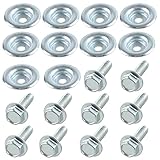
I remember the first time I saw a “320 bolt” listed for a project. I blinked. Was this some sort of specialized, high-tech fastener I’d never heard of? Or was it just… a bolt? After years of wrestling with hardware stores, online listings that looked like hieroglyphics, and the sheer frustration of buying the wrong thing for the umpteenth time, I’ve learned a thing or two. Especially about fasteners that sound more complicated than they are.
Let’s cut to the chase: often, the fancy name doesn’t mean a fancy difference. But sometimes, it absolutely does. And when you’re in the middle of a build, a repair, or just trying to hang a shelf, getting it right the first time saves you time, money, and a whole lot of yelling.
What the Heck Is a ‘320 Bolt’ Anyway?
Honestly, most of the time when you see ‘a 320 bolts’ in a product description or a parts list, it’s not some magical, hyper-engineered fastener. It’s usually just a standard bolt that happens to be listed with a specific, often internal, part number or a size combination that, when you break it down, is fairly common. For instance, a “320” might refer to a specific thread pitch and length combination for a particular manufacturer or industry standard. Think of it like a model number for a screw. The ‘320’ itself doesn’t tell you the material, the head type, or the strength rating inherently, though it’s often associated with a particular set of those specs within a given catalog.
My first real encounter with this was when I was helping a buddy rebuild an old motorcycle. The service manual listed a bunch of these obscure part numbers. We spent hours trying to decipher what they actually were in layman’s terms. Was a ‘410’ bolt different from a ‘320’ bolt in any practical way?
Usually, no. It boils down to how the manufacturer or the seller categorizes their inventory. They need a way to identify thousands of different fasteners, so they use alphanumeric codes. The ‘320’ is just one of those codes.
It’s like calling your dog ‘Fido’ instead of ‘the golden retriever with the floppy ears.’ Fido is specific, but it doesn’t tell you much about his breed without more context.
The real danger here is that you might see ‘a 320 bolts’ and assume it’s something unique, prompting you to pay a premium or get it from a specific, expensive supplier. In reality, you might be able to get the exact same functional bolt from your local hardware store for a fraction of the cost. Or, you might find that the ‘320’ designation is tied to a specific grade of steel or a particular plating that is important for your application. That’s the tricky part. It’s a bit of a guessing game unless you know the system the code comes from.
So, before you chase down a ‘320 bolt’ specifically, do yourself a favor: find out what the actual dimensions and specifications are. Usually, a part number like this is linked to a table of dimensions (diameter, length, thread pitch) and material properties (grade, plating). That’s the information you actually need to source a replacement or an equivalent. Don’t get bogged down by the number itself; get bogged down by the specs it represents. This is a common pitfall for DIYers and even some professionals who haven’t dealt with that specific catalog before.
Decoding Bolt Specifications: What ‘320’ Usually Means in Practice
Let’s get down to brass tacks. When you encounter ‘a 320 bolts’ or any similar alphanumeric designation, the first thing you need to do is ignore the number itself as a primary identifier of what it is. Instead, focus on the underlying specifications that number represents within a specific context. This is where the real knowledge lies, and where most people get tripped up. They see a number and assume it’s a standard size or type, when in fact, it’s often a manufacturer’s internal code that correlates to those standard specs. It’s like a secret handshake for inventory management.
What are those important specs? First and foremost, diameter. Is it a 1/4-inch bolt, a 5/16-inch, an M6, or an M8? This is usually denoted by the first part of the actual measurement, like ‘1/4’ or ‘M8’. Then comes length. This is typically measured from where the head sits down to the end of the bolt. For bolts with a flat head, it’s the total length. For bolts with a hex head or other protruding head, it’s usually measured from under the head. Common lengths are 1 inch, 2 inches, 50mm, etc. Get this wrong, and your bolt might be too short to engage properly or too long, sticking out where it shouldn’t. (See Also: Are All Honda Atv Bolt Patterns The Same )
Next, and this is often overlooked by beginners, is the thread pitch. This refers to how many threads are per inch (for imperial sizes, like 20 TPI for a common coarse thread) or the distance between threads (for metric sizes, like 1.25mm for a common metric thread).
Using the wrong thread pitch is a classic mistake that leads to a bolt not screwing in at all, or worse, cross-threading and ruining the nut or the hole it’s supposed to go into. Imperial fasteners often come in Coarse (UNC) and Fine (UNF) threads. Metric fasteners have a standard pitch and sometimes a fine pitch. A ‘320’ designation might be tied to a specific pitch, say, a 1/4-20 UNC, meaning 1/4 inch diameter, 20 threads per inch, Unified National Coarse.
Beyond the dimensions, you absolutely must consider the material and grade. This dictates the bolt’s strength and its resistance to corrosion. Common materials include various grades of steel (like Grade 2, 5, or 8 for imperial, or Class 4.6, 8.8, 10.9 for metric) and stainless steel. Stainless steel itself comes in different grades (like 304 or 316), offering varying levels of rust resistance. Plating also matters – zinc plating is common for indoor or mild outdoor use, while galvanizing offers better corrosion protection for harsher environments. If ‘a 320 bolts’ is meant for structural integrity or outdoor exposure, its grade and plating are far more important than its arbitrary part number.
Common Mistakes When Buying Fasteners
Buying the wrong bolt is an art form of its own, and I’ve mastered several techniques over the years. The most frequent blunder, as I’ve touched on, is chasing a part number like ‘a 320 bolts’ without understanding the underlying specifications.
You end up with something that looks vaguely right but is dimensionally or materially wrong. I once bought a pack of what were supposed to be M6 bolts for a bike fairing. They screwed in, but felt loose. Turns out, they were M6 with a fine thread pitch (M6x0.75) when the bike needed the standard coarse thread (M6x1.0).
They fit, but they weren’t structurally sound. Cost me an extra $20 and a day’s delay to get the right ones.
Another common slip-up is confusing imperial and metric measurements. They look similar but are completely incompatible. Trying to force an imperial bolt into a metric nut (or vice versa) is a recipe for stripped threads and a ruined component. Always double-check if your project calls for imperial (inches, fractions, TPI) or metric (millimeters, pitch) fasteners. If a part number doesn’t clearly state it, look for other clues or context. Sometimes, just the country of origin of the equipment can be a hint.
Then there’s the strength/grade issue. Using a low-grade bolt where a high-grade one is specified is asking for trouble. Imagine using a standard hardware store bolt (often Grade 2 equivalent) for a important suspension component that calls for Grade 8. It might hold for a while, but it’s a disaster waiting to happen. Conversely, over-specifying can also be a waste of money. You don’t need Grade 8 bolts to hang a picture frame. Look at the original fastener if possible, or consult the manual or engineering drawings for the correct grade. It’s usually stamped on the head of the bolt.
Finally, don’t underestimate the impact of corrosion resistance. Using standard steel bolts outdoors or in damp environments will lead to rust, which can seize the bolt, make it difficult to remove later, and weaken it over time. If the original fastener was stainless steel or coated (like galvanized or ceramic coated), you should aim to replace it with something of similar or better corrosion resistance. I learned this the hard way when a garden gate I built started looking sad and rusty after just one winter because I’d used plain zinc-plated bolts instead of galvanized ones. They still worked, but they looked terrible and were a pain to adjust later. (See Also: Are Ak Bolts Interchangeable )
My Experience: When the ‘part Number’ Lied (sort Of)
I was working on restoring an old industrial workbench. It had this incredibly heavy, solid oak top, and underneath, a cast iron frame bolted together with what seemed like hundreds of these beefy bolts. The original supplier for the replacement parts listed them under a code that, when translated, sounded a lot like what someone might call ‘a 320 bolts’ in a generic context – basically, a specific type of heavy-duty, black oxide finished, hex head bolt. They were priced like gold.
Now, I’m not one to shy away from a challenge, and I’m also notoriously cheap when I don’t have to be. I figured, “How different can a bolt be?” So, I went to a local industrial fastener warehouse, armed with the dimensions of the bolts I needed: diameter, length, thread pitch, and the fact that they were black oxide finished. I bypassed their suggestions for ‘exact replacements’ at $8 a pop and instead asked them to find me the closest equivalent in their bulk bins. We spent maybe an hour sifting through bins. I found bolts that matched the dimensions perfectly, had the correct thread, and were also black oxide finished.
The surprise? They looked almost identical. The weight felt the same. They screwed in perfectly. The only difference I could discern was that the ones I bought from the warehouse had a slightly more pronounced chamfer on the edge of the hex head. That’s it. And the total cost for all the bolts I needed? About $35, compared to the $200+ quoted by the ‘specialty’ supplier. It was a revelation. The part number they were using was likely just a proprietary code for a very standard, albeit high-quality, industrial bolt. They were selling peace of mind and perceived exclusivity, not necessarily a fundamentally different product.
This experience taught me to always prioritize the actual specifications over a cryptic part number. Unless you’re dealing with highly specialized aerospace or medical-grade components where tolerances are measured in microns and material purity is most important, most ‘special’ fasteners are just standard items dressed up in expensive packaging. The common advice to ‘always use OEM parts’ or ‘stick to the manufacturer’s part number’ is often given by people who either don’t know how to find equivalents or who benefit from you buying overpriced parts. For the average DIY project or repair, understanding the specs will save you a fortune. It’s about knowing what to ask for, not just what number to look for.
Practical Tips for Sourcing Bolts
When you’re hunting for specific fasteners, especially if you’ve stumbled upon a designation like ‘a 320 bolts’ and need to figure out the real deal, there are a few strategies that have saved my bacon more times than I care to admit. Firstly, always try to get the original bolt or a clear picture of it. The head often has markings indicating the grade (like ‘8’, ‘8.8’, ‘10.9’).
Measure the diameter with calipers if you have them, or use a ruler and a known-size object for comparison. Measure the length. Then, try to determine the thread pitch. A quick way is to use a thread gauge, or if you don’t have one, try screwing a known-thread nut onto it.
If it’s a common size, you might be able to guess the pitch.
Secondly, once you have the important dimensions (diameter, length, pitch) and the grade/material, you have options. Your local hardware store is a good starting point for common sizes and grades. For a wider selection, especially specialty materials like stainless steel, exotic alloys, or specific plating, industrial fastener suppliers are your best bet. These places often have huge inventories and knowledgeable staff who can help you find exactly what you need, and usually at much better prices than online general retailers or specialty auto/industrial part sites. Some online retailers also specialize in fasteners and offer a vast catalog.
Thirdly, don’t be afraid to use online resources. Manufacturer websites often have detailed spec sheets that can help you cross-reference part numbers to actual dimensions and grades. There are also forums and communities dedicated to specific types of projects (like automotive restoration or woodworking) where you can ask for advice and get recommendations for suppliers or equivalents. I’ve posted pictures of obscure fasteners and had people chime in with “Oh yeah, that’s just a standard 1/4-28 UNF socket head cap screw, you can get those from McMaster-Carr for practically nothing.” (See Also: Are All Bolt Patterns The Same )
Finally, consider buying in bulk if you’re doing a larger project or anticipate needing them again. Many suppliers offer significant discounts for larger quantities. It might seem like overkill to buy 100 bolts when you only need 4, but if the price per bolt drops dramatically, it can be worth it. Just make sure you’re storing them properly so they don’t get lost or corroded before you need them. And always keep a few spares of important fasteners; you never know when one might go missing or get damaged during a project.
Contrarian View: When ‘part Numbers’ Actually Matter
Okay, so I’ve been pretty vocal about how part numbers like ‘a 320 bolts’ are often just arbitrary labels for standard items. And for the most part, I stand by that. However, there’s a scenario where these specific designations can matter, and it’s usually in highly specialized, regulated, or proprietary systems. Think about aerospace, medical devices, or even some high-performance automotive applications. In these fields, the ‘320’ might not just be a size designation; it could refer to a specific material batch control, a unique heat treatment, a special plating process with very tight tolerances, or a combination of factors that are absolutely important for performance, safety, and regulatory compliance.
If you’re working on a modern jet engine or a piece of important medical equipment, trying to substitute a ‘standard’ bolt that looks the same but wasn’t manufactured under the same stringent controls and certifications is not just risky – it’s potentially catastrophic. In these cases, the manufacturer’s part number is not just a suggestion; it’s a specification that guarantees a level of quality, reliability, and traceability that generic fasteners simply cannot provide. The cost premium is there for a reason: it covers the rigorous testing, quality assurance, and documentation required for these high-stakes applications.
So, while I advocate for understanding the specs and finding equivalents for most common DIY and repair tasks, I’m not saying all part numbers are meaningless. If you’re dealing with safety-important systems, or if the manufacturer explicitly states that only their specified parts should be used (often with good reason), then yes, you need to find the exact part number or a certified equivalent. My personal experience with the workbench was on an item that was solid but not safety-important in the same way. Always assess the risk and importance of the component you’re working on. For most of us, though, the ‘320’ is just noise.
People Also Ask:
What Size Is a 320 Bolt?
The designation ‘a 320 bolts’ itself does not specify a standard size. It’s likely an internal part number or code used by a specific manufacturer or supplier. To determine the actual size, you need to find the specifications associated with that code, which will include its diameter (e.g., 1/4 inch, M8), length, and thread pitch (e.g., 20 TPI, 1.25mm). Always look for these measurements rather than relying on the arbitrary part number.
Are 320 Bolts Metric or Imperial?
The designation ‘a 320 bolts’ does not inherently tell you whether it’s metric or imperial. This code is manufacturer-specific. You must consult the product’s specifications or the manufacturer’s catalog to determine if the bolt is measured in inches and TPI (imperial) or millimeters and pitch (metric). The associated dimensions will clarify this.
What Is the Difference Between a 320 and a 410 Bolt?
The difference between ‘a 320 bolts’ and ‘a 410 bolts’ is purely a matter of how those specific part numbers are defined within a particular company’s catalog or system. There is no universal standard where a ‘320’ is inherently different from a ‘410’ in a way that applies across all fasteners. You need to look at the actual specifications (diameter, length, thread, grade, material) for each designation to understand any real differences.
What Does Grade 320 Mean for Bolts?
There is no widely recognized standard grade designation of ‘320’ for bolts in either the imperial or metric systems. Common imperial grades are 2, 5, and 8, while metric grades include 4.6, 8.8, 10.9, and 12.9. If you see ‘320’ associated with a bolt, it is almost certainly a manufacturer’s proprietary part number or an internal inventory code, not a universal grade identifier.
Final Thoughts
So, what have we learned about designations like ‘a 320 bolts’? Mostly, that they’re a pain in the neck if you don’t know what you’re doing. They sound specific, but they often just point to a common bolt with standard dimensions and properties. My advice? Don’t get hung up on the number. Get hung up on the specs: diameter, length, thread pitch, and grade. That’s the real information you need to find what works.
In most everyday situations, whether you’re fixing something around the house or working on a hobby project, understanding these core specifications will save you time, money, and frustration. You can likely find what you need at a fraction of the price from an industrial supplier or even a well-stocked hardware store, simply by knowing the actual requirements.
If you’re ever in doubt, take a picture, measure carefully, and ask questions. Chances are, the bolt you need isn’t some exotic item, but a workhorse fastener that’s readily available if you know how to ask for it. Just remember my workbench story – sometimes the fancy label is just that: a label.