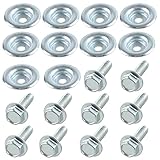
Look, I’ve been there. Staring at a project, needing just the right fastener, and ending up with a drawer full of junk that doesn’t quite fit. It’s a special kind of frustration, especially when you’re trying to get something done and a simple bolt is holding you back. That’s why I wanted to talk about a 325 bolts fastenal, or rather, what that designation actually means and how to avoid buying the wrong thing.
Too many times, I’ve bought what I thought was the right size or type, only to discover it was completely useless. We’re not talking about rocket science here, but there’s enough jargon and enough slightly-different-but-still-wrong options out there to make your head spin.
So, let’s cut through the noise. What are we really dealing with when we talk about these specific bolts, and what should you actually be looking for?
What the Heck Is a 325 Bolt, Anyway?
Honestly, if you’re asking “what is a 325 bolts fastenal?” in the first place, you’re probably in the same boat I was a decade ago. It’s not a universally recognized, standard bolt size like a 1/4-20 or an M6. Instead, that ‘325’ is almost certainly a manufacturer-specific part number or internal code. Fastenal, being a massive distributor, carries an absurd number of products, and they often use their own numbering systems to track them. So, when you see ‘325’ in relation to a bolt from Fastenal, it’s not telling you the diameter, thread pitch, or grade in a way that makes sense to the average DIYer or even a lot of tradespeople who don’t exclusively buy from them.
This is where the confusion starts. You might search for ‘325 bolt’ and get a bunch of results from Fastenal, but without knowing what kind of bolt it is – machine bolt, carriage bolt, lag bolt – and its actual dimensions, you’re still flying blind. I once spent an embarrassing amount of time trying to find a replacement bolt for a garden shed hinge. I knew the old one came from Fastenal, and I thought I remembered the number. Big mistake. I ended up with a box of bolts that looked similar but had a slightly different head and thread, meaning they wouldn’t seat properly. Wasted about $40 and a whole Saturday afternoon.
The lesson learned? That number ‘325’ is a pointer, not a specification. It’s the first clue in a scavenger hunt, not the answer itself. You need to dig deeper. What you really need to know are the fundamental characteristics of the bolt you’re looking for: material, diameter, length, thread type (coarse or fine), and head style. Fastenal’s internal part numbers are designed for their inventory management, not necessarily for intuitive customer understanding. So, if you’re holding an old bolt and see ‘325’ on the packaging, your next step is to use that as a starting point to find the actual specs.
Decoding Bolt Specs: What Really Matters
Forget the ‘325’ for a minute. When you’re buying any bolt, especially from a place with as many options as Fastenal, you need to understand the actual specifications. This is where you stop guessing and start knowing. Let’s break down the important bits.
First up is material. Are we talking steel? Stainless steel? Brass?
Alloy steel for high strength? For most general-purpose stuff around the house – furniture, basic repairs, light framing – plain zinc-plated steel is usually fine. It’s cheap and does the job.
But if it’s going to be exposed to moisture, like outdoors or in a damp garage, you’ll want something like stainless steel or at least a galvanized coating to prevent rust. I learned this the hard way when a deck railing I put up started showing rusty streaks after the first rainy season. The bolts looked okay, but the staining was a mess. Stainless steel would have cost a bit more upfront, but saved me the headache of replacing them later and looking like a hack.
Diameter and Length are pretty self-explanatory, but you need to be precise. Diameter is usually in inches (like 1/4”, 5/16”, 3/8”) or millimeters (M6, M8, M10). Length is measured from where the bearing surface (the part under the head) meets the shaft to the very end of the bolt. Make sure you’re measuring the right thing – don’t include the part of the bolt that might be sticking out past the nut.
Thread pitch is a big one. Are the threads coarse (like typical wood screws) or fine? Coarse threads are more common for general use and go in faster. Fine threads offer a more precise fit and are less likely to loosen under vibration, but they’re also more prone to cross-threading if you’re not careful. For most applications, coarse is standard. (See Also: Are All Honda Atv Bolt Patterns The Same )
Finally, head style. Hex head (the classic six-sided bolt head you use a wrench on) is the most common for general fastening. Pan head, button head, socket head (Allen head) – they all have their place depending on the tool you have available and the clearance you’re working with. Socket heads are great for tight spots where a wrench won’t fit, and they look cleaner too.
If you have an old bolt, take it with you to Fastenal or a similar store. Even if you don’t know the ‘325’, you can compare it directly. Measure it, check the thread with a nut if you have one, and look at the head. That’s your best bet for a match.
Common Pitfalls and How to Dodge Them
So, you’ve figured out the specs. Great. Now, let’s talk about how people mess this up, because believe me, I’ve been part of that crowd.
The biggest mistake, as hinted at with the ‘325’ debacle, is relying on an internal part number or a vague description. If you’re not 100% sure what ‘325’ means in terms of actual dimensions and type, don’t buy it based on that number alone. Always verify the physical characteristics. This applies to online ordering too – read the description carefully. Look for diameter, length, thread pitch, and head type. Don’t just go by the picture or a generic name.
Another common blunder is buying the wrong grade of bolt. For most DIY stuff, a Grade 2 or Grade 5 bolt (in the US system) is plenty strong.
These are often zinc-plated. If you’re doing anything structural, or anything that needs to withstand significant stress or vibration, you’ll need higher grades like Grade 8 or even specialized alloys. Using a low-grade bolt where a high-grade one is needed is a recipe for failure.
I saw a friend’s custom bike rack come loose because he used hardware store bolts that looked fine but weren’t rated for the dynamic load. Luckily, no one was hurt, but it was a close call.
Fastenal will stock various grades, so make sure you’re looking at the specs if the application demands it. For most home projects, though, you’re probably overthinking it if you’re worrying about grades beyond the standard ones.
People also get tripped up on thread engagement. You need enough threads from the bolt to engage with the nut or the tapped hole. A general rule of thumb is that the bolt should pass through the material and have at least a couple of full threads showing beyond the nut. If the bolt is too short, you won’t have enough threads for a secure connection. Conversely, if it’s excessively long, it can get in the way, bend, or be a hazard. Always consider the combined thickness of the materials you’re joining.
Lastly, and this is a pet peeve of mine: using the wrong tool. Trying to tighten a hex bolt with pliers? Stripping the head of a socket cap screw because you used the wrong size Allen key? It’s sloppy, it damages the fastener, and it makes the job look unprofessional. Invest in a decent set of wrenches, sockets, and Allen keys. It’s a small cost that pays dividends in frustration saved and quality of work.
Here’s a quick table to help you visualize some common bolt types you might encounter, even if you don’t know the specific Fastenal number: (See Also: Are Ak Bolts Interchangeable )
| Bolt Type | Head Style | Typical Use | My Verdict |
|---|---|---|---|
| Hex Bolt | Hexagonal | General assembly, construction, machinery. Needs wrench. | The workhorse. Reliable and versatile. |
| Carriage Bolt | Domed, smooth head with square neck | Wood construction, fences, gates. Square neck prevents turning. | Good for applications where you don’t want the head to spin. A bit clunky for fine work. |
| Socket Cap Screw | Cylindrical, recessed hex (Allen) drive | Machinery, tight spaces, where a clean look is desired. Needs Allen key. | Excellent for precision and limited clearance. Looks sharp. |
| Lag Bolt | Hex head, coarse wood-thread shank | Attaching heavy items to wood (e.g., ledger boards). Needs wrench and often a pilot hole. | The go-to for serious wood connections. Don’t skimp on the pilot hole. |
Real-World Applications: Where the Rubber Meets the Road
Let’s put this into practice. Where do you typically encounter situations where you might be looking for a specific bolt, maybe one that was a ‘325’ in someone’s inventory?
Think about furniture assembly. I recently had to replace a few bolts on a solid oak dining table that had worked themselves loose over the years. The original bolts were hex head, maybe 5/16” diameter and about 2 inches long, with coarse threads. They went into threaded inserts in the wood. Getting the exact length and diameter was key so they would seat properly without bottoming out or not being long enough to provide a secure grip. I took one of the old bolts to the hardware store, and they were able to match it up perfectly by sight and measurement. No part number needed.
Another common scenario is repairing outdoor equipment. A lawnmower deck, a wheelbarrow frame, or even a swing set might use standard bolts. Rust can be a major enemy here. If the old bolts are corroded, you’ll want to replace them with stainless steel or at least hot-dip galvanized bolts to prevent future issues. The size and type will depend on the original component, but it’s usually straightforward to measure and compare. I remember fixing a wheelbarrow where the axle bolts had rusted through. I found standard stainless steel bolts of the same diameter and length at Fastenal, along with matching nuts and lock washers. It felt like a pro repair.
What about a garden gate? Those often use carriage bolts to attach the hardware (hinges, latches) to the wood. The smooth, domed head on the outside prevents tampering, and the square neck under the head stops the bolt from spinning when you tighten the nut on the other side. If you’re replacing one, you need to match the diameter and length, and make sure the square neck fits snugly into its recess. If you don’t have the old one, you’ll have to measure the thickness of the gate and the hardware pieces you’re attaching.
And let’s not forget simple shelving units or basic framing. For these, a standard hex bolt or lag bolt (if going into wood studs) is usually the ticket. The main considerations are length – making sure it’s long enough to go through your material and into the anchor point (like a nut, a threaded insert, or wood) securely – and diameter, which determines the strength. For shelves, you might be using something like a 1/4”-20 bolt, a very common size.
The key takeaway across all these examples is that the specific, manufacturer-assigned part number is secondary to understanding the bolt’s actual physical characteristics. If you’re holding an old bolt, bring it. If you’re looking at a project, measure what you need to join.
Contrarian View: When the Cheapest Bolt Isn’t the Best
Here’s something that goes against the grain for a lot of DIY folks, myself included sometimes: not all bolts are created equal, and the cheapest option isn’t always the smartest buy. Everyone looks at a bolt and thinks, ‘It’s just a piece of metal, how different can they be?’ And for many low-stress applications, they’re right. But when it comes to anything load-bearing, safety-important, or exposed to the elements, going for the absolute cheapest option can cost you more in the long run.
Take stainless steel versus zinc-plated steel. You’ll often see a significant price difference. Zinc-plated bolts are cheaper, and for a bolted joint in a dry, indoor environment, they’re perfectly adequate.
But if that joint is going to be outside, exposed to rain, humidity, or salt spray, those zinc-plated bolts are going to start rusting, and fast. That rust can weaken the bolt over time, and it looks terrible, staining whatever it’s attached to.
I once built a custom workbench for my garage using what I thought were good, sturdy bolts. But my garage gets humid in the summer, and within two years, I was seeing rust spots everywhere. I ended up having to replace half of them with stainless steel.
That’s double the cost and double the work. So, while a plain steel bolt might be $0.20 and a stainless one $1.00, that $0.80 difference can save you a lot of grief down the road. (See Also: Are All Bolt Patterns The Same )
Another area is thread quality. Cheaper bolts, especially from less reputable sources, might have poorly formed threads.
This can lead to stripping when tightening, difficulty in getting a nut started, or a weaker connection overall. I’ve had instances where I struggled to get a nut to thread onto a bolt, only to find out the threads were rough and inconsistent.
This isn’t just annoying; it can compromise the integrity of the joint. If a bolt is supposed to hold something important together, a few extra cents for a better-manufactured bolt can make all the difference. Fastenal, being a professional supplier, generally stocks better quality fasteners than your average big-box home improvement store’s cheapest line, but it’s still worth paying attention to the material and any visible quality issues on the threads or head.
Faqs About Fasteners
What Does a 325 Bolts Fastenal Mean?
The designation ‘325’ in relation to a Fastenal bolt is almost certainly an internal part number or code used by Fastenal for inventory management, not a universal standard measurement of its size or type. It indicates a specific item within Fastenal’s vast catalog but does not directly tell you the bolt’s diameter, thread pitch, length, or material. You need to look for the actual specifications of the bolt itself.
How Do I Measure a Bolt for Replacement?
To measure a bolt for replacement, you’ll need to determine its diameter, length, thread pitch, and head type. Diameter is the measurement across the widest part of the threads. Length is typically measured from just under the head to the end of the bolt. Thread pitch is the distance between the crests of the threads (coarse or fine). For head type, note if it’s hex, round, socket, etc. If you have the old bolt, take it with you to compare.
Are There Different Grades of Bolts?
Yes, bolts come in different grades, which indicate their strength and load-carrying capacity. In the US, common grades include Grade 2 (low strength), Grade 5 (medium strength), and Grade 8 (high strength), often identified by markings on the head. Higher grades are made of stronger materials and heat-treated for increased durability. The required grade depends on the stress the fastener will endure.
What’s the Difference Between Coarse and Fine Thread Bolts?
Coarse thread bolts have larger, more widely spaced threads and are more common for general use. They are easier to start and thread in quickly. Fine thread bolts have smaller, more closely spaced threads, offering a more precise fit and greater resistance to loosening from vibration, but they are more prone to cross-threading and require more turns to install.
Should I Use Lock Washers?
Lock washers are designed to help prevent fasteners from loosening due to vibration. They work by creating tension between the bolt head (or nut) and the surface. While they can be helpful in certain applications, especially those prone to shaking or vibration, they are not always necessary and can sometimes damage the surface they are compressing. For many static applications, a standard nut and bolt or a nylon insert lock nut might be sufficient or even preferable.
Verdict
So, when you’re dealing with something like a 325 bolts fastenal, remember that the number is just a key to a specific product in a massive catalog. It’s not the blueprint for what you need. The real knowledge lies in understanding the fundamental specs: diameter, length, thread pitch, material, and head style.
Don’t get caught out by a meaningless part number. Measure twice, buy once. And if you’re tempted by the absolute cheapest option, pause for a second and consider if the potential for rust, weakness, or just plain annoyance is worth the small upfront saving.
Next time you’re at Fastenal or any hardware store, armed with this knowledge, you’ll be able to confidently pick out exactly what you need, whether it’s that specific ‘325’ bolt or any other fastener for your project.