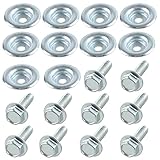
I remember the first time I stared at a pile of mismatched screws and bolts after a DIY disaster. It was a mess, a literal representation of wasted money and time. My workbench looked like a hardware store exploded, and finding the one specific piece I needed was like searching for a needle in a haystack. That’s why I was cautiously optimistic when I first heard about pre-packaged kits, especially something like a 325 bolts collection. Could this finally be the answer to my chaotic workshop woes?
Honestly, I rolled my eyes a bit. ‘Another gimmick,’ I thought. But the sheer frustration of digging through bins for hours finally pushed me to give one a shot. It’s not about perfection; it’s about getting things done without losing your mind.
Why I Gambled on a 325 Bolts Assortment
Look, nobody enjoys buying fasteners. It’s a chore. You go to the hardware store, you stare at wall after wall of metal bits, and you hope you’re grabbing the right size and thread pitch. More often than not, I’d end up with a handful of things that looked close enough, only to realize halfway through a project that I was wrong.
This usually meant another trip to the store, more wasted gas, and a project delayed by a stupid bolt. My first real ‘aha!’ moment with a dedicated fastener kit came after I tried to reassemble an old bike.
I needed a specific shoulder bolt for the derailleur, and I swore I had one. Hours later, covered in grease and frustration, I admitted defeat and drove to three different stores before finding a bolt that sort of fit. It was a terrible experience, and that’s when the idea of having a readily available supply, like a 325 bolts kit, started to sound less like a luxury and more like a necessity.
The appeal is simple: convenience. Instead of buying bags of 10 or 20 of a specific bolt size that you might only need once, a kit offers a variety. It’s like a sampler platter for your toolbox. You get a taste of many different types and sizes, so when that unexpected need arises, you’re more likely to have it on hand. I’ve learned the hard way that ‘close enough’ is usually just ‘wrong’ waiting to happen, leading to stripped threads, wobbly assemblies, and the nagging feeling that you’ve just made a project harder than it needed to be. This isn’t about having every single bolt imaginable; it’s about having enough of the common ones to avoid those frustrating roadblocks.
What to Actually Look for (beyond the Count)
When I’m eyeing a 325 bolts kit, the number itself is just a marketing hook. What really matters is the composition of that kit. Are they all tiny little things you’d use for model airplanes, or is there a decent spread of sizes that an actual human being would use for, you know, actual projects?
I’ve seen kits advertised with hundreds of pieces that were mostly #4 or #6 machine screws. That’s not helpful for building a bookshelf or fixing a fence. You want a good mix of common bolt types: machine bolts, carriage bolts, maybe some lag screws if you’re lucky.
Material is another big one. Most decent kits will be stainless steel or zinc-plated carbon steel. Stainless is great for outdoor use or anything that might get wet, as it resists rust like a champ. Zinc-plated steel is a good all-rounder for indoor projects and offers decent corrosion resistance, but it’s not as tough as stainless.
Avoid kits that don’t specify the material, or worse, use generic ‘steel’ – that’s usually a sign they’re cutting corners.
I once bought a kit that bragged about its sheer volume, but when I got it home, I realized nearly 80% of the bolts were metric M3 and M4 sizes. My projects are almost exclusively imperial. So, it was practically useless to me. (See Also: Are All Honda Atv Bolt Patterns The Same )
That’s a mistake you don’t make twice. You need to look at the breakdown. Does the seller provide a list of what’s actually in the box?
Most reputable kits will give you a general idea, like ‘M6, M8, M10 bolts’ or ‘1/4 inch, 5/16 inch, 3/8 inch’. If they don’t, consider it a red flag. Also, pay attention to the grade of the bolt.
For most DIY stuff, Grade 2 or Grade 5 (or equivalent metric grades) are fine. If you’re doing anything structural or high-stress, you’ll need higher grades, and frankly, you’re probably better off buying those specifically rather than hoping they’re in a mixed kit.
What’s Inside a Typical 325 Bolts Kit?
A typical 325 bolts kit is designed to offer a broad selection of common fasteners. You’ll usually find a mix of machine bolts (with hex heads), carriage bolts (with a rounded head and square neck), and sometimes other specialty bolts like set screws or eye bolts. The sizes can vary wildly, but a good kit will include common imperial sizes like 1/4-20, 5/16-18, and 3/8-16, along with their metric counterparts like M6, M8, and M10. The lengths will also be diverse, often ranging from 1/2 inch up to 2 or 3 inches. The materials are usually zinc-plated steel for general use, or stainless steel for better corrosion resistance.
The Big Mistake I Made (and You Should Avoid)
My biggest blunder with these kinds of kits was assuming that just because a bolt looked right, it was right. I had a cheap kit, and I was building a custom shelving unit. I needed some sturdy bolts to hold the main supports together.
I grabbed what I thought was a 3/8-inch carriage bolt from the kit. It went in fine, seemed snug.
A few weeks later, I loaded up the shelves with books – you know, normal stuff. The whole unit started to sag ominously.
Turns out, the bolt I’d used wasn’t a true 3/8 inch; it was slightly undersized, and the thread pitch was also a bit off, meaning it wasn’t gripping the nut as securely as it should. It was a disaster waiting to happen, and thankfully, no one was hurt. I ended up having to dismantle the whole thing, buy proper, heavy-duty hardware, and rebuild it.
That kit went straight into the scrap metal bin. I learned that day that quality and accuracy matter far more than quantity. A kit with 325 bolts that are all slightly off is worse than a kit with 50 perfectly sized ones.
The lesson here is simple: don’t just trust the label or the visual. If a project is structural, load-bearing, or safety-related, always double-check the fasteners. Use a thread gauge if you have one, or at least try to thread a known good nut onto the bolt to make sure the pitch is correct. For less important things, like attaching a decorative bracket or reassembling a drawer pull, a kit can be a lifesaver. But for anything that could fail and cause damage or injury, it’s always better to buy individual, known-quality fasteners from a reliable source. The temptation to just grab something from the kit is strong, but the potential consequences are too high to ignore. (See Also: Are Ak Bolts Interchangeable )
Real-World Use: When a 325 Bolts Kit Actually Shines
Okay, so I’ve bashed on them a bit, but where do these kits actually earn their keep? For me, it’s the small, quick fixes and the ‘just in case’ scenarios. Picture this: you’re assembling some flat-pack furniture, and you’re one bolt short. Instead of a frantic run to the store, you check your kit.
Bingo. Or, you’re fixing a wobbly chair leg, and you need a specific size bolt to replace a broken one. The kit might have it. It’s also fantastic for general repairs around the house where precise load-bearing isn’t the primary concern.
Think replacing a loose hinge on a cabinet, reattaching a garden tool handle, or securing a bracket for a coat rack. These are the jobs where having a variety of common sizes readily available saves you time and hassle.
I also find them incredibly useful for prototyping. When I’m sketching out an idea for a new jig or a custom mount, I don’t want to commit to buying specific hardware. I’ll grab some bolts and nuts from a kit, put together a rough version, see how it works, and then refine it.
If the design changes, I haven’t wasted money on specialized fasteners. It allows for experimentation without financial commitment.
It’s a bit like having a bunch of spare parts for your brain’s creative process. The sheer variety means you can often find something that will work well enough to test a concept, and if it’s a keeper, you can then buy the exact hardware you need for the final build.
Comparison of Common Fastener Kits
When considering a 325 bolts kit or similar assortments, it’s helpful to see how they stack up against each other. The key differences often lie in the material, the breadth of sizes included, and the overall quality control.
| Kit Type | Typical Count | Material Focus | Best For | Verdict |
|---|---|---|---|---|
| Basic Zinc-Plated Assortment | 200-500+ | Zinc-plated steel | General indoor DIY, quick fixes | Good value for common sizes, but not for outdoor or high-moisture environments. |
| Stainless Steel Assortment | 150-400+ | Stainless steel | Outdoor projects, marine applications, high-humidity areas | Excellent corrosion resistance, but often fewer pieces for the price. |
| Specialty Kits (e.g., Metric, Imperial only) | 100-300+ | Varies (often mixed) | Specific project types or toolkits | Ideal if you know you only need one system (metric or imperial), but less versatile. |
Common Pitfalls and How to Avoid Them
Beyond buying a kit with the wrong size spectrum, the biggest pitfall is storage. These kits often come in cheap plastic containers with flimsy dividers. Within days, you’ll have a chaotic jumble of bolts and nuts that have migrated between compartments.
This defeats the entire purpose of having an organized kit. I learned this the hard way after a few months of the ‘organized chaos’ that my kit devolved into.
I ended up spending more time sorting through it than I would have spent going to the store. My solution? Invest in a proper compartmentalized organizer. (See Also: Are All Bolt Patterns The Same )
Those small parts organizers with clear drawers or a tackle box style with adjustable dividers are a godsend. Label each compartment clearly, and make the effort to put bolts back where they belong immediately after use.
It’s a small investment that pays massive dividends in saved time and sanity.
Another trap is over-reliance. A 325 bolts kit is a convenience, not a replacement for understanding basic fastener types and sizes. If you’re building something that requires specific load ratings or needs to withstand significant stress, don’t guess from a kit. Go to a reputable hardware supplier and buy the appropriate bolts.
Think of the kit as your ‘grab-and-go’ for minor repairs and casual projects, not for important structural components. I’ve seen friends try to use bolts from generic kits for things like mounting a heavy TV mount or reinforcing a car part, and it never ends well. Always err on the side of caution and undersized when in doubt, especially if safety is a concern. As a rule of thumb, if you’re unsure about the grade or strength required, it’s best to consult a professional or a reliable online resource for load-bearing fasteners.
People Also Ask:
Are All 325 Bolts Kits Metric?
No, not all 325 bolts kits are exclusively metric. Many kits are designed for the US market and will contain imperial (SAE) sizes, while others are specifically metric, and some might even offer a mix. It’s important to check the product description or packaging to see which system the kit uses or if it’s a blended assortment.
How Do I Know If a Bolt From a Kit Is Strong Enough?
Determining a bolt’s strength from a generic kit can be difficult as specific grade markings are often absent. For important applications where load-bearing is important, it’s best to buy bolts individually from a reputable manufacturer that clearly labels their grade (e.g., Grade 5, Grade 8, or metric equivalents). For less important tasks, visually inspect the bolt and consider the material and general size as indicators.
What Is the Difference Between a Bolt and a Screw?
The primary difference lies in how they are used. Bolts are typically used with a nut to fasten two or more parts together, often requiring a wrench to tighten. Screws are usually driven into a pre-threaded hole or create their own threads as they are installed, driven by a screwdriver or drill. While there’s overlap and sometimes interchangeable usage, bolts are generally designed for stronger, more permanent connections requiring a nut.
My Verdict on the 325 Bolts Assortment
After years of wrestling with loose nuts and misplaced screws, I’ve come to a grudging respect for the humble fastener kit. A 325 bolts assortment, when chosen wisely, is not a gimmick.
It’s a practical solution for the everyday tinkerer, homeowner, or anyone who just wants to get a small job done without a major expedition to the hardware store. It won’t replace having a well-stocked collection of individual, high-quality fasteners for important tasks, but for those countless small repairs and quick fixes, it’s a genuine time and sanity saver. My own workshop is a testament to this – I’ve got a decent kit now, properly organized, and it’s saved me more than its purchase price in frustration alone.
It’s about having the right tool, or in this case, the right bolt, right when you need it, without the drama.
Conclusion
So, is a 325 bolts kit worth it? For me, the answer is a resounding yes, with a few caveats. Don’t expect it to be the perfect solution for every single project, especially anything load-bearing or safety-important. But for those everyday annoyances, the quick fixes, and the moments when you just need a bolt to get the job done, a well-chosen and properly organized kit is a lifesaver. It’s about having options readily available.
My advice? Do your homework before buying. Look at the breakdown of sizes and materials. If it’s not specified, walk away. And for the love of all that is handy, invest in a decent organizer. Trust me, your future self will thank you. It’s not about having an endless supply, but about having the right supply when you need it most. Happy fixing!