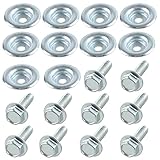
You know that feeling. You’re halfway through a project, sweat dripping, when you realize you’re short one important piece. For me, it was a deck repair. I needed a specific fastener, and I’d grabbed a handful of bolts that looked close enough. Big mistake. Turns out, the devil is in the details, especially with something as seemingly simple as a 5/8 x 3 bolt. They aren’t all created equal, and the wrong one can mean wasted time, money, and a wobbly end result.
Forget the fancy jargon for a second. We’re talking about a piece of metal that holds things together. But when you’re relying on it to keep your shed door from sagging or that workbench from rattling itself apart, you better be sure it’s the right one. This isn’t about impressing your buddies with your knowledge of obscure thread types; it’s about getting the job done right, the first time.
The Basics: What Even Is a 5/8 X 3 Bolt?
Let’s break down what those numbers actually mean, because it’s surprisingly straightforward once you get it. The ‘5/8’ refers to the diameter of the bolt’s shank – the main shaft part. Think of it as how thick the bolt is. A 5/8-inch diameter is pretty beefy. It’s designed for applications where you need serious holding power, like attaching heavy lumber, securing metal brackets, or building sturdy furniture. If you’re used to smaller bolts for, say, assembling flat-pack furniture, this is a whole different league.
The ‘3’ is the length, measured in inches. So, a 5/8 x 3 bolt is three inches long from where the threads start to the very tip. This is important.
Too short, and it won’t have enough thread engagement in the nut or the material it’s screwing into, meaning it won’t hold as securely. Too long, and you’ll have extra sticking out, potentially getting in the way, looking sloppy, or even posing a safety hazard if it’s in a walkway. Getting the length right is as vital as getting the diameter right. You also need to consider the thread pitch, which is how coarse or fine the threads are.
For most general construction and hardware applications, you’ll encounter coarse threads, often abbreviated as UNC (Unified National Coarse). This is usually what you’ll find on a standard 5/8 x 3 bolt unless you’re dealing with something specialized. Fine threads (UNF) are less common for this size in everyday hardware stores, but they exist.
The head of the bolt is another key feature. For a 5/8 x 3 bolt, you’ll most commonly see a hex head. This is the classic six-sided shape that you turn with a wrench or socket. The size of the hex head matters – you need the right size wrench to tighten it.
For a 5/8 bolt, you’ll typically need a 7/8 inch wrench or socket. It feels solid and provides good use. There are other head types, like carriage bolts (with a smooth, rounded head and square neck) or lag bolts (which are more like screws with a hex head for driving into wood), but when people talk about a generic ‘5/8 x 3 bolt’, they usually mean a standard hex head bolt with UNC threads.
Understanding these basic specifications will save you a ton of frustration when you’re standing in the aisle, staring at a wall of metal fasteners.
Material Matters: Steel, Stainless, and When It All Goes Wrong
This is where things get really important, and frankly, where a lot of people trip up. The material of your bolt dictates its strength, its resistance to corrosion, and even how it behaves in different environments. The vast majority of 5/8 x 3 bolts you’ll encounter are made of steel. But not all steel is the same. You’ll see designations like Grade 2, Grade 5, and Grade 8. Don’t just grab the cheapest ones. Grade 2 is your basic, run-of-the-mill bolt. It’s fine for light-duty stuff, but if you need real strength, like for structural connections on a fence or a shed, it’s probably not enough.
Grade 5 is a step up. It’s stronger than Grade 2 and is a good all-around choice for many mechanical applications. You’ll see three radial lines on the head of a Grade 5 bolt. Then there’s Grade 8.
This is serious stuff. It’s significantly stronger and is often used in heavy-duty automotive applications, suspension components, or anything that experiences high stress. Grade 8 bolts usually have six radial lines on the head. I learned this the hard way when I was building a heavy-duty workbench. (See Also: Are All Honda Atv Bolt Patterns The Same )
I used some bolts that looked fine, but under load, one of them started to bend. It turned out I’d grabbed Grade 2 bolts when I really needed Grade 5 or even Grade 8. Lesson learned: check the grade, especially for load-bearing projects.
Corrosion resistance is another huge factor. If your project is going to be exposed to the elements – rain, humidity, salt spray – standard steel bolts will rust. Fast. You’ll end up with that unsightly orange bloom, and eventually, the bolt will weaken and fail.
This is where stainless steel comes in. Stainless steel bolts are fantastic for outdoor use.
They resist rust and corrosion exceptionally well, keeping your project looking good and holding strong for years. However, they are more expensive than plain steel.
For an interior project where rust isn’t a concern, plain steel is perfectly adequate and much cheaper. But if it’s going outside, or anywhere moisture is a factor, I’d strongly recommend stainless steel.
There are different grades of stainless too, like 18-8 (304) and 316, with 316 being even more corrosion-resistant, especially in salty environments. For most general outdoor use, 18-8 is a good bet and a significant upgrade over plain steel.
Common Bolt Types and Their Uses
| Bolt Type | Head Style | Common Uses | Verdict |
|---|---|---|---|
| Hex Bolt | Six-sided | General construction, automotive, machinery, furniture. Versatile. | The workhorse. Get this for most jobs unless you have a specific need. |
| Carriage Bolt | Domed, square neck | Attaching wood to metal, fences, gates, wherever a smooth finish and anti-spin are needed. | Great for a clean look and preventing rotation, but needs a washer on the nut side. |
| Lag Bolt | Hex head with wood screw threads | Attaching wood to wood, ledger boards, structural timber. Primarily for wood. | Excellent for wood-to-wood connections where you don’t need a nut. Drive it in with a socket. |
| U-Bolt | U-shaped, threaded ends | Securing pipes, exhaust systems, axles, mounting poles. Wraps around an object. | Specific use, but incredibly strong for its intended purpose. |
What to Look for: Beyond the Numbers
So, you’ve got the diameter and length sorted. You’ve thought about the material and grade. What else should you be looking at? Finish is one thing. Bolts can come plain (just the raw metal), zinc-plated, or coated in other ways. Zinc plating is common on steel bolts and offers some rust resistance. It gives them a duller, grayish or yellowish appearance. It’s better than nothing, but it’s not foolproof, especially in harsh conditions. For truly demanding environments, you might look at hot-dip galvanized bolts for superior rust protection, though they can be a bit rougher in texture. Or, as mentioned, go for stainless steel.
Thread engagement is another thing people often overlook. When you’re bolting two pieces of material together, you want enough thread from the bolt to bite into the nut or the threaded insert. A general rule of thumb is that you want at least two full threads showing past the nut once it’s tightened. If you have barely one thread showing, your connection is weak.
If you have half the bolt sticking out past the nut, it’s too long. This is why it’s important to measure the thickness of the materials you’re joining. For example, if you’re bolting a 3/4-inch bracket to a 1-1/2-inch piece of lumber, you have a total thickness of 2-1/4 inches.
Add in the thickness of your nut (maybe 1/2 inch) and you’re looking at needing a bolt around 2-3/4 inches to 3 inches long to get decent thread engagement. A 5/8 x 3 bolt might be cutting it close or might be perfect, depending on the nut and how snugly the pieces fit.
Don’t forget the washers. People often just slap a bolt and nut together, but a washer can make a big difference. A flat washer distributes the clamping force over a wider area, preventing the bolt head or nut from digging into the material, especially if it’s softer wood or plastic. (See Also: Are Ak Bolts Interchangeable )
This prevents damage and makes sure a more consistent hold. A lock washer, with its split ring design, is meant to help prevent the bolt from loosening due to vibration. However, their effectiveness is debated, and for important applications, mechanical locking methods like nylon insert nuts or dedicated locking nuts are often preferred.
For most general DIY tasks, a good quality flat washer under both the bolt head and the nut is a solid practice that costs next to nothing and improves your connection significantly.
When Does a 5/8 X 3 Bolt Become Overkill (or Not Enough)?
This is where personal experience really shines. I’ve seen people use bolts that are way too big for the job, not because they needed the strength, but because they just had them lying around. Using a 5/8 x 3 bolt when a 1/4-inch bolt would suffice isn’t necessarily wrong, but it’s often unnecessary. It adds weight, cost, and can look clunky. Imagine building a small decorative shelf and using these massive bolts – it’s just visually out of proportion. The key is to match the fastener to the load and the aesthetic of the project.
On the flip side, I’ve also seen (and been guilty of) using bolts that are not strong enough. The most common mistake is not considering the shear strength and tensile strength required. Shear strength is the bolt’s ability to resist forces trying to cut it sideways, like if you’re hanging something heavy off a bracket.
Tensile strength is its resistance to being pulled apart. A 5/8 x 3 bolt, especially in a higher grade like Grade 5 or 8, has impressive strength. But if you’re trying to support a massive load, say, a heavy piece of industrial equipment or a safety railing that needs to withstand significant force, you might need even larger diameter bolts, or multiple bolts working together.
Always consider the worst-case scenario. What happens if that thing you bolted breaks? Will it cause injury or significant damage?
If the answer is yes, err on the side of caution and use a stronger, larger, or more numerous fastener. Don’t guess. If you’re unsure about load requirements, look up engineering tables or consult someone with experience in structural applications.
The common advice that “bigger is always better” is often wrong. It’s about the right size and grade for the specific application. For instance, if you’re assembling a piece of outdoor furniture that will experience moderate weather and use, a 5/8 x 3 bolt in stainless steel might be perfect. But if you’re building a small birdhouse, it’s ridiculous overkill.
Conversely, if you’re building a frame for a greenhouse that needs to withstand wind loads, a 5/8 x 3 bolt might be the absolute minimum, and you might even need larger ones or more of them. It’s a balance of strength, cost, weight, and appearance. I once tried to save money by using standard steel bolts on a boat dock.
Big mistake. Within a year, they were corroded to the point of uselessness.
Stainless steel would have cost more upfront but saved me a lot of grief and replacement costs. (See Also: Are All Bolt Patterns The Same )
Practical Tips for Buying and Using Your Bolts
When you head to the hardware store or order online, buy more than you think you’ll need. Seriously. Bolts get dropped, they roll under things, they get lost in the shuffle. It’s a pain to have to stop your project because you’re one bolt short. Buying a small box (say, 10 or 25) is usually more economical than buying them individually. Keep a few spares handy for future projects too. It’s always better to have them and not need them than to need them and not have them.
Check the threads. When you buy a box, give a few bolts a quick once-over. Are the threads clean and intact? Are there any burrs or damage? Damaged threads mean poor grip and potential failure. If you’re buying online, read reviews. People often mention if they received damaged or poorly manufactured bolts. Look for reputable brands and sellers. While you don’t need to go to a specialized aerospace supplier for your shed project, sticking to well-known hardware brands generally gives you a better chance of quality.
When tightening, use the right tools. A good quality socket or wrench that fits snugly on the hex head is important. A worn-out or ill-fitting tool can round off the head, making it impossible to tighten or remove later. Don’t overtighten, especially into softer materials, as you can strip the threads or crush the material. Use a torque wrench if you need precise tightness, though for most DIY projects, snug plus a quarter-turn is usually sufficient. And for outdoor projects, consider using an anti-seize compound on the threads, especially if you’re using stainless steel or dissimilar metals, to prevent galling (where the threads seize up and make it impossible to tighten or loosen).
When You Absolutely Need the Right Fastener
Let’s talk about those PAA questions, because they hit on real concerns. People ask, ‘What is a 5/8 x 3 bolt used for?’ We’ve covered a lot of this, but think structural connections: building sturdy furniture frames, securing heavy equipment mounts, reinforcing wooden structures like decks or pergolas, attaching metal brackets to concrete (with the right anchors, of course), and even some automotive repairs where a strong, medium-length bolt is needed. The key is that it’s a substantial bolt for applications requiring significant load-bearing capacity.
Then there’s, ‘Can I use a 5/8 bolt without a washer?’ Technically, yes, you can. But should you? Probably not, especially if the material you’re fastening is at all compressible (like wood) or if you’re dealing with any kind of vibration. A washer distributes the load, prevents gouging, and can significantly improve the integrity of the connection. It’s a tiny extra step that provides a big benefit. My personal rule: always use a washer unless there’s a very specific reason not to, like a countersunk head where the head itself is designed to sit flush.
Another common question is, ‘What size wrench for a 5/8 bolt?’ As I mentioned, for a standard 5/8 bolt head, you’ll typically need a 7/8 inch wrench or socket. It’s a common size, but always double-check the actual bolt head if you can, as manufacturing tolerances can sometimes lead to slight variations. Having a good set of sockets or wrenches, including those common fractional inch sizes, is a must for any DIYer. I keep a few of the most common sizes in my truck and my toolbox because you never know when you’ll need to tighten or loosen something on the go.
Bolt Grade Chart for Reference
| Grade | Markings | Approx. Tensile Strength (psi) | Common Applications |
|---|---|---|---|
| 2 | None (plain head) | 60,000 | Light-duty fastening, general hardware. |
| 5 | Three radial lines | 120,000 | General mechanical, automotive, construction. Good all-around. |
| 8 | Six radial lines | 150,000 | Heavy-duty automotive, structural, high-stress applications. |
The table above is a simplified look at common bolt grades. Remember, these are approximate and refer to steel bolts. Stainless steel has its own grading system. Always prioritize the grade recommended for your specific project’s requirements, especially if it involves safety or significant loads. It’s not just about the size; it’s about the backbone of that bolt.
Final Verdict
So, that’s the lowdown on a 5/8 x 3 bolt. It’s not just a random piece of metal; it’s a important component that needs to be chosen with a bit of thought. Don’t just grab the first thing you see. Think about where it’s going, what it’s holding, and what conditions it will face. A little bit of knowledge goes a long way in preventing costly mistakes and making sure your projects are solid, safe, and built to last.
Whether you’re building a fence, assembling some heavy-duty shelving, or tackling a car repair, taking a moment to understand the specs of your fasteners – diameter, length, grade, and material – will save you headaches down the line. It’s the difference between a project that’s frustratingly flimsy and one that stands the test of time.
Next time you’re at the hardware store staring at that wall of bolts, you’ll know what to look for. And if you’re still unsure, don’t be afraid to ask for help. It’s better to ask a dumb question than to make a costly mistake with the wrong a 5 8 x 3 bolt.