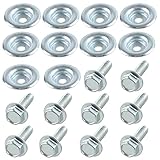
Look, nobody wants to be stuck in their garage, elbow-deep in a transmission tunnel, only to realize they grabbed the wrong damn bolt. It’s happened to me. More times than I care to admit, honestly. You’re sweating, you’re cussing the greasy floor, and you’re staring at a pile of fasteners, wondering which one of them actually fits that hole. So, let’s cut to the chase: a 7/16-20 flexplate bolt has what head? It’s not rocket science, but getting it wrong means a whole lot of wasted time and frustration.
This isn’t about fancy marketing or brand names; it’s about getting the right tool for the job. Because when you’re trying to keep your engine and transmission singing in harmony, the little things, like the head on a flexplate bolt, matter.
The Head Scratching Truth About Flexplate Bolt Heads
Alright, let’s get this out of the way nice and early: a 7/16-20 flexplate bolt almost always has a 9/16 inch hex head. That’s it. Simple, right? But here’s where things get sticky and why so many people end up buying the wrong thing or wrestling with a socket that’s just a hair too big or too small. You see, while 9/16 is the standard, there are a few nuances that can make you question reality.
First off, not all 9/16 heads are created equal. Some are perfectly machined, while others might have slightly chamfered edges or a slightly looser tolerance from the factory. This can make a socket feel a little sloppy, even if it’s technically the correct size. I learned this the hard way when I was rebuilding a ’69 Camaro’s TH350 transmission. I had a brand new set of sockets, all top-tier, but one particular bolt head just wouldn’t seat perfectly. It drove me nuts for a solid hour until I realized the socket was just a smidge too large for that specific bolt’s manufacturing quirks. A slightly worn socket, surprisingly, actually fit better. Go figure.
The ‘-20’ in 7/16-20 refers to the thread pitch. That means there are 20 threads per inch. This is a common fine thread for automotive applications, especially for things that need to stay put under stress, like connecting your engine to your torque converter via the flexplate. The 7/16 is the nominal diameter of the bolt’s shank. So, you’re looking for a bolt with a shank diameter of 7/16 of an inch and a thread count of 20 per inch. And the head? That’s your key to getting the right tool on it.
Now, why 9/16? It’s a pretty standard size in the SAE (Society of Automotive Engineers) system for bolts in this general range. It offers a good balance of strength, surface area for torque, and compatibility with common tools. If you go too small, you risk stripping the head or not being able to apply enough torque. If you go too big, well, it won’t fit, or it’ll be a massive, unwieldy fastener that’s completely unnecessary. The goal is always to have the socket grip the flats of the hex head firmly without wobbling.
What to Look for When Buying Flexplate Bolts
When you’re out shopping for these important little fasteners, whether it’s at your local auto parts store, a big box hardware store, or online, you need to be specific. Don’t just grab a random bolt that looks about right. Here’s what to keep in mind:
- Size and Thread Pitch: This is a must. You need 7/16-20. Check the packaging carefully. Some bolts might be sold individually, others in small packs.
- Head Type: You’re looking for a hex head. Most flexplate bolts will be external hex heads, designed to be turned with a socket or a wrench.
- Length: This is super important and often overlooked. The length of the bolt is measured from where the head starts to bear down on the surface (the shoulder, not the very bottom of the head) to the end of the bolt. You need to know the exact length required for your application. Too short and it won’t engage enough threads; too long and it might bottom out in the crankshaft or torque converter, or interfere with other components.
- Grade/Strength: Flexplate bolts are under significant stress. They’re usually high-tensile strength bolts, often marked with grade markings on the head. Look for Grade 8 or equivalent (often marked with six radial lines on the head). This makes sure they won’t stretch or shear under the immense forces involved in engine operation.
- Washer/Flange Head: Many flexplate bolts will have an integrated washer or a flange under the head. This wide surface area helps distribute the clamping force over a larger area of the flexplate and the crankshaft flange, preventing the bolt head from digging into the metal. This is a feature you definitely want.
I remember one time I was helping a buddy with his project car, and he’d sourced some bolts from a mismatched bin. They looked right, but they didn’t have the integrated washer. We installed them, and after a few drives, we started hearing this awful rattling noise. Turns out, the bolt heads had started to chew into the flexplate. A quick swap to proper flange-head bolts solved it immediately. It’s a small detail, but it makes a world of difference in preventing damage and making sure longevity.
The Common Mistakes That Will Haunt You
You’d think something as straightforward as a bolt head would be easy, but the automotive world is full of little traps. The biggest mistake people make with a 7/16-20 flexplate bolt is assuming any bolt of that general size will work. WRONG. There are several pitfall areas that can cost you dearly in time and money.
First, as I’ve hinted at, is the thread pitch. While 7/16-20 is common, you might encounter other 7/16 threads, like 7/16-14 (coarse thread). Trying to force a coarse thread into a fine thread hole, or vice-versa, is a recipe for stripped threads. You’ll ruin the bolt, and potentially the threads in your crankshaft or torque converter, which is a much, much bigger problem to fix. Always double-check the packaging or, better yet, run a known good bolt you have into a known good nut of the correct thread pitch to confirm.
Second, the length. I’ve seen guys use bolts that are too long. They crank them down, thinking they’re getting a good, tight fit, but the bolt is actually bottoming out before it properly clamps the flexplate. This leaves the flexplate loose, and that’s a dangerous situation. A loose flexplate can cause all sorts of transmission issues, shuddering, and in severe cases, catastrophic failure. Conversely, a bolt that’s too short won’t engage enough threads in the crankshaft, leading to a weak connection that could eventually work its way loose. Measure, measure, and measure again. When in doubt, get the manufacturer’s specs for your specific vehicle or torque converter.
Third, the material and grade. Cheap, low-grade bolts can stretch or break under the torsional forces and vibrations of an engine. This isn’t like bolting on a fender washer; this is holding your engine to your transmission. (See Also: Are All Honda Atv Bolt Patterns The Same )
You need solid fasteners. A bolt that looks too shiny or feels too light is often a red flag.
Look for markings indicating a higher grade like Grade 8. These bolts are heat-treated and designed to withstand significant shock and stress. Don’t skimp here.
I once tried to save a few bucks on some generic bolts for a customer’s project, and within a couple thousand miles, two of them had snapped. The tow bill and the cost of the proper parts far outweighed the initial savings. Never again.
Finally, the head style and size. While 9/16 is standard for the hex size, some aftermarket torque converters or flexplates might have slightly different bolt head recess dimensions. It’s rare, but possible. More commonly, people grab a hex head bolt that doesn’t have the integrated washer. As mentioned, this can lead to the bolt head digging into the flexplate material over time, weakening the connection and causing noise or even failure. Always go for the flange head if it’s an option and designed for your application. It spreads the load and protects the flexplate.
A Real-World Scenario: The Case of the Over-Tightened Wrench
I was working on a friend’s classic muscle car that had been sitting for years. He wanted to get it running again, and the first thing we tackled was the engine and transmission. We bolted the torque converter to the flexplate, feeling pretty good about ourselves. He had a brand new set of flexplate bolts, and I grabbed my trusty socket set. As I was tightening the last bolt, I felt this… give. Not a smooth tightening, but a slight, almost gritty give. I dismissed it, thinking maybe it was just the new sealant on the threads or something. I put a lot of torque on it, thinking ‘better safe than sorry’.
Fast forward a few weeks. The car is running, sounds great, but there’s this weird, intermittent clunking noise coming from the bellhousing area, especially when shifting from park to drive. It was subtle at first, but it got worse. We pulled the inspection plate off, and there it was: one of the flexplate bolt heads was slightly mushroomed.
My over-tightening had somehow deformed the head just enough to cause a slight misalignment or binding. Worse, the threads in the crankshaft looked a bit stressed. We had to carefully extract that bolt, which was a whole new adventure, and replace both the bolt and inspect the crankshaft threads.
Lesson learned: there’s a difference between torquing properly and just wailing on it with a breaker bar. And sometimes, even a new bolt can be defective, or your technique can be flawed. Always listen and feel what the fastener is doing.
Understanding the Mechanics: How Flexplate Bolts Work
It’s easy to just grab a bolt and screw it in, but understanding why it needs to be a specific type of bolt is key to appreciating its importance. The flexplate, in essence, is the link between your engine’s crankshaft and your torque converter. It’s a relatively thin, flexible metal disc, usually made of steel, with a ring of bolt holes around its perimeter. These bolt holes are where the magic happens – connecting the rotating force of the engine to the transmission.
The bolts pass through the flexplate and thread into the end of the crankshaft. They are tightened to a specific torque specification, which is important. This torque does a few things. Firstly, it makes sure a tight mechanical connection, preventing slippage or movement between the flexplate and the crankshaft. Secondly, it creates a clamping force that holds the flexplate securely. This clamping force is distributed across the mating surfaces. This is where the flange head of the bolt becomes important, as it spreads that force over a larger area of the flexplate, reducing stress concentrations and preventing the bolt head from damaging the flexplate material over time.
The ‘flex’ in flexplate is also important. These plates are designed to have a slight degree of flex. This allows them to absorb some of the torsional vibrations and minor misalignments between the engine and transmission. Without this flex, these vibrations would be transmitted directly, potentially causing damage to either component. The bolts, therefore, need to be strong enough to handle the clamping loads and the resulting stress, but also solid enough to survive the dynamic environment. They are basically high-strength fasteners holding a important rotating component in place under immense pressure and vibration. (See Also: Are Ak Bolts Interchangeable )
Think about the forces involved. Your engine is spinning at idle, perhaps 700-900 RPM. Under acceleration, that can jump to 5,000, 6,000, or even more RPM. The torque converter is filled with fluid, and as the engine spins, it tries to spin the transmission input shaft. This whole system is under constant, fluctuating stress. The bolts are the literal anchors holding this entire chain together. If they fail, or if the connection is compromised, you’re looking at serious mechanical issues, from a car that won’t move to potentially severe damage to the engine or transmission.
The Importance of Torque Specs
This is where the often-ignored technical documentation for your vehicle or aftermarket parts comes into play. For most common applications, the torque spec for 7/16-20 flexplate bolts is usually in the range of 35-50 foot-pounds. However, this can vary significantly based on the specific materials of the flexplate and crankshaft, the type of lubricant used on the threads (if any), and the grade of the bolt itself. Always consult a service manual for your specific vehicle or the documentation that came with your torque converter and flexplate.
Using a torque wrench is not optional here. Guessing, or using an impact gun without a torque stick or setting, is a terrible idea. Too little torque, and the bolts can back out due to vibration. Too much torque, and you risk stretching the bolt beyond its yield point, damaging the threads in the crankshaft, or even cracking the flexplate. The goal is to achieve the manufacturer’s specified clamping force consistently across all the bolts. This makes sure even stress distribution and a secure connection.
I’ve seen mechanics who rely on ‘feel’ to tighten bolts, and while they might be wizards with some things, this is not one of them. The threads in the crankshaft are often the most important and potentially the hardest to repair if damaged. A little extra time with a torque wrench saves a lot of headache and expense down the line. It’s one of those details that separates a job done right from a job that’s just finished.
Comparing Flexplate Bolt Types: What’s Best?
When you’re looking at options for flexplate bolts, you’ll notice some variations. Most commonly, you’ll find standard external hex head bolts and flange head bolts. Both serve the purpose of connecting the flexplate to the crankshaft, but there are differences in how they perform and what they protect. Here’s a quick comparison:
| Feature | Standard Hex Head Bolt | Flange Head Bolt | Verdict |
|---|---|---|---|
| Head Type | Standard hexagonal shape | Hexagonal head with an integrated washer or flange | Flange head offers better load distribution. |
| Load Distribution | Concentrates force under the bolt head | Distributes force over a larger area of the flexplate | Flange head is superior for preventing damage. |
| Application | Older vehicles or some aftermarket setups | Most modern vehicles and performance applications | Modern vehicles and performance applications strongly favor flange heads. |
| Ease of Use | Standard socket fit | Standard socket fit (same 9/16 size) | No difference in tool requirement. |
| Material Stress | Can cause bolt head to indent flexplate over time | Minimizes stress and potential for flexplate damage | Flange head is much gentler on the flexplate. |
| Cost | Typically slightly cheaper | Can be slightly more expensive, but worth it | The small price difference is negligible compared to potential damage. |
The table above highlights why, for most applications, especially those involving any kind of performance or longevity expectations, the flange head bolt is the way to go. The integrated washer acts as a built-in lock washer and load spreader, preventing the bolt head from digging into the flexplate as it’s torqued down and as the assembly vibrates and flexes during operation. This protects the flexplate material, preventing premature wear and potential cracks that could start at the edge of a deeply indented bolt head.
You might also see bolts marketed as ‘ARP’ or other performance brands. These are typically made from higher-strength alloys, have tighter tolerances, and often feature specialized coatings for lubrication and corrosion resistance. While they are more expensive, they offer an added layer of security and reliability, especially in high-horsepower or racing applications where component failure can be catastrophic. For a daily driver, a good quality Grade 8 flange head bolt is usually sufficient, but if you’re building a serious performance engine, investing in top-tier hardware like ARP is often a wise decision.
The key takeaway here is that while the head size for a 7/16-20 bolt is generally 9/16 inch, the type of head matters. Don’t just grab the cheapest option. Consider the load distribution and the material integrity of your flexplate. A few extra dollars spent on the right bolt can save you hundreds or thousands in repairs later.
A Note on Torque Converters
When you’re replacing flexplate bolts, it’s often because you’re also dealing with the torque converter or the transmission itself. Make sure the bolt holes on your torque converter also align perfectly with the holes on the flexplate. Sometimes, aftermarket torque converters might have slightly different bolt patterns or hole sizes, although for standard SAE applications, this is less common. Always double-check compatibility between your flexplate, torque converter, and the bolts you’re using.
The Ins and Outs of Socket Sizes and Wrenches
So, we’ve established that the head on a 7/16-20 flexplate bolt is typically a 9/16 inch hex. But what about the tools you use? This is where a good quality socket set really earns its keep. You’ll want a 9/16 inch socket, preferably a 6-point socket rather than a 12-point.
Why a 6-point socket? A 6-point socket grips the flats of the bolt head. This provides maximum contact area and torque transfer, reducing the risk of rounding off the bolt head. A 12-point socket grips the corners, which can be useful in tight spaces, but it applies more localized pressure and is more prone to slipping and damaging the head, especially on fasteners that have been in service for a while or are slightly worn. For something as important as flexplate bolts, a 6-point socket is definitely the preferred choice. (See Also: Are All Bolt Patterns The Same )
You’ll also need a ratchet or breaker bar to go with your socket. A standard 3/8-inch drive ratchet is usually sufficient for the recommended torque values, but for getting that initial snugging or breaking loose a stubborn bolt, a 1/2-inch drive might be more appropriate. A torque wrench is, of course, key for the final tightening step. Make sure your torque wrench is calibrated and accurate, especially if it’s an older one.
When it comes to wrenches, a 9/16 inch combination wrench (one end is open, the other is a box end) can also work. Again, the box end offers better grip than the open end. If you have very limited clearance, you might need a specialized wrench, like a crowfoot wrench, to get access, though this is less common for flexplate bolts that are typically accessed through an inspection port.
The Surprise Factor: Metric vs. Sae
One thing that can throw people off, especially if they’re working on a mix of vehicles or have inherited parts, is the potential for metric fasteners where you expect SAE, or vice-versa. While 7/16-20 is firmly in the SAE camp, it’s always good practice to be aware of this. A 14mm socket, for instance, is very close in size to a 9/16 inch socket. A 14mm socket is about 0.551 inches, while a 9/16 inch socket is 0.5625 inches. That’s a difference of only about 0.0115 inches.
This small difference can be enough to make a 14mm socket feel a little loose on a 9/16 bolt head, or vice-versa. Some people have reported successfully using a 14mm socket on a 9/16 bolt in a pinch, but I wouldn’t recommend it for a important application like flexplate bolts. The risk of stripping the head is too high. Always try to use the correct SAE 9/16 socket for your 7/16-20 bolt.
The same goes for wrenches. If you have a metric set and an SAE set, keep them separate. Trying to make a metric wrench fit an SAE bolt, or the other way around, is a fast track to frustration and damaged fasteners. Invest in a good quality set of both metric and SAE sockets and wrenches. It’s one of those foundational tools of the trade that you’ll use countless times. When dealing with specific fasteners like a 7/16-20 flexplate bolt, having the precise 9/16 socket is key to a smooth and successful job.
People Also Ask
What Size Socket Fits a 7/16-20 Bolt?
A 7/16-20 bolt typically has a 9/16 inch hex head. Therefore, a 9/16 inch socket is the correct size to fit and turn it. It’s recommended to use a 6-point socket for the best grip and to minimize the risk of rounding off the bolt head.
What Is the Difference Between 7/16-14 and 7/16-20?
The difference lies in the thread pitch. The ’14’ in 7/16-14 indicates a coarse thread with 14 threads per inch, while the ’20’ in 7/16-20 indicates a fine thread with 20 threads per inch. Fine threads are generally stronger and less likely to loosen from vibration, making them common in automotive applications like flexplates.
Can I Use a Coarse Thread Bolt in a Fine Thread Hole?
No, you should not. Forcing a coarse thread bolt (like 7/16-14) into a fine thread hole (like 7/16-20) will damage the threads on both the bolt and the hole, potentially ruining the component it threads into. Always use the bolt with the matching thread pitch.
How Tight Should Flexplate Bolts Be?
The tightness, or torque, for flexplate bolts is important and varies by application. A common range for 7/16-20 flexplate bolts is between 35 to 50 foot-pounds, but it is key to consult your vehicle’s service manual or the manufacturer’s specifications for the exact torque value. Over-tightening or under-tightening can lead to serious problems.
Conclusion
So, there you have it. The answer to what head a 7/16-20 flexplate bolt has is pretty straightforward: usually 9/16 inch. But as we’ve seen, the devil is in the details. It’s not just about the size of the head; it’s about the quality of the bolt, the type of head, the correct thread pitch, and using the right tools with the proper torque.
Don’t make the mistake of grabbing the first bolt you find. Take the time to verify the size, thread pitch, and strength. Invest in a good set of sockets, especially a 6-point 9/16 inch socket, and a reliable torque wrench. Your engine and transmission will thank you for it. Getting this seemingly small detail right is a big step in making sure your vehicle runs smoothly and reliably for miles to come.