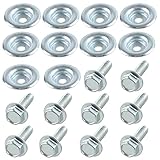
I remember the first time I needed a specific nut and bolt. It was for a wobbly IKEA shelf, and I ended up at a massive hardware superstore. After an hour of wandering, overwhelmed by aisles of shiny metal, I bought a pack of something that looked close enough. It wasn’t. That little mishap taught me a lot about sourcing fasteners, and it’s why I’m telling you about a and n nut and bolt tampa. You need to know what you’re getting into before you waste your time and money.
Forget those generic hardware store bins where everything looks the same. Getting the right fastener is more than just matching a thread size. It’s about durability, the right material, and whether it’ll actually do the job without failing down the line. Whether you’re a DIYer or a seasoned pro, understanding the basics will save you headaches.
Why You Can’t Just Grab Any Old Bolt
Look, I’ve been there. You’re in the middle of a project, something’s come loose, and your brain immediately goes to the nearest hardware store. For a long time, that was my go-to too. But then I started doing more complex projects, things that required a bit more strength or needed to withstand outdoor elements, and I realized the ‘close enough’ mentality was costing me. I once spent nearly $100 on various bolts trying to fix a garden gate hinge. Each one looked fine, but the cheap zinc-plated ones rusted within weeks, and the ones with the wrong thread pitch just wouldn’t hold tight. It was a frustrating cycle that made me seriously re-evaluate how I bought fasteners.
The common advice often glosses over the real differences. They tell you to match thread pitch and diameter, which is obviously important, but they rarely mention material grades, head types, or coatings. If you’re building a birdhouse, maybe it doesn’t matter much. But if you’re assembling furniture that needs to be sturdy, repairing an appliance, or working on anything structural, the wrong nut and bolt can be a disaster waiting to happen.
It’s not just about aesthetics; it’s about safety and longevity. I learned the hard way that a slightly higher price for a better quality fastener from a dedicated supplier, like you might find at a place specializing in a and n nut and bolt tampa, often saves money and stress in the long run.
One of the biggest mistakes I see people make is assuming all metal is created equal. Stainless steel, galvanized steel, brass, even plain old steel – they all have different strengths, corrosion resistance, and costs. If you’re working on something outdoors, plain steel without a proper coating is going to be a rusty mess in no time. Galvanized offers decent protection, but for serious corrosion resistance, especially in coastal areas or high-moisture environments, you really want to look at stainless steel. I’ve seen projects fail prematurely purely because the fasteners weren’t up to the environmental challenge. It’s not rocket science, but it’s definitely more nuanced than just grabbing the cheapest thing you see.
Decoding the Jargon: What to Look For
Let’s break down what you actually need to know. First off, the material. For general indoor use where moisture isn’t a major concern, plain steel is often sufficient and the most affordable. If you need a bit more protection, especially against minor corrosion, zinc-plated steel is a good step up.
It’s common and offers a decent balance of cost and protection. However, if your project is going to see the elements – rain, humidity, salt air – you’re going to want to seriously consider stainless steel. It’s more expensive, no doubt about it, but it offers vastly superior rust and corrosion resistance. I learned this when I tried to use regular bolts on my outdoor deck; within a year, they were showing rust spots.
I had to replace them with stainless, and it was a pain I never wanted to repeat. For truly demanding applications or harsh environments, you might even look at specialized alloys, but for most people, stainless steel is the sweet spot for durability.
Then there’s the thread. You’ll encounter coarse thread (UNC) and fine thread (UNF). Coarse threads are more forgiving and faster to install, making them common for general use. Fine threads offer a more secure hold and are better for applications where vibration is a concern, as they have more contact points. The thread pitch is the distance between the threads. Getting this wrong means the nut won’t thread onto the bolt at all, or it will cross-thread and strip easily. Always measure or know the exact pitch you need. Most common sizes like 1/4-inch or 3/8-inch bolts will have a standard coarse or fine pitch, but specialized applications can vary wildly. (See Also: Are All Honda Atv Bolt Patterns The Same )
Head types are another area where people often get confused. The most common are hex heads, which you tighten with a wrench, and socket head cap screws (often called Allen bolts), which use an Allen key. Carriage bolts have a smooth, domed head and a square neck that digs into the material, preventing them from turning when you tighten the nut – great for preventing theft or for a clean look. Then you have countersunk heads for flush mounting.
The choice depends on the tool you have available, the required torque, and the aesthetic you’re going for. I once used a bolt with a hex head where a countersunk head would have been better, and it just looked clunky and out of place. Paying attention to these details makes a huge difference in the final result.
A Quick Comparison of Common Fastener Materials
| Material | Pros | Cons | Best For | My Verdict |
|---|---|---|---|---|
| Plain Steel | Cheap, strong | Rusts easily, needs painting/coating | Indoor, non-important applications | Avoid if exposed to moisture |
| Zinc-Plated Steel | Good corrosion resistance for price, common | Plating can wear off, not as durable as stainless | General indoor/outdoor use, DIY projects | Decent budget option |
| Stainless Steel | Excellent corrosion resistance, strong, looks good | More expensive | Outdoor projects, marine environments, high-moisture areas | Worth the extra cost for longevity |
| Brass | Corrosion resistant, non-magnetic, decorative | Softer, less strong than steel | Decorative applications, electrical components | Good for looks, not heavy-duty |
Common Mistakes That Will Ruin Your Project
I’ve made my share of boneheaded mistakes when it comes to nuts and bolts, and most of them boil down to rushing or assuming. The biggest one?
Not buying enough. Seriously. You think you need ten bolts, but then one rolls under the workbench, another strips its threads during installation, and you’re left scrambling.
Always get a few extras. It’s a small price to pay for avoiding a trip back to the store when you’re halfway done and frustration is peaking.
I learned this trying to assemble a large bookshelf. I ran out of the specific bolts needed for the back panel and had to make a special trip, which killed my momentum and added an hour to a job that should have taken half that time.
Another massive error is not considering the load or stress. People will use hardware store bolts that are rated for light-duty tasks on things that are going to experience significant weight or dynamic forces. I saw a friend try to hang a heavy swing set using standard carriage bolts. It looked fine initially, but after a few weeks of use, one of the bolts started to bend.
Thankfully, no one was hurt, but it was a stark reminder that bolt strength matters. There are different grades of steel fasteners, often indicated by markings on the bolt head (like Grade 2, 5, or 8 in the US). Higher numbers generally mean higher strength.
If you’re unsure, err on the side of stronger. It’s better to over-engineer slightly than to have a failure. (See Also: Are Ak Bolts Interchangeable )
Then there’s the whole metric versus imperial issue. While it might seem obvious to stick to one system, sometimes mixed components can creep into a project, especially if you’re buying parts from different sources or inheriting tools and hardware. Trying to force a metric nut onto an imperial bolt, or vice versa, is a recipe for stripped threads and a useless fastener. It’s a classic ‘People Also Ask’ question for a reason: ‘Can you mix metric and imperial bolts?’ The short answer from me is a resounding NO. It’s a guaranteed way to cause problems down the line. Always confirm your thread size and pitch in the same system.
Finally, people underestimate the importance of the washer. A flat washer distributes the load over a wider area, preventing the bolt head or nut from digging into the material, which is especially important with softer woods or plastics. A lock washer, on the other hand, is designed to prevent loosening due to vibration. Using the wrong type of washer, or no washer at all, can lead to your fastener loosening over time or damaging the surface you’re attaching to. I once tried to tighten a bolt directly against a piece of plastic without a washer, and it just chewed up the plastic. A simple flat washer would have solved that issue instantly.
Real-World Use Cases for Quality Fasteners
When you’re looking for a place that understands fasteners, whether it’s a local spot like a and n nut and bolt tampa or a well-regarded online vendor, think about what you actually do. For the homeowner tackling DIY projects, this means having reliable hardware for hanging shelves, assembling furniture, or fixing outdoor equipment. I’ve found that investing in a good set of stainless steel screws and bolts for outdoor projects, like building a raised garden bed or repairing a fence, pays dividends in longevity. Instead of replacing rusted hardware every couple of years, I install it once and forget about it. It saves so much hassle and makes the finished product look so much better, longer.
For the hobbyist woodworker, the right fasteners can be the difference between a beautiful piece of furniture and something that looks cobbled together. Whether it’s decorative brass screws for a jewelry box, strong machine screws for attaching drawer slides, or specialized bolts for joining larger wooden components, precision matters. I recently built a custom workbench, and using the correct, high-strength bolts with accompanying washers and nuts made the entire structure feel incredibly solid. It didn’t just hold; it felt engineered. This level of confidence is something you rarely get from a mixed bag of hardware store fasteners.
Then there are the more demanding applications. If you’re into automotive repair, restoring a classic car, or working with machinery, the specific grades and types of fasteners are absolutely important. Vibration, heat, and constant stress mean you need fasteners designed for those conditions. For example, using the wrong grade of bolt on an engine component could lead to catastrophic failure. This is where a dedicated supplier, one that stocks a wide range of grades and materials, becomes invaluable. They can help you find the exact part needed, whether it’s a high-tensile bolt for an engine mount or a specific type of self-tapping screw for bodywork.
Even for simple things, like mounting a TV bracket on the wall, using the appropriate anchors and bolts designed for your wall type (drywall, plaster, concrete) is most important. The cheap anchors that come with some mounts are often inadequate. I once installed a TV bracket using the provided anchors, and while it held initially, I always had this nagging worry. I ended up upgrading to solid lag bolts with proper wall anchors, and the peace of mind was immense. It’s about understanding that the fastener is the connection that holds everything together, and that connection needs to be reliable for the intended purpose.
Practical Tips for Your Next Fastener Run
When you’re heading out to a place that specializes in fasteners, like a and n nut and bolt tampa, or even just browsing online, here are a few things I always keep in mind. First, know your measurements. Before you even leave the house, take the old bolt or nut with you if possible, or at least measure its diameter and count the threads per inch (or millimeter pitch). If you can’t take the old part, use a caliper or even a ruler and a known thread gauge to get the best approximation. Don’t guess. A trip to the hardware store with a clear idea of what you need is infinitely more efficient than wandering aimlessly.
Second, don’t be afraid to ask for help. If you’re at a specialized supplier, the staff are usually knowledgeable. Describe your project and what you’re trying to achieve. They can often recommend the right material, grade, and type of fastener. I once needed some specific bolts for a custom bike rack. I walked into a shop, explained what I was building, and the owner steered me toward a type of stainless steel bolt with a specific head that would be both strong and resistant to theft. It saved me hours of research and probably prevented me from buying the wrong thing.
Third, consider buying in bulk if you have a larger project or tend to use a specific type of fastener frequently. Many suppliers offer discounts for larger quantities, which can significantly reduce the per-piece cost. This is especially true for common items like wood screws or machine bolts. It’s a small upfront investment that can save you money if you’re going to use them. I started doing this for deck screws, and the savings over time were substantial. (See Also: Are All Bolt Patterns The Same )
Fourth, always inspect your fasteners before you buy them, if possible. Look for damaged threads, bent heads, or any signs of corrosion or poor manufacturing. Even in sealed packages, a defective item can slip through. If you’re buying from a bulk bin, take a moment to grab a few and check them over. A quick visual inspection can save you from installing a faulty fastener that could fail later.
Finally, for those times when you’re really unsure or dealing with a important application, look for reputable brands or suppliers. Places that specialize in nuts and bolts are generally going to have better quality control and a wider selection than a general merchandise store. The same goes for online shopping – stick to well-known, reputable vendors who provide detailed specifications for their products. Reading reviews can also be helpful, but always weigh them against the reputation of the seller.
Faq: Your Burning Nut and Bolt Questions Answered
How Do I Know If I Need a Bolt or a Screw?
Generally, bolts are designed to be used with a nut to fasten two or more parts together. They typically have a hexagonal head and a threaded shaft. Screws, on the other hand, are designed to be inserted into a pre-drilled hole or to tap their own threads directly into the material. They usually have a head designed to be driven by a screwdriver (Phillips, flathead, Torx, etc.) and often have a pointed tip. While there’s overlap, think of bolts as needing a companion nut, and screws as creating their own thread or being driven by a specific tool.
What’s the Difference Between Coarse and Fine Thread Pitch?
Coarse threads have fewer threads per inch (TPI) or a larger distance between threads. They are easier and faster to install and are more forgiving if the hole isn’t perfectly tapped. Fine threads have more TPI or a smaller distance between threads. They offer a more secure connection, are less likely to loosen from vibration, and can provide a stronger hold because there’s more surface area contact. However, they require more precise threading and can be more easily damaged if cross-threaded.
Can I Use a Washer That’s Too Big or Too Small?
Ideally, you want a washer that fits the fastener snugly. If a washer is too big, it might not provide sufficient contact area or could interfere with other components. If it’s too small, it won’t effectively distribute the load from the bolt head or nut, potentially damaging the surface material or allowing the fastener to embed itself too deeply. Using a washer with an outer diameter (OD) that’s roughly 1.5 to 2 times the bolt diameter is a good general rule of thumb for flat washers.
What Does the Number on a Bolt Head Mean?
In the US, numbers on bolt heads usually indicate the grade of steel and its tensile strength. For example, Grade 2 is common, lower strength steel. Grade 5 bolts have three radial lines on the head and are stronger. Grade 8 bolts have six radial lines and are even stronger, typically used in heavy-duty applications like automotive suspension. The markings are important for making sure you use a fastener with adequate strength for the job.
Conclusion
Navigating the world of nuts and bolts might seem daunting at first, but a little bit of knowledge goes a long way. You’re not just buying metal pieces; you’re buying reliability for your projects. Whether you’re a weekend warrior or someone building things for a living, understanding the materials, threads, and common pitfalls will save you time, money, and a whole lot of frustration. Don’t be the person who has to redo a job because the fasteners weren’t up to snuff.
My advice? When you’re in Tampa and need something reliable, seek out a dedicated supplier. Places that focus on a and n nut and bolt tampa understand the nuances. They can guide you to the right stainless steel for that outdoor project, the specific grade for that load-bearing application, or simply make sure you get the correct thread pitch. It’s about getting the right tool for the job, and that includes the fasteners holding it all together.
So, next time you’re faced with a fastening challenge, take a breath, do a little research, and make an informed choice. Your future self, working on a project that doesn’t fall apart, will thank you.