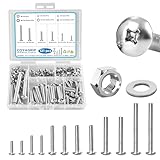
I remember the first time I cracked open an engine block. Felt like a kid in a candy store, except the candy cost a fortune and I was terrified of breaking something expensive. One of the things that stressed me out the most was getting those head bolts just right. Too loose and you’ve got coolant leaks faster than a sieve. Too tight and you’re playing roulette with warped metal. That’s why I was curious about the a b brothers engine head bolt kit – would it actually make this whole process less of a headache?
Years of wrenching have taught me that sometimes, the fancy kits are just overpriced snake oil. Other times, they’re the difference between a weekend project and a tow truck bill. So, does this kit fall into the ‘worth your hard-earned cash’ category, or is it just another shiny box of disappointment?
When You Absolutely Need a Better Head Bolt Solution
Let’s be blunt. For the most part, when you pull a stock engine apart, the original head bolts are usually… fine. If you’re just doing a basic rebuild, replacing a blown head gasket on a daily driver that’s seen better days, slapping the old bolts back in (provided they’re not stretched or damaged, which you should always check) is what most people do. And honestly, for a lot of applications, that’s perfectly acceptable. I’ve done it myself a dozen times, measuring stretch, checking for damage, and torquing them down to spec. It’s a bit of a gamble, sure, but the odds are generally in your favor if you’re careful.
However, there are situations where cutting corners on head bolts is just asking for trouble. If you’re building a performance engine – something that’s going to see boosted air, higher compression, or just generally pushed harder than grandma’s minivan – you need hardware that can handle the extra stress. Stock bolts are designed for stock power levels. Crank up the boost or add a wilder cam, and those stock bolts can stretch, fatigue, and eventually lead to gasket failure, even if you followed the torque sequence perfectly.
I learned this the hard way with a turbo Honda build years ago. I reused the stock bolts, got a little too ambitious with the boost, and within 500 miles, I was staring at a milkshake in my oil coolant reservoir.
Cost me a whole lot more in machine shop time to fix that screw-up than a good set of ARP bolts would have.
This is precisely where a quality aftermarket head bolt kit, like the a b brothers engine head bolt kit might come into play. These aren’t just random bolts; they’re engineered with specific materials and tighter tolerances to withstand higher clamping forces and the thermal cycling that performance engines endure. They’re often made from stronger alloys, have rolled threads to prevent galling, and sometimes come with special washers or nuts. It’s about adding a layer of insurance against catastrophic failure when you’ve invested a lot of time and money into building a stout engine.
Think of it like this: if you’re running a marathon, you wouldn’t wear flip-flops, right? Same principle applies here. If you’re building a street-legal grocery getter, maybe stock is fine. But if you’re aiming for horsepower and reliability under load, you need hardware that’s up to the task. The a b brothers engine head bolt kit is aiming to fill that need for folks who are pushing their engines a bit further than the factory intended.
What to Look for Besides Just ‘head Bolts’
So, you’re convinced you need a better set of bolts. Great. Now, what actually makes one kit better than another? It’s not just about shiny metal. There are a few key things I always check when I’m looking at aftermarket head bolt kits, and this is where the a b brothers engine head bolt kit needs to stack up.
First off, material. Most decent kits will use a higher-grade alloy steel than stock. Look for terms like 8740 chromoly or something similar. These materials offer better tensile strength and resistance to fatigue. If a kit just says ‘high-strength steel’ without specifying, I get a little skeptical. I want to know what I’m buying. For performance applications, you’re often looking for bolts that can handle significantly more clamping force than stock without yielding. This is most important for keeping that head gasket sealed under pressure.
Next, thread rolling. This is a big one that a lot of people overlook. Cheaper bolts are often made with rolled threads, meaning the threads are formed by pressing the material into shape. This creates a stronger, more durable thread that’s less prone to stripping or galling compared to cut threads, where material is removed. When you’re torquing down head bolts, especially to high specifications, the last thing you want is a thread that feels gritty or starts to seize. Rolled threads are smoother and more consistent, which is a huge plus. (See Also: Can I Buy A Full Auto Bolt Carrier )
Then there’s the design of the bolt head itself. Are they standard hex heads, or do they have features like reduced hex heads for better socket access in tight spots? Some kits might offer stud-style bolts, which can offer more consistent clamping force as they eliminate the possibility of the bolt head seating unevenly. For the a b brothers engine head bolt kit, I’d be looking at whether they’ve put thought into the head design for ease of use and secure socket engagement.
Don’t forget about the accompanying hardware. Does the kit come with appropriate washers? Are they hardened, high-quality washers that won’t deform under pressure? Some kits might even include specific nuts if they’re for a stud application. The quality of these small parts can make a difference in the overall reliability of the assembly.
Finally, and this is often overlooked, is the clamping force rating. While manufacturers often don’t publish a specific number for head bolts in the same way they do for main studs, you can infer quality based on the material and design. A kit that uses proper materials and rolled threads is inherently designed to provide higher and more consistent clamping force than stock. It’s about the overall package – the material, the manufacturing process, and the included hardware working together to create a reliable seal.
Common Pitfalls: What Not to Do with Head Bolts
Alright, let’s talk about the ways you can mess this up. Because believe me, I’ve seen and done them all. Messing up head bolts isn’t just about a leaky gasket; it can lead to warped cylinder heads, damaged block surfaces, and a whole cascade of expensive problems. The a b brothers engine head bolt kit can only do so much if you’re not using it correctly.
The most common mistake? Ignoring the torque sequence and final torque values. Every engine has a specific sequence for torquing the head bolts, usually starting from the center and working outwards in a spiral pattern.
This makes sure even clamping pressure across the head gasket, preventing distortion. Then there are the torque values themselves, which often involve multiple stages, including a final torque and sometimes a degree-angle turn.
Rushing this process or not following the manufacturer’s manual precisely is asking for trouble. I once had a buddy who was in a hurry and skipped the final torque-angle step. Within a week, his engine was puking coolant like a broken fire hydrant. He learned that day that patience is a virtue, especially with engine assembly.
Another biggie is reusing old bolts without proper inspection. As I mentioned, stock bolts can stretch. If they stretch beyond their service limit, they lose their ability to maintain proper clamping force. You need to measure them. Most service manuals will give you a maximum allowable length. If a bolt is even slightly longer than that, it’s garbage. Don’t second-guess it. It’s cheap insurance. I keep a set of cheap calipers in my toolbox specifically for this. Don’t be that guy who tries to save a few bucks by reusing questionable bolts and ends up spending hundreds more to fix the resulting damage.
Dirty or damaged threads are another major culprit. Both the bolt threads and the threads in the engine block need to be clean and smooth.
Any debris, old gasket material, or burrs can cause a false torque reading. You might think you’re torquing the bolt to spec, but if the threads are binding, you’re actually applying less clamping force than you think. (See Also: Are Mercruiser 5 7 Engines Four Bolt Mains )
A quick clean with a wire brush and some brake cleaner, or even a thread chaser (not a tap, which cuts new threads and removes material), can make a world of difference. Also, make sure the bolt holes in the block are clean and clear of any oil or coolant that could act as a lubricant, which can also lead to over-torquing.
Finally, using the wrong lubricant or no lubricant at all on the bolt threads and under the bolt heads. Most torque specs are based on a specific lubricant being applied. Some specs call for a light oil, others for a moly-based anti-seize. If you use the wrong lube, or none at all, you’ll get inaccurate torque readings. The a b brothers engine head bolt kit might specify a particular lubricant for their bolts, and you should absolutely follow it. Don’t just assume oil is oil; the friction coefficient is important.
Real-World Use: My Experience with a Similar Kit
I haven’t personally installed an “a b brothers engine head bolt kit” specifically, but I did use a similar aftermarket kit – let’s call it the ‘Grit-Grinder’ kit – on a project car a few years back. It was a slightly older import with a reputation for blowing head gaskets if you breathed on it wrong. I was building it for some spirited weekend driving, nothing crazy, but I wanted the peace of mind. The stock bolts were… well, they were stock. Fine for a grocery getter, but I wanted more clamping force.
The Grit-Grinder kit came in a sturdy box, which is always a good sign. Inside, the bolts looked and felt substantial. They were noticeably heavier than the stock ones, and the threads were perfectly formed – smooth and consistent, no rough spots. The heads were standard hex, but they had a nice, deep socket engagement. It also came with a packet of ARP Ultra-Torque lubricant, which was a nice touch, and specific instructions on the torque sequence and final torque-angle measurement. I was instructed to torque in three stages: first to 30 ft-lbs, then to 60 ft-lbs, and finally a 90-degree turn. The stock manual only called for two stages and a slightly lower final torque.
The installation was straightforward. The bolts spun in easily by hand until they seated, and the lubricant made the torquing process very smooth. I didn’t feel any binding or grittiness in the threads, which is always a good sign. I double-checked my torque values with a calibrated torque wrench and a good quality angle gauge. The whole process felt much more solid than when I’d done it with stock bolts before. I torqued them all down and then sat back, just hoping I hadn’t wasted my money on a fancy paperweight.
Fast forward two years and about 15,000 miles of spirited driving, including a few track days where I really pushed the engine hard. Not a single leak. Not a single drop of coolant where it shouldn’t be.
The engine ran cooler and smoother under load than it ever had before. Was it just the new head gasket, or did the superior clamping force of the Grit-Grinder bolts play a role?
I’m betting on the bolts. It was one of those situations where the upgrade felt genuinely justified, and I didn’t have to worry about the integrity of my engine’s seal every time I got on the gas. It gave me a level of confidence that I just didn’t have with stock hardware.
Comparative Performance Hardware
When you’re looking at engine hardware, especially for important components like head bolts, it’s helpful to see how different options stack up. While I can’t give you a direct comparison for the ‘a b brothers engine head bolt kit’ without having them in hand next to their direct competitors, I can provide a general overview of what to expect when you step up from stock.
| Feature | Stock Bolts | Basic Aftermarket Kit (e.g., ‘Good Enough’) | Premium Aftermarket Kit (e.g., ARP, ‘a b brothers engine head bolt kit’ likely aims here) | Verdict |
|---|---|---|---|---|
| Material Strength | Standard Steel Alloy | Higher-Grade Steel Alloy (e.g., 10.9 equivalent) | Forged Alloy Steel (e.g., 8740 Chromoly) | Premium wins for high-stress applications. |
| Thread Type | Often Cut Threads | Often Rolled Threads | Always Rolled Threads | Rolled threads offer superior strength and consistency. |
| Clamping Force Consistency | Moderate | Good | Excellent | Important for preventing gasket leaks under high load. |
| Corrosion Resistance | Basic Plating | Better Plating (e.g., Black Oxide) | Advanced Coatings (e.g., proprietary Black Ice or similar) | Premium generally offers best protection for longevity. |
| Price Point | Included with Engine | $50 – $150 | $150 – $300+ | You get what you pay for; balance cost with risk. |
| Typical Application | OEM Replacement, Mild Rebuilds | Performance Street, Mild Track Use | Serious Performance, Turbo/Supercharged, High HP Builds | Match the kit to your engine’s intended use. |
The key takeaway here is that while stock bolts are designed to meet minimum requirements, aftermarket kits, especially those aiming for the premium end like the a b brothers engine head bolt kit likely does, are engineered for higher performance and reliability. They use better materials, superior manufacturing processes, and are designed to withstand the increased stresses of modified or high-output engines. For important engine builds, the investment in a quality kit is often a no-brainer, preventing far more expensive failures down the road. (See Also: Can Am Merverick X3 Max Xrs Wheel Bolt Pattern )
Practical Tips for Installing Your Head Bolt Kit
Alright, you’ve got your shiny new head bolt kit, whether it’s the a b brothers engine head bolt kit or something else. Before you even think about putting them in, here are a few practical tips that have saved my bacon more than once:
- Read the Instructions (Seriously): I know, I know. But aftermarket kits often come with their own specific torque sequences, lube recommendations, and torque values that might differ slightly from your engine’s service manual. Always prioritize the kit manufacturer’s instructions if they differ, as they’ve engineered their bolts for optimal performance.
- Cleanliness is Godliness: I can’t stress this enough. Both the bolt holes in the block and the cylinder head mating surfaces need to be impeccably clean. Use a good degreaser and lint-free rags. A thread chaser for the block is your best friend here – it cleans out debris without removing material like a tap does. Any little speck of dirt or old gasket material can throw off your torque readings and lead to leaks.
- Lubricate Properly: If your kit comes with a specific lubricant (like ARP lube, or the manufacturer’s proprietary blend), USE IT. These lubes are designed to provide a consistent friction coefficient, making sure your torque wrench is actually measuring clamping force, not just fighting friction. If no lube is specified, a light coat of clean engine oil on the threads and under the bolt heads is usually acceptable for most street applications.
- Torque Wrench Calibration: Make sure your torque wrench is accurate. A cheap, uncalibrated wrench can lead to disaster. I have mine professionally calibrated every couple of years. If you’re unsure, consider renting a higher-quality one from an auto parts store or a tool rental place. It’s a small cost for peace of mind.
- The Degree Wheel is Your Friend: For torque-to-yield or torque-and-angle applications, a good quality degree wheel is key. You can get inexpensive ones that attach to your socket wrench. Make sure you’re measuring the angle accurately. It’s easy to over- or under-rotate if you’re not paying attention.
- Double-Check Everything: After you’ve torqued all the bolts, go back and re-check them in the correct sequence. Sometimes bolts can settle slightly after the initial torque. A quick re-check makes sure everything is still torqued to spec.
These aren’t complicated steps, but they require attention to detail. Skipping any of them is like playing Russian Roulette with your engine rebuild. A quality kit deserves a quality installation.
Frequently Asked Questions About Engine Head Bolt Kits
Do I Need to Replace Head Bolts on a Basic Engine Rebuild?
For a basic rebuild on a non-performance engine, you might be able to reuse the original head bolts if they are in excellent condition, free of stretching or damage. However, it’s always recommended to inspect them thoroughly. If there’s any doubt, or if you’re building anything beyond a simple commuter car, investing in new bolts is a wise precaution to prevent future gasket failures.
What Happens If Head Bolts Are Too Loose?
If head bolts are too loose, the clamping force on the head gasket will be insufficient. This allows combustion gases to escape, and coolant or oil to enter the combustion chamber or the oil system. This typically results in coolant leaks, overheating, white smoke from the exhaust (coolant burning), or milky oil.
What Happens If Head Bolts Are Too Tight?
Overtightening head bolts can cause significant damage. It can lead to cylinder head distortion or warping, cylinder bore distortion, and even crack the cylinder head or block material. It can also cause the bolts themselves to stretch beyond their yield point, weakening them and potentially leading to failure.
Can I Use a Torque Wrench for the Final Angle Tightening?
No, a standard torque wrench is not used for the final angle tightening. You’ll need a separate tool called a degree wheel, which attaches to your socket wrench. You set your wrench to a starting point and then rotate the engine a specified number of degrees. The torque wrench is used for the initial torque stages before the angle tightening begins.
Are Expensive Head Bolts Really Necessary?
For most stock or mild rebuilds, they are not strictly necessary if the original bolts are in good condition and reused correctly. However, for performance engines, high-stress applications, or if you want maximum reliability and peace of mind, expensive, high-quality aftermarket head bolts are absolutely necessary. They provide superior clamping force, strength, and durability that stock bolts cannot match under demanding conditions.
Verdict
So, when it comes down to it, the a b brothers engine head bolt kit, or any quality aftermarket kit, isn’t just a vanity purchase. It’s about understanding the stresses your engine is under and choosing hardware that can reliably handle them. For everyday drivers, stock might be perfectly fine if you’re careful. But if you’re building something that’s meant to perform, or if you just want that extra layer of security against a costly blown head gasket, then stepping up to better bolts is a decision you won’t regret.
Don’t just grab the cheapest option you find online. Do your homework, understand the materials and manufacturing methods, and make sure the kit you choose is appropriate for your specific application. A good set of bolts, installed correctly, will be one less thing to worry about when you’re out there enjoying your freshly rebuilt engine.
Ultimately, the decision hinges on your build goals and risk tolerance. If you’re building a race car or a serious performance street machine, a quality head bolt kit is a a must part of the equation. For everything else, it’s a calculated decision based on budget and the desired level of reliability under load.