I remember the first time I mounted a scope on a rifle. I’d spent a small fortune on the rifle, the scope, and the mounts, and I was determined to do it myself. Armed with a generic wrench and a vague idea of ‘snug,’ I went to town. A few weeks later, at the range, my shots were all over the place. Turns out, my ‘snug’ was wildly inconsistent. That’s when I learned the hard way about the importance of a bolt scope base torque.
It’s not just about keeping your scope from rattling loose, though that’s a big part of it. It’s about making sure the precision you paid for actually stays put, shot after shot. Over-tightening can warp a base, crack a receiver, or strip threads. Under-tightening means your expensive glass is dancing around, making your rifle about as accurate as a slingshot.
Why ‘snug’ Is a Four-Letter Word for Your Rifle
Look, nobody wants to read a manual for every little thing they do with their guns. I get it. I’m the same way.
But when it comes to mounting a scope, that instinct to just ‘feel it out’ can cost you a lot more than just a few rounds downrange. I’ve seen guys overtighten scope base screws so much they’ve actually deformed the mounting surface on the receiver. The result? A warped base, an unstable scope, and a whole lot of frustration trying to chase down phantom accuracy issues.
I once spent an entire afternoon fiddling with a scope that I swore was defective, only to realize later that one of the base screws had been cranked down way too hard, creating a slight, almost imperceptible cant. My shots were consistently drifting left, and it took me way too long to figure out the problem wasn’t the scope, but the way it was mounted.
The metal in rifle actions and scope mounts isn’t some indestructible alloy that can take abuse. It’s precise. It’s engineered. And it has limits. Exceeding those limits, even by a little, can have consequences that aren’t immediately obvious. Think about it: if you’re putting 50-60 inch-pounds of torque on a tiny screw threading into aluminum, you’re putting a surprising amount of pressure on that material. Too much, and you’re not just stripping the threads; you’re stretching the metal, potentially compromising its integrity over time. And let’s not even talk about the damage you can do to a nice piece of glass if you torque the rings unevenly. It’s not just about the base; it’s the whole chain.
This isn’t about being overly fussy; it’s about respecting the engineering. When a manufacturer specifies a torque value for a bolt scope base torque, they’re not doing it to make your life difficult. They’re doing it to make sure the system performs as designed. They’ve tested it. They’ve calculated it. And they know what the weak points are. Ignoring that advice is like ignoring the speed limit on a highway; you might get away with it for a while, but eventually, you’re going to have a problem, and it’s probably going to be an expensive one.
The Magic Number: What Torque Actually Means
So, what is torque, anyway? In simple terms, it’s a measure of rotational or twisting force. When we talk about a bolt scope base torque, we’re talking about how much twisting force you’re applying to that screw as you tighten it. It’s measured in units like inch-pounds (in-lbs) or Newton-meters (Nm). This is important because it’s a quantifiable, repeatable way to apply the right amount of pressure. Unlike just ‘tightening it,’ which is subjective and varies wildly from person to person and even screw to screw, torque is specific.
Why is this specific number so important? Because it makes sure consistent clamping force. When all your scope base screws are torqued to the same spec, the base sits perfectly flat and stable on the receiver.
This means the scope rings that hold your scope will also be perfectly aligned. Misaligned rings, often a result of uneven tightening, can put stress on the scope tube. This stress can cause internal damage to the scope, leading to reticle drift or even complete failure.
I’ve seen perfectly good scopes ruined because the rings weren’t aligned, and the owner just ‘tightened them down.’ It’s a common mistake that can have pricey consequences, and it all goes back to not using a torque wrench for a bolt scope base torque. (See Also: Do You Need Torque Caliper Bolts )
Different materials require different torque values. Screws going into steel receivers or bases can often handle more torque than those going into aluminum. Manufacturers of both the rifles and the scope mounts will specify these values, usually in the product manual or on their website. For instance, a common torque spec for many Weaver-style or Picatinny scope base screws on a common bolt-action rifle might be around 20-25 inch-pounds. However, for action screws or other larger fasteners, the values can be significantly higher. It’s vital to find the correct spec for your specific rifle and mounts. Don’t just guess or use a general number you found online; always check the manufacturer’s recommendation.
| Component | Typical Torque Range (in-lbs) | Material | Opinion/Verdict |
|---|---|---|---|
| Scope Base Screws (Picatinny/Weaver) | 15-30 | Steel/Aluminum | Generally low. Overtightening is easy and damaging. Use a torque wrench. |
| Scope Ring Screws | 15-25 | Aluminum/Steel | Important for not damaging scope. Uneven torque is a killer. Torque these carefully. |
| Action Screws (Bolt-Action) | 50-70+ | Steel | Higher values. Key for consistent bedding. Use a properly calibrated torque wrench. |
| Muzzle Brake/Flash Hider | Varies Widely | Steel | Often depends on crush washer or specific design. Follow manufacturer instructions precisely. |
This table gives you a general idea, but remember: manufacturer specs are king. Using a torque wrench for a bolt scope base torque is not optional if you want reliable accuracy.
The Tool of the Trade: Choosing and Using a Torque Wrench
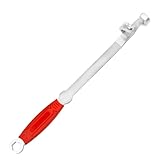
Alright, so you’re convinced you need a torque wrench. Good. Now, which one? For scope mounting, you’re generally looking at smaller torque values, typically in the inch-pound range. A click-type torque wrench is the most common and usually the most affordable for this kind of work. You set the desired torque value, and when you reach it, the wrench makes a distinct ‘click’ sound, or sometimes a physical break in the handle. This tells you to stop tightening.
I’ve used a few different brands over the years, and honestly, for the lower ranges needed for scope mounting, the budget options can be perfectly adequate if you treat them right. I picked up one for around $30 a few years back, and it’s been reliable for all my scope and accessory mounting needs. The key is calibration.
Torque wrenches, especially cheaper ones, can lose their accuracy over time or if they’re mishandled (like being left set at a high torque value). Ideally, you’d get yours calibrated periodically, but for most hobbyists, just being aware and perhaps cross-checking with another wrench if you have one is a good start. Some of the higher-end wrenches are incredibly precise, but you’re likely paying for features you won’t need for just a bolt scope base torque. You don’t need a heavy-duty industrial torque wrench for this job; a smaller, more precise one is what you’re after.
When you use it, don’t just yank on it. Apply steady, smooth pressure. You want to feel that click or break without jerking the wrench. If you’re not sure you’ve hit the mark, it’s better to stop and re-evaluate than to overtighten. Some people like to set the torque wrench and then apply pressure until they feel the click. Others prefer to apply pressure and then listen for the click. Both methods work, but consistency is key. Also, always back off the adjustment to the lowest setting when you’re done using it to preserve the spring mechanism and maintain its accuracy.
One thing that’s often overlooked is the driver bit. You need the correct size and type of bit – usually Torx or hex. A poorly fitting bit can round out a screw head, turning a simple torque job into a stripped-screw nightmare. Make sure your bits are good quality and fit snugly into the screw head. I’ve had to replace stripped scope base screws more times than I care to admit because I used a cheap, worn-out bit. It’s a small thing, but it makes a huge difference. Remember, the goal is a precise, repeatable torque value for a bolt scope base torque, and that starts with the right tool and the right bit.
Common Mistakes and How to Avoid Them
Let’s talk turkey. We all make mistakes, especially when we’re learning. When it comes to a bolt scope base torque, there are a few common pitfalls that people fall into, often due to impatience or just not knowing better. The first, as we’ve beaten to death, is not using a torque wrench at all. People think ‘I’ve got a good feel for it,’ or ‘It just needs to be tight.’ This is the express lane to inconsistent mounting and potential damage.
Another big one is cross-threading. This happens when you start screwing in a bolt at an angle, and the threads don’t engage properly. It feels like it’s tightening, but you’re actually damaging both the screw and the threaded hole.
This is particularly common with the smaller screws used for scope bases. Always start screws by hand, threading them in as far as you can comfortably go. If you feel any resistance, back it out and try again. (See Also: Do I Need Special Replacement Bolts For Car Engines )
It should spin in smoothly. If it doesn’t, something is wrong. I had a buddy who swore his base was just ‘tight fitting’ and ended up cross-threading two of the four screws.
We had to drill them out and re-tap the holes. Expensive and time-consuming lesson.
Uneven torque is also a silent killer. Even if you’re using a torque wrench, if you tighten one screw all the way to spec, then move to the next, you can still create stress. The best practice is to tighten screws in a star or crisscross pattern, bringing them up gradually to the final torque value. For a four-screw base, you might go: screw 1 to half torque, screw 3 to half torque, screw 2 to half torque, screw 4 to half torque.
Then repeat for the full torque. This allows the base to settle evenly onto the receiver.
It sounds like overkill, but it’s how you get a truly stable and level mount. This is especially true when dealing with multiple screws on a single base, or when mounting rings that have two screws per side.
You want that even pressure distribution for a bolt scope base torque.
Finally, using the wrong lubricant or no lubricant at all. Some manufacturers recommend a tiny bit of anti-seize or a light gun oil on the threads. This helps the screw reach the specified torque value without galling or seizing. However, too much lubricant can cause you to overtighten, as the lubricant reduces friction. Always check the manufacturer’s recommendations. For most scope base screws, a dry thread or a tiny dab of appropriate thread locker (like blue Loctite, if recommended and in tiny amounts) is often the way to go. Never use red Loctite on scope bases unless the manufacturer explicitly says to, as it’s meant for permanent bonds.
People Also Ask:
What Torque Setting Is Best for Scope Base Screws?
The best torque setting for scope base screws varies by manufacturer and material, but a common range for Picatinny or Weaver bases on a rifle is between 15 to 30 inch-pounds. Always consult the specific instructions provided by your rifle and scope mount manufacturer for the most accurate and safe torque value.
Can I Use a Regular Wrench for Scope Base Torque?
No, using a regular wrench for scope base torque is not recommended. A regular wrench relies on feel, which is highly inconsistent and prone to error. This can lead to over-tightening or under-tightening, both of which can compromise your scope’s accuracy and potentially damage your equipment. A calibrated torque wrench is key for precise and repeatable results.
How Do I Know If I Overtightened Scope Base Screws?
Signs of overtightened scope base screws include stripped threads, visible deformation of the base or receiver, or screws that are extremely difficult to remove. In some cases, overtightening can also cause the scope to bind, leading to inaccurate shots. If you suspect overtightening, it’s best to have a qualified gunsmith inspect the mounts and rifle. (See Also: Can You Use A Torque Wrench To Break Bolts Loose )
Real-World Application: My Experience Mounting a Scope
A few years back, I was setting up a new hunting rifle. It was a nice bolt-action chambered in 6.5 Creedmoor, and I’d picked out a mid-tier scope with good reviews. I had the rifle, the scope, the mounts, and a brand-new torque wrench I’d just bought – one of those small, click-type ones designed for firearms. I was determined to get this right.
I followed the instructions meticulously. Cleaned the receiver, cleaned the bases, made sure the threads were clean and dry. I checked the torque spec for the base screws – 20 inch-pounds. I attached the first base and started the screws by hand, then used the torque wrench. Click. Moved to the next screw on that base. Click. Repeat for the second base. It felt… weird. Not tight like I was used to, but the wrench told me it was done. Then came the scope rings. These also had a torque spec, 25 inch-pounds, but this time for the screws that clamped the rings around the scope tube. Again, star pattern, steady pressure, listening for that click.
I’ll be honest, my instinct was screaming, ‘That’s not tight enough!’ I wanted to give each screw another little snug-up. But I trusted the wrench. I mounted the scope, did a rough bore-sight, and headed to the range. The difference was night and day compared to my earlier ‘snug’ attempts. The rifle held zero perfectly. My first few shots were clustered nicely, and adjustments made sense. No wandering zero, no reticle slop. It was a lightbulb moment. That consistent, repeatable bolt scope base torque meant my expensive glass was actually performing as intended, reliably, every time I went out.
This experience solidified my belief: you can spend a fortune on rifles and scopes, but if you skimp on the mounting process, you’re throwing money away. That little torque wrench, which cost me maybe $40, was one of the best investments I’ve made for my shooting. It took the guesswork out of a important step and gave me confidence in my equipment. It’s not about being a professional gunsmith; it’s about using the right tools and following the right procedures for a bolt scope base torque.
Torque Is King, Especially for Precision Shooting
Whether you’re a hunter, a competitor, or just someone who likes to know their rifle is dialed in, precision matters. And precision doesn’t happen by accident. It starts with a solid foundation, and for a scope, that foundation is your mounts. Getting the bolt scope base torque right is fundamental to achieving that solid foundation.
Think about the forces a rifle experiences. Recoil slams it backward, and then the bolt cycles forward. Vibration from firing. Temperature changes that cause metal to expand and contract. If your scope isn’t mounted securely and consistently, all these factors can work to throw off your zero. A base that’s even slightly loose or unevenly torqued is a weak link that will absolutely degrade your rifle’s accuracy over time.
For competitive shooters, this is a must. A fraction of a minute of angle can mean the difference between a win and a loss. Every component needs to be installed to its absolute best performance standard. For hunters, it means knowing that when that once-in-a-lifetime shot opportunity presents itself, your rifle will perform. You don’t want to be second-guessing your zero because of a poorly mounted scope. It’s about reliability and confidence in your equipment, and that starts with taking the time to do the small things right.
I know it’s tempting to skip steps, especially if you’re eager to get out and shoot. But trust me, spending an extra 15-30 minutes making sure your scope is mounted correctly with the proper bolt scope base torque will save you hours of frustration and potentially expensive repairs down the line. It’s a simple step that yields enormous benefits in accuracy and reliability.
Verdict
So, there you have it. The humble torque wrench isn’t just some fancy gadget; it’s your best friend when it comes to making sure your scope is mounted correctly. That little device takes the guesswork out of securing your optics and prevents the costly mistakes that come from ‘eyeballing’ it. When you’re dealing with the precision of a firearm and the delicate optics of a scope, there’s no room for vagueness.
I’ve learned that treating every fastener with the respect it deserves, especially for something as important as a bolt scope base torque, pays off in spades. You get better accuracy, greater reliability, and the peace of mind knowing your rifle is as capable as it can be. Don’t let cheap or rushed mounting practices undermine the quality of your rifle and scope.
Next time you’re mounting a scope, do yourself a favor. Grab that torque wrench, find the correct specification for your rifle and mounts, and do it right the first time. Your target, and your wallet, will thank you.