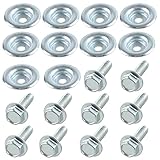
Look, I’ve been there. Staring at a pile of metal bits, wondering if I’m about to build a spaceship or a very expensive paperweight. When it comes to understanding what holds things together, especially when you’re trying to figure out if you am bolts nuts for the job, it can feel like a foreign language.
I remember my first DIY disaster. Bought what I thought were ‘heavy-duty’ anchors for a shelf. Turns out, ‘heavy-duty’ meant ‘might hold a feather’. The whole thing came down, taking half my books with it. Lesson learned: not all fasteners are created equal, and the cheap ones are often the most expensive in the long run.
So, let’s cut through the noise. This isn’t about fancy jargon; it’s about what actually works when you need things to stay put, whether that’s for a simple fix or a project that actually matters.
Why Screws and Bolts Get Confusing Fast
Let’s be real, the world of threaded fasteners is a mess. You’ve got screws, bolts, nuts, washers, and a million variations of each. It’s enough to make anyone’s head spin, and honestly, the marketing around them doesn’t help. They throw around terms like ‘high tensile strength’ and ‘corrosion resistant’ like everyone’s a metallurgist.
My first encounter with what felt like thousands of options for a simple gate repair left me bewildered. I ended up buying a kit that looked good but was entirely the wrong thread pitch for the existing hinges. Took me three trips to the hardware store and a very stern talking-to from the guy behind the counter before I figured out my mistake. It cost me time, gas, and frankly, a good chunk of my pride.
The core issue is that while they all look similar, their purpose, material, and how they interact with other components are wildly different. A screw is designed to cut its own threads into a material, or into a pre-tapped hole. A bolt, on the other hand, is meant to pass through two or more pieces of material and be secured by a nut.
It’s a subtle difference, but it matters. Using a screw where a bolt is needed is asking for trouble; the joint won’t be as strong. And don’t even get me started on thread types – coarse thread, fine thread, metric, imperial. It’s a minefield.
If you’re working on anything where safety is a factor, like attaching a bike rack to your car or building a deck, getting this wrong can have serious consequences. I’ve seen friends’ projects fail because they used the wrong fastener, and it wasn’t pretty. The common advice to ‘just get the right size’ is laughably simplistic when ‘right’ involves a dozen other unspoken variables.
The sheer variety is mind-boggling. You have your standard hex bolts, carriage bolts with their smooth, rounded heads, lag bolts that are practically giant wood screws, and U-bolts for clamping pipes or posts.
Then there are the nuts: hex nuts, lock nuts with their deforming threads to prevent loosening, wing nuts for hand-tightening, and cap nuts that look pretty. Each one has a specific job. For example, a carriage bolt is great for preventing rotation when you’re tightening from the back, like on a wooden bench, because its square shoulder digs into the wood.
A lag bolt, with its coarse threads and pointed tip, is designed specifically for wood, providing strong holding power without needing a pre-drilled pilot hole (though one is usually recommended for larger ones). Trying to use a standard hex bolt in a piece of solid oak without a pilot hole? You’ll likely split the wood.
My own experience taught me that the cheapest option is rarely the best. I once tried to save a few bucks on a set of bolts for a garden shed. They looked fine, felt solid enough, but after about six months, I noticed rust creeping up the threads. A year later, two of them had snapped from the combined stress of weather and vibration. Replacing them cost more in time and effort than buying decent quality stainless steel or galvanized bolts in the first place. It’s a classic case of paying twice.
The Material Matters More Than You Think
This is where most people get it wrong. They pick a fastener based on its shape or size and completely ignore what it’s made of.
It’s like choosing a car based on its color without checking if the engine even runs. The material is everything, especially when it comes to durability and the environment the fastener will be in. My first big mistake was using plain steel bolts for an outdoor furniture project.
They looked great for about a year, then they started to rust and stain the wood. Eventually, they became weak enough that the legs of the table started wobbling. I ended up replacing them with galvanized ones, which looked a bit industrial but held up for years. (See Also: Are All Honda Atv Bolt Patterns The Same )
The cost difference initially was about $5 for the whole project, but the hassle of replacing them, plus the aesthetic damage, was way more expensive.
Generally, you’ll see fasteners made from steel, stainless steel, brass, and sometimes aluminum or titanium for specialized applications. Plain steel is the cheapest but offers the least protection against corrosion. It’s fine for indoor use where moisture isn’t a major factor. If you need something for outdoor use, or in a humid environment like a bathroom or kitchen, you absolutely need something better. Galvanized steel is coated with zinc, which provides a decent layer of protection. It’s a good middle-ground option for many outdoor applications, offering a balance of cost and corrosion resistance. It’s what I typically use for general outdoor projects like fences or simple garden structures.
Stainless steel is the gold standard for corrosion resistance. It’s more expensive than plain steel or galvanized, but it’s worth every penny for anything exposed to the elements. I’ve used stainless steel bolts on my boat trailer, and after years of salt spray, they still look and function like new. It’s also a good choice for food-grade applications or where you want a clean, non-staining finish. For a really high-end look or specific non-magnetic requirements, brass fasteners are an option, but they’re softer and generally more expensive than steel. Aluminum is lightweight and corrosion-resistant but not as strong as steel. Titanium is incredibly strong, lightweight, and corrosion-resistant, but it’s prohibitively expensive for most common uses.
Here’s a table that breaks down some common materials and their general use cases. Don’t just grab the cheapest; think about where it’s going.
| Material | Pros | Cons | Verdict |
|---|---|---|---|
| Plain Steel | Cheap, strong | RUSTS easily, low corrosion resistance | Indoor use only, where looks don’t matter and moisture is absent. Big no for outdoor. |
| Galvanized Steel | Good corrosion resistance for the price, readily available | Zinc coating can wear off over time, not as aesthetically pleasing as stainless | Workhorse for most outdoor projects – fences, sheds, decks. Good balance. |
| Stainless Steel | Excellent corrosion resistance, looks good, strong | More expensive than steel or galvanized | Worth the splurge for anything exposed to weather, saltwater, or where aesthetics and longevity are key. |
| Brass | Corrosion resistant, decorative | Softer, more expensive than steel, limited strength | Best for decorative applications, plumbing, or where non-sparking is needed. |
When I was building an outdoor kitchen island, I initially bought galvanized lag bolts for the main frame. Midway through, I realized the heat and humidity from cooking, plus potential spills, meant I needed something that wouldn’t corrode. Swapping them out for stainless steel added a decent chunk to the budget, but looking at those clean, rust-free connections now, years later, I know it was the right call. You have to factor in the lifespan and the potential for failure. A few extra bucks upfront can save you a lot of headaches down the road.
Common Mistakes That Make You Look Like a Noob
I’ve made them, you’ve probably made them, or you will. The biggest mistake, bar none, is using the wrong tool for the job. I’m talking about using pliers to turn a bolt head because you can’t find the right wrench, or trying to force a screw into a hole that’s too small with a screwdriver that’s about to strip the head. It’s a recipe for stripped threads, damaged hardware, and a job that looks shoddy.
I remember trying to tighten a bolt on a bicycle frame once with an adjustable wrench because I didn’t have the correct size open-end wrench. The adjustable wrench slipped, gouged the bolt head, and then I couldn’t get it off or on properly. I ended up having to cut the bolt off, which was a whole other nightmare. Since then, I’ve learned to invest in a decent set of wrenches and sockets.
It’s not just about convenience; it’s about precision and not damaging the parts you’re working with.
Another common blunder is over-tightening. People think that if a little force is good, a lot of force is better.
This is especially true with screws. Overtightening can strip the threads in the material, especially in softer woods or plastics, rendering the fastener useless. It can also crack brittle materials, like ceramic tiles or some types of plastic casings.
For bolts and nuts, overtightening can strip the threads on the bolt or the nut, or worse, it can deform the bolt, weakening it. I once saw a car repair where someone had overtightened the lug nuts on a wheel.
When the wheel was removed later, the studs were visibly stretched and damaged. It’s a miracle the wheel hadn’t come off while driving. The general rule is to tighten until snug, then give it just a little bit more, maybe a quarter turn, depending on the fastener and material.
If a torque wrench is specified, use it. Otherwise, use common sense and feel.
Not using washers is another frequent oversight. A washer is not just there to look pretty. It distributes the load of the fastener over a larger area, preventing the head from digging into the material, especially on softer surfaces like wood or sheet metal. It also helps to prevent damage to the surface. For things that might vibrate, like machinery or outdoor structures, a lock washer is often indispensable. It provides tension to keep the nut from backing off due to vibration. I’ve had garden furniture fall apart because the nuts on the bolts vibrated loose. Adding simple lock washers would have prevented that entire disaster. It’s a cheap fix that provides a lot of security. (See Also: Are Ak Bolts Interchangeable )
Finally, mixing and matching incompatible fasteners is a classic mistake. Trying to force a metric bolt into an imperial nut, or a fine thread screw into a coarse thread hole, will likely just damage both. They won’t thread properly and you’ll end up with a mangled mess. Always check the thread pitch and diameter.
Most hardware stores have thread gauges, or you can often find charts online to help you identify what you need. Don’t guess. If you’re unsure, take the old fastener with you to the store. People often ask, ‘Can I use a screw if I don’t have a bolt and nut?’
The answer is usually no, not if you want a strong, secure connection. They are designed for different applications.
Mistake Checklist
- Using the wrong tool (pliers for wrenches, wrong screwdriver bit).
- Overtightening, stripping threads, or cracking materials.
- Forgetting washers, especially lock washers for vibrating applications.
- Mixing metric and imperial, or fine and coarse threads.
Honestly, the best way to avoid these mistakes is to slow down, assess the situation, and buy the right fasteners and tools from the start. It saves you time, money, and a lot of frustration in the long run.
When to Use Which Type: A Practical Breakdown
Alright, let’s get down to brass tacks. When do you actually reach for that hex bolt versus a lag screw? It boils down to what you’re joining and what kind of load it’s going to bear. For joining two pieces of wood where you want a strong, secure connection that can be disassembled, a bolt and nut combination is usually your best bet. You drill a hole the size of the bolt shank through both pieces, slide the bolt through, and then secure it with a nut and washer. This creates a clamped joint that’s very solid.
If you’re attaching something directly to a wooden beam or post, like mounting a bracket or a piece of hardware, a lag screw (or lag bolt) is often the go-to. These have coarse threads that grip into the wood, and you typically drive them in with a wrench or socket. You do need to pre-drill a pilot hole, especially for larger lag screws, to prevent splitting the wood and to make driving easier.
The pilot hole should be slightly smaller than the root diameter of the threads. For example, when I built a heavy-duty workbench, I used lag screws to attach the main legs to the apron. They provided a rock-solid connection that has held up to years of hammering and sawing.
Carriage bolts are a bit more niche but incredibly useful. Their rounded head and square shoulder are designed to bite into wood or metal, preventing the bolt from spinning when you tighten the nut on the other side. This is perfect for things like wooden furniture, playground equipment, or anywhere you need a smooth, tamper-resistant finish on one side. You drill a slightly oversized hole, so the square shoulder seats firmly. Then you tighten the nut on the other end.
What about when you’re dealing with materials other than wood, like metal or concrete? For metal-to-metal connections, bolts and nuts are standard. You’ll often use machine screws that are designed to thread into a tapped hole in one of the metal pieces, or bolts that go all the way through and are secured with a nut. For concrete, you’ll need specialized concrete anchors, like wedge anchors or sleeve anchors, which expand within a drilled hole to create a secure fastening point. These aren’t your everyday am bolts nuts, but they are important for structural work involving concrete.
The choice between coarse thread and fine thread is also important. Coarse threads are more common, faster to thread, and more resistant to damage from impact. They’re good for softer materials and general applications. Fine threads are more precise, offer a stronger hold for a given diameter (due to more threads per inch), and are less likely to vibrate loose. They’re often used in automotive applications or where precise adjustment is needed. For most DIY projects, coarse threads are perfectly adequate.
When you’re faced with a choice, ask yourself: What am I attaching this to? What forces will it experience (tension, shear, vibration)? Does it need to be easily disassembled? What environment will it be in? Answering these will steer you toward the right fastener. For instance, if you’re attaching a heavy-duty shelf bracket to a plaster wall, you’ll need special wall anchors, not just a screw. If you’re building a deck railing, you’ll want weather-resistant bolts and screws, likely galvanized or stainless steel, with appropriate washers.
Fastener Selection Cheat Sheet
| Application | Recommended Fastener Type | Notes |
|---|---|---|
| Joining two pieces of wood securely | Bolt and Nut (e.g., Hex Bolt) | Drill through both pieces. Use washers. |
| Attaching hardware to wood (e.g., bracket, post) | Lag Screw/Bolt | Requires pre-drilled pilot hole. Good grip. |
| Wood joinery where one side needs a smooth, non-spinning head | Carriage Bolt | Square shoulder bites into wood. |
| Metal-to-metal connections | Bolt and Nut or Machine Screw | Depends on tapped holes vs. through-holes. |
| Fastening into concrete | Concrete Anchor (wedge, sleeve, etc.) | Specialized for masonry. |
| Vibration-prone applications (e.g., machinery, outdoor structures) | Nut with Lock Washer or Self-Locking Nut | Prevents loosening. |
The Humble Washer: More Important Than You Think
I’ll admit it, for years I treated washers as optional extras. You know, the little metal rings you sometimes find included in a bag of bolts, or that you can grab a handful of for a few cents. My thinking was, ‘Does it really make a difference?’ Turns out, yes, it makes a huge difference, and ignoring them is a surefire way to either damage your project or have it fail prematurely.
I learned this the hard way when I was assembling a metal shelving unit. I was impatient, just screwing the bolts directly into the pre-drilled holes of the thin metal shelves.
As I tightened them, the heads of the bolts started to dig into the metal, deforming it. One of the shelves actually cracked slightly where the bolt head was bearing down. It looked terrible and felt unstable. I had to undo it all, buy a box of appropriate-sized flat washers, and start over. (See Also: Are All Bolt Patterns The Same )
The difference was night and day. The washers distributed the pressure evenly, the metal didn’t deform, and the whole unit felt much more solid and professional.
There are several types of washers, and they all serve slightly different, but important, purposes. The most common is the flat washer. Its primary job is to spread the load of the fastener over a wider surface area. This is particularly useful when fastening into softer materials like wood, plastic, or thin sheet metal, preventing the fastener head from crushing or tearing through the material. It also helps prevent the fastener from loosening due to vibration by providing a larger bearing surface for the nut or bolt head to press against.
Then there are lock washers. These are usually split or have bent sections, and they work by creating tension between the fastener head and the surface it’s contacting, or between the nut and the bolt threads. This tension resists loosening caused by vibration or thermal expansion and contraction. I used to think lock washers were overkill for most things, but after a garden gate hinge came loose and caused the gate to sag, I became a believer. A simple lock washer would have kept it tight. They’re especially important for any moving parts or outdoor structures that experience movement.
Another type is the fender washer, which has a much larger outer diameter than a standard flat washer. These are excellent for thin materials where you need to distribute the load over a very large area to prevent damage, or where the hole in the material is already oversized. Think of attaching thin plastic sheeting or attaching something to a painted surface where you don’t want to chip the paint.
There are also specialized washers like sealing washers (often with a rubber or neoprene ring) for creating watertight seals, and spring washers (like Belleville washers) that provide a more significant spring action to maintain tension. For most common DIY tasks, though, flat washers and lock washers are the ones you’ll reach for most often. My personal rule now? If a bolt or screw head is going to sit directly against a surface that could be damaged or deforms easily, I use a flat washer.
If the assembly is going to experience any kind of vibration or movement, I add a lock washer behind the flat washer (or sometimes just the lock washer itself, depending on the application). It’s a small investment that pays off in reliability.
People often ask, “Can I just use a nut directly against the surface?” Technically, yes, but it’s usually a bad idea. The edge of the nut is small and hard, and it can easily damage the material it’s pressing against, especially if the hole is slightly off-center or the material is soft. The washer acts as a buffer. It’s one of those simple things that makes a project look and perform better. It’s why I always buy my fasteners in bulk now, and I make sure to get a good assortment of washers along with them. It’s better to have them and not need them than to need them and not have them.
The Faq: Digging Deeper Into Fastener Follies
What’s the Difference Between a Bolt and a Screw?
At its core, a bolt is designed to pass through two or more parts and be secured with a nut. It’s meant for clamping two pieces together. A screw, on the other hand, is designed to cut its own threads into a material, or thread into a pre-tapped hole. While there’s overlap, especially with machine screws, the key distinction is the nut. If it needs a nut, it’s generally a bolt. If it threads into the material or a pre-made hole without a nut, it’s a screw.
Are Stainless Steel Fasteners Really Worth the Extra Cost?
For anything exposed to moisture, salt, or the elements, absolutely. While plain steel or galvanized fasteners are cheaper upfront, they corrode and weaken over time. Stainless steel offers superior corrosion resistance, looks better for longer, and provides a more reliable hold in challenging environments. I’ve found that the cost of replacing corroded fasteners, plus the hassle and potential damage, makes stainless steel a far more economical choice in the long run for outdoor or marine applications.
What Does the ‘grade’ Mean on a Bolt?
The grade indicates the strength and material properties of a steel bolt. Higher grades mean stronger bolts. For example, Grade 2 is standard, Grade 5 is stronger, and Grade 8 is very strong, often used in automotive and heavy equipment. For most common household or DIY projects, Grade 2 or Grade 5 is usually sufficient. If you’re working on something important where failure is not an option, like structural components or suspension systems, you’ll need to pay close attention to the grade specified.
Can I Use a Washer If the Bolt Head Already Has a Built-in Flange?
A flange bolt or flange nut already has a washer-like surface built into its head or base. In most cases, you don’t need an additional washer with a flange-style fastener. The flange is designed to distribute the load, similar to a washer. Adding another washer could potentially interfere with the seating of the flange or create an unnecessary gap in the joint.
How Do I Know If I Need a Lock Nut?
You need a lock nut, or a standard nut with a lock washer, if the assembly is subject to vibration, significant temperature changes, or dynamic loads that could cause standard nuts to loosen over time. Examples include machinery, vehicles, outdoor furniture, or anything that rattles or moves. For static, non-vibrating applications, a standard nut is usually fine. My rule of thumb: if it shakes, rattles, or rolls, use a locking mechanism.
Conclusion
So, there you have it. It’s not rocket science, but it’s definitely more than just picking the closest thing in the bin. Understanding the basics of what makes a bolt different from a screw, why material matters, and the unsung hero that is the washer can save you a ton of headaches and make sure your projects actually hold together.
Don’t be afraid to ask for help at the hardware store, and always err on the side of caution when it comes to strength and corrosion resistance. It’s better to over-engineer slightly than to have your project fall apart. When you’re assembling something, take a moment to consider the forces at play. It’s a simple step that makes a massive difference.
Next time you’re staring down a fastener aisle, hopefully, you’ll feel a little more confident. Remember, the right fastener is like the foundation of a house – you don’t see it much, but it’s everything. And for goodness sake, get yourself a decent set of wrenches. You am bolts nuts for that.