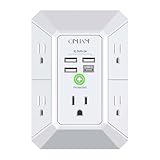
I remember staring at the outlets in my first apartment, the ones with just two little slots, and wondering if they were even safe. It felt like something out of a black and white movie, and frankly, it made me nervous. We see these outlets in older homes all the time, and the question always creeps up: are 2 prong outlets grounded? The short answer is usually no, and that’s a problem you need to understand.
It’s easy to ignore them, especially if your modern appliances have those three-prong plugs. But what about that old lamp you love, or the charger for your vintage radio? Not knowing if your older wiring is actually protecting you is a gamble I’m not willing to take, and neither should you.
The Big Question: Are 2 Prong Outlets Grounded?
Let’s cut to the chase. When you look at a wall socket and see only two slots – a vertical one and a smaller vertical one – you’re likely looking at an ungrounded outlet.
The third slot, the round or U-shaped one, is for the ground pin on a plug. That pin isn’t just for show; it’s a safety feature, and its absence on a two-prong outlet means the circuit isn’t grounded in the way modern electrical codes demand. I learned this the hard way trying to plug in a brand-new power tool into an old house and getting a nasty jolt. It wasn’t a fun surprise, and it immediately made me rethink the safety of that entire house’s wiring.
Many older homes, built before the 1960s, were wired with two-prong outlets. Back then, the understanding of electrical safety and the proliferation of high-demand appliances were different.
The National Electrical Code (NEC), which sets the standards for safe electrical installations in the U.S., didn’t mandate grounding for all circuits until later. This means that millions of homes still have these older, ungrounded systems running. It’s not just a cosmetic difference; it’s a significant safety deficiency.
The primary purpose of a ground wire is to provide a safe path for electricity to travel in case of a fault. Imagine a scenario where the hot wire inside your toaster accidentally touches the metal casing. If your toaster has a three-prong plug and the outlet is properly grounded, that stray electricity will flow harmlessly into the ground wire, trip your circuit breaker or blow a fuse, and shut off the power.
Without a ground wire, that electricity has nowhere safe to go. It will sit there, on the metal casing, waiting for a person to touch it. When you touch that faulty appliance, you become the path to ground, and you get shocked. I’ve heard stories from friends who’ve experienced minor shocks from appliances plugged into these outlets, and it’s always a stark reminder of why grounding is so important.
It’s not an exaggeration to say a ground wire can be the difference between a minor inconvenience and a serious injury or even fatality. My own experience, while just a jolt, was enough to make me respect the power of electricity and the importance of safety measures.
You might see adapter plugs, those little three-to-two prong converters, and think they’re a solution. They’re not. These adapters do not magically create a ground connection. They simply allow you to plug a three-prong appliance into a two-prong outlet.
The important ground pin is left dangling, disconnected, making the appliance more dangerous, not less. If something goes wrong internally with the appliance, there’s no safety net. I bought a few of these adapters years ago, thinking I was being clever. Then I read up on how they actually work, or rather, don’t work, and tossed them immediately.
It’s a dangerous misconception that these adapters provide any real safety benefit. They are basically a bypass of the very safety feature you need. For any appliance that has a three-prong plug, especially those with metal casings like toasters, refrigerators, and washing machines, using them with a two-prong outlet and a cheap adapter is asking for trouble.
The risk of electric shock is significantly increased.
The confusion often arises because many older appliances did have two-prong plugs. These appliances were designed for the electrical systems of their time, where grounding wasn’t standard. They might have had internal safety features or a plastic casing that made them less prone to electrical faults reaching the user. However, modern appliances, especially those with metal casings or higher power demands, rely heavily on the grounding system for safety.
Plugging them into an ungrounded outlet is a mismatch that creates a hazard. I’ve seen people replace old, two-prong appliances with newer, three-prong models, assuming the outlet will just ‘work’. It’s a common oversight, but a potentially costly one.
Understanding the difference between what an outlet is designed for and what you’re plugging into it is most important for safety in any home, particularly older ones.
So, to reiterate the core point: are 2 prong outlets grounded? Generally, no. The absence of the third slot means there’s no dedicated grounding path. This is a fundamental safety issue that needs to be addressed, not ignored. Relying on outdated wiring can lead to dangerous situations, especially with today’s array of electrical devices. (See Also: Are American Outlets Ac Or Dc )
Why Your Old Two-Prong Outlets Are a Problem
Look, I get it. You’ve got an old house, it’s got character, and it’s got two-prong outlets.
Maybe you’ve lived there for years without incident, and the thought of rewiring sounds like a massive, expensive headache. I’ve been there, staring at peeling wallpaper and wondering if I should just live with it. But when it comes to electrical safety, ‘living with it’ can be a gamble with very high stakes. The real problem with two-prong outlets isn’t just about whether they are grounded or not; it’s about the overall lack of protection they offer compared to modern standards.
Think of it like driving a car without airbags. It might have gotten you around for years, but that doesn’t mean it’s safe by today’s standards. The technology and our understanding of risks have evolved, and electrical systems are no different.
The biggest danger, as I mentioned, is the risk of electric shock. When a fault occurs within an appliance – say, a hot wire inside your blender shorts out and touches the metal housing – the electricity needs a place to go. With a properly grounded outlet, this electricity is shunted safely to the ground, tripping a breaker or fuse and cutting off power.
Without that ground connection, the metal housing becomes energized. If you touch it while also in contact with something grounded (like a sink or even a damp floor), you become the conductor. I’ve had a friend who learned this the hard way with a faulty washing machine.
He got a painful jolt that left him shaken and with a newfound respect for electrical safety. He was lucky; it could have been much worse. That experience solidified my belief that upgrading these systems is not just a recommendation, but a necessity for anyone living in an older home.
Beyond direct shock hazards, ungrounded outlets are a significant fire risk. Electrical faults can generate heat. If that heat builds up in a faulty appliance or wiring without a proper escape route, it can easily ignite surrounding materials, like dust, insulation, or wood. Old wiring, especially if it’s degraded or has been subjected to overloading over the years, is more susceptible to developing faults.
The lack of a ground can exacerbate these issues, allowing small electrical problems to escalate into fires. I remember a neighbor’s house fire that started because of an old appliance plugged into an ungrounded circuit. The investigators pointed to a short circuit that, without a ground, couldn’t be immediately contained. It was a devastating loss, and a stark visual of what can happen when electrical systems aren’t up to par.
The cost of upgrading wiring pales in comparison to the potential cost of a house fire.
Another common issue with older wiring systems is the lack of modern safety devices like Ground Fault Circuit Interrupters (GFCIs) and Arc Fault Circuit Interrupters (AFCIs). GFCIs are designed to detect imbalances in current flow that indicate electricity is leaking out of the circuit – often through a person – and shut off power very quickly. AFCIs detect dangerous arcing conditions, which can also cause fires.
These are standard in modern construction, especially in areas like kitchens, bathrooms, and laundry rooms. If you have two-prong outlets, you almost certainly don’t have GFCI or AFCI protection built into your system.
While you can install GFCI outlets as replacements for existing two-prong outlets (even if they aren’t technically grounded themselves, they add a layer of protection), the underlying issue of an ungrounded system remains for other circuits. It’s a band-aid, not a cure.
Finally, there’s the practical consideration of modern electronics. Many sensitive electronic devices, like computers, surge protectors for electronics, and even smart home devices, are designed with the expectation of a grounded electrical system. Plugging them into ungrounded outlets can lead to inconsistent performance, premature failure, and a lack of surge protection.
While not a direct safety hazard in the same way as a shock or fire, it can lead to costly damage to your electronics. I’ve had more than one expensive piece of tech die prematurely after being plugged into an old, ungrounded circuit, despite using a surge protector. The surge protector itself relies on the ground wire to do its job effectively. Without it, it’s like trying to catch a lightning bolt with a fishing net.
So, while the temptation to leave well enough alone might be strong, the reality is that two-prong outlets represent a significant safety deficit. They expose your home and its occupants to increased risks of shock, fire, and damage to electronics. It’s a problem that demands attention.
How Do I Know If My Outlets Are Grounded?
Figuring out if your outlets are grounded isn’t rocket science, but it does require a bit of keen observation and maybe a simple tool. The most obvious indicator, of course, is the outlet itself. If it has two slots and no third, round hole, it’s almost certainly ungrounded. This is the case for the vast majority of outlets you’ll find in homes built before the mid-1960s. However, sometimes you might see an outlet that looks like it has three slots, but the round hole is just a dummy, or the wiring behind it isn’t actually connected. So, looking at the outlet is your first and easiest step. (See Also: Are All Power Outlets Ac )
The definitive way to check, however, is with an inexpensive outlet tester. You can pick one up at any hardware store for around $10 to $20. These are little gadgets that you plug into the outlet. They have indicator lights that tell you the status of the wiring – whether it’s correctly wired, open ground, reversed polarity, or open neutral.
I keep a couple of these testers handy because I do a lot of work in older properties, and they’ve saved me from making assumptions more times than I can count. You simply plug the tester into the outlet, and the lights will illuminate in a specific pattern depending on the wiring. For example, if the ‘ground’ indicator light on the tester doesn’t come on, you know that outlet, and likely the circuit it’s on, is not grounded.
If you don’t have an outlet tester, you can sometimes tell by the type of plug the appliance uses. Appliances with a three-prong plug (one round pin and two flat, prong-like slots) are designed to be used in grounded outlets. If you find yourself using a two-to-three prong adapter, it’s a strong sign that the outlet is ungrounded. However, as we’ve discussed, adapters don’t create a ground.
They just allow the plug to fit. So, while the presence of an adapter might indicate an ungrounded outlet, the absence of one doesn’t guarantee grounding if the outlet itself only has two slots.
I saw a home inspector once look at an outlet, see a three-prong plug sitting nearby, and assume it was grounded. He was wrong. The outlet was indeed two-prong, and the homeowner was using an adapter. It’s a common mistake to make without proper verification.
Another clue, though less reliable on its own, is the age of your home’s wiring. If your house was built before roughly 1965, it’s highly probable that many of your outlets are ungrounded. Electrical codes have evolved significantly, and grounding became a standard safety requirement for most new installations over time. However, this is not a foolproof method, as some renovations might have included updated outlets while leaving the underlying wiring ungrounded, or vice-versa. I’ve seen houses wired in patchwork fashion where some circuits are grounded and others aren’t, which can be even more confusing and potentially dangerous. You can’t assume uniformity.
Here’s a simple table to help you identify potential grounding issues:
| Outlet Appearance | Plug Type Used | Likely Grounded? | Verdict |
|---|---|---|---|
| Two slots only | Two-prong plug | No | Assume ungrounded. Safe for older appliances designed for it. |
| Two slots only | Three-prong plug with adapter | No | DANGEROUS. Appliance is NOT grounded. Upgrade outlet. |
| Three slots (round hole present) | Three-prong plug | Potentially Yes, but verify | Use an outlet tester to confirm. Could be miswired. |
| Three slots (round hole present) | Two-prong plug (rare) | Uncertain. Verify with tester. | May indicate older wiring that doesn’t support grounding. |
The most reliable method is the outlet tester. It provides a clear, visual indication of the outlet’s wiring status. If you’re unsure, or if your tester indicates an issue, it’s always best to consult a qualified electrician. They can assess the entire circuit and provide professional advice on how to bring your home up to modern safety standards. Don’t guess when it comes to electricity; test and verify.
Upgrading to Grounded Outlets: What You Need to Know
So, you’ve determined that you have a lot of two-prong, ungrounded outlets, and you’re ready to do something about it. Good. That’s the smart move. The process of upgrading your outlets to grounded ones is a common electrical project, but it’s not always as straightforward as just swapping out the old for the new. There are a few ways to approach this, each with its own implications for safety and code compliance. Understanding these options will help you make the right decision for your home. I’ve seen people try to cut corners here, and it never ends well. Safety first, always.
The ideal scenario is running a new ground wire from your electrical panel to each outlet location. This is the most solid and code-compliant solution. Your electrician will run a dedicated ground wire alongside the hot and neutral wires.
This new ground wire will connect to the ground bus bar in your electrical panel and to the ground screw on the back of the new three-prong outlet. This provides a true, reliable path to ground for all your appliances.
This is the best way to upgrade, but it can be labor-intensive and costly, especially in older homes with finished walls where access might be difficult. I’ve had this done in my own home, and while it was a significant investment, the peace of mind was well worth it. It took about three days for a professional to tackle a significant portion of my house.
Another common and often more practical approach, especially if running new wires is prohibitive, is to replace existing two-prong outlets with GFCI (Ground Fault Circuit Interrupter) outlets. These outlets have a built-in safety mechanism that can detect ground faults and shut off power almost instantaneously, protecting against electric shock. You can install a GFCI outlet in place of a two-prong outlet even if there isn’t a ground wire present. However, here’s the important part: the GFCI outlet must be wired correctly, and it must be labeled.
The outlet itself will have “No Equipment Ground” printed on the face. When you install it, you connect the hot and neutral wires to the appropriate terminals, and you can then connect subsequent ungrounded outlets downstream from this GFCI outlet, basically using the GFCI as a protection device for those ungrounded outlets. This is often referred to as “back-feeding” the GFCI.
Here’s a simplified look at the GFCI upgrade option:
- Identify the Circuit: Determine which circuit breaker controls the outlet you want to replace.
- Turn Off Power: Importantly, turn off the power to that circuit at the breaker box. Double-check with your outlet tester to make sure the power is off.
- Remove Old Outlet: Carefully remove the old two-prong outlet from the box.
- Install GFCI Outlet: Connect the wires to the GFCI outlet according to the manufacturer’s instructions. Typically, the incoming hot wire connects to the “Line” hot terminal (often brass), and the incoming neutral wire connects to the “Line” neutral terminal (often silver).
- Label Clearly: This is vital. The GFCI outlet itself should be labeled “No Equipment Ground.” Any outlets wired downstream from this GFCI (using the “Load” terminals on the GFCI) should also be clearly marked with a sticker indicating they are protected by a GFCI but are not directly grounded.
- Test Thoroughly: Turn the power back on and test the GFCI outlet using its “Test” and “Reset” buttons. Then, test any downstream outlets.
While a GFCI outlet provides excellent shock protection, it’s important to understand that it doesn’t provide the same level of protection against surges or the same safety mechanism for sensitive electronics as a true grounded outlet. The appliance’s casing won’t have a direct path to ground, so if a fault occurs, the GFCI will trip, but the casing could still become momentarily energized before the GFCI reacts. This is why running a new ground wire is always the preferred solution when possible. (See Also: Are Arc Trip Outlets Required In Hillsborough County )
You might also see “self-grounding” receptacles. These are three-prong outlets that have a special clip or mounting strap that can make contact with the metal electrical box. If the box is metal and properly grounded back to the panel, this can effectively ground the outlet. However, if the box is plastic, or if the metal box isn’t grounded, this feature is useless. This is why relying solely on the appearance of a three-prong outlet can be misleading. You need to make sure the ground path is actually connected and functional.
When in doubt, and especially for major renovations or if you’re dealing with a lot of old wiring, hire a qualified electrician. They have the knowledge and tools to assess your system, bring it up to code, and make sure that your home is as safe as possible. The cost of hiring a professional is an investment in safety that’s hard to put a price on. It’s not worth the risk of a DIY attempt gone wrong.
The Controversial Take: When Are 2 Prong Outlets ‘okay’?
Alright, let’s stir the pot a bit. Everyone and their dog will tell you that two-prong outlets are inherently dangerous and must be replaced immediately. And for the most part, they’re right. But like most things in life, there’s a nuanced answer, and sometimes, in very specific, controlled circumstances, they’re not the ticking time bomb everyone makes them out to be.
I’ve heard electricians grumble about this, but hear me out. The key here is understanding the appliance and the risk.
If you’re plugging in a simple lamp with a plastic casing and a basic incandescent bulb, the risk of a dangerous shock from that particular outlet is relatively low, assuming the appliance itself is in good condition. That’s the controversial part: not all 2-prong outlets are creating a crisis waiting to happen, but they are definitely not ideal.
My contrarian opinion is this: while upgrading to grounded outlets is the gold standard and should be your ultimate goal, for very low-risk, specific applications in older homes, an ungrounded outlet might be acceptable if you are extremely diligent about the appliances you use and their condition. I’m talking about things like a simple bedside lamp, an old clock radio that came with a two-prong plug, or a charging station for low-power devices where the appliance itself has a plastic casing. These devices typically don’t have metal parts that can become energized in a way that poses a significant shock risk.
They were designed for the electrical systems of their era. The common advice is to replace them all, no questions asked. I disagree with the blanket ‘replace them all NOW’ approach because it ignores the context of the appliance. However, this is a very fine line, and the danger comes when people push the boundaries.
The danger arises when people assume that because their old lamp worked fine, their new, high-power toaster oven or their gaming PC will also be perfectly safe. They won’t. Modern appliances, especially those with metal casings or complex electronics, rely on grounding for protection against surges, faults, and electrical interference. Plugging a modern appliance with a three-prong plug into a two-prong outlet, even with an adapter, is asking for trouble. That adapter doesn’t provide a ground. It just lets the plug fit. The ground pin is left dangling, useless. I’ve seen this done by people who think they’re being resourceful, and it makes me cringe. It’s like putting a fancy new tire on a bicycle with no brakes.
Furthermore, the wiring behind the two-prong outlets might be old, brittle, or inadequately sized for modern electrical demands. Even if you’re plugging in a low-risk appliance, the old wiring itself could be a fire hazard. This is where the “acceptable” use of 2-prong outlets becomes extremely limited. If the wiring is questionable, then no appliance is truly safe. The integrity of the entire circuit matters. I once stayed in a vacation rental with beautiful antique fixtures but old, frayed wiring. Even the simple lamp I used felt suspect. I ended up unplugging it entirely and using my phone’s flashlight.
So, when might they be acceptable? Only if you are absolutely certain that: 1) the appliance is designed for ungrounded use (i.e., it has a two-prong plug and a non-metallic casing), 2) the appliance is in excellent condition with no signs of damage, and 3) the wiring behind the outlet is in good condition and not overloaded.
If any of these conditions are not met, you are in risky territory. The presence of a three-prong plug on an appliance is a clear signal that it requires grounding for safe operation. Trying to bypass this requirement is dangerous. I’ve seen people replace the old outlets with new-looking three-prong ones, but without running a ground wire, they are just cosmetic changes that give a false sense of security.
This is a common, and frankly, dangerous, DIY mistake.
The National Electrical Code (NEC) in the U.S. has evolved significantly over the decades, and its primary goal is safety. Modern codes mandate grounding for most circuits and outlets, especially in kitchens, bathrooms, and outdoors. While older homes might not be held to the same strict standards as new constructions in every aspect, the inherent risks associated with ungrounded systems remain. My opinion is that while a blanket “replace immediately” is the safest advice, understanding why and when they are most risky is important. The risk is amplified by modern appliances and the potential degradation of old wiring.
Ultimately, the decision to upgrade is yours, but don’t let the “it’s always been fine” mentality lull you into a false sense of security. The risks are real, and the consequences can be severe. I stand by the idea that upgrading is the responsible choice for the vast majority of situations, but a nuanced understanding of risk is important. However, for 95% of people reading this, the answer to “are 2 prong outlets grounded?” is a resounding “NO,” and you should plan to fix it.
The Faq: Your Burning Questions About 2-Prong Outlets Answered
What Happens If I Plug a 3-Prong Plug Into a 2-Prong Outlet?
If you plug a three-prong plug into a two-prong outlet, you are bypassing the safety ground. This is typically done using a two-to-three prong adapter. The adapter allows the plug to fit, but the important third prong (the ground pin) is not connected to anything. This means that if a fault occurs within the appliance where a hot wire touches the metal casing, there is no safe path for that electricity to go. You become that path, leading to a risk of electric shock when you touch the appliance.
Can I Replace a 2-Prong Outlet with a 3-Prong Outlet Without a Ground Wire?
Final Thoughts
You can physically install a three-prong outlet in place of a two-prong one, but it won’t be properly grounded unless a ground wire is run to it. Simply putting in a new outlet without the ground connection provides a false sense of security. The third slot will be non-functional. The correct way to handle this is either to run a new ground wire or to install a GFCI outlet and label it appropriately as providing GFCI protection but no equipment ground.
Appliances that came with two-prong plugs were designed for the electrical systems of their time. If the appliance is in good condition, has a non-metallic casing, and the wiring is sound, it might be relatively safe for its intended use. However, the condition of the appliance and the underlying wiring are important. Old wiring can become brittle and a fire hazard regardless of the appliance. It’s always wise to inspect older appliances for any signs of damage or wear before use.