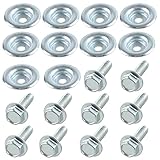
You’re staring at a pile of freshly machined cylinder heads, the smell of solvent still clinging to the air, and a nagging question pops into your head: ‘Are 4.0 SOHC cam bolts TTY?’ I’ve been there. More times than I care to admit. It’s the kind of question that can send you down a rabbit hole of forums, manuals, and conflicting advice, all while the clock ticks and your engine bay gathers dust. Trust me, I’ve learned the hard way about what matters and what’s just noise when it comes to these particular fasteners. Let’s cut through the BS.
For years, I’d just torque ‘em down to spec and call it a day. But then came that one rebuild, the one where things just felt off. That’s when I really started digging into the specifics of these seemingly simple bolts.
The Big Question: Tty or Not Tty?
So, are 4.0 SOHC cam bolts TTY? The short, blunt answer is: Yes, they are designed as Torque-To-Yield (TTY) fasteners. This means they are engineered to stretch a specific amount when torqued to their designated yield point. Once they’ve stretched, they’ve reached their optimal clamping force. Reusing them after they’ve been yielded is generally a bad idea, like trying to bend a paperclip perfectly straight after you’ve already bent it into a shape. You might get it mostly straight, but it’s weaker, and the next bend won’t be as precise.
This TTY design is common on many modern engines, especially those with aluminum heads and blocks, to make sure consistent clamping force and prevent over-tightening, which can strip threads or warp important components. For the Ford 4.0L SOHC engine, this applies directly to the camshaft bearing cap bolts. They look like regular bolts, sure, and sometimes people get away with reusing them for a while. I’ve seen it. But ‘getting away with it’ isn’t the same as ‘doing it right’ or ‘doing it safely.’ My personal experience with this engine platform has shown that pushing the limits on bolt reuse often leads to headaches down the road, sometimes months or even a year later when you’re least expecting it.
Here’s a quick story. A buddy of mine was rebuilding his Explorer’s 4.0 SOHC. He was on a tight budget, and the cam bolts looked perfectly fine. No visible damage, no stretching that he could see.
He reused them, torqued them to spec, and the engine fired up beautifully. He was stoked. About six months later, he started getting a subtle ticking noise.
Turned out, one of the cam caps had started to loosen slightly. Not enough to cause immediate catastrophic failure, but enough to create that annoying sound and, more importantly, compromise oil pressure to that specific cam journal. He ended up having to pull the valve covers again, replace the bolts, and re-torque. Cost him more in time and a new set of bolts than he would have saved upfront.
Lesson learned, the hard way.
The key takeaway here is that TTY bolts are a one-shot deal. They are calibrated to stretch. Once they’ve done their stretching act, their ability to maintain that precise clamping force is compromised. Trying to reuse them is like playing Russian roulette with your engine’s valvetrain. You might win a few times, but eventually, you’re going to face the consequences.
Why the Tty Design Matters for Your 4.0 Sohc
Understanding why these bolts are TTY is just as important as knowing that they are. The 4.0L SOHC is a fairly complex engine, especially with its dual overhead cams driven by a rather intricate timing chain system. The camshafts sit in bearing caps that are bolted to the cylinder head. These caps are important for maintaining proper alignment and providing a stable platform for the camshafts to spin. Any deviation in the clamping force on these caps can lead to several problems:
1. Camshaft Alignment Issues: If a bolt loosens or doesn’t provide consistent clamping, the bearing cap can shift slightly. This misalignment can cause increased friction, wear on the cam lobes and journals, and even lead to premature failure of the camshaft itself. Imagine a race car driver’s hands being slightly off-center on the steering wheel – it’s going to affect control and precision.
2. Oil Pressure Fluctuations: The bearing caps also seal oil passages. If a cap isn’t seated correctly due to uneven or insufficient clamping force, oil can leak out of these passages, leading to reduced oil pressure in the valvetrain. This is often the culprit behind those insidious ticking noises that seem to come from nowhere and everywhere at once. Low oil pressure means less lubrication, which is a fast track to internal engine damage.
3. Increased Wear and Tear: Even if a cam cap doesn’t visibly shift, inconsistent clamping force from reused TTY bolts means the load isn’t distributed evenly across the bearing surface. This can accelerate wear on both the camshaft journals and the bearing surfaces in the cap and head. Over time, this wear will compromise the engine’s performance and longevity. (See Also: Are All Honda Atv Bolt Patterns The Same )
4. Potential for Catastrophic Failure: In the worst-case scenario, a severely loosened cam cap could lead to the camshaft jumping out of its intended position, potentially causing valve-to-piston contact. This is the stuff of nightmares for any mechanic, leading to bent valves, damaged pistons, and a very expensive repair bill. It’s not a common outcome, but it’s a very real risk when you cut corners on important components like TTY bolts.
The engineering behind TTY bolts is all about precision. They make sure that the specific amount of force required to keep everything perfectly aligned and sealed is applied consistently. When you reuse them, you’re basically removing that precision and introducing variability. The initial torque might be within spec, but the bolt has already stretched, and its ability to maintain that precise tension over time and under varying engine temperatures and loads is significantly reduced. This is why sticking to the manufacturer’s recommendation of replacing these bolts is the smart play, not just for the 4.0 SOHC, but for any engine that specifies TTY fasteners.
What to Look for When Replacing Cam Bolts
Alright, so you’ve decided (rightly so!) to replace your 4.0 SOHC cam bolts. What should you be looking for? It’s not as simple as just grabbing any old bolt off the shelf. Here’s what I’ve learned to check:
1. OEM vs. Aftermarket: This is a big one. For important components like TTY cam bolts, I almost always lean towards Original Equipment Manufacturer (OEM) parts if I can get them at a reasonable price. Ford’s parts are designed and tested specifically for this engine. Aftermarket options can be perfectly fine, but there’s a wider range of quality. If you go aftermarket, stick with reputable brands known for producing quality engine components. I’ve had cheap aftermarket bolts that looked right but had slightly off-spec thread pitch or material hardness, leading to issues during torquing. Always check reviews and known product quality.
2. Material and Grade: TTY bolts are made from specific alloys designed to yield predictably. They are usually high-strength bolts. While you don’t need to be a metallurgist, understanding that they’re not just standard hardware store bolts is important. If a bolt feels too soft or too brittle when you’re installing it, that’s a red flag. The specifications will often list a grade or material type, but typically, sticking with OEM or a well-regarded aftermarket supplier covers this.
3. Exact Fitment: This seems obvious, but double-check the part number for your specific year and model of the 4.0L SOHC engine. While generally consistent, there can be minor variations over the production run of an engine. Make sure the length, thread pitch, and head style (e.g., Torx, hex) are identical to the original bolts you removed.
4. Quantity and Kit Contents: Camshaft bearing caps typically have multiple bolts each. Make sure you’re buying the correct quantity. Some kits might come with thread locker pre-applied, which is a nice touch, but always verify if it’s the correct type of thread locker for high-temperature engine applications. If not, you’ll need to apply your own.
5. Price vs. Risk: Let’s talk numbers. A set of new OEM cam bolts for the 4.0 SOHC might run you anywhere from $60 to $120, depending on where you buy them. Aftermarket sets can be cheaper, sometimes $40-$70. When you consider the cost of potential engine damage from reusing old bolts, the price of new ones is peanuts. I once spent nearly $300 on a set of performance cam bolts for a different engine that turned out to be junk – warped my heads. So, while saving a few bucks is tempting, don’t go for the absolute cheapest option available. The risk just isn’t worth it.
My Mistake: I remember on one of my early 4.0 SOHC builds, I was impatient. I found a set of “compatible” bolts online for a steal, like $35. They looked identical. When I started torquing them, the first few went in fine, but the last few felt… strange.
Notchy. I should have stopped right there.
Instead, I pushed through, thinking maybe it was just a bit of grit in the threads. A week later, I heard a distinct metallic scraping sound. Had to pull it all apart again.
Turns out, one of the threads in the bolt was slightly deformed, and it was galling the aluminum head. Cost me a new head and a new set of proper OEM bolts. Lesson learned: never skimp on important fasteners. (See Also: Are Ak Bolts Interchangeable )
The Torque Sequence and Procedure
Knowing that the 4.0 SOHC cam bolts are TTY is one thing; correctly installing them is another. The torque sequence and procedure are important for making sure even clamping pressure and preventing damage to the cylinder head and bearing caps. Always consult your specific service manual for the exact sequence and torque values, as these can vary slightly between model years. However, here’s a general outline of what you can expect and what’s important:
1. Cleanliness is Most important: Before you even think about threading a new bolt in, make sure the bolt holes in the cylinder head and the mating surfaces of the camshaft bearing caps are spotless. Any debris, old thread locker, or old gasket material can prevent the cap from seating properly, leading to uneven clamping. Use a good quality thread chaser (NOT a tap) for the bolt holes to clean them without damaging the threads. Use brake cleaner or a similar solvent to make sure the surfaces are free of oil and grime.
2. Thread Lubrication (if specified): Some procedures call for a light application of engine oil or a specific thread lubricant on the bolt threads. Others specify dry installation. Check your manual! This lubrication affects the final torque reading, so using the wrong type or amount can lead to over or under-torquing. For TTY bolts, it’s generally about achieving the specified stretch, and lubrication helps the bolt threads slip rather than gall, making sure the torque wrench reading is accurate.
3. The Torque-Angle Method: Most TTY bolts are tightened using a two-stage process: an initial torque specification, followed by an additional angle of rotation. For example, it might be 20 Nm (15 lb-ft) followed by 90 degrees. This angle is important because it’s how the bolt is precisely stretched to its yield point. You’ll need a torque wrench and an angle gauge (or a torque wrench with a built-in angle finder) for this. A simple click-style torque wrench won’t suffice for the angle part.
4. The Sequence: This is where things get detailed. The bolts are usually tightened in a specific order, often starting from the center and working outwards, or in a criss-cross pattern. This makes sure the bearing cap is drawn down evenly onto the head. Tightening one bolt completely before moving to the next can warp the cap and the head. The sequence prevents stress risers.
5. Multiple Passes: Don’t expect to hit the final torque-angle in one go. The process often involves going around the bolts multiple times, applying the initial torque, then the angle, potentially in stages. Patience is key. Rushing this step is a surefire way to mess things up.
My Experience with Torque Wrenches: I used to think my old Craftsman click-style torque wrench was good enough for everything. Then I tried to do a TTY head bolt job on another vehicle. It was a disaster. I bought a decent digital torque wrench with an angle finder for my 4.0 SOHC rebuilds, and the difference is night and day. You can feel the bolt stretch as you apply the angle, and the accuracy is immense. Investing in the right tools for this job is a must. For the 4.0 SOHC cam bolts, using the proper torque-angle method is how you make sure they are properly yielded and will hold their clamping force.
Common Mistakes and How to Avoid Them
When you’re deep into an engine rebuild, especially a complex one like the 4.0 SOHC, it’s easy to make mistakes. Some are minor annoyances; others can be costly. Here are some common blunders related to cam bolts, and how to steer clear of them:
Mistake 1: Reusing Old TTY Bolts. We’ve hammered this point home, but it bears repeating. The temptation to save money is huge, but the risk of valvetrain damage, oil leaks, and premature wear is far greater. Always replace them with new ones designed for your specific engine.
Mistake 2: Incorrect Torque Sequence. Not following the prescribed tightening pattern can lead to uneven clamping. This can warp the camshaft bearing caps, damage the cylinder head, or cause the caps to loosen over time. Always consult a service manual and stick to the sequence religiously.
Mistake 3: Using the Wrong Tools. A cheap or inaccurate torque wrench, or not having an angle gauge when one is required, is a recipe for disaster. TTY bolts rely on precise stretch, which is achieved through accurate torque and angle. If you don’t have the right tools, either borrow them or rent them. I once borrowed a torque wrench that was out of calibration; it cost me a set of cylinder heads. Never again.
Mistake 4: Contaminated Threads or Mating Surfaces. Any debris, old sealant, or oil in the bolt holes or on the bearing cap surfaces will prevent proper seating. This leads to inaccurate torque readings and uneven clamping. Thoroughly clean all surfaces and bolt holes before assembly. Use a thread chaser for the bolt holes and a solvent for the mating surfaces. (See Also: Are All Bolt Patterns The Same )
Mistake 5: Over-Tightening or Under-Torquing. Both are bad. Over-torquing can strip threads in the aluminum head, snap the bolt, or warp components. Under-torquing means the bolts won’t provide enough clamping force, leading to looseness and potential damage. The torque-angle method is designed to prevent these issues, so follow it precisely.
Mistake 6: Ignoring the Manual. Every engine is slightly different. While general principles apply, the specific torque values, angles, and sequences for your 4.0 SOHC are laid out in the factory service manual (or a reputable aftermarket one like Haynes or Chilton). Don’t guess. Don’t assume. Look it up. I found a forum post once that claimed a slightly different torque spec for the cam bolts. I followed it, and guess what? It didn’t work out. The engine ran rough, and I had to redo it with the factory specs. Stick to the reliable sources.
Faq: Common Questions About 4.0 Sohc Cam Bolts
Are 4.0 Sohc Cam Bolts Single-Use?
Yes, the 4.0 SOHC camshaft bearing cap bolts are designed as Torque-To-Yield (TTY) fasteners. This means they are engineered to stretch to a specific point to achieve optimal clamping force. Once they have yielded, they should not be reused, as their ability to maintain consistent clamping pressure is compromised.
What Happens If I Reuse 4.0 Sohc Cam Bolts?
Reusing TTY cam bolts can lead to several problems, including insufficient clamping force, which may cause camshaft bearing caps to loosen. This can result in increased wear on the camshaft and cylinder head, oil leaks, and potentially catastrophic engine damage if a camshaft comes loose. It’s a risk that isn’t worth taking.
What Is the Torque Spec for 4.0 Sohc Cam Bolts?
The exact torque specification typically involves an initial torque value followed by an additional angle of rotation (e.g., 20 Nm + 90 degrees). You must consult a service manual specific to your 4.0 SOHC engine year for the precise values and the correct tightening sequence to avoid engine damage.
Can I Use Aftermarket Cam Bolts for My 4.0 Sohc?
Yes, reputable aftermarket cam bolts can be used, but it’s important to choose high-quality parts from well-known manufacturers. OEM (Original Equipment Manufacturer) bolts are generally recommended for important components like these to make sure exact fitment and material specifications. Always verify the part number and quality before purchasing.
The Bottom Line on 4.0 Sohc Cam Bolts
Look, I’m not here to sell you anything. I’m just telling you what I’ve learned from wrenching on these engines for years, often through trial and error, and sometimes through expensive mistakes. The question of ‘are 4.0 SOHC cam bolts TTY?’ is definitively answered with a ‘yes.’ They are designed to be single-use fasteners, and reusing them is a gamble that rarely pays off in the long run. The precision engineering that goes into these bolts is there for a reason: to make sure the longevity and proper function of your engine’s valvetrain.
When you’re rebuilding or repairing your 4.0 SOHC, factor in the cost of new cam bolts as a a must part of the budget. It’s a relatively small expense compared to the potential cost of engine failure or repeated repairs. Invest in quality, use the correct tools, and follow the service manual meticulously. This approach will save you headaches, money, and a lot of frustration down the line. It’s about building it right the first time, so you can just drive it.
Final Verdict
So, to circle back and be absolutely clear: are 4.0 SOHC cam bolts TTY? Yes, they are. Treat them as such. Don’t let the seemingly low cost of new bolts tempt you into reusing old ones. The potential fallout from a failed cam cap is far more expensive than a new set of fasteners.
My final word on this? When you’re working on your 4.0 SOHC, especially when it comes to something as important as the valvetrain, always err on the side of caution. That means new TTY bolts, proper torque, the correct sequence, and the right tools. It’s the most straightforward way to make sure your engine runs smoothly and reliably for miles to come.
Before you button everything back up, do yourself a favor and re-read the torque sequence section of your service manual one last time. It’s the small details that make a big difference.